PUMCH Gastroenterology for International Patients: Costs, Booking, and What to Expect
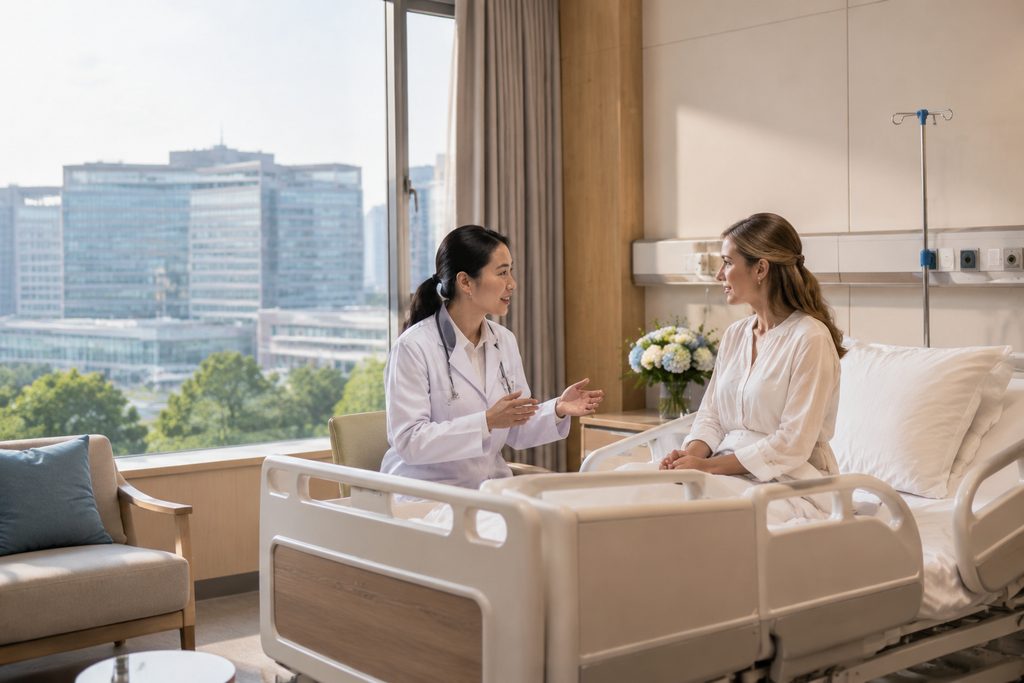
Peking Union Medical College Hospital Gastroenterology for International Patients: A Practical Guide to Costs, Booking, and Digestive Care
According to a 2024 report from China’s National Health Commission, the country’s top-tier public hospitals collectively handle over 2.3 billion outpatient visits annually — a staggering volume that includes a growing number of international patients seeking specialized digestive care. If you have been searching for the Peking Union Medical College Hospital gastroenterology price, you are likely weighing a serious decision: whether to fly to Beijing for an endoscopy, a liver evaluation, or a complex gastrointestinal workup. The short answer is that a colonoscopy at PUMCH’s international department typically ranges from $600 to $1,200, while an upper endoscopy runs between $400 and $800 — roughly one-fifth to one-third of what the same procedures cost in the United States. But the real story is more nuanced than a price tag.
This guide breaks down what international patients actually need to know about accessing gastroenterology care at Peking Union Medical College Hospital (PUMCH), from realistic cost ranges and booking mechanics to the documentation you must prepare. We will not sugarcoat the friction points. Public hospital systems in China operate differently from Western clinics, and understanding those differences before you book a flight is the difference between a smooth visit and a frustrating one.
Key Takeaways
- PUMCH ranks among China’s top-tier gastroenterology departments under the Fudan University hospital ranking system, with a daily outpatient volume exceeding 10,000 patients.
- Endoscopy costs at PUMCH’s international department run $400–$1,200, compared to $2,500–$5,000 for comparable procedures at major US hospitals.
- You cannot book a standard public outpatient appointment from overseas — international patients must go through the hospital’s international medical services channel or work with a coordination service.
- Bring complete medical records in English or Chinese, including prior endoscopy reports, pathology slides, imaging, and a detailed medication list — incomplete documentation is the most common reason consultations stall.
The Problem: Digestive Care Delays and Costs Are Pushing Patients to Look Abroad
In the United Kingdom, the National Health Service reported in 2023 that the median wait time for a routine gastroenterology appointment had reached 14 weeks, with some trusts reporting waits exceeding 40 weeks for non-urgent endoscopies. Canada’s provincial health systems tell a similar story — Ontario’s wait time data shows patients waiting an average of 86 days for a colonoscopy after referral. Meanwhile, the financial burden in the US is equally stark. A 2023 analysis by the Kaiser Family Foundation found that the average out-of-pocket cost for a diagnostic colonoscopy with biopsy in the United States was $2,750, even for insured patients who had not yet met their deductible.
For patients with chronic digestive symptoms — persistent abdominal pain, unexplained weight loss, changes in bowel habits, or a family history of colorectal cancer — these delays are not an inconvenience. They are a clinical risk. Colorectal cancer, for instance, is highly treatable when caught early, with a five-year survival rate above 90% for localized disease, according to the American Cancer Society. But every month of delay in diagnosis shifts the odds. And for patients without comprehensive insurance, the cost of a full GI workup in the West — endoscopy, colonoscopy, biopsy, and histopathology — can easily exceed $8,000.
That is the landscape driving a quiet but growing number of international patients toward Beijing. They are not chasing novelty. They are chasing timely, competent, affordable care.
Why Peking Union Medical College Hospital Delivers for Digestive Care
PUMCH is not just another hospital. It is the hospital that other Chinese doctors reference when they discuss diagnostic rigor. Founded in 1921 with support from the Rockefeller Foundation, PUMCH has maintained a reputation for meticulous clinical work for over a century. In the Fudan University hospital rankings — China’s most authoritative independent hospital evaluation — PUMCH consistently places in the top tier (A++++ category) on the comprehensive list, and its gastroenterology department ranks among China’s top 10 for digestive disease reputation.
Clinical Volume Drives Diagnostic Competence
Volume matters in gastroenterology. A physician who sees 50 cases of inflammatory bowel disease per month develops pattern recognition that a physician seeing five cases cannot match. PUMCH’s gastroenterology department processes more than 150,000 outpatient visits annually, with endoscopy suites performing over 40,000 procedures per year, according to hospital-reported figures. That is roughly four times the annual procedure volume of an average US academic medical center’s GI unit. For international patients, this means access to specialists who have seen the rare presentations, the atypical cases, and the diagnostic puzzles that stump smaller centers.
Integrated Care for Complex Liver and Biliary Disease
If your concern is liver disease — hepatitis B, autoimmune hepatitis, cirrhosis, or a suspected liver lesion — PUMCH’s integration of gastroenterology, hepatology, interventional radiology, and hepatobiliary surgery under one institutional roof is a structural advantage. Many Western hospitals separate these disciplines into different buildings, different scheduling systems, and different care teams. At PUMCH, a patient with an indeterminate liver mass can move from hepatology consultation to contrast-enhanced imaging to a multidisciplinary tumor board discussion without leaving the same campus. The question “is PUMCH good for liver disease treatment” has a data-backed answer: the hospital’s hepatology group manages one of the largest cohorts of chronic hepatitis B patients in northern China, with treatment protocols aligned to both Chinese and international guidelines.
Cost Advantage Without Quality Compromise
The Peking Union Medical College Hospital gastroenterology price reflects structural economics, not inferior care. Chinese physician salaries, while rising, remain a fraction of US levels — a senior specialist at PUMCH earns roughly $60,000 to $90,000 annually, compared to $350,000 to $500,000 for a US gastroenterologist. Hospital administrative overhead is lower. Malpractice insurance costs are a small fraction of US levels. And the sheer patient volume spreads fixed costs across more procedures. The result: a diagnostic colonoscopy with biopsy and histopathology at PUMCH’s international department runs approximately $800 to $1,500 all-in, versus $3,000 to $6,000 in the US. The equipment is the same — Olympus and Fujifilm endoscopes, standard histopathology processing, internationally recognized laboratory protocols. The difference is the cost structure, not the clinical standard.
How to Book PUMCH Gastroenterology as an International Patient: The Real Process
Here is what nobody tells you clearly: you cannot simply call PUMCH’s general outpatient line from London or Dubai and book a gastroenterology appointment. The public outpatient system operates on same-day queueing — patients line up at 6:00 AM for a limited number of registration slips, and non-Mandarin speakers without local help will struggle. For international patients, there are two legitimate pathways.
The first is PUMCH’s International Medical Services department, which handles foreign and overseas Chinese patients. This department has English-speaking staff, dedicated clinics, and the ability to schedule appointments in advance — something the standard public channel does not offer. Expect to pay 1.5 to 2 times the standard public rate for this access. A specialist consultation through the international department typically costs $150 to $300, and procedures are billed separately.
The second pathway is working with a coordination service like China Medical Services, which handles the logistics: submitting your medical records for pre-review, confirming which specialist is appropriate, booking the international department appointment, arranging interpretation, and managing follow-up communication. This is not a shortcut around hospital rules — it is a navigation service for a system that was not designed for foreign patients. The hospital’s own international department remains the clinical provider; coordination services handle the friction points around it.
Practical tip: Before contacting any booking channel, prepare a one-page medical summary in English. Include your symptom timeline, prior diagnoses, all medications with dosages, prior endoscopy or imaging results, and specific questions you want answered. This single document dramatically improves the quality of the initial consultation.
What to Expect During Your Digestive Workup at PUMCH: A Timeline
Once your appointment is confirmed, the process unfolds in stages. Understanding this timeline prevents mid-trip surprises.
Day 1 — Initial consultation: You meet the gastroenterologist in the international department. Expect 20 to 40 minutes — longer than the typical 5 to 10 minutes in the public clinic. The physician reviews your records, takes a detailed history, and orders tests. If you need an endoscopy or colonoscopy, you will be scheduled — usually within 1 to 3 days, sometimes the same day if you have completed bowel preparation in advance.
Day 2 — Pre-procedure preparation: For colonoscopy, you must complete bowel prep the day before the procedure. The hospital provides instructions and the prep solution. For upper endoscopy, fasting for 8 hours is required. Blood work — coagulation profile, liver function, hepatitis screening — is typically drawn at this stage.
Day 3 — Procedure day: Endoscopy and colonoscopy at PUMCH are performed under sedation (propofol-based, administered by an anesthesiologist). The procedure itself takes 20 to 40 minutes. Recovery from sedation takes 1 to 2 hours. If biopsies are taken — standard for any suspicious lesion — histopathology results take 3 to 7 days.
Day 4–7 — Results and follow-up: You meet the specialist again to review findings. If pathology is still pending, the hospital can send results by email, and a follow-up video consultation can be arranged through the international department or your coordination service.
Total time in Beijing for a standard diagnostic workup: 4 to 7 days. If therapeutic intervention is needed — polypectomy, variceal banding, ERCP — plan for 7 to 14 days.
PUMCH Gastroenterology Price Breakdown for International Patients
Transparency on cost is essential. The figures below reflect current international department pricing at PUMCH, converted to US dollars. These are ranges — final billing depends on case complexity, number of biopsies, sedation requirements, and whether additional therapeutic procedures are performed during the endoscopy.
| Service | PUMCH International Dept (USD) | Average US Hospital (USD) | UK Private (USD) |
|---|---|---|---|
| Specialist consultation (initial) | $150–$300 | $350–$600 | $250–$450 |
| Upper endoscopy (diagnostic) | $400–$800 | $2,500–$4,000 | $1,800–$3,200 |
| Colonoscopy (diagnostic, with biopsy) | $600–$1,200 | $3,000–$5,500 | $2,200–$4,000 |
| Abdominal CT with contrast | $200–$400 | $1,200–$2,500 | $800–$1,500 |
| Liver function panel + hepatitis screen | $80–$150 | $300–$600 | $200–$400 |
| Histopathology (per specimen) | $50–$120 | $200–$500 | $150–$350 |
These are the numbers patients ask about when they search for the Peking Union Medical College Hospital gastroenterology price. A full diagnostic workup — consultation, blood work, endoscopy, colonoscopy, imaging, and pathology — typically lands between $1,500 and $3,000 at PUMCH. The same workup in the US averages $8,000 to $15,000. The savings are real, but they come with trade-offs: you are traveling to a foreign country, navigating a different healthcare culture, and managing follow-up from a distance.
Who Should Not Choose PUMCH for Digestive Care
PUMCH is an outstanding institution, but it is not the right choice for every international patient. Be honest with yourself about the following limitations.
If you have an acute gastrointestinal emergency — severe GI bleeding, suspected bowel perforation, acute pancreatitis with organ failure — you should not board a long-haul flight to Beijing. Seek care wherever you are. PUMCH’s value proposition is elective, planned diagnostic work and treatment, not emergency stabilization.
If you require long-term, high-frequency follow-up — for example, biologic infusion therapy for Crohn’s disease every 4 to 8 weeks — flying to China repeatedly is impractical. PUMCH can establish the diagnosis and initiate a treatment plan, but ongoing management will need to happen closer to home. The hospital does provide written treatment summaries and can coordinate with your local gastroenterologist.
If you cannot tolerate uncertainty in scheduling, the public hospital environment — even the international department — may frustrate you. Appointments can shift. Doctors may be called to emergencies. The system is less predictable than a Western private clinic. Patients who need rigid, to-the-minute scheduling should consider Beijing’s private international hospitals, which offer Western-style appointment discipline at a higher price point.
Practical Considerations: Documentation, Visa, and Payment
Getting the logistics right before you travel is as important as choosing the right hospital. Here is what you need to handle.
Medical records: Bring everything. Prior endoscopy reports, pathology slides (if available), CT or MRI images on CD or USB, liver biopsy reports, and a complete medication list. If your records are not in English or Chinese, have them translated. The consulting physician will review these documents during your first visit — incomplete records waste a consultation slot and may require a repeat visit. If you are working with a coordination service, records are typically submitted for pre-review before you book flights, which allows the hospital to confirm the appropriate specialist in advance.
Visa: Medical treatment in China falls under the S2 visa category, which covers short-term private affairs including medical treatment. The S2 visa requires an invitation letter or supporting documentation — in this case, a letter from PUMCH’s international department confirming your appointment, or documentation from your coordination service. Family members accompanying you apply for the same S2 category. The S2 visa is typically issued for 30 to 90 days. For treatment requiring stays longer than 180 days, the S1 visa applies. Do not apply for an M visa — that is a commercial and trade visa, not applicable to medical travel. Visa processing times vary by embassy, so start the application at least 4 to 6 weeks before your planned travel date. Requirements change, so check the latest guidance from the Chinese embassy or consulate in your country.
Payment: PUMCH’s international department accepts cash (RMB), UnionPay cards, and major international credit cards (Visa, Mastercard). Payment is required at the time of service — the hospital does not bill international patients after the fact. If your insurance reimburses out-of-network international care, request itemized receipts and a discharge summary in English; the international department provides these on request. Note that Chinese public hospitals do not bill foreign insurers directly. You pay, then submit for reimbursement.
Language: The international department has English-speaking staff, but do not expect fluency from every nurse, technician, or administrative clerk. For complex discussions — treatment options, procedural risks, pathology interpretation — a professional medical interpreter is strongly recommended. Some coordination services include bilingual medical companions who handle registration, queueing, payment, and interpretation throughout your visit. If you are navigating alone, bring a Mandarin-speaking friend or hire an interpreter for key appointments.
Follow-up after returning home: PUMCH provides written reports in English, including endoscopy findings, pathology results, and treatment recommendations. If questions arise after you leave, the international department can arrange a video follow-up consultation. Prices for written second opinions from top specialists run $300 to $500, and video consultations with senior gastroenterologists range from $500 to $800 — figures worth knowing if you are considering remote follow-up rather than a return trip.
Frequently Asked Questions
Yes, but with significant friction. You can contact PUMCH’s International Medical Services department directly by email or phone, submit your records, and request an appointment. The department will schedule a consultation, and procedures are booked after the specialist has seen you in person. The process works, but expect slower response times, language barriers in email communication, and the need to handle your own visa documentation and local logistics. A coordination service does not change the clinical pathway — it changes the administrative experience around it.
What if the biopsy results show something serious — can PUMCH perform the surgery too?
Yes. PUMCH has full surgical capabilities, including gastrointestinal surgery, hepatobiliary surgery, and interventional endoscopy. If a colonoscopy reveals a malignant polyp or early cancer, the gastroenterology team coordinates directly with surgical colleagues for definitive treatment. The transition from diagnosis to treatment within the
For more medical information and treatment options in China, visit chinamedservices.com (China Medical Services).
