Fuwai Hospital Heart Failure Care: What International Patients Should Know
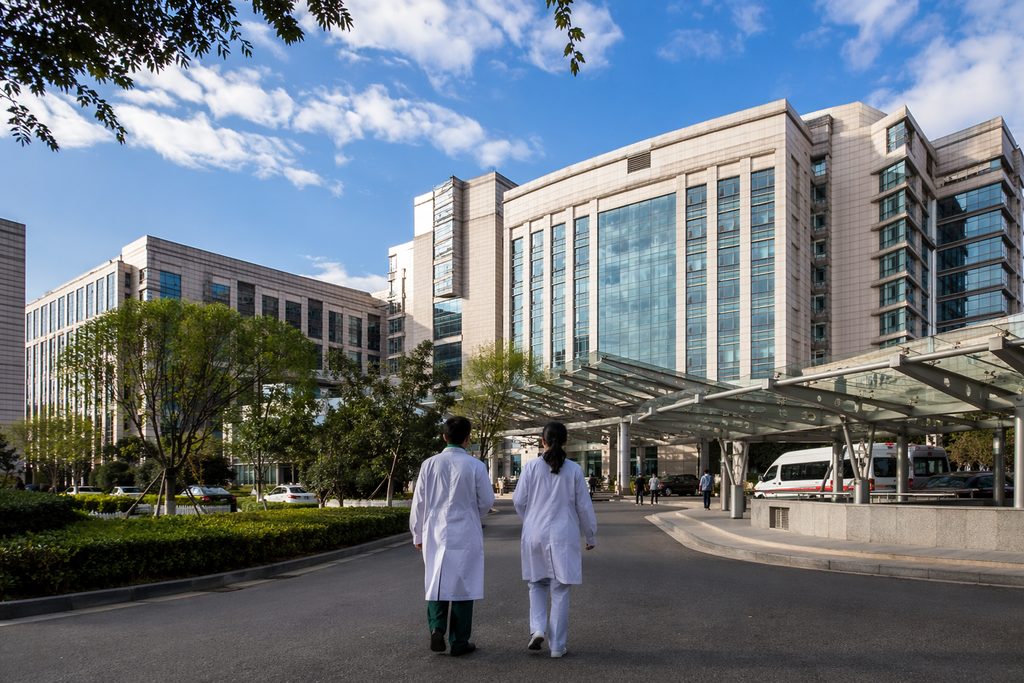
Have you been told your heart is failing, and now you are wondering whether one of the world’s busiest cardiac centers could actually see you? Fuwai Hospital in Beijing performs over 14,000 cardiac surgeries a year. But for a foreign patient, the question is never just about clinical skill. It is about access, language, and the real Fuwai Hospital heart failure treatment cost. This guide walks through each of those, honestly.
We are China Medical Services, a team that connects international patients with top-tier Chinese hospitals. We do not perform medicine. We handle the logistics, the translation, the appointments, and the navigation so that you can make a clear decision. This article focuses on Fuwai’s heart failure program and what it takes to get through the door.
How This Actually Works, Step by Step
You do not simply email Fuwai and book a bed. The public system in China runs on in-person registration, which means a foreigner cannot reserve a surgery slot from overseas through the standard outpatient route. What actually happens is a staged process.
First, you send your existing medical records: echocardiogram reports, NT-proBNP levels, ejection fraction, medication list, any prior angiograms or MRIs. Our team translates these into Chinese and submits them to the hospital’s international department or a relevant specialty team for a written review. That written second opinion costs between $300 and $500 and gives you a preliminary read on whether your case fits their treatment protocols.
Second, if the feedback is positive, you schedule a video consultation. This costs $500 to $800 with a top specialist. The specialist will ask about your symptoms, your functional class, what you have tried already. You hear directly whether they recommend device therapy, medication optimization, or surgical intervention.
Third, if you decide to travel, we coordinate the S2 visa documentation, the hospital appointment, and an in-person consultation. Admission, if recommended, follows the hospital’s own rules. Nobody can promise a specific surgery date before the doctor has seen you in person. That is the honest sequence.
How Does Fuwai Hospital Treat Heart Failure?
Fuwai is not a single-department facility. Its Heart Failure Center operates within a larger cardiovascular institute that sees a volume few Western centers match. The clinical approach depends on the underlying cause: ischemic cardiomyopathy, valvular disease, dilated cardiomyopathy, or advanced failure requiring mechanical support.
For patients with reduced ejection fraction, the standard pathway includes guideline-directed medical therapy, often optimized more aggressively than in some Western settings due to the sheer volume of cases the physicians manage. For those with electrical dyssynchrony, cardiac resynchronization therapy (CRT) is routine. For advanced cases, Fuwai has an active left ventricular assist device (LVAD) program and performs heart transplantation, though the latter is subject to China’s national organ allocation rules and is not something any foreign patient should assume is available to them.
What distinguishes Fuwai is repetition. A surgeon there may perform more valve repairs or bypass procedures in a month than a regional Western center does in a year. That volume translates into procedural fluency, but it also means the system is built for throughput. International patients who expect a leisurely, hotel-like experience will be surprised. The care is excellent. The environment is functional.
Fuwai Hospital Heart Failure Treatment Cost: A Realistic Breakdown
The primary question most international patients ask is about money. So let us be direct. Fuwai Hospital heart failure treatment cost varies enormously by intervention. A heart failure hospitalization for medication optimization and monitoring might run $5,000 to $10,000 through the international department. A CRT device implantation could range from $25,000 to $40,000. A complex surgical procedure such as a ventricular assist device placement could exceed $80,000, though that remains a fraction of the $500,000 or more such a procedure can cost in the United States.
| Procedure | Estimated Cost at Fuwai (USD) | Typical US Cost (USD) |
|---|---|---|
| Heart failure hospitalization (7–10 days, medication optimization) | $5,000–$10,000 | $30,000–$60,000 |
| CRT device implantation | $25,000–$40,000 | $80,000–$150,000 |
| Coronary artery bypass grafting (if ischemic cause) | $12,000–$20,000 | $120,000+ |
| LVAD placement | $80,000–$120,000 | $500,000+ |
These are ranges, not quotes. Final pricing depends on the specific device, the length of ICU stay, and whether complications arise. The international department typically charges 1.5 to 2 times the standard public rate, which is still far below Western private-pay pricing. Payment is required upfront in almost all cases. Insurance reimbursement is between you and your insurer, not the hospital.
A Realistic Timeline
People underestimate the waiting steps. Here is what an actual timeline looks like for an international heart failure patient.
| Stage | What Happens | Typical Duration |
|---|---|---|
| Day 1–7 | You collect and send medical records; our team translates them | 1 week |
| Week 2–4 | Written second opinion from the specialty team | 1–3 weeks |
| Week 4–6 | Video consultation with a specialist | 1–2 weeks to schedule |
| Week 6–10 | S2 visa application with hospital invitation documents | 2–4 weeks |
| Week 10–12 | Travel to Beijing, in-person consultation, pre-admission testing | 3–5 days |
| Week 12+ | Admission and treatment, if recommended | Varies by procedure |
Notice the gaps. Document translation takes time. The hospital’s international department has limited slots. Visa processing depends on your home country’s Chinese embassy or consulate. If you need a device implanted, the device itself may need to be ordered. None of this is fast. Plan for a minimum of 10 to 12 weeks from first contact to hospital admission, and longer if your case is complex.
What Can Go Wrong — and What Happens Then
The most common failure point is incomplete records. If your echocardiogram is older than six months, the reviewing physician may request a repeat study before giving any opinion. That delays everything. The fix is simple: gather every relevant document before you start, and be prepared to get a fresh echo locally if asked.
A second failure point is the in-person consultation itself. The specialist may review your records and conclude that surgery is not indicated, or that your case is better managed medically. That is a valid outcome, not a failure of the system. You will have spent money on travel and consultation to learn that a procedure is unnecessary. That is sometimes the most valuable result.
Language is the third failure point. Fuwai’s public floors are overwhelmingly Chinese-speaking. Without a bilingual companion, you will struggle to understand discharge instructions, medication changes, or follow-up requirements. This is not a criticism of the hospital; it is a reality of any large Chinese public institution. We provide bilingual medical companions from $300 per day for exactly this reason.
What happens if the hospital cancels or delays your admission? It can happen. Emergency cases take priority. If we have coordinated your appointment and it falls through, our appointment coordination fee is refunded in full. We cannot refund your flights.
Is Fuwai Hospital Good for International Patients?
The honest answer is: clinically, yes. Operationally, it depends on your expectations. Fuwai is not an international hospital. It does not have a JCI accreditation, and its international department is smaller than what you would find at a private facility like United Family or Jiahui. But it does have the world’s highest cardiac surgery volume and a depth of experience in heart failure that few institutions anywhere can match.
So the question is not whether Fuwai is good. The question is whether your case justifies navigating a high-volume Chinese public hospital rather than choosing a more Westernized private option. If you need a complex procedure and want the most experienced hands, Fuwai makes sense. If you want English-speaking nurses, direct insurance billing, and a hotel-like environment, a private international hospital in Beijing or Shanghai may serve you better. We can help you evaluate both paths. Our database of top-ranked Chinese hospitals includes Fuwai alongside other options, and our Beijing city guide explains what to expect on the ground.
Practical Considerations: Records, Visa, Payment, and Follow-Up
Your medical records must be in English or Chinese. If they are in another language, translation is required before submission. Bring digital copies and paper copies. Bring a medication list with generic names, not just brand names.
The visa is an S2 visa, issued for short-term private affairs including medical treatment. Your accompanying family member applies for the same category. The hospital provides an invitation letter and treatment confirmation, which you submit to the Chinese embassy or consulate. Processing times vary by country. Do not book flights until the visa is in your passport.
Payment is upfront. Fuwai’s international department will issue a deposit estimate before admission. You pay the deposit, and the hospital deducts from it as services are rendered. If the deposit is exhausted, you top it up. At discharge, you receive a final statement, which you submit to your insurer for reimbursement if your policy covers treatment abroad.
Follow-up at home is the piece most people forget. After a CRT implant or a medication optimization, you need a local cardiologist who is willing to take over your care. Chinese hospitals do not manage you remotely. Before you travel, confirm that your home cardiologist will accept the discharge summary and continue the treatment plan. If not, you are buying a procedure without a maintenance plan.
Frequently Asked Questions
You cannot book surgery or admission from overseas through the standard public route. What you can do is complete a written second opinion and video consultation first, then travel for an in-person consultation. Admission, if recommended, follows that face-to-face visit and the hospital’s scheduling rules.
The quoted cost typically covers the hospital stay, procedure, device or medication, and standard nursing care. It does not include international department coordination fees, translation, your flights, accommodation, or post-discharge rehabilitation. Always ask for a written breakdown before paying a deposit.
The medical staff includes many physicians who speak English, especially in the international department. But the broader hospital environment — nursing stations, pharmacy, billing, discharge paperwork — operates in Chinese. A bilingual companion is strongly recommended unless you have a Chinese-speaking family member with you.
The public department charges standard rates and serves the general population. The international department charges 1.5 to 2 times more, offers English coordination, and provides a more streamlined experience for foreign patients. The physicians are often the same specialists. You are paying for access and language support, not better medicine.
For major procedures, yes. A CRT implant or bypass surgery in China typically costs one-fifth to one-tenth of the US private-pay price, even through the international department. But factor in travel, accommodation, and the cost of a bilingual companion. The savings are real, but they are not as dramatic as the raw procedure price suggests.
Your Next Step
Fuwai Hospital offers world-class heart failure care at a price that makes financial sense for many international patients. The challenge is not the medicine. It is the navigation. We are China Medical Services, and we help you move through the process: records translation, specialist review, video consultation, visa documentation, and on-the-ground support in Beijing. We do not perform treatment, and we do not promise outcomes. What we do is make a complex system legible.
If you are considering heart failure treatment in China, start with a conversation. Send us your records, and we will help you understand whether Fuwai — or another center — is the right fit. Visit our patient services page to begin. No pressure. Just clarity.
For more medical information and treatment options in China, visit chinamedservices.com (China Medical Services).
