China vs Thailand for Medical Care: Cost, Quality, and Outcomes Compared
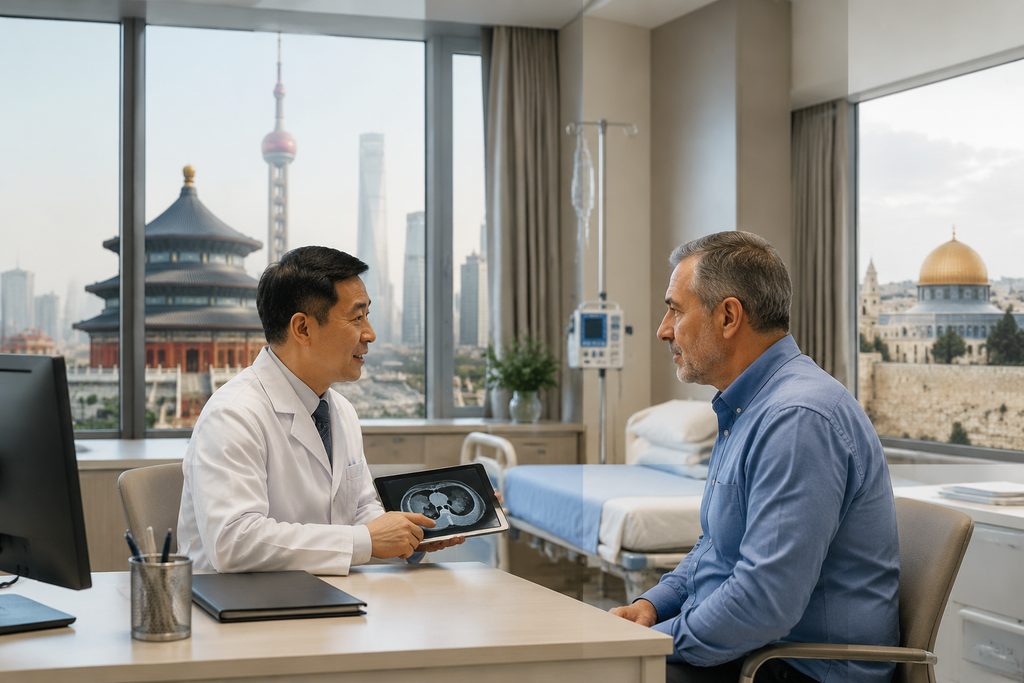
Heart Bypass Surgery Cost China vs Thailand: Which Destination Delivers Better Value for International Patients?
When international patients search for heart bypass surgery cost China vs Thailand, they are usually weighing two very different healthcare systems. The short answer: China offers significantly higher surgical volumes at top cardiac centers, broader access to advanced robotic procedures, and costs that remain competitive with Thailand’s private hospital sector. A coronary artery bypass graft (CABG) at a top-tier Chinese public hospital typically runs $12,000–$20,000, while Thailand’s leading private cardiac centers charge $15,000–$25,000 for comparable procedures. The real difference lies not in price, but in clinical depth.
Key Takeaways
- China’s Fuwai Hospital performs over 14,000 cardiac surgeries annually — the highest volume of any heart center globally.
- Thailand’s private hospitals offer strong hospitality and English-language service, but China’s top 100 hospitals handle complex cases at a scale Thailand cannot match.
- Neither country allows foreign patients to book surgery without an in-person consultation first — beware of any service promising otherwise.
- Visa requirements differ: China uses the S2 visa for medical treatment, while Thailand has a dedicated medical visa category.
The Problem: High Surgical Costs at Home Push Patients to Choose Between Two Very Different Asian Destinations
An estimated 1 in 8 American adults carries medical debt, and cardiac surgery remains one of the most expensive procedures in the US healthcare system. A heart bypass in the United States costs $120,000–$200,000 on average. Even with insurance, out-of-pocket maximums can reach $10,000–$20,000. For uninsured or underinsured patients, the numbers are catastrophic.
So patients look abroad. Thailand has spent two decades marketing itself as a medical tourism hub. Bumrungrad International Hospital in Bangkok serves over 1.1 million patients annually, roughly half from overseas. The country’s private hospitals are polished, efficient, and English-friendly. But volume does not equal depth. Thailand’s cardiac surgery programs are solid for routine cases. For complex, high-risk procedures, China’s top centers operate at a different level entirely.
Why China Delivers Results for Complex Cardiac and Cancer Care
Clinical Volume Drives Better Outcomes
Fuwai Hospital in Beijing performs more than 14,000 cardiac surgeries every year. That is more than any single heart center in the world. Surgeons there see cases in a month that a typical Western cardiac surgeon sees in a year. The same pattern holds across Chinese specialties. West China Hospital in Chengdu handles over 25,000 inpatient surgeries annually across all departments. Peking Union Medical College Hospital manages some of the most diagnostically challenging cases in Asia.
Thailand’s top cardiac centers — Bangkok Heart Hospital, Bumrungrad — are excellent for standard CABG procedures. But when a case involves prior surgeries, anatomical anomalies, or multi-vessel disease with comorbidities, the depth of experience shifts decisively toward China.
Technology and Efficiency at Scale
Chinese hospitals adopted robotic surgery platforms aggressively. As of 2024, China had installed over 380 da Vinci surgical systems, with more than 100,000 robotic procedures performed annually across urology, gynecology, and general surgery. Beijing and Shanghai alone account for more robotic prostatectomy volume than most European countries. Patients asking can I get robotic prostate surgery in Beijing will find multiple top-tier centers offering the procedure, often with shorter scheduling windows than in Thailand’s private hospitals.
Thailand has robotic systems too, concentrated in Bangkok’s premium private hospitals. But the number of surgeons performing high volumes of robotic cases is smaller. China’s scale means more experienced robotic surgeons, more refined protocols, and better handling of intraoperative complications.
Cost Advantage Without Quality Compromise
Lower cost does not mean lower quality in China. It means structurally lower operating expenses. Chinese public hospitals run on high patient volumes with lean administrative overhead. Physician salaries are lower than in Thailand’s private sector, where international-standard compensation drives up fees. Real estate costs in Beijing or Shanghai are high, but hospital infrastructure was built over decades with state backing.
The result: a heart bypass at Fuwai or Zhongshan Hospital costs $12,000–$20,000, while Bumrungrad quotes $18,000–$28,000 for the same procedure. For orthopedic surgery, the gap widens further. Patients researching how much cheaper is hip replacement in China will find total hip arthroplasty at top Chinese public hospitals priced at $8,000–$15,000, compared to $12,000–$18,000 in Thailand and $40,000–$60,000 in the US.
Is Cancer Treatment Better in China Than Thailand? A Specialty-by-Specialty Look
The question is cancer treatment better in China than Thailand depends heavily on the cancer type. For common solid tumors — breast, lung, colorectal — both countries offer competent care. For rare or complex malignancies, China’s advantage becomes clear.
China’s Fudan University hospital ranking system evaluates 45 clinical specialties. In oncology, hospitals like Fudan University Shanghai Cancer Center and Sun Yat-sen University Cancer Center in Guangzhou rank among Asia’s best. These centers treat tens of thousands of new cancer cases annually. They participate in global clinical trials. They have dedicated proton therapy centers, CAR-T cell therapy programs, and advanced radiotherapy platforms.
Thailand has strong oncology programs at Bumrungrad, Bangkok Hospital, and Samitivej. But the total number of board-certified oncologists, the number of clinical trials, and the breadth of subspecialty expertise are smaller. For a patient with metastatic disease or a rare tumor, China offers more options.
| Procedure | China (Top Public Hospital) | Thailand (Private International Hospital) | United States |
|---|---|---|---|
| Heart Bypass (CABG) | $12,000–$20,000 | $18,000–$28,000 | $120,000–$200,000 |
| Hip Replacement | $8,000–$15,000 | $12,000–$18,000 | $40,000–$60,000 |
| Robotic Prostatectomy | $15,000–$25,000 | $18,000–$30,000 | $50,000–$80,000 |
| Liver Transplant (Package) | $50,000–$80,000 | $60,000–$100,000 | $300,000–$500,000 |
| Cancer Immunotherapy (Annual) | $30,000–$60,000 | $40,000–$80,000 | $150,000–$250,000 |
All figures are estimates and vary by hospital, case complexity, and exchange rates. Final quotes require medical records review.
Top JCI Accredited Hospitals in Shanghai for Foreigners: What Actually Matters
Patients searching for top JCI accredited hospitals in Shanghai for foreigners are usually looking for English-speaking staff, Western-style care protocols, and insurance compatibility. Shanghai has several options. Jiahui International Hospital, United Family Healthcare, and Parkway Health all hold JCI accreditation and cater specifically to expatriates and international patients.
But JCI accreditation is not the only quality signal. Many of Shanghai’s top public hospitals — Zhongshan Hospital, Ruijin Hospital, Huashan Hospital — operate international departments that serve foreign patients with English-speaking coordinators, expedited scheduling, and private rooms. These departments are not always JCI-accredited, yet they offer access to China’s most experienced specialists.
Thailand’s private hospitals almost universally hold JCI accreditation. It is a baseline expectation there. In China, JCI is more common among private international hospitals, while public hospital international departments rely on domestic accreditation systems and Fudan rankings. For foreign patients, the practical question is: do you want a hotel-like experience with competent care, or do you want access to the highest-volume specialists in Asia? Thailand skews toward the former. China’s public hospital international departments deliver the latter.
Book Liver Transplant Package China: What the Process Really Looks Like
Some patients arrive at our site searching for a way to book liver transplant package China. We need to be direct about what is possible. No hospital in China — or Thailand — allows foreign patients to book a liver transplant as a package deal before medical evaluation. Transplant eligibility depends on MELD score, blood type, donor availability, and a rigorous ethics review.
What Chinese transplant centers do offer is world-class surgical expertise. Renji Hospital in Shanghai performs over 800 liver transplants annually, among the highest volumes globally. West China Hospital and Beijing Friendship Hospital also run major transplant programs. The cost for a liver transplant in China ranges from $50,000–$80,000, significantly less than the $300,000+ typical in the US. Thailand’s transplant programs are smaller, with fewer deceased-donor organs available and more limited living-donor infrastructure.
Any service claiming to “book” a transplant package before evaluation is not being honest with you. The legitimate path is: submit medical records, undergo remote evaluation, travel for in-person assessment, and then be placed on the transplant list if eligible.
Practical Considerations: Visa, Payment, and Documentation for China vs Thailand
Thailand’s medical visa process is straightforward. You apply for a Non-Immigrant O visa with a medical treatment purpose, supported by a letter from the treating hospital. Approval is generally quick for patients with confirmed appointments.
China uses the S2 visa for short-term medical treatment, with stays up to 180 days. For treatment exceeding 180 days, the S1 visa applies. Family members accompanying the patient also apply for S2 visas. The application requires a hospital invitation letter, treatment plan, and proof of funds. Processing times vary by embassy, but typically run 1–4 weeks. Neither country guarantees approval — documentation quality matters.
Payment differs too. Chinese public hospitals require prepayment deposits before admission, with insurance reimbursement handled after discharge. Private international hospitals in both countries may bill insurers directly. Bring a credit card with a high limit and notify your bank before traveling. Wire transfers are common for large surgical deposits.
Practical tip: Request itemized cost estimates from at least two hospitals — one in China, one in Thailand — before committing. Ask specifically about implant costs, ICU fees, and postoperative rehabilitation. These line items vary dramatically between facilities.
Caution: Never travel for surgery without a confirmed in-person consultation plan. Both China and Thailand require on-site evaluation before scheduling major procedures. Any intermediary promising otherwise is not operating legitimately.
Frequently Asked Questions
China is generally 20–30% cheaper for heart bypass surgery at top-tier public hospitals, with costs of $12,000–$20,000 compared to Thailand’s $18,000–$28,000. The gap narrows if you choose a Chinese private international hospital, which prices closer to Thai private facilities.
For common cancers, both countries offer competent care. For complex or rare cancers, China’s top cancer centers — Fudan University Shanghai Cancer Center, Sun Yat-sen University Cancer Center — treat far higher volumes and participate in more clinical trials. Thailand’s oncology programs are solid but smaller in scale.
No. Chinese public hospitals require an in-person outpatient consultation before scheduling surgery. The international department or VIP channel can expedite this process, but the consultation step cannot be skipped. Thailand operates similarly for major procedures.
You need an S2 visa for medical treatment stays up to 180 days. For longer treatment periods, apply for an S1 visa. Accompanying family members also apply for S2 visas. The M visa is for commercial and trade activities only — it is not appropriate for medical travel.
Private international hospitals in China often accept international insurance and may bill directly. Public hospitals, including their international departments, typically require upfront payment with reimbursement claimed afterward. Check with your insurer before committing to any treatment plan.
Your Next Step
The decision between China and Thailand comes down to your specific medical needs, budget, and comfort with different healthcare cultures. Thailand offers polished hospitality and well-established medical tourism infrastructure. China offers unmatched clinical volume, especially for complex cardiac, oncologic, and transplant cases, at costs that remain competitive. We are not a hospital and we do not provide diagnoses. We help international patients navigate Chinese healthcare — hospital matching, appointment coordination, bilingual accompaniment, and visa guidance. If you are weighing your options, start by understanding what is actually possible for your case. Request a free consultation to discuss your medical records and treatment goals with our coordination team.
For more medical information and treatment options in China, visit chinamedservices.com (China Medical Services).
