Is Anesthesia Safe in China? What International Patients Must Know
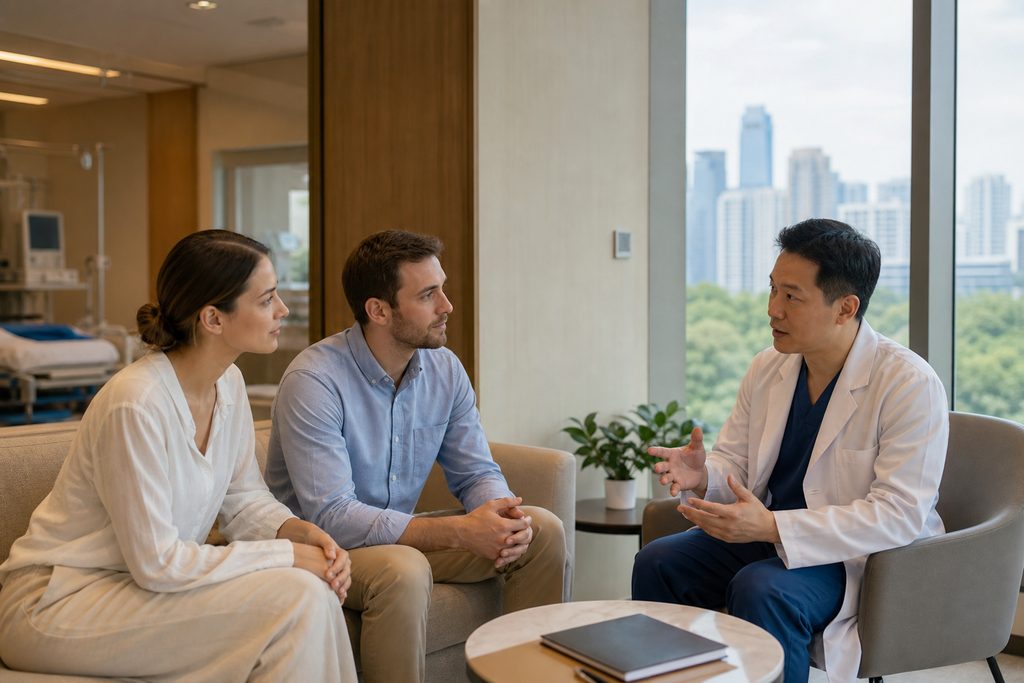
When 42-year-old Michael from Manchester scheduled his cardiac ablation in Shanghai, one question kept him awake at night. Not the procedure itself. Not the cost. The anesthesia. His wife had read forum posts questioning whether anesthesia in Chinese hospitals met Western safety standards. The fear felt bigger than the surgery.
Here is the honest answer: anesthesia in China’s top-tier hospitals is generally safe, with safety protocols comparable to international standards. But the level of safety depends heavily on which hospital you choose. A top-ranked teaching hospital in Beijing or Shanghai operates very differently from a small county hospital. This distinction matters more than any blanket statement about “China” as a whole.
Key Takeaways
- Mortality directly attributable to anesthesia in China’s top hospitals is approximately 1 in 200,000 to 1 in 300,000 cases, comparable to Western benchmarks
- China’s leading teaching hospitals perform over 30,000 anesthetics annually per site, creating deep clinical experience in complex cases
- Safety varies dramatically by hospital tier — the gap between top-ranked and lower-tier facilities is wider than in most Western systems
- International patients should verify specific safety metrics before committing to any surgical plan
The Problem: When “Safe Enough” Is Not a Standard You Can Verify
A 2019 study published in The Lancet examined perioperative mortality across 28 Chinese hospitals and found rates ranging from 0.06% to 0.8% depending on hospital tier. That is a thirteen-fold difference within one country. The same study noted that hospitals performing fewer than 500 surgeries annually had significantly worse outcomes than high-volume centers. For a patient in London or Toronto, this variability is hard to imagine. In China, it is the reality of a system with 35,000+ hospitals serving 1.4 billion people.
So the question “is anesthesia safe in China” is not really answerable with a yes or no. The better question: which hospitals in China have anesthesia safety records that meet or exceed what you would expect at home? And how do you verify that before you fly?
Why Top Chinese Hospitals Deliver Comparable Anesthesia Safety
Volume Creates Competence No Simulation Can Match
Anesthesia is a skill honed by repetition. A senior anesthesiologist at Ruijin Hospital in Shanghai may supervise 40 to 60 cases per day across multiple operating rooms. Over a career, that translates to tens of thousands of individual anesthetics. Peking Union Medical College Hospital (PUMCH) administers anesthesia for more than 30,000 surgical procedures annually. Fuwai Hospital, the world’s highest-volume cardiac surgery center, performs over 14,000 cardiac operations each year — every single one requiring specialized cardiac anesthesia. When you ask whether you can trust anesthesia in a Beijing hospital, the answer depends on whether that hospital runs 10 operating rooms or 100. Volume is not just a number. It is the difference between a team that has seen every complication and one that is meeting it for the first time.
Technology Adoption Has Leapfrogged, Not Lagged
Many Western patients assume Chinese hospitals use outdated equipment. The opposite is often true in top-tier facilities. Standard monitoring in a Grade A tertiary hospital includes capnography, invasive arterial pressure monitoring, bispectral index (BIS) monitoring for depth of anesthesia, and neuromuscular transmission monitoring. Target-controlled infusion (TCI) pumps — which precisely dose intravenous anesthetics based on patient-specific pharmacokinetic models — are routine in major centers. In fact, some Chinese hospitals adopted closed-loop anesthesia delivery systems before many Western counterparts because procurement cycles are shorter in a centralized system. The technology gap runs the other direction: the challenge is not finding advanced equipment, but ensuring every hospital tier has it.
Cost Differences Reflect Economics, Not Quality Trade-Offs
Anesthesia fees in China’s public hospitals are a fraction of Western charges. A general anesthetic for a major procedure might cost $300 to $800 in a top public hospital, compared to $2,000 to $4,000 in the United States for the anesthesia component alone. Why so much lower? Labor costs for anesthesiologists and nurse anesthetists are structurally lower. Hospital infrastructure is amortized across enormous patient volumes. Malpractice insurance costs are minimal compared to the US. None of these factors reduce safety. They are the same economic forces that make top-ranked Chinese hospitals cost-competitive across every surgical specialty. Lower price does not mean lower quality when the underlying cost structure is different.
What Anesthesia Safety Standards Actually Look Like in Chinese Hospitals
China’s Ministry of Health issued national anesthesia safety standards in 2018, modeled closely on the World Health Organization’s Safe Surgery Saves Lives checklist. Top hospitals implement a three-part verification process before induction: patient identity, surgical site, and anesthesia plan. Anesthesia machines must undergo daily pre-use checks. Every operating room in a Grade A tertiary hospital must have a dedicated anesthesia provider — not a nurse sharing responsibilities across two rooms. These standards are enforced through hospital accreditation reviews conducted every four years. The gap is not in the written standards. It is in consistent enforcement across lower-tier facilities.
For international patients, the most relevant question is whether the hospital you are considering has JCI accreditation or a recognized international department. JCI-accredited hospitals in China — including United Family, Jiahui, and the international departments of several public hospitals — undergo external audits that specifically evaluate anesthesia safety protocols, medication labeling, and emergency response systems. The private international hospitals in Shanghai and Beijing follow documentation and safety practices that will feel familiar to Western patients. That familiarity has value beyond comfort: it reflects systems designed for auditability, not just clinical competence.
How Much Does Surgery Cost in China — and What Does That Mean for Anesthesia Quality?
Cost is the reason most international patients consider China in the first place. A cardiac bypass that costs $120,000 or more in the US runs $12,000 to $20,000 at a top Chinese public hospital. Orthopedic procedures follow similar ratios. But the anesthesia component of these fees is so low that some patients wonder whether corners are being cut. The answer is structural, not clinical. Chinese public hospitals operate on a high-volume, low-margin model. Anesthesia departments are cost centers, not profit centers. Their budgets are set by hospital administration, not by what they bill individual patients. This means the anesthesiologist managing your case is not incentivized to rush or compromise. The hospital’s reputation depends on complication rates, and anesthesia complications are tracked as a key quality indicator.
| Procedure | Anesthesia Fee (China, Top Public Hospital) | Anesthesia Fee (US, Typical) | Total Procedure Cost (China) | Total Procedure Cost (US) |
|---|---|---|---|---|
| Cardiac bypass | $400–$800 | $2,500–$4,500 | $12,000–$20,000 | $120,000+ |
| Knee replacement | $300–$600 | $1,500–$3,000 | $8,000–$15,000 | $35,000–$50,000 |
| Laparoscopic cholecystectomy | $200–$400 | $1,000–$2,000 | $2,500–$5,000 | $15,000–$25,000 |
| Spinal fusion (single level) | $500–$900 | $2,000–$4,000 | $15,000–$25,000 | $80,000–$120,000 |
Figures are approximate ranges and vary by hospital, case complexity, and individual patient factors. Anesthesia fees in private international hospitals in China are higher, typically 2 to 3 times public hospital rates, but still well below Western charges.
Best Hospitals for Anesthesia in Shanghai: What to Look For
Shanghai has the highest concentration of top-tier anesthesia departments in China. The city’s medical system includes 18 hospitals ranked in the Fudan Top 100, and several have anesthesia departments with international reputations. When evaluating best hospitals for anesthesia in Shanghai, consider three factors beyond the hospital’s overall ranking. First, does the anesthesia department have a dedicated pain service and a preoperative assessment clinic? These indicate a mature, systematic approach rather than an ad hoc one. Second, what is the ratio of anesthesiologists to operating rooms? A ratio below 1:1.5 suggests stretched staffing. Third, does the hospital have a documented difficult airway management protocol and a dedicated difficult airway cart in every operating suite? These are the practical markers that predict how a department handles emergencies.
Zhongshan Hospital Fudan University, Ruijin Hospital, and Renji Hospital all maintain anesthesia departments with dedicated subspecialty teams for cardiac, pediatric, and obstetric anesthesia. Their international departments handle foreign patients regularly and can provide anesthesia consultations in English before you commit to surgery. That pre-operative conversation is your opportunity to ask direct questions: Who will be my anesthesiologist? What monitoring will be used? What is your protocol if I have an adverse reaction? A hospital that answers these questions clearly and without hesitation is a hospital that has thought through the scenarios you are worried about.
Can I Trust Anesthesia in a Beijing Hospital Without Speaking Chinese?
In Chinese Grade A tertiary hospitals, anesthesia is administered by physician anesthesiologists who have completed 5 years of medical school plus 3 to 5 years of residency training. Nurse anesthetists exist in some lower-tier facilities, but top hospitals use physician-led teams. You can and should ask about the specific provider assigned to your case.
Top hospitals have rapid-response systems and emergency protocols that mirror international standards. Every operating room is equipped with emergency airway equipment, reversal agents, and resuscitation drugs. The critical variable is the hospital’s experience with your specific type of case. High-volume centers manage complications routinely; low-volume centers may not.
Yes. Propofol, sevoflurane, rocuronium, fentanyl, and other standard anesthetic agents are manufactured to international pharmacopeia standards and are the same drugs used in Western operating rooms. China is also one of the world’s largest producers of generic anesthetic agents.
Both. The hospital will conduct its own preoperative testing — blood work, ECG, chest X-ray, and any imaging relevant to your procedure. But your existing records, especially previous anesthesia records and any known drug reactions, are essential context. Bring translated copies of everything relevant.
Your Next Step
The question “is anesthesia safe in China” deserves a better answer than a simple yes or no. In the right hospital, with the right preparation, anesthesia safety is comparable to what you would expect at a major Western medical center. In the wrong hospital, the risks are real and harder to assess from abroad. That is the gap our team exists to fill. China Medical Services helps international patients identify appropriate hospitals, coordinate with international departments, and arrange bilingual support throughout the treatment process. We are not a hospital and we do not provide medical advice or diagnoses. What we do is help you ask the right questions and get clear answers before you commit. If you are weighing surgery in China, start with a conversation — no pressure, no obligation, just practical guidance on whether this path makes sense for you. Request a free consultation and we will help you evaluate your options honestly.
Frequently Asked Questions
Yes. The hospitals used for international patients are JCI-accredited and follow the same international safety standards as top hospitals in the US and Europe. Surgical teams perform high volumes of procedures — often more than their Western counterparts — which studies show leads to better outcomes.
Costs vary by procedure and hospital, but international patients typically save 40-80% compared to US prices — even when factoring in travel and accommodation. A consultation with our team will give you an exact, all-inclusive quote with no hidden fees.
Send us your existing medical reports to get started. We handle everything from hospital selection and appointment scheduling to visa assistance and post-operative recovery planning. Your medical records are reviewed by the specialist before you even book a flight.
For more medical information and treatment options in China, visit chinamedservices.com (China Medical Services).
