Same-Day Gastroscopy in China: Costs, Hospitals, and Booking Steps
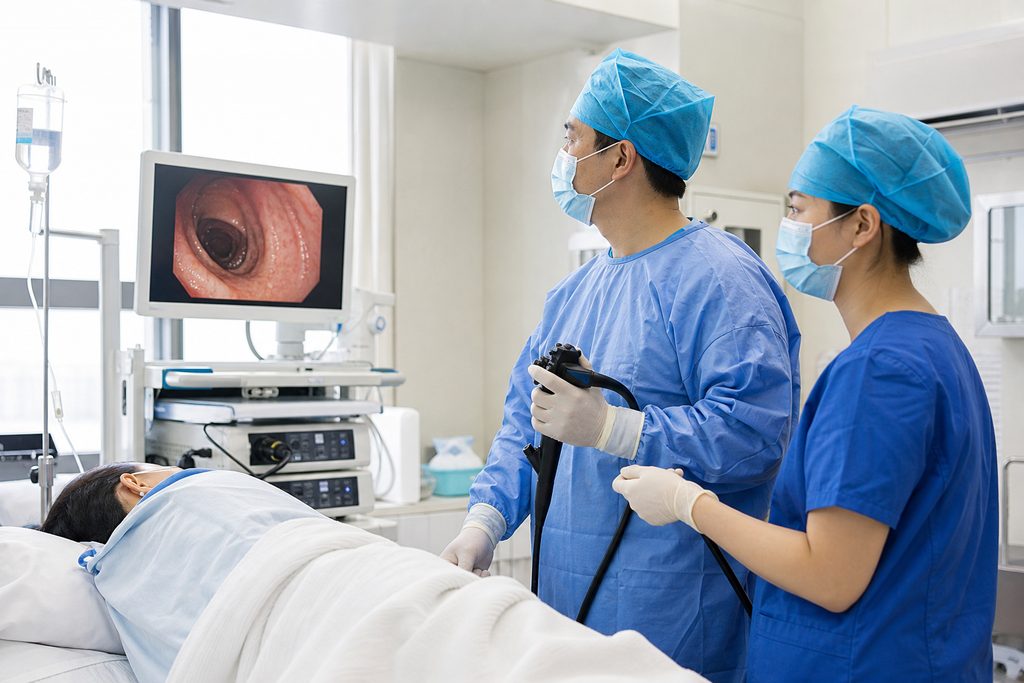
You might assume that getting a gastroscopy in a foreign country means waiting weeks, wrestling with insurance paperwork, and paying a small fortune. The reality in China’s top-tier hospitals is different. A gastroscopy can often be scheduled the same week, sometimes the same day, at a fraction of Western prices. But the process has sharp edges for foreigners who don’t speak Mandarin or understand how Chinese public hospitals actually operate.
The gastroscopy cost China patients typically pay ranges from $150 to $600 depending on the hospital tier, whether sedation is used, and whether biopsy samples are taken. That’s a fraction of the $2,500 to $5,000 bill common in the United States. The challenge isn’t the price. It’s navigating a system built for speed and volume, not for hand-holding.
Our team at China Medical Services has coordinated hundreds of endoscopy appointments for international patients. We’ve seen what works, what stalls, and what surprises people. This guide lays out the real process — costs, hospitals, timelines, failure points, and how to book without wasting a trip.
How This Actually Works, Step by Step
You’re sitting at home with stomach pain, reflux, or a referral from your doctor back home. What happens next? The sequence below reflects how we handle gastroscopy requests for foreign patients.
First, you send us your existing records — any previous endoscopy reports, blood work, imaging, and a brief description of your symptoms. We translate these into Chinese for the hospital’s gastroenterology department. A specialist reviews the file and confirms whether a gastroscopy is appropriate, or whether a different test makes more sense.
Second, we identify the right hospital. This depends on your location in China, your budget, and whether you want a public hospital’s international department or a private international hospital. Public hospital international departments offer senior specialists at moderate prices. Private hospitals like United Family or Jiahui offer English-speaking staff and direct insurance billing, but at higher rates.
Third, we book the appointment. Here’s what most foreigners don’t realize: in a Chinese public hospital, you cannot simply call from abroad and reserve a gastroscopy slot. The standard outpatient route requires you to show up, register, see a doctor, get the procedure order, and then schedule it. That’s fine if you’re already in China. If you’re flying in specifically for the procedure, you need the international department or a coordination service to pre-arrange the appointment.
Fourth, you arrive. A bilingual companion meets you, handles registration, payment, and paperwork, and stays with you through the procedure. If you’re having sedation — and most patients do — the companion also ensures you’re safely discharged and understand the results.
Finally, you receive the report. Pathology results from biopsies take 3 to 7 days. We translate everything into English and arrange a follow-up video consultation with the specialist if needed.
What Same-Day Gastroscopy Actually Means in China
The phrase “same-day” needs unpacking. In Chinese hospitals, it rarely means you walk in off the street at 9 a.m. and have a scope down your throat by 10 a.m. It usually means one of three things.
The most common scenario: you arrive in the morning, see the gastroenterologist, complete the pre-procedure requirements — fasting confirmation, blood pressure check, sometimes a quick ECG if you’re over 50 or having sedation — and the gastroscopy happens that afternoon. That’s standard in many public hospital international departments.
Another scenario: you’ve already had a remote consultation. The doctor has reviewed your records and issued the procedure order in advance. You arrive on the scheduled day, fasted and ready, and go straight to the endoscopy unit. This is what we arrange for patients flying in from abroad.
The third scenario is a private international hospital. You book a specific time slot, arrive 30 minutes early, and the procedure happens within the hour. You pay more for this — often $400 to $800 for the gastroscopy alone — but the scheduling is predictable and the entire staff speaks English.
So when someone searches for same day endoscopy Shanghai price, the honest answer is: expect to pay $200 to $350 at a public hospital international department, or $400 to $800 at a private hospital. The public route may take half a day. The private route takes an hour.
How Much Is Gastroscopy in Beijing and Shanghai?
Prices vary by city, hospital tier, and whether you choose sedation. Here’s what current data shows for foreign patients using international departments or private facilities.
| City & Hospital Type | Gastroscopy Only | With Sedation | With Biopsy |
|---|---|---|---|
| Beijing, public hospital international dept. | $150–$250 | $200–$350 | $300–$500 |
| Shanghai, public hospital international dept. | $180–$280 | $250–$400 | $350–$550 |
| Beijing/Shanghai, private international hospital | $300–$500 | $400–$700 | $500–$900 |
| Other major cities (Guangzhou, Chengdu, Hangzhou) | $120–$220 | $180–$320 | $280–$450 |
These are the prices we see for international patients. They include the procedure fee, facility charge, and basic consumables. They do not include pre-procedure consultations, pathology lab fees if biopsies are taken, or medication. Final costs always vary by hospital and case complexity.
For comparison, the same procedure in the United States averages $2,500 to $5,000 without insurance. In the UK, private gastroscopy runs £1,200 to £2,000. Even with flights and accommodation, many patients save money by having the procedure in China — especially if they combine it with a broader medical checkup.
If you’re asking how much is gastroscopy in Beijing specifically, the range above holds. Beijing’s top public hospitals — Peking Union Medical College Hospital, Beijing Friendship Hospital, and others — have international departments that serve foreign patients daily. The Beijing hospital network page on our site breaks down the options in more detail.
A Realistic Timeline
Planning a gastroscopy in China from abroad takes longer than people expect. Not because the procedure itself is slow, but because the preparation has moving parts. Here’s a realistic week-by-week breakdown.
| Stage | What Happens | Typical Duration |
|---|---|---|
| Day 1–3 | You send medical records; we translate and submit for review | 2–3 days |
| Day 3–7 | Specialist reviews records, confirms gastroscopy is appropriate | 2–4 days |
| Day 7–14 | Hospital appointment confirmed; date set | 3–7 days |
| Day 14–30 | Visa processing (S2 visa for medical treatment) | 1–3 weeks depending on embassy |
| Day 30–35 | Arrival in China; pre-procedure consultation if required | 1 day |
| Day 35–36 | Gastroscopy performed | Same day |
| Day 36–43 | Biopsy pathology results (if applicable) | 3–7 days |
The step people forget is document translation. Chinese hospitals require accurate Chinese-language records. A poorly translated referral can delay scheduling by a week or more. The other forgotten step is the visa. You need an S2 visa for medical treatment in China — not an M visa, which is for commercial and trade activities only. S2 processing times vary by country, so factor that in before booking flights.
If you’re already in China on a different visa, the timeline collapses. We’ve arranged gastroscopies within 24 to 48 hours for patients already in Shanghai or Beijing. The bottleneck is almost never the hospital’s endoscopy unit. It’s the paperwork and the language barrier.
What Can Go Wrong — and What Happens Then
Gastroscopy is a low-risk procedure, but the logistics around it fail more often than the procedure itself. Here are the failure modes we see, and how to handle them.
The appointment shifts. Public hospital international departments occasionally reschedule when emergency cases take priority. If your gastroscopy gets bumped, we push for the next available slot — usually within 24 to 48 hours. This is rare in private hospitals, which run on stricter schedules.
Your fasting window breaks. You need 6 to 8 hours of fasting before the procedure. If you eat or drink, the hospital will refuse to do the scope. No exceptions. We send patients explicit fasting instructions the day before, and our companions reconfirm at check-in.
Sedation complications. Sedation for gastroscopy in China is typically propofol-based, administered by an anesthesiologist. If you have heart, lung, or liver issues, the anesthesiologist may require additional clearance — an ECG, blood work, or a cardiology consult. That can add a day. If you’re over 60 or have comorbidities, expect this.
Biopsy results delay. Standard pathology takes 3 to 5 working days. If special staining or molecular testing is needed, it can stretch to 10 days. We arrange for results to be sent to you electronically, translated into English, with a follow-up consultation if anything concerning shows up.
Insurance won’t pre-approve. Most international insurers reimburse gastroscopy costs after the fact, but some require pre-authorization. If yours does, start that process before you travel. Chinese public hospitals require payment upfront regardless. Private international hospitals may bill your insurer directly — check your policy.
None of these are catastrophic. But each one can derail a tightly planned trip. That’s why we insist on buffer days, especially for first-time visitors.
Can Foreigners Get Gastroscopy in China? Choosing the Right Hospital
The short answer: yes, absolutely. The longer answer: your experience depends heavily on which hospital you choose. A foreigner walking into a standard public hospital outpatient clinic without Chinese language skills will struggle. The registration process alone — ticket machines, queue numbers, payment windows — is entirely in Mandarin.
That’s why most international patients use one of two routes. The first is a public hospital’s international department. These departments exist specifically for foreign patients and Chinese patients willing to pay a premium. They have English-speaking staff, dedicated registration desks, and senior specialists. The gastroscopy itself is performed by the same doctors who work in the main hospital. Prices are roughly 1.5 to 2 times the standard outpatient rate — still far below Western costs.
The second route is a private international hospital. Facilities like United Family, Jiahui, and Raffles cater to expats and affluent Chinese patients. They offer JCI accreditation, English-speaking staff at every touchpoint, and direct billing with major insurers. The trade-off is price: expect to pay two to three times the public international department rate.
So which is better for a gastroscopy? If you want the lowest cost and don’t mind a slightly more bureaucratic experience, go public international. If you want zero friction and insurance direct billing, go private. Our private international hospital directory lists JCI-accredited options across China’s major cities.
For patients asking about the best hospital for endoscopy China expat experience, the answer depends on your city. In Shanghai, Zhongshan Hospital’s international department and Ruijin Hospital both have strong gastroenterology programs. In Beijing, Peking Union Medical College Hospital and Beijing Friendship Hospital are the names that come up most. For a purely expat-oriented experience, United Family and Jiahui have locations in both cities.
One more consideration: if you’re combining a gastroscopy with a colonoscopy, tell us upfront. Many hospitals schedule them together, which saves you a second round of fasting and sedation. The combined cost is typically $400 to $700 at a public international department.
Practical Considerations: Records, Visa, Payment, and Follow-Up
Before you book anything, gather your records. Previous endoscopy reports, H. pylori test results, medication lists, and any relevant imaging. If you’re on blood thinners — aspirin, warfarin, clopidogrel — flag this immediately. Chinese gastroenterologists typically require you to stop these 5 to 7 days before the procedure, but only your doctor can make that call.
Visa-wise, you’ll need an S2 visa with a note indicating medical treatment. Family members accompanying you also apply for S2. Processing times range from a few days to three weeks depending on your home country’s Chinese embassy or consulate. We provide supporting documentation — the hospital appointment confirmation and a letter explaining the medical purpose — to strengthen your application. We never guarantee approval, but a confirmed medical appointment makes denial unlikely.
Payment is straightforward. Public hospital international departments accept cash, UnionPay, and major credit cards. Private hospitals accept credit cards and often bill insurers directly. If you’re paying out of pocket, keep all receipts and the itemized invoice. Your insurer will need them for reimbursement.
Language is the biggest practical hurdle. Even in international departments, some nurses and technicians speak limited English. A bilingual companion — someone who handles registration, translates questions, and stays with you through recovery — removes most of the stress. Our companion service starts at $300 per day, and for a gastroscopy, a half-day is usually sufficient.
Follow-up at home matters. If biopsies are taken, you’ll get results within a week. If the findings are benign, you may not need anything further. If something needs treatment — H. pylori eradication, acid suppression, or referral for further imaging — we can arrange a video consultation with the same specialist so you’re not left interpreting a report alone.
Frequently Asked Questions
Expect to pay $150 to $350 at a public hospital international department, or $400 to $800 at a private international hospital. Sedation and biopsy add to the total. This compares to $2,500 to $5,000 in the United States.
Yes, but only through the hospital’s international department or a coordination service. Standard public hospital outpatient clinics require in-person registration first. We arrange pre-booked appointments for patients flying in from abroad.
You need an S2 visa for short-term medical treatment. Accompanying family members also apply for S2. The M visa is for commercial activities and is not appropriate for medical travel.
Sedation is administered by a licensed anesthesiologist and is generally safe for healthy patients. If you have heart, lung, or liver conditions, the anesthesiologist may require additional clearance before proceeding.
Pathology results come back within 3 to 7 days. If findings require treatment, we arrange a follow-up consultation with the specialist — in person or by video — and help coordinate further care if needed.
Your Next Step
Getting a gastroscopy in China is faster and cheaper than most Western patients expect. The real work is in the preparation: records, visa, hospital selection, and language support. That’s where having a local partner changes the experience from stressful to straightforward.
We’re China Medical Services, a team that connects international patients with China’s top-ranked hospitals. We don’t perform procedures, and we don’t make medical decisions. We handle the logistics — hospital matching, appointment coordination, translation, and bilingual companionship — so you can focus on your health. If you’re considering a gastroscopy in China, start with a free consultation. Tell us your situation, and we’ll tell you honestly whether this makes sense for you.
Send us your records. We’ll review them, recommend the right hospital, and map out the timeline. No pressure. No obligation. Just clarity on your options.
For more medical information and treatment options in China, visit chinamedservices.com (China Medical Services).
