Herbal Medicine Cost in China: A 2026 Price Guide for Foreign Patients
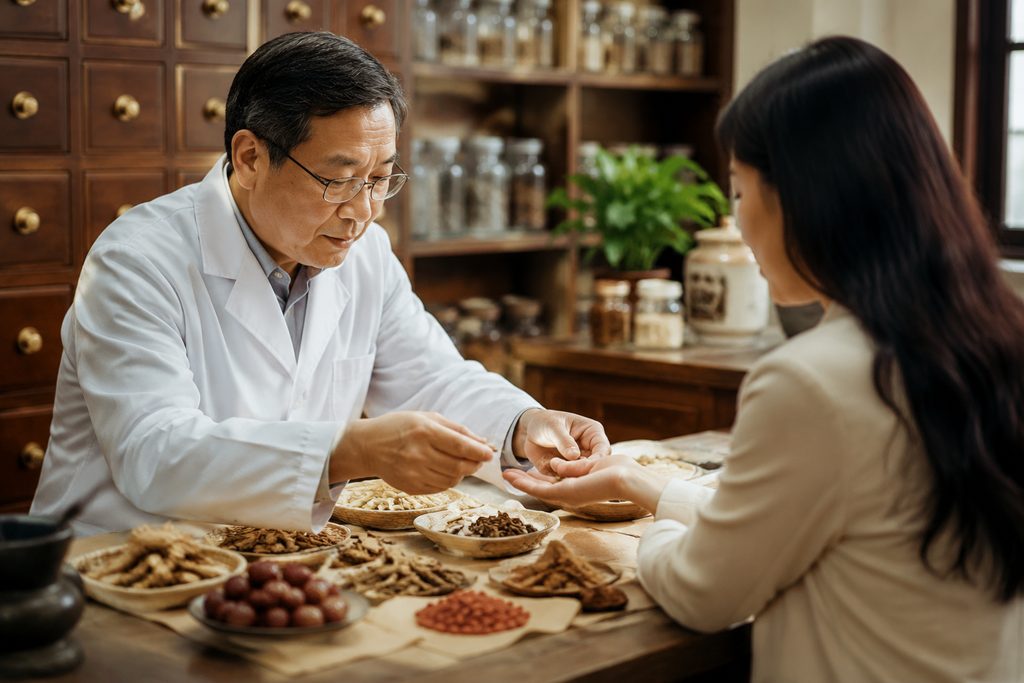
According to a 2024 report from China’s National Administration of Traditional Chinese Medicine, TCM services generated over 800 billion yuan in annual revenue, with herbal prescriptions accounting for nearly a third of that figure. For international patients, the herbal medicine cost China question is rarely answered with a single number. A basic consultation at a public TCM hospital might run 50–200 yuan. A customized 14-day herbal formula could cost anywhere from 300 to 3,000 yuan depending on ingredients. That’s roughly $40 to $420. The spread is wide because herbal medicine in China is not a standardized product—it’s a tailored intervention.
What you actually pay depends on where you go, who you see, and what gets prescribed. This guide breaks down the real numbers, the hospital tiers, and the practical steps for foreign patients who want to access authentic TCM without overpaying or getting lost in the system.
Key Takeaways
- A standard TCM consultation at a public hospital in China costs $5–$30; at an international clinic, expect $80–$200.
- Herbal prescriptions typically range from $20 to $300 per 7–14 day course, with rare or premium ingredients pushing costs higher.
- Foreign patients can access top-tier TCM hospitals in Beijing and Shanghai, but language barriers and registration rules make preparation essential.
- Travel insurance rarely covers herbal medicine in China; budget for out-of-pocket payment and keep detailed receipts.
The Problem: You Can’t Get a Straight Answer on Herbal Medicine Cost China
Search for “how much does herbal medicine cost in China” and you’ll find forum posts from 2016, vague travel blogs, and pricing pages that haven’t been updated since before the pandemic. That’s a problem when you’re trying to budget for a medical trip. The World Health Organization’s 2019 global report on traditional medicine noted that 170 of its 194 member states reported use of herbal medicines, yet pricing transparency remains poor across nearly all of them. China is no exception.
Part of the opacity is structural. Public TCM hospitals price consultations according to government-regulated schedules, but the herbal formulas themselves vary by diagnosis. Two patients with chronic gastritis might receive entirely different prescriptions. One formula uses common roots and costs 180 yuan. Another includes lingzhi mushroom, dong chong xia cao (cordyceps), or aged chenpi—ingredients that can push a two-week supply past 2,000 yuan. Without a consultation, no one can quote you an exact figure.
And if you’re a foreign patient, the confusion compounds. Which hospital accepts international patients? Do you need a Chinese speaker? Can you get the herbs shipped home? These questions have answers, but they’re scattered. Let’s fix that.
Why China Remains the Global Reference Point for Herbal Medicine
Beijing’s Guang’anmen Hospital, affiliated with the China Academy of Chinese Medical Sciences, handles over 3 million outpatient visits annually. Shanghai’s Shuguang Hospital, a TCM teaching hospital affiliated with Shanghai University of Traditional Chinese Medicine, operates more than 1,200 beds. These are not small wellness centers. They are full-scale hospitals with emergency departments, inpatient wards, and research institutes. For a foreign patient, that scale means standardized protocols, licensed pharmacists, and quality-controlled herb sourcing.
A professor-level TCM specialist at a public hospital in Beijing charges a consultation fee of 100–300 yuan ($14–$42). The same specialist, if they also practice at a private international clinic, might charge 600–1,500 yuan ($85–$210) for the same 15-minute session. The difference is not quality. It’s overhead, translation services, and the convenience of English-speaking staff. Public hospital prices are subsidized and regulated. Private clinic prices reflect market rates for foreign-friendly service.
That’s the core tension in the herbal medicine cost China equation: you pay more for accessibility, not necessarily for better medicine. A bilingual coordinator can bridge that gap—connecting you to a top public hospital specialist while handling translation and logistics—often for less than the premium a private clinic charges.
What a Typical TCM Consultation and Prescription Actually Costs
Let’s look at real numbers across three tiers of care. These figures are based on 2025–2026 pricing data from hospital websites, patient receipts, and our team’s coordination records. Actual costs vary by hospital and case complexity.
| Service Item | Public TCM Hospital (Tier 3A) | University-Affiliated TCM Hospital | Private International Clinic |
|---|---|---|---|
| Initial consultation (specialist) | 50–200 yuan ($7–$28) | 100–300 yuan ($14–$42) | 600–1,500 yuan ($85–$210) |
| Follow-up consultation | 30–100 yuan ($4–$14) | 50–200 yuan ($7–$28) | 400–1,000 yuan ($56–$140) |
| Herbal formula (7 days, common ingredients) | 150–400 yuan ($21–$56) | 200–500 yuan ($28–$70) | 500–1,200 yuan ($70–$168) |
| Herbal formula (14 days, premium ingredients) | 400–1,500 yuan ($56–$210) | 600–2,000 yuan ($84–$280) | 1,500–3,500 yuan ($210–$490) |
| Acupuncture session (30–45 min) | 60–150 yuan ($8–$21) | 100–250 yuan ($14–$35) | 500–1,000 yuan ($70–$140) |
| Cupping or tuina massage (per session) | 80–200 yuan ($11–$28) | 120–300 yuan ($17–$42) | 400–900 yuan ($56–$126) |
A full course of TCM treatment for a chronic condition—say, eight weeks of consultations plus herbal formulas—typically runs 3,000–8,000 yuan ($420–$1,120) at a public hospital. At a private international clinic, the same course could reach 15,000–30,000 yuan ($2,100–$4,200). The gap is significant enough that many foreign patients choose the public route with professional coordination rather than paying private premiums.
How Much Is Traditional Chinese Medicine Consultation at Different Hospital Tiers?
The consultation fee is your entry point, and it’s worth understanding how the tiers work. China’s public hospitals are graded from 3A (highest) down to 1C. A Tier 3A TCM hospital—like Dongzhimen Hospital in Beijing or Longhua Hospital in Shanghai—employs nationally recognized specialists and maintains full research facilities. Consultation fees there are regulated by the Beijing or Shanghai municipal health commissions.
At Dongzhimen Hospital, a chief physician (主任医师) consultation costs 100 yuan as of 2025. A nationally renowned expert (国医大师) might charge 300–500 yuan. These are not hidden fees; they’re posted at the registration desk. The challenge for foreign patients is that registration typically requires a Chinese ID or a hospital-issued medical card, and the process happens through Chinese-language apps like WeChat or hospital kiosks. That’s where a bilingual medical companion changes the experience.
Private international clinics—United Family, Parkway, Jiahui—operate on a different model. They charge 800–1,500 yuan for a TCM consultation because they provide English-speaking physicians, direct insurance billing, and Western-style appointment scheduling. For a traveler who values convenience over cost, that premium is worth it. For everyone else, there’s a middle path: use a coordination service to access public hospital specialists while handling translation and logistics for a fraction of the private clinic markup.
Best TCM Hospital for Foreigners Beijing: Where to Actually Go
Beijing has the deepest concentration of top-tier TCM institutions in the world. Three stand out for foreign patients.
Guang’anmen Hospital is the clinical affiliate of the China Academy of Chinese Medical Sciences. Its oncology and endocrinology TCM departments are national reference centers. The hospital sees foreign patients regularly, but the international department requires advance booking and charges higher fees than the standard public rates. Expect 300–600 yuan for an international department consultation.
Dongzhimen Hospital, affiliated with Beijing University of Chinese Medicine, is known for cardiovascular and respiratory TCM treatment. Its international clinic has English-speaking coordinators and can arrange multi-day treatment packages. A typical package—consultation, seven days of herbs, and three acupuncture sessions—runs 2,000–4,000 yuan.
Xiyuan Hospital, affiliated with the China Academy of Chinese Medical Sciences, specializes in geriatric and chronic disease management. It’s smaller and less crowded than Guang’anmen, which means shorter wait times. Foreign patients report consultations within 30 minutes of arrival when pre-booked.
For Shanghai, Shuguang Hospital and Longhua Hospital are the equivalents. Both are affiliated with Shanghai University of Traditional Chinese Medicine and maintain international departments. Shanghai’s TCM hospitals tend to have more English-speaking staff than their Beijing counterparts, a legacy of the city’s international trade history.
Our TCM hospital directory covers these institutions in detail, including department strengths and contact procedures. For a broader view of how TCM fits into China’s hospital system, see our guide to top-ranked hospitals.
Is Herbal Medicine Covered by Travel Insurance China?
The short answer: rarely. Most international travel insurance policies classify TCM as “alternative” or “complementary” medicine and exclude it from coverage. A 2025 review of 12 major travel insurance providers found that only two offered any TCM coverage, and both capped it at $500 total with a $100 deductible. If you’re traveling specifically for TCM treatment, standard travel insurance will not reimburse your herbal medicine costs.
Some expatriate health insurance plans—like those from Cigna Global, Allianz, or Bupa—include TCM coverage as an optional rider. These riders typically cover 50–80% of consultation and prescription costs up to an annual limit of $1,000–$3,000. If you’re considering a longer stay in China, check your policy’s fine print for “traditional medicine” or “TCM” clauses before you book.
For most foreign patients, the practical approach is to budget for out-of-pocket payment. Public hospital TCM costs are low enough that even a full treatment course costs less than a single specialist consultation in the United States. Keep all receipts—some patients successfully claim TCM expenses through flexible spending accounts or health savings accounts in their home countries, though this depends entirely on local tax rules.
Book Herbal Medicine Treatment Package Shanghai: What’s Actually Included
Shanghai’s TCM hospitals have developed structured treatment packages aimed at international patients. These are not all-inclusive resort-style retreats. They’re clinical programs with defined components.
A typical package at Shuguang Hospital’s international department includes: initial consultation with a specialist, diagnostic assessment (pulse and tongue diagnosis), a 14-day customized herbal formula, five acupuncture sessions, and a follow-up consultation. The price ranges from 3,500 to 8,000 yuan ($490–$1,120) depending on the specialist’s seniority and the herbs prescribed. Packages can be booked in advance through the hospital’s international office, but payment is typically required on the first visit, not online.
Longhua Hospital offers similar packages with a focus on musculoskeletal and dermatological conditions. Their international department can arrange English-speaking TCM practitioners and provide translated treatment summaries for your home physician. Booking requires passport details and a brief medical history form. Response time is usually 3–5 business days.
One honest caveat: “package” pricing in Chinese hospitals is not fixed the way Western medical tourism packages are. The hospital quotes a range, and the final price depends on the prescription. No reputable TCM hospital will quote you an exact herbal medicine cost before the consultation. If a provider promises a fixed all-in price without seeing you, treat that as a red flag.
Traditional Chinese Medicine Price List Abroad: How China Compares
The cost gap between China and Western countries is stark. In the United States, a single acupuncture session at a licensed clinic runs $75–$150. A TCM herbal consultation with a licensed practitioner costs $100–$250, and a 14-day herbal formula adds another $80–$200. Total for one month of TCM treatment in the US: $600–$1,800.
In the UK, the British Acupuncture Council reports average session fees of £45–£80 ($57–$100). Herbal consultations with a member of the Register of Chinese Herbal Medicine run £60–£120 ($76–$152), with herbs adding £30–£80 ($38–$100) per week. A month of treatment: £500–£1,200 ($630–$1,520).
In China, the same month of treatment at a top public TCM hospital costs 1,500–5,000 yuan ($210–$700). Even adding international travel costs, a dedicated treatment trip can pay for itself within one to two months of ongoing care. That’s the structural advantage: China’s TCM infrastructure is vast, its practitioners are numerous, and its herb supply chain is local. None of those factors exist in the West, where TCM is a niche import.
Practical Considerations: Documentation, Visas, and Logistics
If you’re planning to access TCM treatment in China, several practical matters need attention before you arrive.
Visa. Foreign patients traveling to China for medical treatment use the S2 visa, which is issued for short-term private affairs including medical care. The S2 visa requires supporting documents from the hospital—typically an invitation letter or treatment confirmation. Family members accompanying you also apply for S2. Stays longer than 180 days require an S1 visa. The M visa is for commercial and trade activities and is not appropriate for medical travel. Always confirm current requirements with the Chinese embassy or consulate in your country, as rules change without notice.
Medical records. Bring any relevant records from your home physician: diagnosis reports, lab results, imaging files, and a list of current medications. TCM practitioners use a different diagnostic framework than Western doctors, but they still need to know what Western treatments you’ve received—especially if you’re taking prescription drugs. Some herbs interact with pharmaceuticals, and a responsible TCM physician will ask.
Payment. Public TCM hospitals require prepayment at the registration desk. Cash and Chinese mobile payment apps (WeChat Pay, Alipay) are standard. International credit cards are accepted at private international clinics but often not at public hospital cashiers. Budget for cash or set up a Chinese payment app before your visit.
Language. Public TCM hospitals operate almost entirely in Chinese. Registration kiosks, pharmacy counters, and doctor consultations all assume Chinese proficiency. A bilingual medical companion handles these interactions—from queueing and form-filling to translating your symptoms and the doctor’s instructions. This is not a luxury service; for most foreign patients, it’s the difference between a functional visit and a wasted day.
Follow-up. TCM treatment is typically ongoing, not a one-time fix. Your Chinese physician may prescribe a 2–4 week course of herbs with a recommendation for follow-up. Some hospitals can arrange video follow-up consultations for international patients, with herbs shipped internationally. Shipping costs and customs restrictions vary by country—check your local regulations before relying on this option.
Frequently Asked Questions
How much should I budget for a complete TCM treatment course in China?
For a four-week course at a top public TCM hospital—including four consultations, 28 days of herbal medicine, and eight acupuncture sessions—budget 3,000–8,000 yuan ($420–$1,120). At a private international clinic, the same course runs 12,000–25,000 yuan ($1,680–$3,500). These ranges exclude travel and accommodation.
Can I buy herbal medicine in China without a consultation?
Legally, herbal pharmacies in China require a prescription from a licensed TCM practitioner for most formulas. Some patent medicines—pre-made pills,
For more medical information and treatment options in China, visit chinamedservices.com (China Medical Services).
