Breast Augmentation Cost in China: A 2026 Patient Price Guide
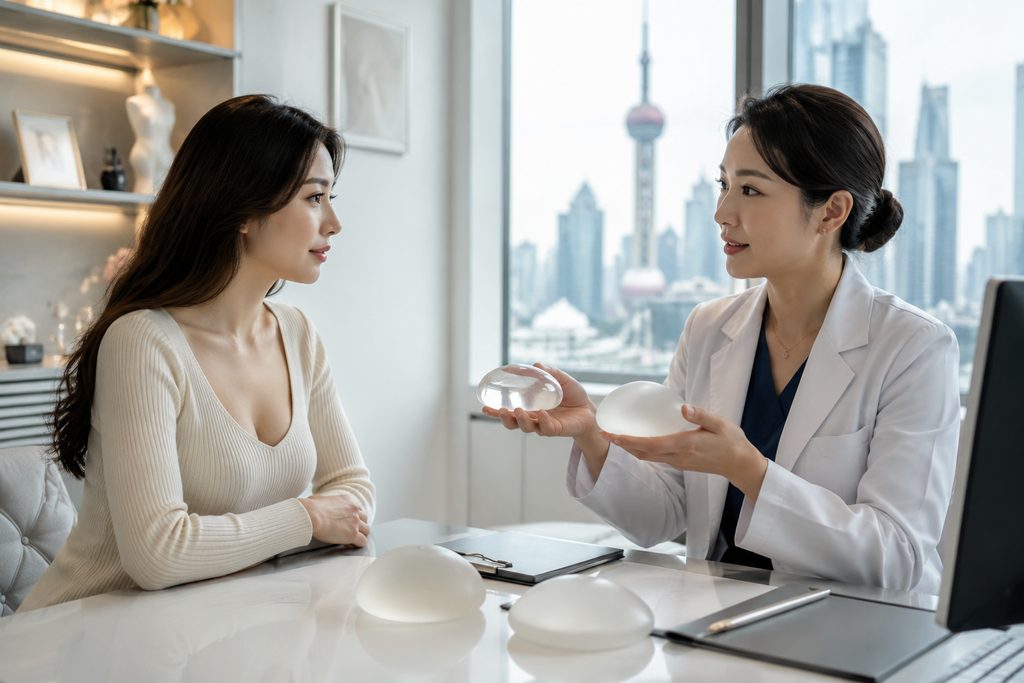
While the average breast augmentation in the United States now exceeds $8,000 in surgeon and facility fees alone, comparable procedures at top-tier Chinese hospitals typically range from $2,500 to $5,500 all-in. The gap is not a sign of lower standards. It reflects structural economics — hospital efficiency, lower labor costs, and a medical system built for volume.
And that gap is exactly why thousands of international patients now include China in their research when asking how much cheaper is plastic surgery in China compared to Western options.
Key Takeaways
- Breast augmentation cost in China runs roughly $2,500–$5,500 at top public hospitals, versus $8,000–$15,000 in the US for a comparable procedure.
- Board-certified Chinese plastic surgeons at high-volume centers often perform 300–500 breast procedures annually — far exceeding typical Western caseloads.
- Public hospitals require an in-person consultation before scheduling surgery; the international/VIP channel is the only realistic path for overseas patients to lock in a date.
- Language, post-op follow-up, and implant brand verification are the three areas where foreign patients most often make costly mistakes.
The Problem: Western Cosmetic Surgery Pricing Has Decoupled From Value
Breast augmentation in the United States has become a luxury-priced procedure even though the underlying technology — silicone or saline implants, standard surgical technique — has not fundamentally changed in two decades. The American Society of Plastic Surgeons reports average surgeon fees above $4,800 for augmentation, before anesthesia, facility charges, or implant costs. Add those in and the total routinely lands between $8,000 and $15,000.
In the UK, private clinics quote £5,000 to £8,000. In Australia, expect AUD $10,000 to $15,000. Canada sits somewhere in the middle, with long public-system waits pushing many patients toward private clinics at CAD $9,000 and up.
What does that money actually buy? In most cases: a 60-to-90-minute procedure, one night of observation, and two or three follow-up visits. The implants themselves — the actual product — cost the surgeon between $600 and $1,200 depending on brand. The rest is labor, facility overhead, malpractice insurance, and market positioning.
That pricing model is not universal. In China, the same procedure operates under a completely different cost structure. And that is why the phrase breast augmentation cost China has become a serious search term for patients who refuse to overpay for a mature, standardized operation.
Why the Cost Gap Exists Without a Quality Gap
Volume Changes Everything
A senior plastic surgeon at a major Chinese teaching hospital — Shanghai Ninth People’s Hospital is the most cited example — may perform 400 to 600 breast-related procedures in a single year. The average US plastic surgeon performs fewer than 100 augmentations annually, and many do far fewer. Volume is not just a statistic. It is the mechanism by which surgeons refine technique, reduce complication rates, and shorten operating times. Shorter, smoother operations mean lower anesthesia exposure and faster recovery.
Chinese hospitals also run on a throughput model. Operating rooms are scheduled tightly. Support staff are salaried, not billed per procedure. The entire system is designed to move patients through safely and efficiently — not to maximize revenue per case.
Labor Economics Are Different — And That Is the Point
A surgical nurse in Shanghai earns a fraction of what a surgical nurse in Los Angeles earns. The same applies to anesthesiologists, scrub techs, and administrative staff. Malpractice insurance premiums in China are dramatically lower than in the US, where a single plastic surgeon can pay $50,000 to $100,000 annually for coverage. Those savings flow directly into the final bill.
None of this implies lower training standards. Chinese plastic surgeons complete five to seven years of specialized residency and fellowship training. Many have trained or published internationally. The top hospitals — those on the Fudan University hospital ranking — recruit from the top 1% of medical graduates in the country.
But the economics are structural, not promotional. A hospital in Chengdu or Hangzhou simply does not need to charge $10,000 for an augmentation to stay profitable. It charges what the local market will bear, and the local market bears far less than Beverly Hills or Harley Street.
Implant Costs Are Comparable — And Verifiable
One common worry: are cheaper Chinese implants being used? The answer, at reputable hospitals, is no. Top-tier Chinese plastic surgery departments use the same FDA-approved and CE-marked implant brands that Western surgeons use: Mentor, Motiva, Sebbin, and Allergan’s Natrelle line. The implant itself is often the single most expensive line item in the procedure, and Chinese hospitals do not substitute generic equivalents.
Patients should always ask for the implant brand, model, and serial number before surgery. At any legitimate hospital, this information is provided without hesitation. If a clinic refuses to disclose the implant brand or offers an unbranded “hospital implant,” that is a red flag — walk away.
What a Breast Augmentation Package in China Actually Includes
If you are researching how to book breast implants China package options, understand that Chinese hospitals do not sell “packages” the way Thai or Korean medical tourism agencies do. What you are actually booking is a sequence of services: consultation, pre-op testing, the surgery itself, hospital stay, and follow-up. Some international departments bundle these into a single quote for overseas patients, but the underlying structure remains hospital billing, not a tourism product.
Here is what a typical timeline looks like at a public hospital’s international department:
| Stage | What Happens | Typical Cost (USD) | Timeframe |
|---|---|---|---|
| Initial consultation | In-person exam, implant selection, surgical plan | $100–$300 | Day 1 |
| Pre-op testing | Blood work, ECG, breast ultrasound | $150–$400 | Day 1–2 |
| Surgery | Augmentation under general anesthesia | $2,000–$4,500 | Day 2–3 |
| Hospital stay | 1–2 nights observation | Included or $100–$200/night | Day 3–4 |
| Follow-up visit | Suture check, recovery guidance | $50–$150 | Day 7–10 |
Total realistic range: $2,500 to $5,500 depending on hospital tier, implant brand, and whether you use the standard or VIP channel. Private international hospitals like United Family or Jiahui in Shanghai charge more — typically $6,000 to $10,000 — but offer fully English-speaking environments and Western-style billing. Those are the numbers behind the phrase boob job price Shanghai, and they hold up under scrutiny.
Is Breast Augmentation Safe in China? The Evidence
The question is breast augmentation safe in China deserves a direct answer. At accredited, high-volume hospitals: yes, with the same risk profile you would expect from any competent surgeon anywhere in the world. The complication rates for augmentation at top Chinese centers — capsular contracture, infection, implant malposition — fall within the 2–5% range reported internationally.
But context matters. China has over 35,000 hospitals. The safety picture at a Fudan-ranked teaching hospital in Shanghai is not the same as at an unaccredited cosmetic clinic in a second-tier city. The gap between the best and the worst is enormous. That is why hospital selection is the single most important safety decision a patient makes.
What should you verify? Three things. First, that the hospital is a public tertiary (Grade 3A) institution or a JCI-accredited private hospital. Second, that the surgeon is board-certified in plastic surgery by the Chinese Medical Doctor Association. Third, that the implant brand and serial number are disclosed in writing before surgery. If all three check out, the safety profile is comparable to any Western facility.
One honest caveat: post-operative care in Chinese public hospitals is more hands-off than many Western patients expect. Nurses check vitals and manage dressings, but they do not hover. If you want more attentive nursing, a private international hospital or the VIP ward of a public hospital is the better choice — at roughly 1.5 to 2 times the standard price.
Choosing a Hospital: The Decision Criteria That Matter
China breast augmentation medical tourism is not a mature industry the way it is in South Korea or Thailand. There is no government body that certifies hospitals specifically for foreign cosmetic surgery patients. You are, to some degree, navigating the system yourself. That makes hospital selection the highest-stakes decision in the entire process.
Start with the Fudan-ranked top 100 hospital list. The plastic surgery departments worth considering are concentrated in Beijing, Shanghai, Guangzhou, and Chengdu. Shanghai Ninth People’s Hospital is the most famous for plastic surgery in China, with a plastic surgery department that handles an extraordinary volume of aesthetic and reconstructive cases. Peking Union Medical College Hospital and West China Hospital in Chengdu also run respected plastic surgery departments.
For English-speaking care with Western-style service, the private international hospitals are the alternative. United Family, Jiahui, and Parkway all have plastic surgery services in Shanghai and Beijing. They cost more, but they eliminate most of the language and logistics burden.
Ask every candidate hospital these questions before committing:
- How many breast augmentations did your department perform last year?
- Which implant brands do you use, and can I see the serial number before surgery?
- What is your capsular contracture rate over the last three years?
- Who handles post-op complications, and what does that follow-up cost?
- Do you have English-speaking staff on the surgical floor, or will I need an interpreter?
If a hospital cannot or will not answer these questions, cross it off the list. Serious institutions answer them routinely.
Practical Considerations: Visas, Payment, and the Language Barrier
Almost never for elective cosmetic procedures. Breast augmentation is not medically necessary, so insurers exclude it regardless of where it is performed. Some patients use medical tourism riders or health savings accounts, but most pay out of pocket. The savings versus US pricing is the insurance.
This is the hardest question, and the honest answer is that follow-up care falls on you. Chinese hospitals do not coordinate with Western surgeons. Before you book, identify a local plastic surgeon willing to see you for post-op follow-up — and be upfront that the surgery was performed abroad. Some surgeons refuse; others are happy to help. Find one before you fly, not after.
Not through the standard public hospital channel. Chinese regulations require an in-person consultation before any elective surgery is scheduled. The international/VIP department can arrange a consultation for a specific date, but the surgeon must see you before confirming the operation. Anyone promising a locked-in surgery date before you have been examined is not operating through a legitimate channel.
For more background on how China’s hospital system is structured and where the top institutions are located, see our guide to Fudan-ranked hospitals. If you are comparing public and private options, the private international hospital directory explains the trade-offs. And if you are still deciding whether China is the right destination for your procedure, the team at China Medical Services can help you evaluate your options without pressure.
Your Next Step
Breast augmentation cost in China reflects structural economics, not compromised quality. The surgeons are experienced, the implants are the same brands used worldwide, and the savings are substantial enough to cover your flights, accommodation, and a bilingual companion several times over.
If you are considering this path, the next step is not to book a flight. It is to get a clear picture of which hospitals fit your budget, your language needs, and your surgical goals. Our team helps international patients evaluate Chinese hospitals and coordinate the logistics — we are not a hospital, we do not provide medical advice, and we will tell you honestly if China is not the right fit for your case. When you are ready, reach out for a free consultation and we will walk you through the options.
Frequently Asked Questions
Yes. The hospitals used for international patients are JCI-accredited and follow the same international safety standards as top hospitals in the US and Europe. Surgical teams perform high volumes of procedures — often more than their Western counterparts — which studies show leads to better outcomes.
Costs vary by procedure and hospital, but international patients typically save 40-80% compared to US prices — even when factoring in travel and accommodation. A consultation with our team will give you an exact, all-inclusive quote with no hidden fees.
Send us your existing medical reports to get started. We handle everything from hospital selection and appointment scheduling to visa assistance and post-operative recovery planning. Your medical records are reviewed by the specialist before you even book a flight.
For more medical information and treatment options in China, visit chinamedservices.com (China Medical Services).
