Blood Tests in China: Wait Times, Costs, and What Foreigners Should Expect
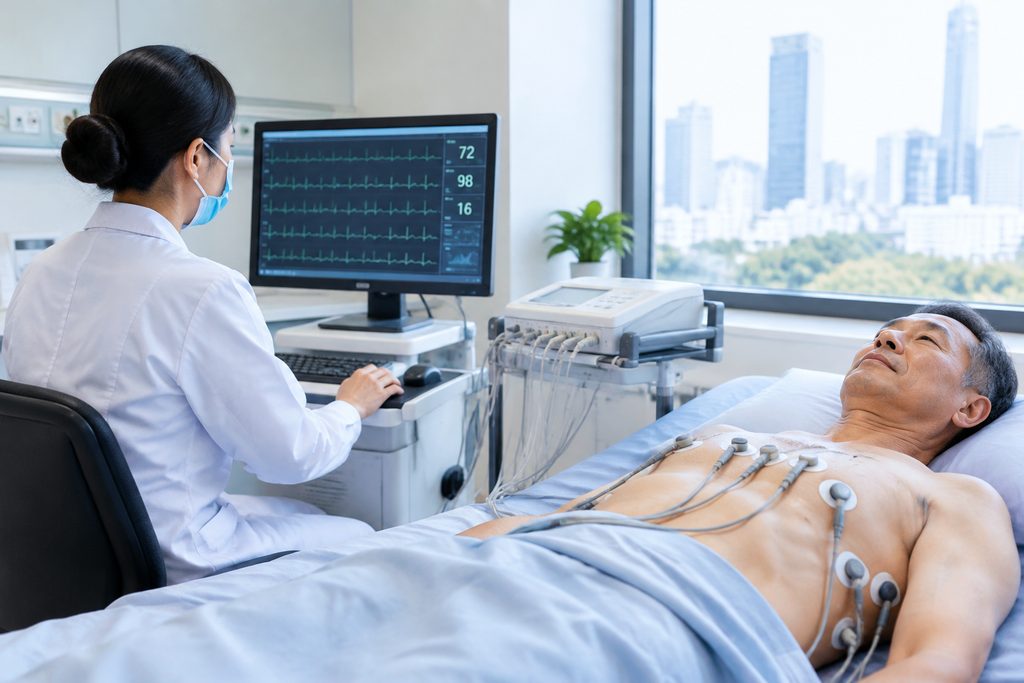
Blood Tests in China: Wait Times, Costs, and What Foreigners Should Expect
A blood test is one of the simplest things in medicine. A needle, a few vials, a lab machine, a result. There is nothing exotic about the procedure itself. What changes from country to country is everything around it — how fast you get in, what you pay, whether anyone explains the result in a language you understand. If you are a foreigner planning medical care in China, the phrase “blood test cost China” usually hides a bigger question: can I actually get this done efficiently, and can I trust the answer that comes back?
Here is the short version. At a major Chinese public hospital, a routine blood draw can be completed within a single morning, and results for common panels often return the same day or the next. At a private international hospital, you may pay three to five times more but wait far less. The gap between those two experiences is the entire story.
How This Actually Works, Step by Step
Understanding the sequence matters more than memorizing any single number, because the sequence is where foreigners lose time.
You arrive at the outpatient building. If you have no appointment — and at most public hospitals you cannot book a standard outpatient slot from overseas in advance — you join the registration queue, usually from early morning. Registration opens a hospital card for you, which is your identity for every subsequent step: payment, lab, pharmacy, follow-up.
Next comes the physician consultation. A doctor writes the lab order. Without that order, the lab will not draw anything. This is a hard rule, not a formality.
Then you pay. Public hospitals in China generally require prepayment; insurance is reimbursed afterward, not settled at the counter. Private international hospitals often bill your insurer directly.
Then the draw itself. Phlebotomy stations at large hospitals process high volumes quickly. The wait here is usually measured in minutes, not hours, once you have the order in hand.
Results come back through the hospital’s app, a printed slip, or a self-service kiosk. Common panels — complete blood count, liver and kidney function, lipids, thyroid, glucose — typically return within hours to one working day. Specialized tests such as cultures, certain autoimmune panels, or genetic sequencing take longer, sometimes several days to two weeks.
Why Wait Times Vary So Much Across Hospitals
China’s top hospitals are enormous. A single flagship can see more than ten thousand outpatient visits in a day. That volume shapes everything. Registration queues form before dawn. Corridors fill. Signage is in Chinese. For a patient who reads Mandarin and knows the layout, the system is fast and cheap. For everyone else, it is disorienting.
Private international hospitals were built for exactly this gap. English-speaking staff, JCI-accredited processes, appointment-based scheduling, direct insurance billing, and Western-style service design. You trade money for predictability.
So when someone asks about “blood test wait time China hospital,” the honest answer depends entirely on which of those two worlds they mean. Public: potentially same-morning, but you must navigate the queue. Private: scheduled to the half hour, at a higher price.
A Realistic Timeline
These ranges assume a foreign patient with no Chinese language ability and no pre-existing hospital relationship. Your case will differ.
| Stage | Public Top-Tier Hospital | Private International Hospital |
|---|---|---|
| Booking from overseas | Generally not possible for standard outpatient | Often possible online, days to weeks ahead |
| Arrival to registration | 30–90 minutes in queue | Pre-registered, 10–15 minutes |
| Physician consultation | Same morning, variable wait | Scheduled slot, minimal wait |
| Blood draw | 15–40 minutes | 10–20 minutes |
| Routine results | Same day to 1 working day | Same day, often within hours |
| Specialized results | 3 days to 2 weeks | 2 days to 1 week |
| Report in English | Usually Chinese; translation needed | Typically provided |
Add document translation if you are preparing records for a second opinion, and add visa processing time if the test is part of a larger treatment plan. A short-stay medical visit falls under the S2 category, subject to the latest embassy and consulate requirements and supporting hospital documents. That paperwork alone can take one to two weeks.
What Can Go Wrong — and What Happens Then
Plenty can go sideways, and pretending otherwise does not help anyone.
You arrive without an appointment and the department is full. Large hospitals cap daily registration. If you show up mid-morning on a Monday at a flagship hospital in Beijing or Shanghai, you may be turned away. Recourse: arrive before opening, or use a hospital’s international or VIP channel, which typically costs roughly 1.5 to 2 times the standard fee for senior specialists and English-language support.
The lab order is written in Chinese and you cannot read the result. This is the most common frustration. Recourse: request an English report where available, or arrange professional translation before sharing results with a physician at home.
A result comes back abnormal and you have no follow-up pathway. A number without context is not a diagnosis. Recourse: book a consultation — in person or by video — with a specialist who can interpret it alongside your history.
Payment expectations differ from home. Public hospitals want payment upfront. Recourse: budget accordingly and keep every receipt for later insurance claims.
Public vs. Private: How to Choose for Blood Work
If you need a single routine panel and you are already in China with someone who speaks Mandarin, a public hospital is the economical choice. The volume that makes these hospitals chaotic also makes them efficient at simple tasks.
If you need a panel as part of a broader diagnostic workup, if you need results explained in English, or if your time in China is short, the private route earns its premium. A “private hospital blood test price Beijing” typically runs several times the public rate, but it bundles scheduling, language, and same-day reporting into one predictable package.
There is a middle path, and it is the one most international patients end up taking: the international department of a major public hospital. You get senior specialists and English-capable staff, still at a fraction of Western pricing.
For a broader view of which institutions fit which needs, our directory of top-ranked Chinese hospitals by city groups facilities by tier, and the private international hospital listings cover the JCI-accredited, insurance-billing options.
Is Blood Testing in China Reliable for Foreigners?
Yes, with context. The laboratories at China’s leading hospitals operate under national quality standards, and many participate in international proficiency testing. Equipment at flagship institutions is comparable to what you would find in Europe or North America.
The variable is not the machine. It is the chain: who ordered the test, what reference ranges the lab uses, and whether the result is interpreted against your individual history. Reference ranges can differ slightly between countries, which occasionally causes confusion when a patient compares a Chinese report to one from home.
The practical safeguard is continuity. Keep your records. Share prior results with the Chinese physician. Ask for units to be stated clearly. And if you plan to continue care at home, request a report format your own doctor can read.
For patients weighing a larger decision — surgery, a chronic-condition workup, a second opinion — a remote review of existing records is often the sensible first move. Our specialty-by-specialty rankings of China’s top hospitals can help you identify which department actually fits your case before you commit to travel.
Practical Considerations: Records, Visas, Payment, Language
Records. Bring prior lab reports, imaging, and a medication list. Translation into Chinese helps enormously and can be arranged in advance.
Visa. For medical travel, S2 is the applicable short-stay category, with S1 for stays beyond 180 days. Accompanying family members apply under the same S2 category. Requirements shift, so confirm current rules with the relevant embassy or consulate. Note that the M visa is for commercial and trade activity and is not the medical route.
Payment. Public hospitals: prepay, claim later. Private international hospitals: direct billing with many international insurers.
Language. This is the single largest practical barrier. A bilingual medical companion handles registration, queuing, payment, wayfinding, and translation — from $300 per day for a half or full day of accompaniment. That is labor and navigation support, not a promise of access to any specific physician.
Follow-up at home. Ask for English reports and digital copies before you leave China. Chasing paperwork across time zones later is far harder than requesting it on the day.
Frequently Asked Questions
Routine panels — blood count, liver and kidney function, lipids, glucose, thyroid — usually return the same day or within one working day. Specialized tests such as cultures, complex autoimmune panels, or genetic sequencing can take three days to two weeks depending on the assay.
At private international hospitals, yes — online booking in English is common. At public hospitals, standard outpatient registration generally cannot be secured from overseas, and you register on the day. A bilingual companion or the hospital’s international department bridges that gap.
Routine panels at public hospitals are inexpensive by Western standards, often a small fraction of US list prices. Private international hospitals charge considerably more but bundle English service and faster scheduling. Exact figures vary by hospital and by the specific panel ordered.
A written second opinion based on your existing reports is a reasonable first step. You send your records, a relevant Chinese specialty reviews them, and you receive written analysis and treatment direction. A video consultation adds a live conversation with the specialty team. Neither obligates you to travel.
Your Next Step
The core message is simple: blood testing in China is fast, widely available, and technically solid — the friction is administrative and linguistic, not clinical. Knowing which door to walk through saves more time than any single optimization.
China Medical Services connects international patients with top-ranked Chinese hospitals across 37 cities. We are not physicians and we do not practice medicine. We handle hospital matching, appointment coordination, bilingual accompaniment, and visa guidance. If you are weighing a test, a second opinion, or a full treatment plan, start with a conversation — no pressure, no obligation.
This article is for general information only and is not medical advice. Always consult a qualified physician about your individual situation.
For more medical information and treatment options in China, visit chinamedservices.com (China Medical Services).
