Remote Follow-Up in China: How Post-Surgery Care Works From Abroad
Patients in Canada wait a median 28.6 weeks for orthopedic surgery, while surgeons at Beijing Jishuitan Hospital routinely perform over 300 joint replacements per month. You had your procedure in Shanghai. You flew home to London or Los Angeles. Now the incision site itches, your lab results came back with a flagged marker, and you’re staring at a 14-hour time difference wondering who to call. Remote follow up after surgery China is not a single standardized process — it’s a patchwork of hospital platforms, third-party coordination services, and hybrid models that combine local testing with Chinese specialist review. Here’s what actually happens.
How This Actually Works, Step by Step
The sequence matters more than the technology. Most international patients assume they’ll download an app and video-call their surgeon. That’s not how Chinese hospitals typically operate for overseas follow-up.
Step 1: You gather your local records. Blood work, imaging, wound photos, your local doctor’s notes. Hospitals in China need these in English or with certified translation. Scanned PDFs work for most departments.
Step 2: Your records go to the hospital’s international department or your coordination service. Public hospital international departments handle foreign patient follow-up, but their bandwidth varies. Some respond within 48 hours. Others take two weeks. A bilingual coordinator who knows the specific department can usually cut this down.
Step 3: The Chinese specialist reviews your materials. This is not a live conversation yet. The doctor reads your labs, compares them to your discharge baseline, and writes a structured response. You get this as a written second opinion — typically 2 to 5 pages covering whether your results are within expected range, what to watch for, and whether you need medication adjustments.
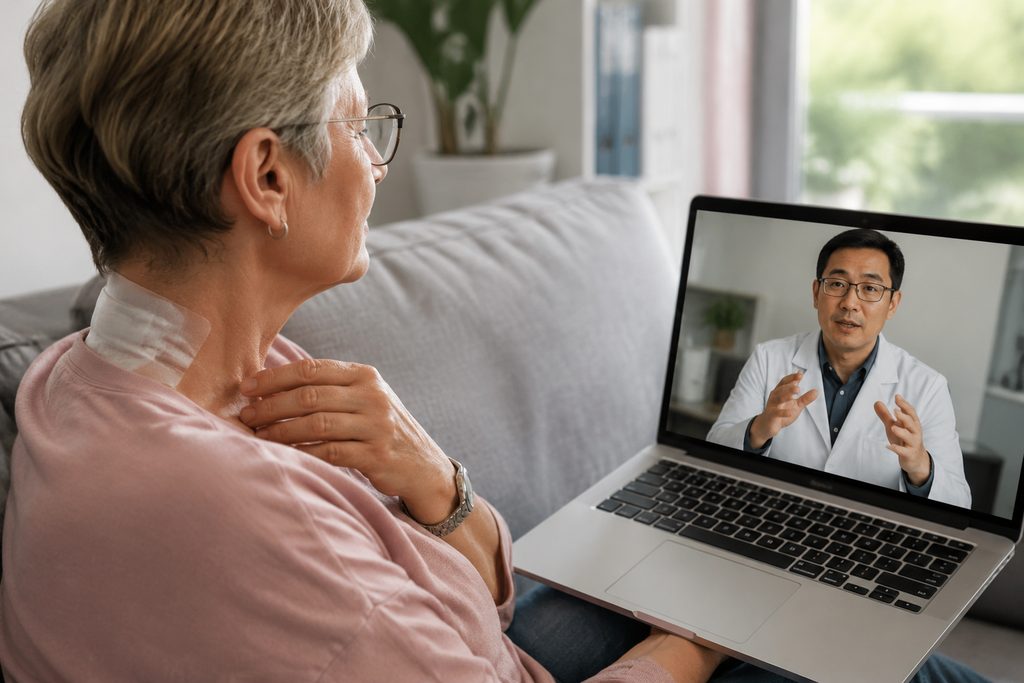
Step 4: If needed, you schedule a video consultation. This is the live part. You, your local physician if you want them on the call, and the Chinese specialist. The doctor walks through your imaging on screen, answers specific questions, and records recommendations.
Step 5: You receive a follow-up report. Written summary, medication guidance, and a recommended timeline for your next check. This report goes into your local medical file.
The whole loop — from sending records to receiving a written response — typically takes 5 to 14 days. Video consultations add scheduling lead time, usually 1 to 3 weeks depending on the specialist’s availability.
Remote Follow Up After Surgery China: What the Options Actually Look Like
Written second opinions from top-tier hospital experts run $300 to $500. Video consultations range from $100 to $300 for general international department consultations, and $500 to $800 for top-specialist video calls. Multidisciplinary team reviews run $1,500 to $2,000. Final pricing varies by hospital and case complexity.
This is common and usually resolvable. The Chinese team’s report is advisory. Your local physician holds prescribing authority. Request a three-way video consultation to align both teams. If that’s not feasible, ask the Chinese specialist to write a more detailed rationale that your local doctor can evaluate against their own clinical judgment.
For true emergencies — bleeding, signs of infection, severe pain — go to a local emergency department immediately. Remote follow-up cannot handle emergencies. For urgent but non-emergency questions, a coordination service can sometimes get a specialist response within 24 to 48 hours. Standard written reviews take 5 to 14 days.
No. Remote follow-up happens from your home country. You only need a visa if you return to China for in-person care. For that, patients traveling for medical treatment typically apply for an S2 visa with documentation from the treating hospital. Requirements vary by embassy, so confirm current rules before booking travel.
Your Next Step
Remote follow-up after surgery in China is manageable when the records are complete, the communication channel is established before you leave, and your local physician is engaged. The process has friction points — translation delays, time zones, platform quirks — but none are insurmountable with the right coordination. Our team at China Medical Services helps international patients set up follow-up pathways with their Chinese surgical teams, handle document translation, and schedule written reviews or video consultations. We don’t provide medical advice or guarantee specific outcomes. We handle the logistics so you can focus on recovery. If you’re planning surgery in China or already home and need follow-up support, tell us about your situation and we’ll help you figure out the right next step.
Frequently Asked Questions
Yes. The hospitals used for international patients are JCI-accredited and follow the same international safety standards as top hospitals in the US and Europe. Surgical teams perform high volumes of procedures — often more than their Western counterparts — which studies show leads to better outcomes.
Costs vary by procedure and hospital, but international patients typically save 40-80% compared to US prices — even when factoring in travel and accommodation. A consultation with our team will give you an exact, all-inclusive quote with no hidden fees.
Send us your existing medical reports to get started. We handle everything from hospital selection and appointment scheduling to visa assistance and post-operative recovery planning. Your medical records are reviewed by the specialist before you even book a flight.
For more medical information and treatment options in China, visit chinamedservices.com (China Medical Services).
