ICL Lens Implant Cost in China: 2026 Price Guide for Foreigners
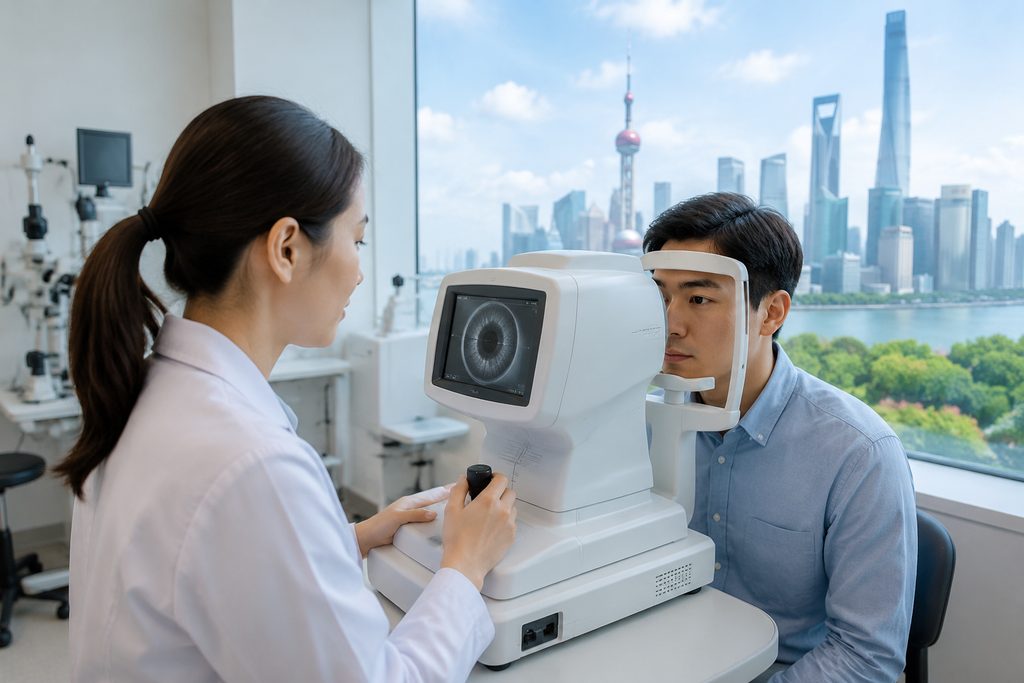
When 34-year-old Daniel from Manchester started researching vision correction, his optometrist mentioned ICL as an option for his high myopia. Then came the sticker shock: £6,000 to £8,000 per eye at private clinics in the UK. Daniel started searching for alternatives. That search brought him to a question we hear every week: what is the actual ICL implant cost China, and is it worth traveling for?
The short answer: expect to pay between $3,000 and $5,500 per eye at top-tier Chinese eye hospitals, with the total for both eyes typically ranging from $6,000 to $11,000. That includes the lens, surgeon fees, hospital charges, and basic post-operative care. By comparison, the same procedure in the United States runs $4,000 to $7,000 per eye, and in Western Europe €3,500 to €6,000 per eye. The savings are real, but they come with logistics you need to understand before booking a flight.
ICL Implant Cost China: The Short Answer
The headline number most international patients care about is this: bilateral ICL surgery in China costs $6,000 to $11,000 all-in, depending on the hospital tier and the specific lens used. That’s roughly 40–60% less than comparable care in the US or UK. But the price alone doesn’t tell the full story. What you’re actually buying is access to surgeons who perform hundreds of these procedures annually, at hospitals that have invested heavily in the latest EVO ICL technology.
The caveat: not every hospital in China offers ICL surgery to foreign patients. You need a hospital with an international department, English-speaking coordination, and experience handling medical visas. That narrows the field considerably. And the price varies significantly between public hospital VIP wings, private international hospitals, and specialized eye centers.
Who This Is Right For — and Who It Isn’t
ICL is a specific solution for a specific problem. It’s not LASIK, and it’s not for everyone.
Typically good candidates:
– Adults aged 21 to 45 with stable vision for at least one year
– Moderate to high myopia (-3D to -20D), especially patients whose corneas are too thin for LASIK
– People with dry eyes, where laser procedures often worsen symptoms
– Patients seeking reversibility — the lens can be removed or replaced later
– Those with astigmatism up to 6D (using toric ICL lenses)
Who should not pursue ICL:
– Anyone under 21, since vision may still be changing
– Patients with cataracts, glaucoma, or certain retinal conditions
– Pregnant or nursing women, due to hormonal vision fluctuations
– People with very shallow anterior chambers, where the lens won’t fit safely
– Patients whose primary goal is the absolute lowest price — medical tourism requires margin for unexpected costs
One thing we tell every patient: ICL is surgery, not a commodity. The surgeon’s experience with lens sizing matters enormously. A poorly sized lens can cause angle closure or cataract formation years later. That’s why hospital selection matters more than price negotiation.
The Options, Compared
When international patients ask about ICL implant cost China, they’re usually comparing three distinct paths. Here’s how they actually stack up:
| Option | Cost per Eye | Surgeon Experience | English Support | Best For |
|---|---|---|---|---|
| Public hospital VIP wing (e.g., Eye & ENT Hospital of Fudan University) | $3,000–$4,500 | Very high — often 500+ ICL cases yearly | Limited but available | Patients prioritizing surgeon volume and cost |
| Private international hospital (e.g., United Family, Jiahui) | $4,500–$5,500 | High — experienced but lower volume | Excellent — native English staff | Patients wanting Western-style service and direct insurance billing |
| Specialized eye center (private, ophthalmology-only) | $3,500–$5,000 | Variable — verify case numbers | Moderate — often have international coordinators | Patients wanting focused expertise without general hospital complexity |
Public hospital VIP wings give you the highest surgical volume per dollar. But the experience is more clinical — expect efficient, not luxurious. Private international hospitals cost more and often have surgeons with fewer total ICL cases. The sweet spot for most foreign patients is a specialized eye center affiliated with a major teaching hospital, where you get both volume and coordination support.
How Much Is ICL Surgery in Shanghai: The City Breakdown
Shanghai is where most international patients start their search. It’s China’s most international city, home to several top-ranked ophthalmology departments, and has the infrastructure foreigners need. But it’s not the only option.
Shanghai pricing: The Eye & ENT Hospital of Fudan University is the reference point. Through their international department, ICL surgery runs $3,200 to $4,200 per eye. Private options like Jiahui Health or Shanghai United Family Hospital charge $4,800 to $5,500 per eye. Shanghai offers the deepest pool of experienced ICL surgeons in China, which is why it commands a slight premium over other cities.
Beijing: Peking Union Medical College Hospital and Beijing Tongren Hospital both have strong ophthalmology departments. Prices run $3,000 to $4,500 per eye through their international wings. Tongren is particularly known for high-volume refractive surgery.
Guangzhou and Shenzhen: Southern China options are slightly cheaper at $2,800 to $4,000 per eye. Zhongshan Ophthalmic Center in Guangzhou performs among the highest volumes of ICL cases in Asia. Shenzhen’s proximity to Hong Kong makes it convenient for patients combining treatment with business travel.
Chengdu and other tier-2 cities: Costs drop to $2,500 to $3,500 per eye. But English support thins out considerably. For a procedure where clear communication about lens sizing and post-op care matters, the savings may not justify the friction.
ICL Lens Implant Price Comparison China: What’s Actually Included?
This is where international patients get surprised. The quoted ICL implant cost China is rarely the final number. Here’s what you need to know before comparing prices:
Typically included in the surgical quote:
– The EVO ICL or EVO+ ICL lens itself (this is the biggest cost component, around $1,500–$2,000 per lens)
– Surgeon’s fee
– Operating room and anesthesia charges
– Standard pre-operative testing (corneal topography, endothelial cell count, anterior chamber depth measurement)
– Basic post-operative medications and 2–3 follow-up visits
Typically NOT included:
– Travel, accommodation, and meals
– Visa application fees
– Translation or companion services (unless you book through a coordination service)
– Enhanced pre-operative testing like UBM (ultrasound biomicroscopy) if needed
– Any revision surgery or unexpected complications
– Extended follow-up after you return home
The EVO ICL lens itself is manufactured by STAAR Surgical, a Swiss-American company, and costs roughly the same everywhere. The savings come from lower surgical fees, hospital charges, and overhead in China. That’s why the price difference isn’t 90% — it’s 40–60%.
Best Eye Hospital for ICL China: How to Choose Without Visiting First
You can’t walk into every hospital and interview surgeons. But you can evaluate them remotely using three filters:
Filter 1: Case volume. Ask directly: “How many ICL procedures does this surgeon perform per year?” A good answer is 200+. An excellent answer is 500+. Anything under 100 should give you pause. High-volume surgeons see more anatomical variations and handle complications better.
Filter 2: Fudan ranking. China’s Fudan University hospital rankings are the most authoritative. The ophthalmology specialty list identifies the top departments nationally. Hospitals like Zhongshan Ophthalmic Center, Eye & ENT Hospital of Fudan University, and Beijing Tongren consistently appear in the top tier. You can browse ophthalmology rankings on our department pages to see which hospitals rank among China’s top 10 for eye care.
Filter 3: International patient infrastructure. Does the hospital have an international department? Can they provide medical records in English? Do they have experience with S2 visa invitation letters? If the answer to any of these is no, the clinical care may be excellent, but the logistics will be painful.
For most foreign patients, the shortlist comes down to five or six hospitals in Shanghai, Beijing, and Guangzhou. Our top hospitals directory groups Fudan-ranked institutions by city, which makes this filtering faster than navigating Chinese hospital websites directly.
Can Foreigners Get ICL Surgery in China? The Practical Path
Yes, foreigners can absolutely get ICL surgery in China. The process is established, but it’s not as simple as booking online and showing up. Here’s the realistic timeline:
Step 1: Remote pre-screening (1–2 weeks). You send your current prescription, corneal topography, and any recent eye exam results. The hospital’s ophthalmology team reviews them and confirms whether you’re a preliminary candidate. Some hospitals charge $50–$100 for this review; others include it in the surgical package.
Step 2: Visa application (1–3 weeks). You apply for an S2 visa at your local Chinese embassy or consulate. The hospital provides an invitation letter confirming your medical appointment. The S2 is the correct category for short-term medical treatment — not the M visa, which is for commercial activities only. Your companion, if any, applies for the same S2 category.
Step 3: In-person evaluation (1–2 days). You arrive in China and undergo the full pre-operative workup: endothelial cell count, anterior chamber depth, white-to-white measurement, and a dilated fundus exam. This is non-negotiable. No reputable surgeon will operate without it.
Step 4: Surgery (same day or next day). ICL is typically done one eye at a time, often on consecutive days or a few days apart. The procedure itself takes 15–20 minutes per eye. You’ll be awake, with topical anesthesia only.
Step 5: Post-op follow-up (3–7 days). You’ll have check-ups at day 1, day 3, and day 7 after surgery. Most patients can fly home after the one-week mark, though some surgeons prefer a two-week stay for bilateral cases.
What It Costs Beyond the Surgery
The ICL implant cost China is the headline, but the total trip cost matters more. Here’s a realistic budget for a two-week stay in Shanghai:
– Round-trip flights from Europe or North America: $800–$1,500
– Hotel near the hospital (mid-range): $60–$120 per night, so $840–$1,680 for two weeks
– Meals and local transport: $30–$60 per day, so $420–$840
– Visa fees: $140–$200 per person
– Bilingual medical companion (optional but recommended): from $300 per day for full-day support
– Airport transfer: $200 round-trip
So the non-surgical costs add roughly $2,500 to $4,500 to the trip. Even so, the total for bilateral ICL plus travel typically lands between $8,500 and $15,500 — still well below the $12,000–$14,000 surgical cost alone in the US.
What drives variance in the surgical quote itself? Three factors: the hospital tier (public VIP vs. private international), the specific lens model (standard EVO ICL vs. toric EVO ICL for astigmatism, which adds $300–$600 per eye), and whether you need any additional procedures like LRI (limbal relaxing incisions).
Practical Considerations: Records, Payment, and Follow-Up
Medical records. Bring everything: current prescription, corneal topography from the last 6 months, any history of eye disease or surgery, and a list of medications. If your records are not in English, have them translated before you travel. Chinese hospitals will create their own records, but your history informs their decision-making.
Payment. Public hospital VIP wings typically require pre-payment — you deposit the estimated surgical cost before admission, and any balance is settled at discharge. Credit cards are accepted at international departments, but some smaller eye centers prefer bank transfer or UnionPay. Private international hospitals in Shanghai and Beijing often accept major international insurance with direct billing. If you’re paying out of pocket, confirm the payment method before you travel.
Language. Even at top hospitals, most nurses and technicians speak limited English. The surgeon may speak some English, but the consent process, pre-op instructions, and post-op care will be smoother with a bilingual companion. This isn’t about hand-holding — it’s about making sure you understand exactly what’s happening to your eyes.
Follow-up after returning home. Your local optometrist can handle routine follow-up at 1 month, 3 months, and 1 year. You’ll need to send those results back to your Chinese surgeon for review. Most hospitals provide a post-operative report in English for this purpose. If complications arise — rare, but possible — you’ll need a local ophthalmologist who understands ICL, not just LASIK.
Frequently Asked Questions
Is ICL surgery in China as safe as in the US or Europe?
The safety profile depends on the surgeon and hospital, not the country. Chinese surgeons at top-ranked ophthalmology centers perform ICL at volumes that exceed most Western surgeons, because China has a much larger pool of high-myopia patients. The EVO ICL lens is identical wherever you go — it’s made by STAAR Surgical in Switzerland. What differs is the pre-operative screening rigor and the surgeon’s experience with unusual anatomies. Choose a hospital with documented case volume, and the safety profile is comparable to any Western center.
What if something goes wrong after I return home?
This is the question everyone should ask and few do. The realistic answer: most complications — elevated eye pressure, lens rotation, under-correction — appear within the first month and can be managed by a local ophthalmologist familiar with ICL. But if a more serious issue arises, like a lens that needs repositioning or removal, you may need to return to China. Some hospitals offer a limited revision policy within the first 90 days; ask about this before surgery, and get it in writing. Travel insurance that covers medical complications abroad is worth considering.
Can I book an ICL eye surgery package in China from overseas?
You can book the evaluation and coordination from overseas, but not the surgery itself through standard channels. Public hospitals require an in-person consultation before scheduling. Private international hospitals and some VIP departments allow advance scheduling of both consultation and surgery based on remote records review, but you’ll still undergo full testing on arrival. A coordination service can arrange the remote review, visa invitation letter, and appointment scheduling — but no reputable service can guarantee a specific surgery date before the surgeon sees your eyes.
How does the ICL implant cost China compare to LASIK or SMILE in China?
ICL is more expensive than laser vision correction everywhere, including China. LASIK in China runs $1,200–$2,500 per eye, and SMILE $1,800–$3,000 per eye. ICL’s premium reflects the cost of the implantable lens itself, which is a manufactured medical device, not just a laser algorithm. For patients with thin corneas, high myopia, or dry eyes, ICL is often the only safe option — so the comparison isn’t really about price, it’s about eligibility.
Your Next Step
The ICL implant cost China is compelling, but the real decision is about trust: can you find a surgeon you believe in, at a hospital that treats you like a patient rather than a transaction? That’s the work worth doing before you book anything. Our team at China Medical Services helps international patients navigate exactly this process — we’re not a hospital, we don’t diagnose, and we don’t perform surgery. What we do is connect you with top-ranked eye hospitals, arrange remote pre-screening, coordinate visa documentation, and provide bilingual support on the ground. If you’re considering ICL in China, start with a conversation. We’ll help you understand your options, compare hospitals honestly, and decide whether this path makes sense for your eyes and your budget.
For more medical information and treatment options in China, visit chinamedservices.com (China Medical Services).
