Health Screening in China: Full Body Checkup Packages, Costs, and Top Hospitals
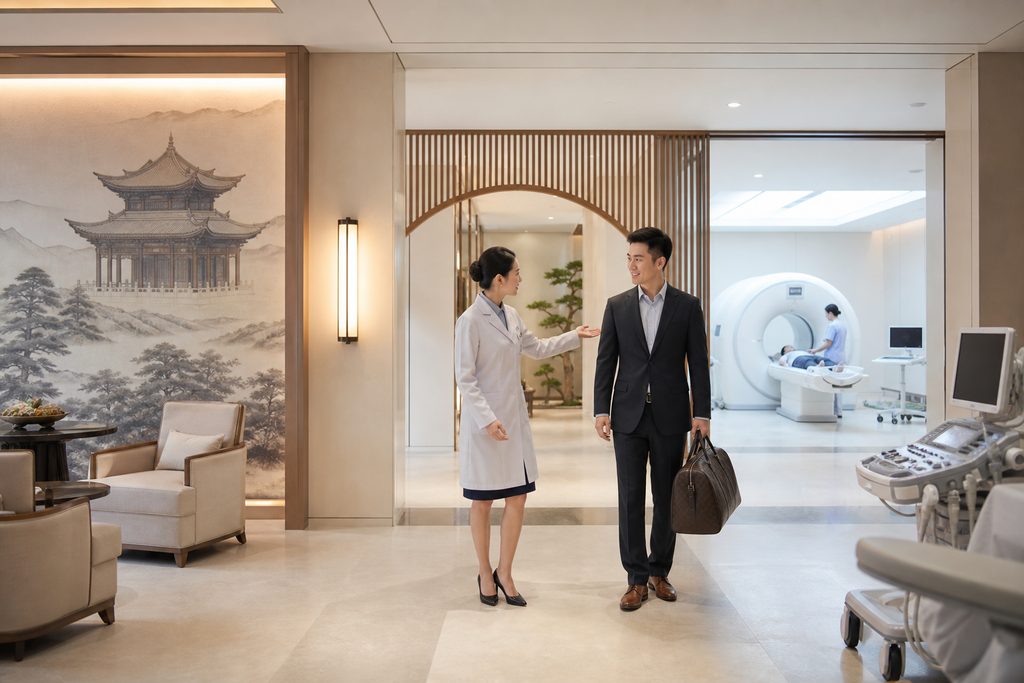
When 54-year-old Daniel from Manchester started researching executive health screenings, the quotes from private London clinics made him pause. A comprehensive cardiovascular, cancer-marker, and abdominal imaging package was running north of £3,800. His Google search history shows exactly what yours probably does: “full body checkup package China price,” “best hospital in Shanghai for health screening,” “is health screening in China reliable.” Daniel had never been to China. He did not speak Mandarin. But the numbers were hard to ignore.
A comparable screening package at a top-tier Chinese hospital typically costs between $350 and $900. That is not a typo. The gap between Western private screening costs and Chinese hospital-based programs has widened considerably over the past decade, driven by scale, infrastructure investment, and a fundamentally different healthcare delivery model. Our team at China Medical Services has spent years helping international patients evaluate these programs. What follows is an honest breakdown of what you actually get, what it costs, and where the real trade-offs lie.
Key Takeaways
- A comprehensive full body checkup package China price ranges from roughly $350 to $900 at top public hospitals, versus $2,500–$5,000+ for comparable private screenings in the US or UK.
- China’s top-tier hospitals operate dedicated health management centers that process 200–500 screening patients daily, with same-day results for most bloodwork and imaging.
- Language is the biggest barrier. Most public hospital screening centers run almost entirely in Mandarin, making a bilingual companion or international clinic the practical choice for most foreign patients.
- Not all packages are equal. The cheapest options often exclude cardiac imaging, low-dose CT, or tumor markers. You need to read the itemized list before booking.
The Problem: Routine Health Screening in the West Is Expensive, Slow, and Fragmented
Health screening in the United States and much of Western Europe is rarely a single, coordinated event. Patients piece together annual physicals, separate imaging referrals, and lab work spread across weeks. A 2023 Peterson-KFF Health System Tracker analysis found that a comprehensive executive physical at a major US academic medical center averages $2,700 to $6,000 out of pocket, depending on imaging scope. Add cardiac CT calcium scoring, a full abdominal ultrasound, and a colonoscopy, and the bill can exceed $8,000. Insurance often covers fragments of this, but rarely the full preventive package.
Wait times compound the problem. In Canada, the median wait for a CT scan is 7.4 weeks, according to the Fraser Institute’s 2023 report. In the UK, NHS diagnostic waiting lists have hovered around 1.6 million patients. For a 50-something executive with a family history of cancer or cardiac disease, waiting two months for a scan is not just inconvenient. It is anxiety-inducing.
And then there is the fragmentation. You might get bloodwork from LabCorp, a calcium score from a radiology center, and an abdominal ultrasound from a hospital outpatient department. Three different appointments. Three different billing codes. No single physician reviewing the full picture in one sitting.
Why Chinese Hospital Screening Centers Deliver Results
Volume Creates Efficiency That Western Clinics Cannot Match
The scale of China’s top hospitals is difficult to overstate. A hospital like Peking Union Medical College Hospital (PUMCH) or Zhongshan Hospital in Shanghai processes over 10,000 outpatient visits daily. Their dedicated health management centers are designed as high-throughput screening factories, not boutique clinics. A typical center runs 200 to 500 full screening patients per day, Monday through Saturday.
This volume drives two things: speed and operational maturity. Blood panels that take 3–5 days in a Western lab are often returned in 4–6 hours at a Chinese tertiary hospital. CT scans are read by radiologists who see more chest CTs in a month than many Western radiologists see in a year. The workflow is streamlined because it has to be. When you process 400 screening patients daily, inefficiency is not an option.
Technology Is Standardized, Not Optional
Walk into the health management center at Ruijin Hospital in Shanghai or West China Hospital in Chengdu, and you will see the same equipment you would find at a top US medical center: 3T MRI machines, 256-slice CT scanners, automated chemiluminescence immunoassay analyzers. China’s hospital construction boom between 2005 and 2020 means most top-tier facilities are newer than their Western counterparts. The average age of a major hospital building in China is under 15 years.
What is different is how the technology is deployed. Chinese screening packages are heavily protocolized. A standard executive package includes a fixed sequence: fasting blood draw at 7:30 AM, abdominal ultrasound at 8:15, low-dose chest CT at 9:00, cardiac ultrasound at 9:45, physician consultation at 10:30. Results are compiled into a bound report by 3:00 PM the same day. This is not premium service. This is the standard workflow.
Cost Advantage Without Quality Compromise
The obvious question: does lower cost mean lower quality? The structural answer is no, and the reasons are economic rather than clinical. Chinese physician salaries are a fraction of US salaries, but the training pipeline is rigorous. Top-tier specialists complete 8–10 years of medical education plus residency and fellowship, often with international rotations. Hospital infrastructure is state-funded. Malpractice insurance costs are far lower. And the sheer patient volume means fixed costs are amortized across vastly more procedures.
A cardiac CT calcium score that costs $700–$1,200 in the US runs $80–$150 in Shanghai. A full abdominal ultrasound costs $30–$60. A comprehensive metabolic panel costs $15–$40. These are not discounted rates for foreigners. These are the standard prices at top public hospitals. When you bundle them into a screening package, the economies of scale become obvious.
What Is Included in China Health Check Package Options
Package structures vary by hospital tier and target patient. Most centers offer three to five tiers, from basic annual physicals to comprehensive executive screenings. The naming conventions differ, but the content follows a predictable pattern.
A standard executive package at a top-tier public hospital typically includes:
- Comprehensive blood panel: complete blood count, liver function, kidney function, lipid profile, fasting glucose, HbA1c, thyroid panel, and common tumor markers (CEA, AFP, CA19-9, CA125, PSA for men)
- Cardiac assessment: resting ECG, echocardiogram, and often a treadmill stress test or coronary CT calcium score
- Imaging: chest X-ray or low-dose CT, abdominal ultrasound (liver, gallbladder, pancreas, spleen, kidneys), thyroid ultrasound, carotid ultrasound
- Physical examination: internal medicine, surgery, ENT, ophthalmology, and gynecology/urology as applicable
- Additional testing: urinalysis, stool occult blood, bone density scan (for women over 45), and sometimes a head MRI or full-body MRI in premium packages
What is usually not included unless specified: colonoscopy, gastroscopy, full-body MRI, genetic testing, and advanced cardiac imaging like CT angiography. These are typically add-ons or included only in the highest-tier packages.
Full Body Checkup Package China Price: Real Numbers by Hospital Tier
Prices vary significantly by city, hospital tier, and package depth. Here is a realistic breakdown based on published price lists from major health management centers as of 2025. Actual quotes fluctuate with exchange rates and package revisions.
| Hospital Type | City Example | Package Tier | Typical Price Range (USD) | What Stands Out |
|---|---|---|---|---|
| Top public hospital | Beijing (PUMCH) | Standard executive | $400–$700 | Deep specialist roster, heavy volume, Mandarin-dominant |
| Top public hospital | Shanghai (Zhongshan, Ruijin) | Comprehensive executive | $500–$900 | Strong cardiology and oncology screening, English support varies |
| Public hospital VIP/international wing | Beijing, Shanghai, Guangzhou | Executive + concierge | $800–$1,500 | English-speaking staff, priority scheduling, private rooms |
| Private international hospital | Shanghai (Jiahui, United Family) | Executive health screening | $1,200–$2,500 | Western-style service, direct insurance billing, JCI accredited |
| Private international hospital | Beijing (United Family, Raffles) | Premium full-body with MRI | $2,000–$3,500 | Full-body MRI, same-day physician consult, English reports |
The executive health screening cost Beijing patients typically pay at a public hospital international wing lands between $800 and $1,200. That buys the same clinical testing as the standard package but adds English coordination, expedited scheduling, and a private consultation room. For many foreign patients, this middle tier is the sweet spot.
Best Hospital in Shanghai for Health Screening: A Closer Look
Shanghai has the densest concentration of top-tier screening centers in China. If you search “best hospital in Shanghai for health screening,” three names consistently surface.
Zhongshan Hospital, affiliated with Fudan University, operates one of the largest health management centers in the city. Its cardiology screening is particularly strong, given the hospital’s reputation as a national cardiac center. Ruijin Hospital, affiliated with Shanghai Jiao Tong University, offers a broader internal medicine focus with strong endocrinology and metabolic screening. Huashan Hospital, also Fudan-affiliated, is known for neurology and imaging depth.
Each of these hospitals has an international medical department that handles foreign patients. The international departments charge a premium over the standard Chinese-language packages, typically 1.5 to 2 times the base price. What you get for that premium: English-speaking nurse coordinators, faster scheduling, and a physician who will actually sit down and explain your results in English. Without that, you are navigating a Mandarin-only workflow with hundreds of other patients.
For a deeper look at Shanghai’s hospital landscape, see our Shanghai hospital guide and the top-ranked hospital database.
Is Health Screening in China Reliable? What the Data Says
This is the question every foreign patient asks, and it deserves a straight answer. The short version: yes, at top-tier hospitals, the testing is reliable. The longer version requires understanding where reliability comes from and where it can break down.
Chinese tertiary hospitals participate in the same international quality programs as Western institutions. Many top hospitals hold JCI accreditation or China’s own rigorous Grade 3A (三甲) designation, which requires periodic re-evaluation of clinical quality, equipment standards, and laboratory protocols. Laboratory testing at major centers is subject to external quality assessment programs, including those run by the National Center for Clinical Laboratories.
But there are caveats. The reliability of your screening depends heavily on which hospital you choose. A Grade 3A hospital in Beijing or Shanghai operates at a different standard than a small private clinic in a second-tier city. The screening package market in China is enormous and uneven. Some private “health checkup centers” offer cheap packages that cut corners on equipment calibration, radiologist qualifications, or result interpretation.
The practical advice: stick to hospitals on the Fudan University Hospital Rankings list or those with JCI accreditation. These are the institutions where international patients can expect consistent quality. Our private hospital guide covers the JCI-accredited options in detail.
How to Book Health Screening Package China: The Step-by-Step Reality
Booking a screening package at a Chinese public hospital is not like booking online in the West. There is no unified national booking platform for foreigners. Most hospital websites are Mandarin-only. Phone lines are answered in Mandarin. If you do not have a Chinese mobile number or a local contact, the process can stall quickly.
The most common pathways for foreign patients:
- Direct booking via hospital international department: Some hospitals accept email inquiries in English. Response times range from 24 hours to never, depending on the hospital. This works best if you already know exactly which hospital and package you want.
- Through a medical coordination service: This is where our team at China Medical Services typically steps in. We handle the hospital communication, package selection, appointment scheduling, and on-the-day coordination. Our hospital appointment coordination service starts from $300, and if we cannot secure the appointment as specified, we refund that fee in full.
- Walk-in at a private international hospital: United Family, Jiahui, and similar facilities accept walk-in screening patients, though advance booking is recommended. These hospitals are fully English-capable and handle insurance directly.
The day of screening itself follows a tight schedule. You arrive fasting at 7:30–8:00 AM. Blood is drawn first. Then imaging. Then the physical exam. Most centers finish the full protocol by noon. A preliminary report is often available the same afternoon, with the full bound report delivered within 3–7 days.
Practical tip: If you are flying in specifically for screening, schedule the appointment for the second day after arrival. Jet lag can affect blood pressure readings and some hormone levels. A day of rest improves result accuracy.
Practical Considerations: Documentation, Payment, and Follow-Up
Several practical matters require attention before you book.
Medical records: Bring any prior imaging, lab results, or physician notes. Chinese screening physicians will want to compare against your baseline. Digital copies on a tablet or phone are acceptable, but printed copies are easier to hand over.
Visa: Medical screening falls under the S2 visa category for short-term private affairs or medical treatment. The S2 visa covers stays up to 180 days. Your family members accompanying you also apply for S2. You will need an invitation letter from the hospital or a supporting document confirming your appointment. Requirements vary by embassy, so check with the Chinese embassy or consulate in your country before applying. We provide visa guidance as part of our coordination service, but we do not guarantee approval.
Payment: Public hospitals require upfront payment, typically via cash, Chinese debit card, or international credit card (Visa/Mastercard are accepted at most international departments, but not always at standard cashiers). Private international hospitals accept major international insurance directly. If you have international health insurance that covers preventive screening, check whether the hospital can bill directly or whether you need to pay and claim reimbursement.
Language: At public hospital standard screening centers, everything is in Mandarin: signage, forms, staff instructions. A bilingual medical companion costs from $300 per day and handles registration, queue management, payment, and translation. At private international hospitals, English is the working language throughout.
Follow-up: If your screening reveals an abnormality, the same hospital can usually schedule follow-up diagnostics quickly. This is a structural advantage of doing screening at a full-service hospital rather than a standalone clinic. If you return home before follow-up, request an English-language report and digital copies of all imaging (DICOM files on CD or USB).
Frequently Asked Questions
A standard executive package at a top public hospital runs $400–$900. The same package at a private international hospital costs $1,200–$2,500. Add-ons like full-body MRI, colonoscopy, or cardiac CT angiography increase the total. Prices vary by city, hospital, and package depth.
Yes, but with friction. Public hospital international departments have English-speaking staff, and private international hospitals operate fully in English. If you choose a standard public hospital package, you will need either a Mandarin-speaking companion or a coordination service. Booking by phone or website in English is not reliably available at most public hospitals.
At top-tier Grade 3A hospitals and JCI-accredited private hospitals, yes. The equipment, laboratory protocols, and radiologist training are comparable to what you would find at a good Western teaching hospital. The main difference is service style: public hospital screening centers are high-volume and impersonal, while private international hospitals offer a Western-style experience at a higher price.
What should I do if my screening finds an abnormality?
First, do not panic. Screening tests are designed to catch potential issues early, and many flagged results turn out to be benign. The screening hospital can usually arrange confirmatory testing within days. If you return home, bring your English report and imaging files to your primary care physician
For more medical information and treatment options in China, visit chinamedservices.com (China Medical Services).
