Robotic Surgery in China: Which Top Hospitals Offer da Vinci Systems?
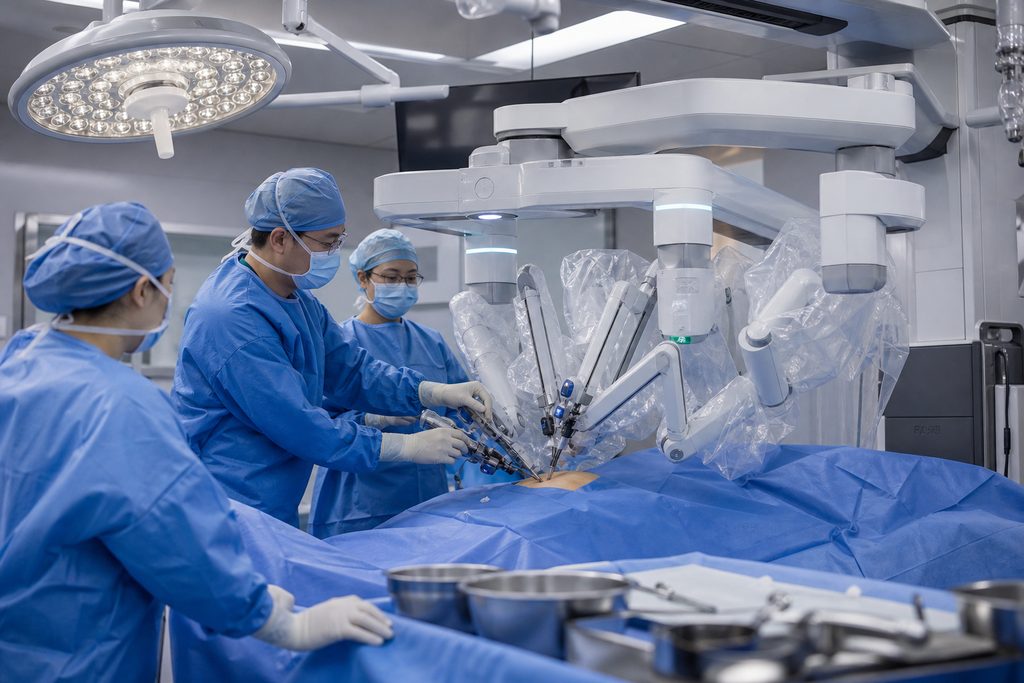
When 52-year-old Daniel from Manchester was told he needed a prostatectomy, his first question was not about survival rates. It was about continence and recovery time. His urologist mentioned robotic-assisted surgery, then quoted a private hospital fee of £18,000 with a 14-week wait. Daniel started searching for alternatives. That search led him to a phrase he had never typed before: robotic surgery hospitals in China.
He is not alone. Every month, hundreds of patients from the UK, the US, Australia, and the Gulf states look into whether China’s top-tier hospitals can match Western robotic surgery standards at a fraction of the cost. The short answer is yes — but only if you know which hospitals actually operate the systems, how surgeons are trained, and what the real price looks like. This guide breaks that down without the marketing fluff.
Key Takeaways
- China operates more than 300 da Vinci surgical systems, with the highest concentrations in Shanghai, Beijing, and Guangzhou.
- Robotic prostatectomy at a top Chinese public hospital typically costs $18,000–$30,000, compared to $40,000–$70,000 in the United States.
- Foreign patients cannot simply book a surgery date online — you need a hospital international department or a coordination service to arrange the pre-operative consultation first.
- The biggest barrier is not technology or surgical skill. It is navigating registration, language, and the pre-admission workflow without local support.
The Problem: Robotic Surgery at Western Prices Is Out of Reach for Many
In the United States, a robotic-assisted radical prostatectomy costs between $40,000 and $70,000 depending on the hospital system and geographic region. For uninsured or high-deductible patients, that number is catastrophic. In the UK, NHS wait times for urological oncology surgery have stretched past 18 weeks in many trusts, and private care moves faster only if you can pay £12,000 to £20,000 out of pocket.
Robotic surgery is no longer experimental. It is the standard of care for many prostate, gynecologic, colorectal, and thoracic procedures. The precision of the da Vinci system means smaller incisions, less blood loss, shorter catheter time after prostatectomy, and faster return to normal activity. But access remains unequal. Patients in Canada wait months for a robotic prostatectomy. Patients in Australia face out-of-pocket gaps even with private insurance. And in many European countries, robotic systems are concentrated in a handful of academic centers with long queues.
That is the reality Daniel faced. His diagnosis was localized prostate cancer. He had time to make a decision, but not unlimited time. The quote from the private London hospital was £18,000 for the surgery alone — not including consultations, imaging, or hospital stay overruns. He began looking abroad.
Why China Has Become a Serious Option for Robotic Surgery
Clinical Volume That Surpasses Most Western Centers
Surgeons get better with repetition. That is not a slogan — it is borne out in surgical literature. A 2021 study in The Lancet Oncology found that hospitals performing more than 100 robotic prostatectomies per year had significantly lower rates of positive surgical margins than low-volume centers. In China, top urology departments at hospitals like Changhai Hospital in Shanghai and Peking University First Hospital in Beijing each complete over 1,000 robotic procedures annually. Compare that to the average US hospital, where many centers perform fewer than 100 per year.
Volume matters for one reason: complication rates drop as case counts rise. Chinese surgeons at high-volume centers operate on 5 to 8 robotic cases per day during peak periods. That rhythm builds a level of procedural familiarity that is hard to replicate in lower-volume Western settings.
Technology Deployment at Scale
China approved the da Vinci system for clinical use in 2006. Since then, the installed base has grown to more than 300 systems across public and private hospitals. The newest generation — the da Vinci Xi — is now standard at major centers in Shanghai, Beijing, Guangzhou, and Chengdu. Domestic robotic systems like the Toumai and Kangduo are also entering clinical use, though international patients overwhelmingly seek out hospitals using the da Vinci platform because of its longer track record and global familiarity.
What does this mean for a patient? It means you are not flying to a country with one or two machines. You are choosing from dozens of hospitals with mature robotic programs, trained surgical teams, and established perioperative protocols.
Cost Advantage Without Cutting Corners
The price difference is structural, not a reflection of quality. Chinese public hospitals operate on lower labor costs, higher patient throughput, and government-subsidized infrastructure. A robotic prostatectomy at a top-tier public hospital in Shanghai costs between $18,000 and $30,000 for international patients. The same procedure at the best robotic surgery hospital Shanghai has to offer — through its international medical center — falls in that range. In the US, the same surgery costs $40,000 to $70,000 before insurance. In the UK privately, £12,000 to £20,000. In Australia, AUD $25,000 to $45,000 out of pocket after Medicare.
Lower cost does not mean lower standards. Fuwai Hospital in Beijing performs more cardiac surgeries than any hospital in the world — over 14,000 per year — and its outcomes are published in peer-reviewed journals. The same principle applies to robotic urology and gynecology at China’s top academic medical centers.
Which Hospitals Actually Offer Robotic Surgery in China
Not every hospital with a da Vinci system accepts international patients. And not every hospital that accepts foreigners has meaningful robotic volume. The list below reflects the reality of what our coordination team sees when arranging surgical packages for patients from Europe, North America, and the Middle East.
| Hospital | City | Robotic Specialties | International Patient Pathway |
|---|---|---|---|
| Changhai Hospital (Naval Medical University) | Shanghai | Urology, prostatectomy, partial nephrectomy | International medical center, English-speaking coordinators |
| Zhongshan Hospital, Fudan University | Shanghai | Thoracic, general surgery, hepatobiliary | VIP clinic, dedicated international ward |
| Peking Union Medical College Hospital (PUMCH) | Beijing | Gynecology, urology, colorectal | International department, long history of treating foreign patients |
| Peking University First Hospital | Beijing | Urology, robotic prostatectomy | International clinic, high robotic case volume |
| Ruijin Hospital, Shanghai Jiao Tong University | Shanghai | General surgery, colorectal, pancreatic | International medical center, JCI-accredited processes |
| West China Hospital, Sichuan University | Chengdu | Urology, gynecology, thoracic | International department, growing robotic program |
Is robotic surgery available in Beijing? Yes. PUMCH and Peking University First Hospital both run high-volume robotic programs and accept international patients through their international departments. Beijing has 21 hospitals in the Fudan Top 100 ranking — more than any other Chinese city — so the concentration of robotic expertise there is significant.
What a Robotic Surgery Package in China Actually Costs
Patients often ask us for a single price. The honest answer is that surgical pricing depends on the procedure, the hospital tier, the surgeon’s seniority, and whether you go through the public international department or a private hospital. The table below gives realistic ranges based on cases we have coordinated in 2024 and 2025.
| Procedure | China (International Patient) | United States (Before Insurance) | United Kingdom (Private) |
|---|---|---|---|
| Robotic radical prostatectomy | $18,000 – $30,000 | $40,000 – $70,000 | £12,000 – £20,000 |
| Robotic partial nephrectomy | $16,000 – $26,000 | $35,000 – $55,000 | £14,000 – £22,000 |
| Robotic hysterectomy (cancer) | $14,000 – $24,000 | $30,000 – $50,000 | £11,000 – £18,000 |
| Robotic colorectal resection | $20,000 – $35,000 | $50,000 – $85,000 | £18,000 – £30,000 |
How much does robotic prostatectomy cost in China? The range above reflects the total surgical package — operating room time, robotic system usage, surgeon fees, anesthesia, hospital stay, and standard post-operative care. It does not include international patient coordination fees, translation, or extended hotel recovery stays. Those add $2,000 to $5,000 depending on the level of support you need.
Da Vinci surgery cost China comparisons often overlook one factor: the pre-operative workup. Before any Chinese hospital will schedule surgery, you need imaging, blood work, and a consultation with the operating surgeon. That can be done remotely through a video consultation first, which costs $100 to $300, or in person after you arrive. We always recommend the remote route first — it saves you a wasted trip if the surgeon determines you are not a candidate for the robotic approach.
How to Book a Robotic Surgery Package in China: The Real Process
Here is the part most websites gloss over. You cannot book robotic surgery package China the way you book a hotel room. Chinese public hospitals do not allow foreign patients to reserve an operating room slot online. The pathway works like this:
Step 1: Remote evaluation. You send your existing medical records — pathology reports, MRI or CT scans, blood work — to the hospital’s international department or to a coordination service like ours. A specialist reviews them and gives a written opinion on whether robotic surgery is appropriate for your case. This costs $300 to $500 for a top-tier hospital written second opinion.
Step 2: Video consultation. You speak directly with the surgeon or their team online. This is where you ask about their case volume, complication rates, and what recovery looks like. It costs $500 to $800 for a top-specialist video consultation. That fee is credited toward your on-the-ground coordination if you proceed within 90 days.
Step 3: In-person consultation. You fly to China on an S2 visa — the short-stay visa category used for medical treatment and private affairs. You meet the surgeon, complete any additional imaging, and get a final surgical plan. The hospital then schedules your admission.
Step 4: Admission and surgery. You are admitted through the hospital’s international ward or VIP unit. Surgery happens within days of admission, not weeks. Post-operative care follows the hospital’s standard robotic surgery protocol.
Step 5: Follow-up. Most patients stay in China for 7 to 14 days after discharge for catheter removal, wound checks, and a final consultation. After that, you fly home and continue follow-up with your local urologist or surgeon.
The entire process from first contact to surgery typically takes 3 to 6 weeks. That is faster than the NHS private route for many procedures and comparable to US scheduling timelines for non-emergency robotic surgery.
What Could Go Wrong: Honest Risks and How to Mitigate Them
We would rather you hear the downsides from us than discover them after you land in Shanghai. Robotic surgery in China is not for everyone, and there are real risks.
Language and navigation. Chinese public hospitals are enormous. A single outpatient building can see 10,000 patients a day. Registration counters, payment windows, imaging departments, and pharmacy queues are all labeled in Chinese. Without a bilingual companion, a foreign patient can spend an entire day just trying to complete a pre-operative blood draw. This is the single most common pain point our patients report — and the reason we recommend a medical companion for at least the first 2 to 3 days.
Payment structure. Chinese public hospitals require pre-payment. You deposit an estimated amount before admission, and the hospital deducts from that deposit as services are rendered. If the actual cost exceeds the deposit, you top up. If it comes in under, you receive a refund. Insurance reimbursement is your responsibility — Chinese public hospitals do not bill Western insurers directly. Private international hospitals in China, like United Family or Jiahui, do offer direct insurance billing, but their robotic surgery volumes are lower than the top public academic centers.
Not every surgeon is equal. The da Vinci system is a tool. The surgeon operating it matters more. When you do a video consultation, ask directly: how many robotic cases have you personally completed? What is your positive margin rate for prostatectomy? What is your conversion rate to open surgery? A high-volume surgeon will answer these questions without hesitation. If they deflect, choose someone else.
Post-operative follow-up across borders. You will fly home with a discharge summary in Chinese and English. Your local doctor may not be familiar with the Chinese hospital’s protocols. We recommend requesting a detailed English-language operative note and pathology report before you leave. Most top hospitals provide this for international patients, but you have to ask.
Frequently Asked Questions
Shanghai has the highest concentration of da Vinci systems among public academic hospitals, followed closely by Beijing. Changhai Hospital and Zhongshan Hospital in Shanghai, and PUMCH and Peking University First Hospital in Beijing, are the most commonly chosen by international patients for robotic urology and general surgery.
No. Chinese public hospitals require a pre-operative consultation and imaging before scheduling surgery. The fastest realistic timeline is about 3 weeks from first contact to operating room, assuming your records are complete and the surgeon approves the robotic approach after a video consultation.
At top-tier academic hospitals, yes. The complication rates and oncologic outcomes at high-volume Chinese centers are comparable to Western benchmarks. The key variable is hospital selection. A random provincial hospital with a da Vinci system is not the same as Changhai or PUMCH. Stick to hospitals ranked in the Fudan Top 100 or with JCI accreditation.
Top Chinese hospitals have full intensive care units, interventional radiology, and 24-hour surgical backup. The international departments have English-speaking staff who coordinate with your family. That said, you are in a foreign country with a different legal system. Medical malpractice litigation in China is complex and rarely pursued by foreign patients. Your practical protection is choosing a high-volume hospital with a strong safety record — not relying on legal recourse after the fact.
You need an S2 visa, which covers short-term private affairs including medical treatment. Your accompanying family member also applies for an S2. The hospital’s international department will provide an invitation letter and treatment confirmation to support your visa application. M visas are for commercial and trade activities and are not appropriate for medical travel.
Your Next Step
Robotic surgery hospitals in China are not a secret — but navigating them from abroad without local knowledge is genuinely difficult. Our team at China Medical Services helps patients evaluate whether a Chinese hospital is the right choice for their specific case, arrange remote consultations with high-volume robotic surgeons, and coordinate the on-the-ground logistics once you decide to proceed. We are not a hospital and we do not provide diagnoses or treatment recommendations. What we do is help you get straight answers from the right specialists, faster than you would on your own.
If you are weighing robotic surgery options and want a realistic assessment of cost, timeline, and hospital fit, start with a free consultation. Bring your diagnosis and your questions. We will tell you honestly whether China makes sense for your situation — and if it does, we will show you exactly how to move forward.
For more medical information and treatment options in China, visit chinamedservices.com (China Medical Services).
