Biopsy in China: How Diagnostics Coordination Works for Foreigners
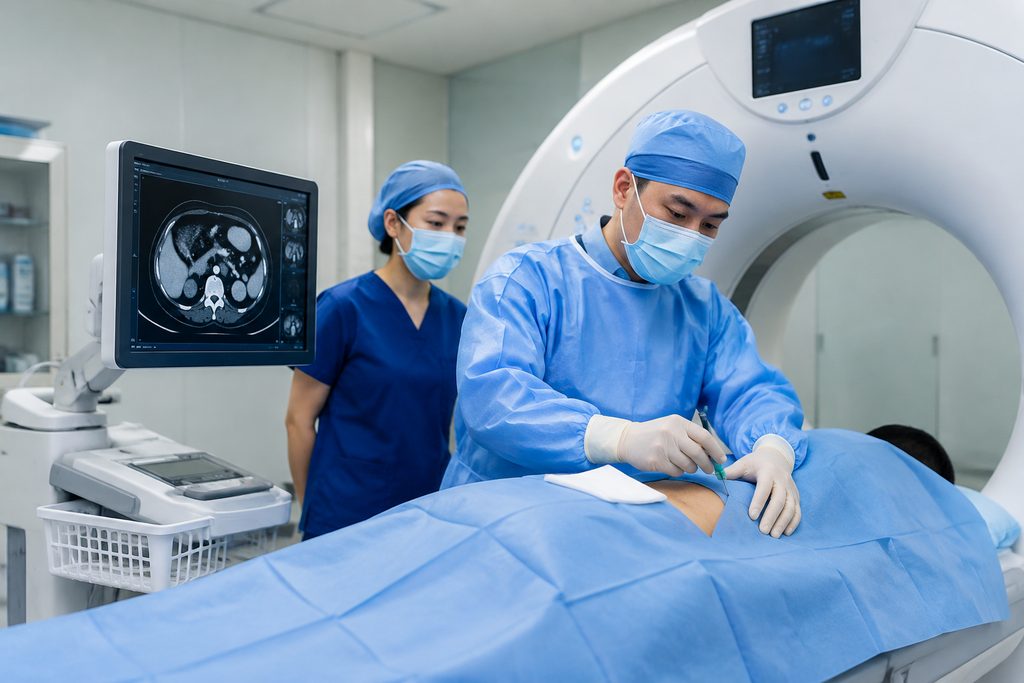
Have you ever wondered whether a suspicious scan result could be resolved faster, and for far less money, by crossing a border? That question brings many Western patients to our inbox. A biopsy in China for an international patient typically costs between $300 and $1,500 depending on the organ, imaging guidance, and hospital tier — a fraction of what the same procedure bills in the United States, where a CT-guided lung biopsy often exceeds $6,000 before pathology. But the real question is not just price. It is whether the logistics can be handled without a local contact.
Our team at China Medical Services coordinates diagnostics for patients who already have imaging or lab findings suggesting something needs tissue confirmation. We do not diagnose. We do not treat. We connect you with the right department, translate your records, and make sure the sample gets to the pathology lab with a clear chain of custody.
Biopsy in China: The Short Answer
Yes, foreigners can get a biopsy in China. The procedure itself follows the same standards you would expect at any accredited academic medical center — ultrasound-guided, CT-guided, endoscopic, or surgical, depending on the target tissue. What differs is the pathway. Public hospitals in China typically require an in-person outpatient consultation before scheduling any invasive procedure. You cannot simply email a scan and book a biopsy slot from overseas.
That is where coordination becomes essential. We schedule the initial specialist consultation, arrange bilingual interpretation, and ensure your prior imaging is reviewed by the department that will actually perform the biopsy. The procedure is then usually scheduled within days, not weeks.
Who This Is Right For — and Who It Isn’t
A biopsy in China makes sense for a specific profile of patient. Not everyone.
Typically a good candidate:
- You have imaging (CT, MRI, ultrasound, or PET) from your home country showing a lesion that needs tissue diagnosis.
- Your local wait time for biopsy is measured in weeks or months, and you want a faster answer.
- You are paying out of pocket or facing a high deductible, and the price difference matters.
- You are mobile enough to travel and sit through a 30–60 minute outpatient procedure.
- You want the pathology read at a high-volume center that sees rare and complex cases regularly.
Who should not pursue this:
- Patients who are hemodynamically unstable or require ICU-level monitoring.
- Anyone whose primary doctor has advised against travel for medical reasons.
- Patients with bleeding disorders that are not yet medically optimized.
- Those who need the biopsy result to be accepted by a specific home-country oncologist without question — some Western doctors will re-read the slides anyway, which is fine, but you should know that upfront.
- Anyone expecting a “package deal” that skips the consultation step. That is not how Chinese public hospitals work.
The Options, Compared
Not all biopsy pathways in China are equal. Here is how the main routes compare for international patients.
| Pathway | Typical Biopsy Cost (Procedure Only) | Wait Time After Consultation | English Support | Best For |
|---|---|---|---|---|
| Public hospital, standard outpatient | $300–$800 | 3–10 days | Limited; bring interpreter | Budget-conscious patients with straightforward cases |
| Public hospital, international/VIP department | $600–$1,500 | 2–7 days | Yes, dedicated staff | Patients wanting senior specialists and smoother logistics |
| Private international hospital (e.g., United Family, Jiahui) | $800–$2,000+ | 1–5 days | Yes, full English | Patients wanting Western-style service and direct insurance billing |
The international department route is often the sweet spot. You get access to the same senior pathologists and interventional radiologists as the public queue, but with English coordination and faster scheduling. The private route costs more but may bill your insurer directly. The standard public route is cheapest but demands the most from you logistically — which is exactly where a bilingual companion earns their fee.
How Is a Biopsy Performed in China for Foreigners: The Step-by-Step
The procedure itself is not exotic. What is different is the sequence of events before you lie on the table.
Step 1: Record review. You send us your existing imaging reports, CDs or DICOM files, and any relevant lab work. We translate the key findings into Chinese and forward them to the appropriate department — often interventional radiology, pulmonology, gastroenterology, or breast surgery, depending on the lesion.
Step 2: Specialist consultation. You meet the doctor who will perform or supervise the biopsy. This can be in person or, in some hospitals, via video consultation first. The doctor assesses whether the lesion is accessible and what guidance method is safest.
Step 3: Pre-procedure checks. Blood tests for coagulation status, platelet count, and sometimes infectious markers. These are usually done the same day or the day before.
Step 4: The biopsy. Most are outpatient. Local anesthesia. Ultrasound or CT guidance. The actual tissue sampling takes 10–30 minutes depending on depth and organ. You are monitored for 1–2 hours afterward, then discharged.
Step 5: Pathology. The sample goes to the hospital’s pathology department. Routine histology takes 3–7 working days. Immunohistochemistry or molecular testing adds another 5–10 days. You receive the report in Chinese; we arrange certified translation.
Can I Get a Biopsy Quickly in China? Timing Realities
Short answer: usually yes, compared to many Western systems. But “quickly” needs definition.
From the day we receive your complete records, a realistic timeline looks like this:
- Week 1: Record translation, department matching, consultation scheduling.
- Week 1–2: In-person or video consultation, pre-procedure bloodwork.
- Week 2: Biopsy performed.
- Week 2–3: Initial pathology report available.
- Week 3–4: Full report with immunohistochemistry, translated, in your hands.
Some patients compress this to under two weeks. Others take longer if the lesion requires multidisciplinary discussion before sampling. No one can honestly promise a same-week biopsy from a cold start — anyone who does is selling something other than medical care.
Biopsy Cost China International Patients: What You Actually Pay
Let us put numbers on the table. These are procedure and pathology costs at top-tier public hospitals, not including travel or lodging.
- Ultrasound-guided fine needle aspiration (thyroid, lymph node, superficial mass): $150–$400
- Ultrasound-guided core needle biopsy (breast, liver, soft tissue): $300–$700
- CT-guided lung or abdominal biopsy: $500–$1,200
- Endoscopic biopsy (stomach, colon, bronchial): $200–$600 for the procedure, plus endoscopy fees
- Pathology with routine histology: $100–$300
- Immunohistochemistry panel: $200–$600 depending on markers
- Molecular testing (EGFR, ALK, PD-L1, etc.): $500–$1,500
Costs vary by hospital and case complexity. A complex CT-guided biopsy of a deep retroperitoneal mass at a top Shanghai hospital will land at the upper end. A straightforward thyroid FNA at a provincial center will land at the lower end. The international department typically adds 50–100% to the standard fee for English coordination and senior specialist involvement.
For context, the same CT-guided lung biopsy in the US averages $6,000–$15,000 before pathology. Many of our patients find that even with flights and a hotel, the total is lower.
Best Hospital for Biopsy Shanghai: Where We Actually Send Patients
Shanghai has more Fudan-ranked top-100 hospitals than any city except Beijing — 18 of them. For biopsies, the choice depends on the organ.
For lung and mediastinal lesions, we frequently coordinate with the interventional radiology and pulmonology departments at Zhongshan Hospital or Shanghai Chest Hospital. For liver and abdominal lesions, Zhongshan’s hepatology and interventional teams are among the busiest in the world. For breast lesions, Fudan University Shanghai Cancer Center handles enormous volume. For thyroid, Ruijin Hospital’s endocrinology and head-neck surgery departments are reference centers.
We do not publish a single “best” because that would be misleading. The right hospital is the one whose pathology department sees your specific lesion type every day. That is a matching exercise, not a ranking exercise. Our specialty department database breaks this down by organ system.
Is It Safe to Get a Biopsy in China?
At an accredited top-tier hospital, yes. The safety profile of a biopsy depends on three things: the operator’s volume, the imaging guidance quality, and the pathology lab’s processing standards. Top Chinese hospitals score high on all three — because they do enormous volume.
Fuwai Hospital alone performs over 14,000 cardiac surgeries a year. That volume culture extends to diagnostics. A senior interventional radiologist at a major Shanghai or Beijing center may perform more CT-guided biopsies in a month than a typical Western community hospital radiologist does in a year. Volume builds skill.
But safety also depends on you. You must disclose all medications — especially anticoagulants and antiplatelet drugs like warfarin, clopidogrel, or even daily aspirin. You must arrange follow-up care in your home country. And you must understand that no procedure is zero-risk. Bleeding, infection, and pneumothorax (for lung biopsies) are real possibilities anywhere in the world.
Practical Considerations: Records, Visas, and Payments
Here is what actually trips people up.
Records. Bring original imaging on CD or DICOM format, not just printed reports. Chinese radiologists will want to review the actual images, not someone else’s summary. Bring your pathology slides if you have had a prior biopsy elsewhere.
Visa. Medical treatment falls under the S2 visa category, not the M visa. M is for commercial and trade activities. You will need an invitation letter or supporting documents from the hospital, which we help arrange. Your accompanying family member also applies for S2. Requirements vary by embassy, so check the latest consulate guidance.
Payment. Public hospitals require prepayment. Most accept international credit cards at the international department counter, but do not assume — carry a backup. Private international hospitals often bill insurers directly. We can advise on which route fits your coverage.
Language. Outside the international departments, English is scarce. A bilingual companion who knows the hospital layout, the registration system, and the payment queues saves hours and prevents errors. That is a service we provide, not a luxury.
Follow-up. Your home doctor will likely want to review the slides themselves. Ask the Chinese pathology lab to prepare additional unstained slides for export. Most will do this for a small fee. You carry them home, and your local pathologist does a confirmatory read.
Frequently Asked Questions
Usually yes, but many will want to re-read the slides themselves. That is standard practice, not a rejection. Request extra unstained slides before you leave. The written report will be in Chinese; we arrange certified medical translation so your doctor sees a clean English version.
It happens. Maybe 5–10% of needle biopsies yield insufficient tissue, depending on the lesion. If that occurs, the pathology report will say so plainly. You may need a repeat biopsy, sometimes with a different guidance method. That is frustrating, but it is honest medicine. We would coordinate the repeat procedure at the same hospital.
You can bundle logistics — airport transfer, hotel, interpretation, hospital coordination — into a single service arrangement. What you cannot buy is a “biopsy package” that skips the consultation step. Any legitimate hospital will require a doctor to examine you and review your imaging before scheduling the procedure. Be wary of anyone offering otherwise.
No. Chinese hospitals do not require a Western referral letter. Your existing imaging and lab reports are what matter. A summary letter from your doctor explaining the clinical question is helpful, and we can translate it.
Request formalin-fixed paraffin-embedded blocks or unstained slides from the pathology department before discharge. There is usually a small administrative fee. We help arrange this and ensure proper documentation for customs.
Your Next Step
A biopsy in China is not a magic shortcut. It is a practical option for patients who need tissue confirmation faster or cheaper than their home system allows — and who are willing to travel for it. The procedure is standard. The logistics are the hard part.
We are China Medical Services, a coordination team — not a hospital, not doctors. We match you with the right department, translate your records, schedule consultations, and provide bilingual support on the ground. If you are considering a biopsy in China, start with a conversation. Tell us what your imaging shows and what your home doctor suspects. We will tell you honestly whether this route makes sense for your case.
Your next step is simple: request a free consultation. No commitment. Just clarity.
For more medical information and treatment options in China, visit chinamedservices.com (China Medical Services).
