Which Hospital in China Offers LASIK? Top Cities, Costs & Safety
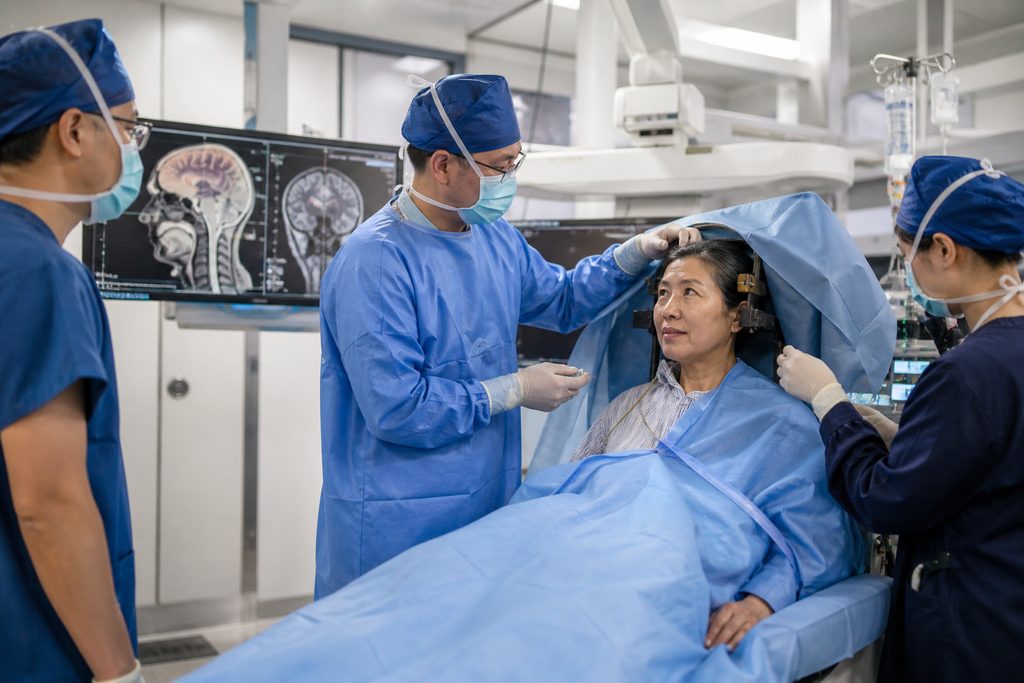
Have you ever wondered whether flying to another country for laser eye surgery could actually save you thousands of dollars without compromising on safety? It is a question more people are asking, especially when the LASIK eye surgery cost China presents a stark contrast to prices in the United States or Europe. We regularly help patients evaluate this decision, and the answer is rarely a simple yes or no. It depends on which hospital you choose and how you navigate the system.
The short answer to your search is that China does not have a single “LASIK hospital.” Instead, several top-tier ophthalmology departments in Beijing, Shanghai, and Guangzhou perform high volumes of refractive surgery using the same equipment you would find in London or New York. The key is knowing which institutions actually specialize in this procedure versus general hospitals that offer it as a side service.
Our team works with a database of 340+ top-ranked hospitals across 37 cities. That sounds like a lot of options. But when you narrow it down to centers with dedicated refractive surgery units, experienced surgeons, and English-speaking international departments, the list shrinks considerably. We will walk you through what that list looks like and how to choose from it.
How This Actually Works, Step by Step
The process of getting LASIK in China as a foreign patient is not as simple as booking a flight and showing up. Public hospitals in China operate on a walk-in registration system for routine outpatient care. That means you cannot simply email a hospital and reserve a surgery slot from overseas. You must first be seen in person for a comprehensive eye examination.
Here is the sequence we guide our patients through:
First, you send us your existing eye examination records if you have them. A recent refraction, corneal topography, and pachymetry report are ideal. If you do not have these, that is fine. The hospital will perform all necessary tests on site.
Second, we help you identify which hospital and department fits your needs. This depends on your prescription, your corneal thickness, your budget, and whether you prefer a public hospital‘s international department or a private international hospital.
Third, we coordinate the appointment. For public hospital international departments, this means scheduling a specific consultation time with the ophthalmology team. You skip the general queue but still meet the doctor face to face before any surgery is approved.
Fourth, you travel to China on an S2 visa, which is the correct category for private medical treatment. We provide supporting documentation from the hospital to include with your visa application.
Fifth, you undergo the pre-operative evaluation. This typically takes half a day and includes corneal topography, wavefront analysis, dry eye assessment, and a dilated fundus exam. The surgeon reviews all results before clearing you for the procedure.
Sixth, if you are approved, surgery is usually scheduled within one to three days. The procedure itself takes about fifteen minutes per eye. You rest for a few hours, return the next morning for a follow-up, and then you are free to plan your return flight.
Which Hospitals in China Actually Perform LASIK Well?
When patients ask us about the best hospital for LASIK in Shanghai, we usually point them toward institutions with dedicated refractive surgery centers rather than general ophthalmology clinics. The distinction matters. A hospital that performs five thousand LASIK procedures a year has a different level of surgical volume and complication management experience than one that performs a hundred.
In Shanghai, the eye and ENT hospitals affiliated with major universities tend to dominate this space. These are public tertiary hospitals with specialized corneal and refractive departments. They use excimer and femtosecond laser platforms from manufacturers like Zeiss, Alcon, and Schwind — the same devices used in Western refractive surgery centers.
In Beijing, the situation is similar. The top ophthalmology departments at major teaching hospitals run high-volume refractive surgery programs. Patients often ask us what does LASIK cost in Beijing compared to Shanghai, and the answer is that prices are broadly comparable. The bigger variable is whether you go through the standard public channel or the international VIP channel.
Guangzhou and Chengdu also have strong options. The ophthalmology specialty rankings on our site can help you see which departments are considered leaders in the field. But a word of caution: rankings alone do not tell you whether a specific department is the right fit for your eyes. That requires a pre-operative consultation.
A Realistic Timeline
People underestimate how long the entire process takes when they factor in document preparation, visa processing, and the mandatory in-person consultation. Here is what a realistic schedule looks like:
| Stage | What Happens | Typical Duration |
|---|---|---|
| Week 1 | Initial inquiry, record review, hospital matching | 2–5 days |
| Week 2 | Appointment confirmation, visa documentation prepared | 3–7 days |
| Week 3 | S2 visa application processing at Chinese embassy/consulate | 4–10 business days |
| Week 4 | Travel to China, in-person pre-op examination | 1 day |
| Week 4–5 | Surgery scheduling (after exam clearance) | 1–3 days after exam |
| Week 5 | LASIK procedure, first follow-up visit | 2 days total |
| Week 5–6 | Return flight, local optometrist follow-up at home | Varies |
The waiting step people forget is the visa. You cannot book a flight and expect to be in the operating room within a week. The S2 visa application requires an invitation letter or supporting documents from the hospital, and embassy processing times vary by country. Plan for at least three to four weeks from initial contact to surgery date.
Another forgotten step: if you wear contact lenses, you must stop wearing them before the pre-operative exam. Soft lenses typically require a one to two week break. Hard or rigid gas permeable lenses may require three to four weeks. This is not a China-specific rule — it is standard refractive surgery protocol worldwide. But it catches people off guard when they realize their timeline just got longer.
What Can Go Wrong — and What Happens Then
Let us be direct about the risks, because you deserve honesty before you book a flight.
The most common issue is being deemed not a candidate after the pre-operative exam. Corneal thickness, pupil size, dry eye severity, or irregular topography can all disqualify you. If this happens, you have traveled to China and spent money on flights and accommodation for nothing — except the consultation itself. This is why we recommend a remote video consultation before you travel. It does not replace the in-person exam, but it can screen out obvious disqualifiers and save you a wasted trip.
Another risk is undercorrection or overcorrection. LASIK outcomes are generally excellent, but no surgeon guarantees perfect 20/20 vision. Enhancement procedures are sometimes needed months later. If you have surgery in China and return home, coordinating an enhancement means either returning to China or finding a local surgeon willing to touch another surgeon’s work. Most will, but it adds complexity.
Dry eye is a near-universal temporary side effect. It usually resolves within three to six months. In rare cases, it persists longer. Chinese hospitals manage this the same way Western ones do: preservative-free artificial tears, punctal plugs if needed, and time.
And then there is the language barrier. Public hospital corridors are crowded and chaotic. Registration counters, payment windows, and pharmacy queues operate in Mandarin. If you do not speak the language, navigating this alone is genuinely difficult. That is exactly why bilingual accompaniment services exist. Our team provides a bilingual medical companion who handles registration, translation, and wayfinding so you are not stranded in a queue trying to mime your way through a payment terminal.
How Safe Is LASIK in China? Evaluating the Numbers
The question of how safe is LASIK in China is fair. The answer depends on which facility you choose. Top-tier teaching hospitals in Beijing and Shanghai follow international sterilization protocols, use modern femtosecond laser platforms, and maintain complication rates consistent with global benchmarks. The surgeons are typically ophthalmologists with years of refractive surgery experience and often international training or conference participation.
But the safety picture changes if you choose a low-cost clinic that advertises heavily on social media. China has thousands of eye clinics, and not all of them operate at the same standard. The price difference between a top-tier hospital and a budget clinic might be a few hundred dollars. That is not where you want to save money.
One useful signal: ask whether the hospital’s international department handles foreign patients regularly. Hospitals that serve international patients have English-speaking staff, standardized pricing, and experience with the documentation foreign patients need for insurance or visa purposes. A hospital that has never treated a foreign patient is not necessarily unsafe, but the friction will be higher.
Another signal: ask about the laser platform. If a hospital uses a femtosecond laser for flap creation and an excimer laser for ablation, that is current-generation technology. If they are still using a mechanical microkeratome blade for flap creation, that is older technology. Both can be safe, but femtosecond is the modern standard.
Practical Considerations: Visas, Payment, and Follow-Up
The visa category for medical treatment in China is the S2 visa. Not the M visa — that is for commercial and trade activities. The S2 visa covers private affairs including medical treatment, and your accompanying family members apply under the same category. You will need supporting documents from the hospital, which we help coordinate.
Payment is another practical hurdle. Public hospitals in China require prepayment before surgery. Most accept international credit cards at their international department counters, but it is not universal. Some require payment via Chinese mobile payment platforms like WeChat Pay or Alipay, which are difficult for foreigners to set up without a Chinese bank account. Private international hospitals are more likely to accept international cards and even work with international insurance providers.
Insurance reimbursement is another layer. Chinese public hospitals do not bill international insurers directly. You pay out of pocket, receive an itemized receipt and medical report, and submit the claim yourself. Private international hospitals in China often have direct billing arrangements with major insurers. This matters if your insurance covers refractive surgery, which most do not — LASIK is typically considered elective and excluded from coverage.
Follow-up care after you return home is straightforward. Your local optometrist can handle most post-operative checks. You will receive a discharge summary and post-operative instructions in English from the hospital’s international department. If complications arise, you can email the hospital or schedule a video follow-up.
For those considering the broader medical tourism angle, the phrase book LASIK surgery China medical tourism reflects a growing trend. People combine the procedure with travel. But we advise against planning a sightseeing-heavy itinerary immediately after surgery. Your eyes need rest, and your vision will fluctuate for the first few days. Schedule the surgery near the end of your trip, not the beginning.
Frequently Asked Questions
The LASIK eye surgery cost China ranges from approximately $800 to $2,500 per eye depending on the hospital tier, the laser technology used, and whether you go through the public channel or the international department. Private international hospitals in Shanghai and Beijing tend to be at the higher end. This compares to $2,000 to $4,000 per eye in the United States.
No. Chinese public hospitals require an in-person consultation and examination before any surgery is scheduled. You can book the consultation appointment in advance through the hospital’s international department, which we help coordinate. But the surgery itself is only confirmed after the surgeon reviews your exam results.
Most patients can fly home within three to five days after surgery. The first follow-up happens the day after the procedure. A second follow-up may be scheduled before departure if you are staying longer. Flying is generally safe within a few days, but cabin air is dry, so use lubricating drops frequently during the flight.
At top-tier teaching hospitals and accredited international hospitals, yes. The equipment, sterilization standards, and surgical protocols are equivalent to Western refractive surgery centers. The risk comes from choosing an unvetted low-cost clinic. That is where the safety margin narrows.
If you use the hospital’s international department, staff there typically speak English. But the moment you step outside that department — to the pharmacy, the payment counter, or the imaging center — Mandarin is the default. A bilingual companion eliminates that friction entirely.
Your Next Step
Choosing a hospital for LASIK in China comes down to matching your eyes, your budget, and your comfort level with navigating a foreign healthcare system. We are China Medical Services, and our role is to help you make that match without guesswork. We do not perform surgery, and we do not make medical decisions for you. What we do is connect you with the right ophthalmology department, coordinate your consultation, and provide on-the-ground support so the process feels manageable rather than overwhelming.
If you are seriously considering LASIK in China, start with a conversation. Send us your current prescription and any recent eye exam records. We will review them, suggest appropriate hospitals in Shanghai, Beijing, or elsewhere, and give you a realistic picture of cost and timeline. No pressure, no obligation — just a clear path forward from someone who knows the road.
For more medical information and treatment options in China, visit chinamedservices.com (China Medical Services).
