West China Hospital Stomatology: Oral Surgery Options for International Patients
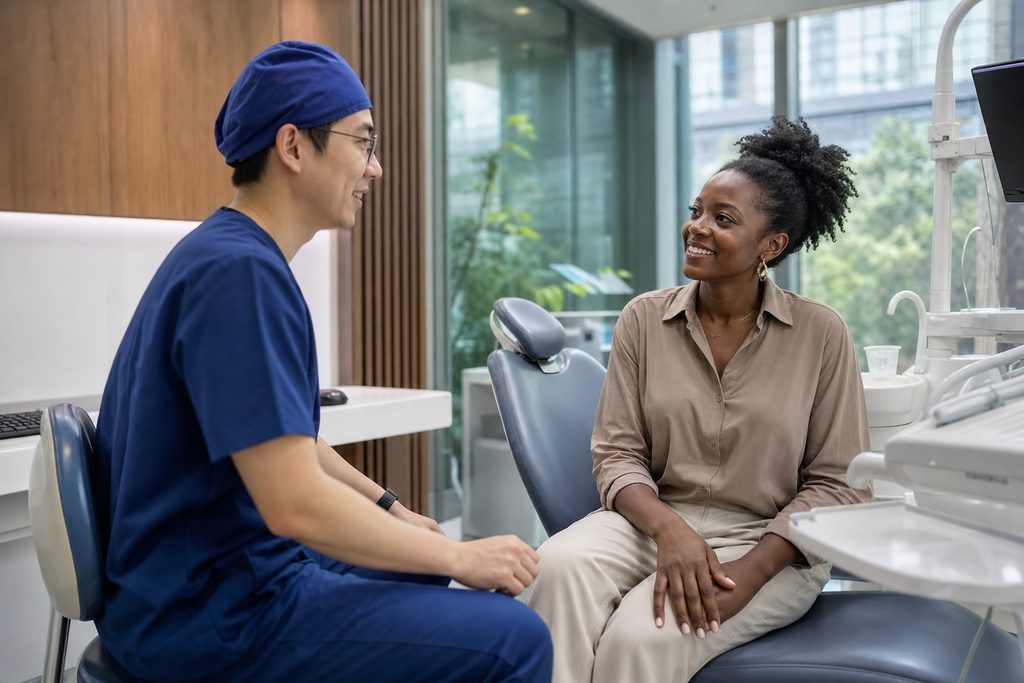
You’ve probably heard that flying to China for oral and maxillofacial surgery means gambling on quality. The data says otherwise. West China Hospital of Stomatology in Chengdu handles a surgical volume most Western teaching hospitals never approach — and for international patients, the oral surgery cost lands at a fraction of US or European rates. But the path from inquiry to operating table is not what most foreigners expect. This guide breaks down exactly what that path looks like, what it costs, and where the real risks hide.
Key Takeaways
- West China Hospital of Stomatology is the largest stomatology center in China, treating over 1 million outpatient visits annually across its Chengdu campus.
- Complex oral and maxillofacial procedures here typically run 60-80% below US list prices, with orthognathic (jaw) surgery packages starting around $12,000-18,000 for international patients.
- Public hospital rules mean you cannot book surgery remotely without an in-person consultation — the international department is the only structured pathway for overseas patients.
- Recovery timelines for jaw surgery abroad mirror domestic ones: 4-6 weeks of liquid diet, 3-6 months for full bone healing, and 9-12 months before final facial contours settle.
The Problem: Oral and Maxillofacial Surgery Is Priced Out of Reach in the West
Orthognathic surgery in the United States carries a price tag that stops most patients cold. The full sequence — surgical planning, hospital fees, surgeon fees, anesthesia, and hardware — routinely lands between $40,000 and $100,000, depending on whether one jaw or both require repositioning. And that figure assumes insurance covers part of it. For patients whose plans classify jaw surgery as cosmetic, the out-of-pocket burden is the entire amount.
In the United Kingdom, the National Health Service offers orthognathic surgery for severe functional cases, but the wait from referral to surgery frequently stretches to 24 months or longer. Canada tells a similar story. Patients with temporomandibular joint (TMJ) disorders, obstructive sleep apnea, or congenital dentofacial deformities often find themselves trapped: either pay a small fortune privately or wait years for public coverage.
That math is what pushes roughly 1.9 million Americans abroad for medical care each year, according to the CDC’s most recent medical tourism survey data. Oral surgery is a smaller slice of that pie than cardiac or orthopedic work, but it is growing. And China — specifically Chengdu — has become a destination most Western patients never consider until someone mentions it.
Why West China Hospital of Stomatology Delivers Results for International Patients
Clinical Volume That Creates Surgical Muscle Memory
West China Hospital of Stomatology is not a small specialty clinic. It operates as the stomatology arm of West China Hospital, Sichuan University — one of the hospitals on our top-ranked hospital database. The stomatology center logs over 1 million outpatient visits and performs tens of thousands of surgical procedures every year. That volume matters. A surgeon who performs 300 orthognathic cases annually has seen complications, anatomical variations, and healing patterns a surgeon doing 30 cases a year simply has not encountered.
Compare that to the average US oral and maxillofacial surgeon, who may complete 20-50 orthognathic procedures per year. Volume does not guarantee a good outcome. But it is one of the strongest predictors available.
Integrated Care Under One Roof
What catches most international patients off guard is how consolidated the workflow is. Pre-surgical orthodontics, 3D cephalometric planning, the surgery itself, and post-operative rehabilitation all happen within the same hospital system. You are not bouncing between a private orthodontist, a separate imaging center, and a hospital surgical suite. The digital workflow — cone-beam CT, virtual surgical planning, and 3D-printed surgical guides — is standard practice here, not an upsell.
Cost Advantage Without Quality Compromise
The structural reasons Chinese surgical fees run lower are not mysterious. Labor costs for nurses, anesthesiologists, and support staff are substantially lower than in the US or Western Europe. Hospital infrastructure is already built and operating at high capacity. Malpractice insurance premiums — a massive cost driver in American healthcare — are a fraction of what US surgeons pay. None of these factors reflect lower surgical skill. They reflect different economics.
What the Booking Process Actually Looks Like for a Foreigner
Here is the hard truth: you cannot email West China Hospital of Stomatology, send your CT scans, and receive a surgery date. Public hospital rules in China require an in-person consultation before any surgical scheduling. The international department exists precisely to bridge this gap for overseas patients, but it does not eliminate the requirement.
The realistic sequence runs like this. You submit your records — panoramic X-rays, lateral cephalometric films, CBCT scans if you have them, and any prior surgical notes — for a written second opinion. A specialist reviews the material and tells you whether you are a surgical candidate and what approach they would recommend. That written opinion typically costs $300-500 through a coordination service. If the assessment is positive, the next step is a video consultation with the maxillofacial team, usually $500-800. Only after that conversation do you travel to Chengdu for the in-person evaluation.
Expect the first trip to last 7-10 days. That window covers the face-to-face consultation, additional imaging the hospital requires, and the pre-surgical workup. If surgery is approved, you return home, complete any required pre-surgical orthodontics with your local orthodontist, and schedule the procedure for a later date. Some patients combine the consultation and surgery into one longer stay of 4-6 weeks. That is possible, but it requires careful coordination and a flexible timeline.
Comparing Costs: Chengdu vs. Shanghai vs. Beijing for Oral Surgery
Patients often assume Beijing or Shanghai must offer better care because the cities are larger. For oral and maxillofacial surgery, that assumption is backwards. Chengdu is home to the country’s highest-volume stomatology center, and its cost of living is lower than either coastal megacity. That translates directly into lower hospital fees.
| Procedure | West China (Chengdu) | Shanghai Top Hospital | Beijing Top Hospital | US Average |
|---|---|---|---|---|
| Single-jaw orthognathic surgery | $12,000–18,000 | $15,000–22,000 | $16,000–24,000 | $40,000–70,000 |
| Double-jaw orthognathic surgery | $18,000–28,000 | $22,000–35,000 | $24,000–38,000 | $60,000–100,000 |
| TMJ arthroscopy | $6,000–10,000 | $7,000–12,000 | $8,000–13,000 | $25,000–40,000 |
| Complex cyst/tumor resection | $8,000–15,000 | $10,000–18,000 | $11,000–20,000 | $35,000–60,000 |
These figures are ballpark ranges for international patients going through the hospital’s international department. They include surgeon fees, anesthesia, hospital stay, and standard hardware. They do not include pre-surgical orthodontics, which typically runs $3,000-8,000 depending on where you live and how long your case requires. Final quotes always vary by hospital and case complexity.
For TMJ surgery cost Shanghai vs Beijing for international patients, the gap is narrower — roughly 10-15% between the two cities — but both run higher than Chengdu. The difference is driven by real estate costs, staffing wages, and the premium that comes with operating in a city where demand from international patients is higher.
Is Jaw Surgery Safe in China? What the Data and Regulations Show
The question behind the question is usually: what happens if something goes wrong, and what recourse do I have as a foreigner? Both are fair. The safety record at a high-volume academic center like West China is strong precisely because the institution’s reputation depends on it. Complication rates for orthognathic surgery — infection, nerve damage, hardware failure — are published in peer-reviewed journals and generally comparable to Western benchmarks.
One structural safeguard worth knowing: West China Hospital of Stomatology is a teaching hospital attached to Sichuan University. Every case is reviewed by an attending surgeon, and complex cases are discussed in multidisciplinary rounds. That does not eliminate risk. No surgery is risk-free. But it means there are multiple layers of oversight, not a single surgeon operating in isolation.
For international patients, the practical safety question is different. It is about language, documentation, and continuity of care. If you speak no Mandarin and arrive without an interpreter, you are not unsafe — you are just unable to communicate effectively with your surgical team. That is not a clinical failure. It is a logistics failure. And it is the single most preventable problem in the entire process.
Recovery Timeline: What to Expect After Orthognathic Surgery Abroad
How long is recovery from orthognathic surgery abroad? The honest answer is that your body heals on the same schedule whether you are in Chengdu or Chicago. The difference is what happens in the first two weeks after discharge from the hospital.
Week one is the hardest. You will be on a liquid diet, your face will be swollen, and you will have elastics holding your jaw in its new position. Most patients stay in the hospital for 5-7 days after double-jaw surgery. If you flew to China for the procedure, you should plan to remain in Chengdu for at least 10-14 days after discharge. That gives your surgical team time to check the incisions, adjust the elastics, and confirm there are no early complications before you board a long-haul flight.
Weeks two through six are a gradual return to normal function. A soft, no-chew diet replaces liquids. Swelling drops significantly by week three, though residual puffiness lingers for months. Most patients can return to desk work after 3-4 weeks, assuming the work does not require speaking constantly.
Full bone healing takes 3-6 months. The final facial contours — what you will actually look like — do not settle until 9-12 months post-op. That timeline is identical whether you have surgery in Chengdu, Seoul, or Los Angeles. The variable is your access to follow-up care. Patients who return home after surgery should arrange a local oral surgeon or orthodontist who can see them for routine checks. The surgical team in Chengdu will typically review photos and X-rays remotely, but they cannot physically examine you from 7,000 miles away.
Practical Considerations: Documentation, Visa, and Payment for Surgery in Chengdu
Getting to Chengdu for oral surgery requires more than a plane ticket. The visa category matters, and getting this wrong will cause problems at the border. Foreign nationals traveling to China for medical treatment apply for an S2 visa, which covers short-term private affairs including medical care. Your accompanying family member applies for the same S2 category. The hospital’s international department issues an invitation letter and treatment confirmation that you submit with your visa application. Processing time varies by consulate, but plan for 2-4 weeks. Do not book surgery until the visa is approved.
Payment is another reality international patients need to plan for. Public hospitals in China operate on a prepayment model. You deposit funds at admission, and the hospital draws down from that balance as services are rendered. International credit cards are not always accepted at hospital cashier windows — some accept UnionPay only. Wire transfers are the most reliable option for large deposits. International departments can usually process major foreign cards, but confirm this before you arrive.
Insurance reimbursement is a separate matter. Most US and European insurers will not directly settle with a Chinese public hospital. You pay out of pocket, keep every receipt and medical record, and submit a claim when you return home. Whether your plan reimburses depends entirely on your policy’s out-of-network and international care provisions. Check this before you commit.
Language is the final practical hurdle. The international department at West China has English-speaking coordinators, but the broader hospital environment — nurses on the ward, radiology technicians, the pharmacy — operates in Mandarin. A bilingual medical companion who handles registration, queueing, payment, and translation during your hospital stay removes the single largest source of stress for foreign patients. It is not a luxury. It is the difference between navigating a massive Chinese hospital with confidence and feeling lost in a system you cannot read.
Frequently Asked Questions
No. You can complete a written second opinion and a video consultation remotely, but the hospital requires an in-person evaluation before any surgical scheduling. This is standard policy for public hospitals in China and is not negotiable.
Your surgical team will review photos and imaging remotely and coordinate with a local oral surgeon if intervention is needed. Serious complications requiring revision surgery are rare, but you should have a plan in place — typically a local maxillofacial surgeon who agrees to see you before you leave for China.
No. The cost difference reflects lower labor costs, lower malpractice premiums, and higher patient volume, not inferior surgical training. The senior surgeons at West China Hospital of Stomatology complete international fellowships and publish in peer-reviewed journals. The institution’s reputation in maxillofacial surgery is built over decades.
Almost always, yes. Orthognathic surgery requires teeth to be positioned correctly relative to the dental arches before the bones are repositioned. You can complete pre-surgical orthodontics with your local orthodontist, but the surgical team in Chengdu will need to approve the final tooth positions before your surgery date.
Plan for 3-6 months from initial inquiry to surgery date. That accounts for records review, video consultation, visa processing, travel arrangements, and any required pre-surgical orthodontic adjustments. Patients with complex cases or those requiring coordination with a local orthodontist should lean toward the longer end of that range.
Your Next Step
West China Hospital of Stomatology offers international patients something rare: world-class oral and maxillofacial surgical volume at a price that makes treatment financially viable. The trade-off is complexity — visa paperwork, language barriers, prepayment logistics, and a two-stage travel process. We help patients navigate exactly that. China Medical Services is not a hospital and we do not provide diagnoses; we connect you with the right specialists, coordinate records review and consultations, and arrange on-the-ground support in Chengdu. If you are weighing jaw surgery abroad, start with a written second opinion. It costs a few hundred dollars and tells you whether this path is even worth pursuing.
Take the first step. Send your records for review, and get a clear answer about whether surgery in Chengdu makes sense for your case.
For more medical information and treatment options in China, visit chinamedservices.com (China Medical Services).
