Ankle Surgery China vs Canada: Fusion Without the 2-Year Wait
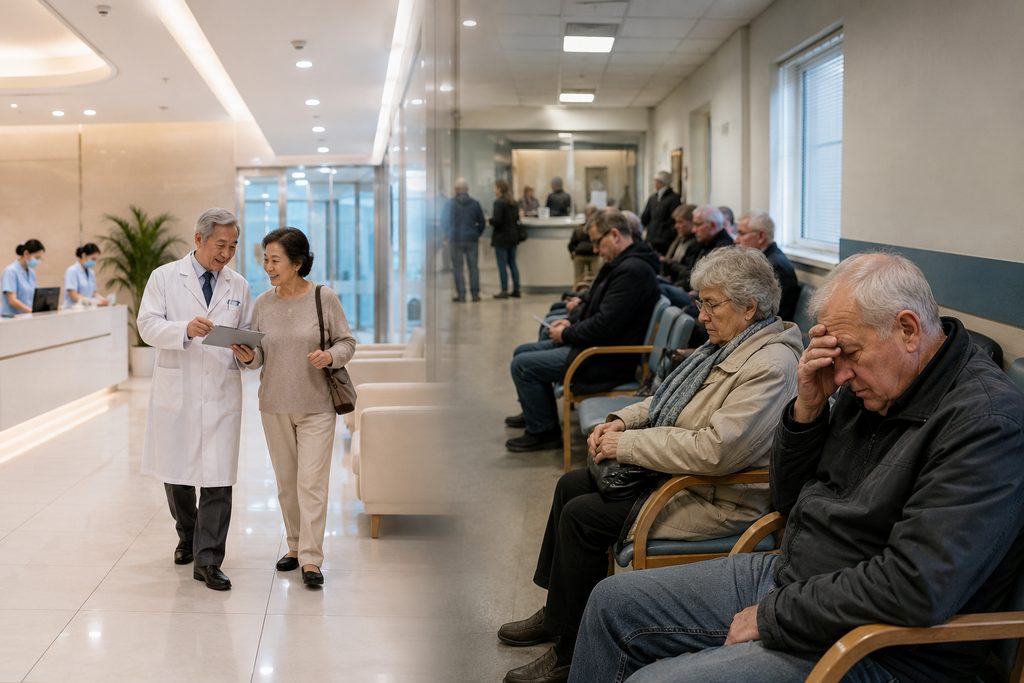
You’ve probably been told that going abroad for a complex surgery means rolling the dice on quality. The data tells a different story. For Canadians stuck on a provincial surgical waitlist, watching their mobility disappear month by month, the real gamble is staying put. A deteriorated joint doesn’t pause while the system triages your case. The ankle fusion surgery cost China combined with clinical volumes that rival or exceed any Western center is reshaping where patients choose to get their lives back.
We don’t perform surgery. Our team connects international patients with rigorously vetted orthopedic departments across China’s top-ranked hospitals. We’ve seen the pattern repeat: a patient calls us after 18 months of limping through daily life, told the wait could stretch another year. They want to know if there’s a path that doesn’t involve losing another two summers to pain. There is. It requires understanding a completely different healthcare delivery model—one built on speed, volume, and transparent pricing.
Key Takeaways
- Elective orthopedic surgery wait times in Canada frequently exceed 26 weeks from specialist consult to treatment, with ankle fusion often pushed further down the priority list behind hip and knee replacements.
- China’s top-tier orthopedic hospitals operate at a clinical volume that dwarfs Canadian centers—a surgeon at a major Chinese joint center may perform over 300 ankle and foot reconstructions annually, building a depth of experience that directly correlates with lower complication rates.
- The structural cost difference is stark: an ankle fusion priced at $18,000–$30,000 CAD in a Canadian private clinic is available at a top-ranked Chinese public hospital for approximately $6,000–$12,000 USD, including implant and hospital stay.
- Language, visa logistics, and post-operative follow-up are the real barriers—not clinical quality. A patient who plans these logistics carefully can receive definitive surgery within 3–4 weeks of first contact, not 18–24 months.
The Problem: Canada’s Orthopedic Waitlist Is a Chronic Condition
Let’s put a hard number on the frustration. The Canadian Institute for Health Information (CIHI) reports that in 2023, only 66% of patients across Canada received their hip or knee replacement within the recommended 26-week benchmark. That’s the benchmark for the highest-volume, most-prioritized joint procedures. Ankle fusion—a surgery for end-stage arthritis, severe deformity, or post-traumatic collapse—falls into a lower-priority category in most provincial health systems. It’s not life-threatening. So it waits.
And waits. A 2023 report from the Fraser Institute pegged the median wait time from specialist consultation to treatment across all orthopedic surgeries at 27.4 weeks. That’s the median. For foot and ankle reconstruction, patients in provinces like Nova Scotia or Manitoba routinely report waits stretching 18 to 24 months. The joint doesn’t stop degenerating during that window. Compensatory gait changes stress the contralateral knee and hip. Pain medication use climbs. Employment, mental health, and metabolic fitness all take a hit. The cost of waiting isn’t just measured in discomfort—it’s measured in cascading health decline.
There is a private-pay option in Canada. Private surgical clinics in provinces like Quebec and British Columbia offer ankle fusion for patients willing to pay out-of-pocket. The price tag? Typically $18,000 to $30,000 CAD, depending on the implant and facility fees. That’s a mortgage down payment. For many, it’s simply not accessible. And even private clinics have scheduling constraints—you’re not walking in next week.
Why China’s Orthopedic Model Delivers Faster, High-Volume Care
The Chinese hospital system operates on a fundamentally different logic. Top-tier public hospitals in cities like Beijing and Shanghai are not small, boutique centers. They are massive clinical engines. A single orthopedic department at a hospital like Peking University Third Hospital or Shanghai Sixth People’s Hospital may perform over 15,000 orthopedic surgeries annually. Foot and ankle subspecialists within those departments see a volume of pathology—post-traumatic arthritis, Charcot deformity, failed prior fusions—that a Canadian surgeon might encounter over several years, compressed into a single quarter.
Clinical Volume Drives Surgical Precision
This isn’t a vague claim about “experience.” The relationship between surgical volume and outcomes is well-documented. A 2022 study in the Journal of Bone and Joint Surgery found that higher surgeon and hospital volumes were associated with significantly lower rates of revision, infection, and 30-day readmission for ankle arthrodesis. When a surgeon performs 150 ankle fusions a year instead of 20, the technical nuances—graft preparation, joint preparation angle, compression screw placement—become second nature. Complication rates drop. Fusion rates rise.
Chinese foot and ankle surgeons at Fudan-ranked hospitals operate at this volume tier routinely. They manage complex revisions that smaller centers might refer out. For a Canadian patient with a failed prior fusion or severe post-traumatic deformity, that depth of subspecialty experience is the difference between a salvageable joint and a lifetime of limited mobility.
Structural Cost Advantage Without Cutting Corners
The lower ankle fusion surgery cost China offers isn’t a sign of inferior implants or rushed care. It’s a function of economics. Labor costs for surgeons, anesthesiologists, and nursing staff are structurally lower. Hospital overhead per bed-day is a fraction of North American rates. Implant costs for high-quality systems—DePuy Synthes, Zimmer Biomet, Stryker—are comparable globally, but the bundled facility fee is dramatically lower.
At a top-ranked Chinese public hospital, an uncomplicated ankle fusion typically ranges from $6,000 to $12,000 USD all-in. That covers the surgeon’s fee, anesthesia, operating room, a 5–7 day inpatient stay, the implant itself, and basic post-operative imaging before discharge. Compare this to $18,000–$30,000 CAD at a Canadian private clinic, or $40,000+ USD at a U.S. hospital. The math is not subtle. For a Canadian paying out of pocket, the savings can fully cover flights, accommodation for a companion, and a week of recovery in a serviced apartment—with tens of thousands left over.
What an Ankle Fusion in China Actually Looks Like: A Week-by-Week Timeline
A patient who contacts our team with imaging and a confirmed diagnosis doesn’t enter a queue measured in months. The timeline from initial remote review to surgery typically runs 3–5 weeks. Here’s what that looks like on the ground.
Week 1: Remote Evaluation. You send your existing X-rays, CT scans, and clinical notes. A foot and ankle specialist at a target hospital reviews them remotely. This written second opinion confirms whether you’re a surgical candidate and what approach—arthroscopic or open fusion, specific implant choice—is recommended. This step costs $300–$500 USD. It’s not a prescription. It’s a roadmap. And if you proceed to surgery, that fee is credited in full toward coordination.
Week 2: Scheduling and Logistics. Once you confirm you want to move forward, our team coordinates the surgical date with the hospital’s international department. You apply for an S2 visa (short-stay private affairs, the correct category for medical treatment). We provide the hospital invitation letter and guidance. Flights are booked. Accommodation near the hospital is arranged. A bilingual companion is assigned.
Week 3: Arrival and Pre-Op. You land, rest a day, then complete pre-operative testing—blood work, ECG, chest X-ray, and a final surgical planning CT if needed. This happens in one day at the hospital’s international wing. The surgeon conducts an in-person consultation, reviews the plan, and answers every question. Surgery is typically scheduled 1–2 days later.
Surgery Day + Hospital Stay. Ankle fusion takes 1.5–3 hours under general or spinal anesthesia. Post-op, you’re in a private room in the international ward. Pain is managed with multimodal protocols—nerve blocks, oral medication, ice. Physiotherapy begins on day 1 or 2: non-weight-bearing transfers, crutch training, upper body conditioning. Most patients are discharged on day 5–7 with a cast or boot, crutches, and a clear rehab protocol.
Weeks 4–6: Local Recovery Before Flying Home. You cannot fly immediately. Deep vein thrombosis risk is elevated after lower-extremity surgery. Most surgeons require a 10–14 day post-operative stay in the city for wound checks and suture removal. Some patients stay longer—2 to 4 weeks—to complete initial physiotherapy and ensure no early complications. Once cleared, you fly home with documentation for your Canadian family doctor or physiotherapist.
Is This Path Right for Every Canadian Patient? A Hard Look at the Trade-offs
We need to be blunt. An ankle fusion abroad is not a universal solution. It works brilliantly for some patients and is a poor fit for others. The decision hinges on three factors: your clinical stability, your support system, and your tolerance for managing follow-up remotely.
First, the ideal candidate has a confirmed diagnosis of end-stage ankle arthritis or deformity that has already failed conservative management—bracing, injections, physiotherapy. The joint is not going to improve on its own. The surgery is definitive. If you’re still uncertain whether fusion is the right procedure, or if you’re a candidate for total ankle replacement instead, a remote second opinion is the correct first step, not booking a flight.
Second, you need a companion. Traveling alone for ankle fusion is not realistic. You will be non-weight-bearing for 6–8 weeks minimum. You need someone to manage luggage, navigate the hospital, and help with daily tasks during local recovery. A spouse, adult child, or close friend. Our bilingual companion handles hospital navigation and translation—not personal care.
Third, post-operative follow-up will be with your Canadian provider. The Chinese surgeon will provide a detailed operative note, implant stickers, post-op imaging, and a phased rehab protocol. But the physiotherapist who guides your weight-bearing progression and the doctor who checks for fusion at 12 weeks will be at home. This handoff works smoothly when your Canadian family doctor is willing to manage it. If you don’t have a primary care provider—a growing problem in parts of Canada—you need to solve that before you leave.
| Factor | Canada (Public) | Canada (Private) | China (Top Public Hospital) |
|---|---|---|---|
| Wait Time (Specialist to Surgery) | 12–24+ months | 4–12 weeks | 3–5 weeks |
| Cost (All-In, USD Equivalent) | $0 (publicly funded) | $14,000–$23,000 | $6,000–$12,000 |
| Surgeon Volume (Annual Ankle Fusions) | 10–30 typically | 15–40 | 100–300+ |
| Post-Op Follow-Up | Local, integrated | Local, integrated | Handoff to Canadian provider |
| Language Barrier | None | None | Bilingual companion required |
One more hard truth: not every patient is a surgical candidate. Severe peripheral vascular disease, uncontrolled diabetes, active infection, or a BMI significantly above 40 increase the risk of non-union and wound complications. A responsible surgeon will decline to operate if the risk profile is unacceptable. A remote second opinion will surface this before you travel.
Practical Considerations: Visas, Payments, and the Paper Trail
The logistics are manageable but not trivial. Here’s what you need to know before you commit.
Visas. Medical treatment in China falls under the S2 short-stay visa category, not the M (business) visa. The S2 is for private affairs, including medical treatment. You’ll need an invitation letter from the hospital, proof of accommodation, and a passport with at least six months’ validity. Processing typically takes 1–2 weeks at a Chinese visa application service center in Canada. Your traveling companion applies for the same S2 category. We provide the documentation package and guidance—we do not guarantee approval, as that rests with the consular officer.
Payment. Chinese public hospitals require pre-payment for international patients. You’ll pay a deposit upon admission, typically covering the estimated surgical and hospital fees. Final settlement occurs at discharge. Payment methods are usually UnionPay, major credit cards (with limits), or wire transfer. Cash in RMB is accepted but impractical for large amounts. Canadian provincial health insurance does not cover elective surgery abroad. Private insurance may reimburse a portion—check your policy for out-of-country surgical coverage before booking.
Medical Records. Bring everything. Original imaging on CD or USB, not just the report. All prior operative notes if this is a revision. A summary from your referring physician. Medication list. Allergies. These must be translated into Chinese for the hospital record. Our team handles certified translation as part of coordination.
Language. Even in an international ward, nursing staff and junior doctors may have limited English. The lead surgeon often speaks functional English, but nuanced discussions about surgical approach, risk, and recovery expectations require a skilled medical interpreter. Our bilingual companions are not just translators—they understand the hospital workflow, know where to pay fees, how to collect results, and when to push for clarification. A patient navigating this alone in Mandarin would find it nearly impossible.
Frequently Asked Questions
Full recovery from ankle fusion is measured in months, not weeks. You’ll be non-weight-bearing in a cast or boot for 6–8 weeks, then progress to partial weight-bearing over the next 4–6 weeks. Full fusion consolidation on X-ray typically takes 12–16 weeks. Driving is prohibited while in a cast or boot on the right foot. Flying is generally safe 10–14 days post-op, once the wound is dry and the surgeon confirms no signs of deep vein thrombosis. Some patients choose to stay in China for 3–4 weeks to complete early physiotherapy and have a final in-person wound check before the long-haul flight. The flight itself requires precautions: aisle seat, regular ankle pumps, compression stockings, and possibly a short course of anticoagulation as prescribed by the surgeon.
The wait for ankle fusion in Canada varies from roughly 6 months to over 2 years, depending on the province and the specific hospital. The Fraser Institute’s 2023 survey found a median orthopedic wait of 27.4 weeks from specialist to treatment nationally, but foot and ankle procedures are often deprioritized behind hip and knee replacements, which have their own mandated benchmarks. Provinces with fewer orthopedic surgeons per capita—like Saskatchewan, Manitoba, and the Atlantic provinces—consistently report longer waits. The system triages by acuity, and a painful but stable ankle doesn’t compete with a fractured hip. If you’re in Ontario or British Columbia, you may have a shorter wait at a major academic center. If you’re in a rural area with no local foot and ankle subspecialist, the wait for a referral alone can be 6–12 months before you even see the surgeon who will operate.
In Canada, a privately paid ankle fusion costs $18,000–$30,000 CAD, covering the surgeon’s fee, anesthesia, facility fee, and implant. In China at a top public hospital, the equivalent all-in cost is $6,000–$12,000 USD. That includes the surgeon’s fee, anesthesia, operating room, 5–7 days of inpatient stay in a private room, the implant, post-op imaging, and basic medications during admission. It does not include flights, accommodation, the bilingual companion service (from $200/day), the remote second opinion ($300–$500, credited toward coordination if you proceed), or post-discharge physiotherapy. A realistic total budget, including travel and companion support for a 3-week stay, runs $12,000–$18,000 USD. That’s still substantially less than the Canadian private-pay option, with surgery performed by a higher-volume subspecialist.
How do I find the best ankle surgeon China for Canadians, and what credentials should I look for?
The surgeon’s individual credentials matter more than the hospital’s name. Look for a foot and ankle fellowship-trained orthopedic surgeon who practices at a hospital ranked in the Fudan University Hospital Ranking for Orthopedics. These rankings, published annually, evaluate clinical reputation and research output across 45 specialties. A hospital in the top 10 for orthopedics nationally—such as Peking University Third Hospital in Beijing or Shanghai Sixth People’s Hospital—has a department where foot and ankle subspecialists perform high volumes of ankle fusions, revisions, and complex reconstructions. Ask directly: how many ankle fusions does this surgeon perform annually? A volume of 100+ per year is a strong signal. Also confirm that the surgeon uses modern fixation techniques—arth
For more medical information and treatment options in China, visit chinamedservices.com (China Medical Services).
