Two-Trip Dental Implant Plan in China: How We Coordinate Both Visits
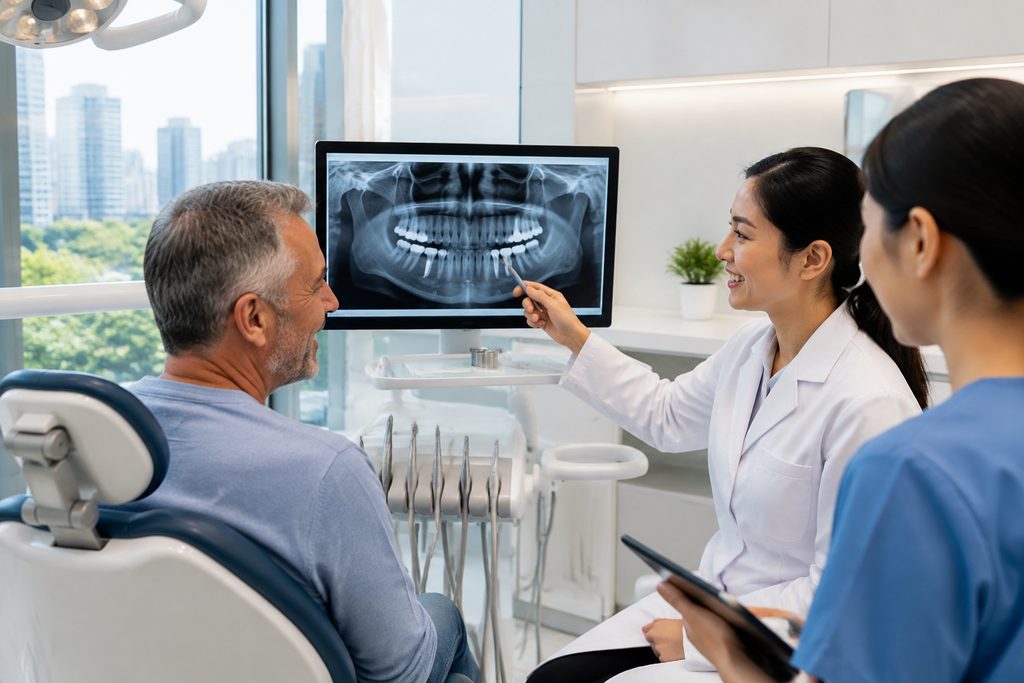
Two-Trip Dental Implant Plan in China: The Short Answer
Most dental implant cases in China follow a two-trip structure: the first visit covers diagnostics, extraction if needed, and implant placement. The second visit, roughly three to six months later, handles the abutment and final crown. The dental implant cost China two trips typically ranges from $900 to $2,500 per implant depending on the hospital tier and implant brand. That compares with $3,000 to $6,000 per implant in the United States.
But the two-trip model is not the only option. Some clinics offer same-day implants with immediate loading. Others use guided surgery that compresses timelines. The real question is whether your bone quality, budget, and schedule favor the classic staged approach or something faster. That’s what this article unpacks.
Who This Is Right For — and Who It Isn’t
The two-trip dental implant plan suits many international patients. It also excludes some. Here’s the honest breakdown.
Typically a good candidate:
- You have adequate jawbone density or are willing to get a bone graft and wait for integration
- You want to keep costs predictable without sacrificing implant quality
- You can travel twice within a six-month window
- You prefer a conservative, well-documented protocol over accelerated techniques
- You need multiple implants and want the surgical phase separated from restoration for healing verification
Who should not pursue this:
- Uncontrolled diabetes or active periodontal disease — implant failure rates climb sharply
- Heavy smokers unwilling to pause during osseointegration
- Patients on bisphosphonates for osteoporosis — risk of osteonecrosis of the jaw
- Those who cannot return for the second trip within the required window
- Anyone expecting a single-visit miracle for complex full-arch cases
Being honest about exclusions matters. A clinic that promises everyone a two-trip plan without reviewing your CT scan is not doing you a favor.
The Options, Compared
Patients researching how many trips for dental implants China typically encounter three distinct models. Here’s how they stack up.
| Approach | Trips Required | Timeline | Cost per Implant (USD) | Best For |
|---|---|---|---|---|
| Classic Two-Stage | 2 | 3–6 months between trips | $900–$2,500 | Most patients; maximum predictability |
| Immediate Loading (Same-Day) | 1–2 | 1–2 weeks total | $1,500–$3,500 | Single front tooth; excellent bone density |
| Full-Arch (All-on-4/6) | 2 | 4–8 months | $8,000–$18,000 per arch | Edentulous patients; full-mouth restoration |
The classic two-stage approach wins for most international patients. The healing period lets the implant integrate before loading forces hit it. Immediate loading works beautifully in select cases but carries higher early failure risk if bone quality is marginal. Full-arch solutions demand careful planning and a longer second visit for final prosthesis fitting.
What Each Trip Actually Involves
This is the section most articles skip. Let’s walk through it day by day because the logistics determine whether the two-trip dental implant plan in China makes sense for your life.
Trip One: Diagnostics, Extraction, Placement
Day one typically starts with a cone-beam CT scan. This is non-negotiable — any clinic placing implants without 3D imaging is cutting a corner that affects nerve safety and implant positioning. The scan takes about 15 minutes. Then comes the clinical exam and treatment plan discussion.
If extraction is needed, it often happens the same day or the next morning. Some cases allow immediate implant placement into the extraction socket. Others require waiting six to eight weeks — which would shift your timeline to a three-trip structure. Your surgeon decides based on infection levels and bone condition.
Implant placement surgery itself runs 30 to 90 minutes per implant under local anesthesia. Most patients return to their hotel the same day. You will need roughly three to five days in-country for this trip: one day for diagnostics and planning, one for surgery, and two to three for a post-op check and suture removal if non-dissolvable sutures are used.
The Waiting Period
Osseointegration — the process where bone fuses to the titanium implant surface — takes three to six months. Lower jaw implants typically integrate faster (three to four months). Upper jaw implants often need five to six months due to softer bone density. Your dentist will give you a specific window based on your CT scan.
Trip Two: Abutment and Crown
This trip is shorter. Two to four days usually suffices. The surgeon exposes the implant if it was buried beneath gum tissue, places the abutment, and takes digital impressions. The final crown is fabricated in a dental lab — often within 24 to 72 hours in major Chinese cities. You leave with the crown cemented or screwed into place and instructions for long-term care.
Dental Implant Cost China Two Trips: What You Actually Pay
Let’s get specific about money because that’s usually the starting point for international patients.
| Cost Component | Typical Range (USD) | Notes |
|---|---|---|
| Initial consultation + CT scan | $50–$150 | Often credited toward treatment if you proceed |
| Implant fixture (brand-dependent) | $400–$1,200 | Straumann, Nobel Biocare, Osstem, Dentium all available |
| Abutment | $150–$400 | Custom vs stock affects price |
| Crown (zirconia or porcelain-fused-to-metal) | $300–$800 | Zirconia costs more; front teeth often warrant it |
| Bone graft (if needed) | $200–$600 | Not always required |
| Extraction (if needed) | $50–$150 per tooth | Simple vs surgical extraction |
What drives variance? Implant brand is the biggest factor. European premium brands like Straumann or Nobel Biocare command higher prices than Korean brands like Osstem — though both have solid clinical track records. Hospital tier matters too. Private international hospitals in Shanghai or Beijing charge more than public hospital dental departments, but they offer English-speaking staff and direct insurance billing. Public top-tier hospitals deliver excellent clinical quality at lower prices but require more navigation.
Airfare and accommodation are separate. Budget $600 to $1,500 per trip for flights depending on origin. Hotels in Shanghai or Guangzhou run $60 to $150 per night for comfortable mid-range options. Some dental implant packages China with accommodation bundle hotel stays into the treatment quote — worth asking about.
Is It Safe to Get Dental Implants in China in Two Visits?
The short answer: yes, at the right hospitals. China’s top dental hospitals perform implant procedures at volumes that dwarf most Western centers. The Ninth People’s Hospital in Shanghai and Peking University School of Stomatology in Beijing each place thousands of implants annually. Volume builds competence.
Infection control standards at top-tier public and JCI-accredited private hospitals meet international benchmarks. The implant systems used — Straumann, Nobel Biocare, Osstem, Dentium — are identical to what your home dentist would use. The hardware is not the variable. The surgeon’s experience and the clinic’s imaging protocol are.
What should you verify before committing? Three things. First, that the clinic uses cone-beam CT for planning, not just panoramic X-rays. Second, that the surgeon placing your implant is a licensed stomatologist with implant-specific training — ask how many implants they place annually. Third, that the clinic provides a written treatment plan with implant brand, warranty terms, and a clear protocol for managing complications.
Red flag: Any clinic quoting a “guaranteed success rate” of 100% is not being honest. Published success rates for dental implants run 95–98% over ten years. A small failure percentage is normal biology, not malpractice.
Practical Considerations: Records, Visa, Payment, Follow-Up
Dental records matter. Bring any existing panoramic X-rays, CT scans, and a list of medications. If you have a failing tooth that needs extraction, bring your home dentist’s notes. This saves time and avoids redundant imaging.
Visa category: short-term medical treatment falls under the S2 visa. You will need supporting documents from the hospital — typically an invitation letter or treatment confirmation. Requirements vary by Chinese embassy and can change without notice. We verify current requirements before you apply. And no, the M visa is not for medical travel. That’s for commercial and trade activities.
Payment: public hospitals in China generally require prepayment for treatment. Private international hospitals may accept direct insurance billing if your plan has overseas dental coverage. Most international patients pay out of pocket and claim reimbursement later. Credit cards work at private hospitals; public hospitals often prefer cash, Chinese bank cards, or WeChat Pay.
Follow-up after returning home: dental implants need annual check-ups. Your home dentist can handle routine monitoring. If a complication arises — implant mobility, persistent pain, gum recession around the implant — contact the treating clinic first. Reputable Chinese dental hospitals provide post-treatment support for international patients, including video consultations to assess whether a return trip is needed.
Frequently Asked Questions
Two trips for the standard two-stage protocol: one for placement, one for restoration three to six months later. If you need a bone graft with a separate healing period, or if extraction requires socket preservation before implant placement, you may need three trips. Same-day immediate-loading protocols can compress this to one trip in narrow clinical situations.
Sometimes. Bundled packages that include hotel stays, airport transfers, and a bilingual coordinator simplify logistics, especially for first-time visitors. But compare the package price against booking components separately. The treatment cost should be itemized. If a package hides the implant brand or surgeon credentials, walk away.
Implant failure rates are low — roughly 2 to 5 percent over ten years. If failure occurs, the treating clinic should evaluate via video consultation first. Many top Chinese dental hospitals offer a warranty period during which implant replacement is covered or discounted. You would need to return for removal and replacement. This is one reason choosing a hospital with a documented international patient follow-up protocol matters more than saving a few hundred dollars.
Yes, but understand the limits. You cannot secure a specific surgery date at a public hospital without an in-person consultation — that’s a hard rule in China’s public system. What you can do is arrange a consultation slot, submit your records for preliminary review, and have logistics coordinated before you fly. Private international hospitals offer more flexibility for advance booking.
At a top-tier Chinese dental hospital, the clinical safety profile matches or exceeds what most Western patients would experience at home. The implant systems, imaging technology, and sterilization standards are equivalent. The main difference is the logistics burden of traveling twice — language, navigation, and follow-up coordination. That’s manageable with planning; it’s not a clinical safety issue.
Your Next Step
Two-trip dental implants in China offer real savings without compromising on implant quality or surgical standards. The key is choosing a hospital with documented implant volume, modern imaging, and a clear protocol for international patients. We help you navigate that selection.
China Medical Services maintains a database of 340+ top-ranked hospitals across 45 specialties, including dental and oral surgery departments. We are not a hospital and we do not provide diagnoses. What we do is match your case to the right institution, coordinate appointments, arrange bilingual support, and help you structure both trips efficiently. If you are weighing dental treatment in China against options at home, start with a conversation.
Send us your existing dental records and a brief description of what you need. We’ll review them, suggest appropriate hospitals, and give you a realistic picture of costs and timelines. No pressure. Just clarity.
Request a free consultation to discuss your case.
For more medical information and treatment options in China, visit chinamedservices.com (China Medical Services).
