Gastric Sleeve in China: Top Hospitals, Costs, and How to Book Safely
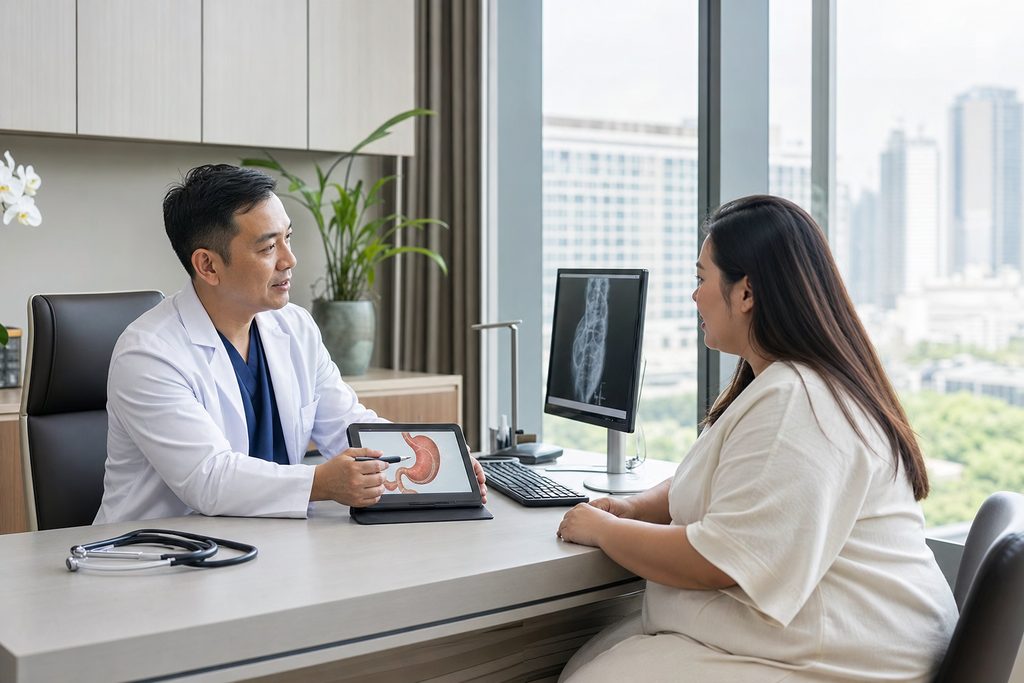
When 42-year-old Daniel from Manchester started researching weight-loss surgery, the quotes he received at home made his stomach drop. Private bariatric surgery in the UK ran between £11,000 and £15,000. His insurance called it elective. So he typed the question thousands of patients now ask every month: which hospital in China offers gastric sleeve surgery that is both safe and affordable? The answer surprised him. Not because options were scarce. Because the gap between a top-tier Chinese bariatric center and a Western private clinic was wider than he expected — in cost, in surgical volume, and in how the whole process actually works.
This article walks through what Daniel discovered. The real gastric sleeve cost China numbers. The hospitals that perform this procedure at scale. The safety record. And the step-by-step path from overseas inquiry to a booked surgery date — without flying blind. If you are weighing bariatric surgery abroad, this is the honest map.
How This Actually Works, Step by Step
Booking a gastric sleeve in China from abroad is not like booking a hotel. Public hospitals do not let overseas patients reserve a surgery slot through a website. The actual sequence looks more like this.
First, you send your medical records. Recent blood work, any endoscopy results, your weight history, existing conditions like diabetes or sleep apnea, and a letter from your GP if you have one. A bariatric team reviews these documents. They check whether you meet the standard criteria for sleeve gastrectomy — typically a BMI of 35 or higher with comorbidities, or 40 or higher without. This review usually takes three to seven working days.
Second, you get a written assessment. The surgical team states whether you are a candidate, what additional tests they need, and what the total treatment plan would look like. This is where a written second opinion becomes useful. It costs between $300 and $500 through our coordination, and it gives you a concrete medical document to make decisions with.
Third, you schedule a video consultation. You speak directly with the bariatric surgeon or the department lead. You ask about technique, staple-line reinforcement, leak rates, recovery expectations. This call typically costs $100 to $300 for a standard international department consultation. For a top-specialist video consultation, expect $500 to $800.
Fourth, you confirm dates and travel. Once the medical team approves you for surgery, the hospital proposes an admission window. You apply for an S2 visa with the hospital’s invitation letter and treatment confirmation. Visa processing takes one to four weeks depending on your home country. You fly in, complete pre-operative testing at the hospital, and surgery happens within a few days of admission.
The whole process, from first inquiry to surgery date, realistically spans six to ten weeks. Anyone promising a sleeve within days of landing is cutting corners you do not want cut.
Which Hospitals in China Actually Perform Gastric Sleeve Surgery at Scale
The question “which hospital in China offers gastric sleeve” has no single answer. But the shortlist is clearer than most people expect. Bariatric surgery in China concentrates in large metropolitan centers, with Shanghai and Beijing leading in surgical volume and international patient infrastructure.
Shanghai is the most common starting point. Several top-tier public hospitals there run dedicated bariatric and metabolic surgery departments that perform hundreds of sleeve gastrectomies annually. These are not occasional procedures. They are core departmental programs with dedicated follow-up protocols. When patients search for the best hospital for gastric sleeve Shanghai, they are usually comparing two or three Fudan-ranked institutions with international departments that handle foreign patients regularly.
Beijing offers comparable options. The capital’s leading general surgery departments run mature bariatric programs, and the international medical centers attached to major public hospitals there are accustomed to coordinating care for patients from the Middle East, Southeast Asia, and Europe.
What matters more than the city is the department’s specific experience. You want a team that does sleeve gastrectomy weekly, not monthly. You want a hospital with a documented low leak rate and a structured post-operative nutrition program. Our database covers 340+ top-ranked hospitals across 37 cities, including bariatric departments with the volume and international coordination experience that this surgery demands.
Private international hospitals in Shanghai and Beijing also offer gastric sleeve surgery. Facilities like Jiahui and United Family provide English-speaking staff, JCI accreditation, and direct insurance billing. The trade-off is cost. Private international hospital pricing for bariatric surgery typically runs 1.5 to 2 times higher than public hospital international departments. Some patients choose private for the hotel-like experience. Others prefer a public top-tier surgical team at a lower price. Both paths are valid. The decision hinges on your budget and your comfort with the hospital environment.
Gastric Sleeve Cost China: Real Numbers
Let’s talk actual figures. The gastric sleeve cost China varies by hospital tier, city, and case complexity. But the range is remarkably consistent across top public hospitals with international departments.
| Cost Component | Public Hospital International Dept | Private International Hospital |
|---|---|---|
| Surgery package (sleeve gastrectomy) | $8,000 – $14,000 | $15,000 – $22,000 |
| Pre-operative testing | $500 – $1,200 | $800 – $1,500 |
| Hospital stay (3–5 days) | Included in package | Included in package |
| Post-op nutrition follow-up (6 months) | $300 – $800 | $500 – $1,000 |
| Total estimated range | $8,800 – $16,000 | $16,300 – $24,500 |
Compare that to the United States, where self-pay sleeve gastrectomy commonly lands between $16,000 and $25,000. In the UK, private bariatric surgery sits at £11,000 to £15,000 — roughly $14,000 to $19,000. Australia and Canada fall in similar ranges. The cost advantage in China is real, but it is not the only reason patients choose it.
What those numbers do not capture is the coordination cost. If you are asking how much is gastric sleeve in China in total, factor in flights, accommodation for you and a companion, visa fees, and local support. A bilingual medical companion runs from $300 per day. Airport transfer is $200 round-trip. Full end-to-end coordination for a complex case ranges from $5,000 to $8,000. These are not hidden fees. They are the logistics of having surgery in a country where you do not speak the language.
Is Gastric Sleeve Safe in China?
The honest answer is that safety depends on the hospital, not the country. China’s top-tier bariatric centers perform sleeve gastrectomy with complication rates comparable to accredited centers in the United States and Europe. The key metric is leak rate — the most serious early complication after sleeve surgery. In experienced, high-volume centers, leak rates run below 1%. In low-volume or inexperienced hands, that number climbs.
This is not a China-specific problem. The same variance exists everywhere. What China offers is concentration: a small number of hospitals perform very high volumes of bariatric surgery because they serve enormous domestic populations. A surgeon doing 300 sleeves a year has seen complications and knows how to manage them. That volume is harder to find in smaller Western private clinics.
But you must be clear-eyed about the risks. Infection, bleeding, staple-line leak, blood clots, and anesthesia complications are real possibilities with any sleeve gastrectomy, anywhere. The question is not whether is gastric sleeve safe in China — it is whether the specific hospital you choose has the volume, the protocols, and the post-operative monitoring to catch problems early.
That is why remote evaluation matters so much. Before you book a flight, the surgical team should review your records, assess your individual risk profile, and tell you plainly whether you are a good candidate. If a hospital accepts you for surgery without reviewing anything, walk away.
A Realistic Timeline
Here is what the process actually looks like, week by week, for a typical international patient pursuing a gastric sleeve in China.
| Stage | What Happens | Duration |
|---|---|---|
| Week 1 | Submit medical records; team reviews eligibility | 3–7 days |
| Week 2 | Written second opinion delivered; video consultation scheduled | 5–10 days |
| Week 3 | Video consultation with bariatric surgeon; surgical plan confirmed | 1 day |
| Week 4 | Visa application with hospital invitation letter | 1–4 weeks |
| Week 5–6 | Travel booking; pre-operative instructions; payment deposit | 1–2 weeks |
| Week 7–8 | Arrival in China; pre-op testing; surgery; 3–5 day hospital stay | 7–10 days |
| Month 3 | First major follow-up; remote nutrition consult | Ongoing |
The stages people forget are document translation and visa lead time. Your medical records need to be in English or Chinese for the review team. If your records are in another language, add a week. Visa processing varies wildly by country. Some Middle Eastern and Southeast Asian passports move faster. European and North American applicants should budget the full four weeks.
And then there is the follow-up. A gastric sleeve is not a one-time event. You need nutritional guidance at one month, three months, six months, and a year. Top Chinese programs now include remote follow-up for international patients. Ask about this before you commit. If a hospital has no plan for after you fly home, that is a red flag.
What Can Go Wrong — and What Happens Then
Let’s be blunt about failure modes, because this is where trust is earned.
The most common problem is not medical. It is administrative. A patient arrives expecting surgery in two days and discovers the hospital requires additional cardiac clearance or a sleep study first. This delays surgery by three to five days. The fix is simple: complete all requested pre-operative testing before you fly, and get written confirmation of what is required.
The second problem is language. Even in hospitals with international departments, the surgical floor staff may not speak fluent English. You need a bilingual companion for the admission, the consent process, and the first post-operative day. This is not a luxury. It is a safety measure.
The third problem is medical. A leak, an infection, a reaction to anesthesia. These are rare in high-volume centers, but they happen. The recourse is the hospital’s own complication management protocol. Top Chinese bariatric centers have endoscopy and interventional radiology on site to manage leaks without immediate re-operation. Ask about this capability before you book. It is a legitimate question, and any reputable department will answer it.
The fourth problem is expectation mismatch. Some patients expect to lose 30 kilograms in three months. The reality is slower. A sleeve typically produces 25–30% total body weight loss over 12 to 18 months. If a clinic promises dramatic, rapid results, treat that as a warning sign, not a selling point.
How to Evaluate a Chinese Bariatric Program Before You Commit
You cannot visit every hospital. But you can ask the right questions remotely. Here is the checklist that separates serious programs from marketing operations.
Ask for annual sleeve gastrectomy volume. A department doing fewer than 100 sleeves a year is not a high-volume center. Ask for their leak rate. If they will not share it, that is an answer in itself. Ask about their staple-line reinforcement technique and whether they use intraoperative leak testing. These are standard practices in mature programs.
Ask who performs the surgery. In some hospitals, the department head consults but a junior surgeon operates. You want the name and experience level of the actual operating surgeon. This is a reasonable request, not an insult.
Ask about the post-operative diet protocol. A good program provides a structured progression from clear liquids to purees to solids, with written materials in English. If the answer is vague, the follow-up will be vague too.
And ask about the total cost, in writing. Not just the surgery package. The testing, the hospital stay, the follow-up, the coordination. China bariatric surgery packages vary in what they include. Some packages cover only the operation and the immediate hospital stay. Others bundle pre-op testing and six months of remote nutrition support. The cheapest quote is rarely the best value.
What about the visa? Patients traveling for medical treatment in China use an S2 visa, with the hospital providing a treatment confirmation letter. Family members accompanying you apply for the same category. Do not let anyone tell you to apply for an M visa for medical purposes. That is for commercial and trade activities, and using it for surgery creates problems you do not need.
Practical Considerations: Records, Payment, and Follow-Up at Home
In high-volume, Fudan-ranked bariatric centers, complication and leak rates are comparable to accredited Western centers. The key is choosing a hospital that performs sleeve gastrectomy at high volume and has on-site endoscopy and interventional radiology for complication management. Safety is a function of the specific hospital, not the country.
Yes, but not through a website checkout. The process involves remote record review, a written second opinion, a video consultation with the surgical team, and then a confirmed admission window. You fly in for pre-op testing and surgery. Expect six to ten weeks from first inquiry to surgery date.
An S2 visa, with the hospital providing a treatment confirmation letter and invitation documentation. Family members traveling with you also apply for S2 visas. Processing takes one to four weeks depending on your home country.
Top Chinese bariatric programs now include remote follow-up for international patients: scheduled video consultations with a nutritionist at one, three, six, and twelve months. Your local GP receives a full discharge summary and medication list. Confirm the follow-up protocol before you commit, not after surgery.
Your Next Step
Choosing to have gastric sleeve surgery in China is a serious decision, and the right first move is information, not a plane ticket. Our team at China Medical Services helps international patients
Frequently Asked Questions
Yes. The hospitals used for international patients are JCI-accredited and follow the same international safety standards as top hospitals in the US and Europe. Surgical teams perform high volumes of procedures — often more than their Western counterparts — which studies show leads to better outcomes.
Costs vary by procedure and hospital, but international patients typically save 40-80% compared to US prices — even when factoring in travel and accommodation. A consultation with our team will give you an exact, all-inclusive quote with no hidden fees.
Send us your existing medical reports to get started. We handle everything from hospital selection and appointment scheduling to visa assistance and post-operative recovery planning. Your medical records are reviewed by the specialist before you even book a flight.
For more medical information and treatment options in China, visit chinamedservices.com (China Medical Services).
