Gastric Sleeve Recovery in China: Timelines, Costs, and Realistic Planning
Have you ever wondered whether the recovery from a gastric sleeve is just about the incision healing, or if there is something much more fundamental happening in your body? The answer shapes everything about how you should plan a trip to China for surgery. Most people focus on the price of a gastric sleeve cost China package and forget that the metabolic and behavioral adjustments take months, not weeks. We have walked hundreds of international patients through this exact decision, and the gap between expectation and reality usually comes down to one thing: a realistic timeline.
China has become a serious destination for bariatric surgery because of the combination of high surgical volume, modern private international hospitals, and prices that remain far below Western averages. But “recovery” is not a single event. It is a sequence of physical, dietary, and psychological stages. This guide explains what actually happens after surgery, how long each phase lasts, what can go wrong, and how to plan the logistics without making the mistakes we see too often.
How This Actually Works, Step by Step
The sequence matters more than the surgery date itself. Here is the real path from where you are now to being back home and stable.
First, you send us your existing medical records: recent blood work, any endoscopy reports, a letter from your primary doctor, and your weight history. A Chinese bariatric team reviews them. They look for contraindications — untreated sleep apnea, severe reflux, certain psychiatric conditions, or a BMI below the accepted threshold. You get a written assessment back, usually within a few working days.
If the team says you are a candidate, the next step is a video consultation. This is where you speak directly with the surgeon or the bariatric coordinator. You discuss your goals, your eating patterns, and what the first six months will actually look like. No one should promise you a surgery date before this happens.
After the video call, if both sides agree to proceed, we coordinate the hospital booking. This is where the Chinese system differs from what many Western patients expect. Public hospitals generally cannot reserve a bed for an overseas patient without an in-person outpatient visit first. Private international hospitals and the VIP/international departments of top public hospitals can often pre-arrange admission — but at a higher price, typically 1.5 to 2 times the standard pathway. That premium buys you English-speaking staff, shorter queues, and a fixed admission date.
Then comes the visa. You apply for an S2 visa with a note indicating medical treatment as the purpose. Your accompanying family member applies for the same category. We provide the supporting hospital invitation letter and medical documentation. Processing time varies by consulate, but you should budget three to six weeks.
You fly in, usually two to three days before the scheduled pre-operative workup. The hospital repeats key labs, does an ECG, and sometimes a chest X-ray. Surgery happens the following day. You stay in hospital for two to four nights. Then you move to a nearby hotel or serviced apartment for the early recovery period before flying home.
Gastric Sleeve Recovery Time: What the First Eight Weeks Actually Look Like
The question “how long is gastric sleeve recovery time” has two answers. The short answer is that most people return to a desk job in two to three weeks. The honest answer is that full metabolic and dietary adaptation takes three to six months. Both matter for planning a trip to China.
The first 48 hours are the hardest. You will have abdominal gas pain from the CO₂ used to inflate the abdomen. Walking helps more than any medication. Most patients are discharged on day three or four. By day seven, the surgical pain is usually manageable with paracetamol alone.
Weeks two through four are the liquid and purée phase. This is not a suggestion — it is a structural requirement. The staple line along the stomach needs time to heal under minimal pressure. Eating solid food too early can cause a leak, which is the most serious early complication. We tell patients to plan for at least two weeks of full liquids, then two weeks of puréed food.
By week six, most people tolerate soft solids. Energy levels return. But here is what surprises many: the weight loss in the first month is not always dramatic. Some patients lose eight to twelve kilograms; others lose four. The body is retaining fluid and adjusting. The real inflection point usually comes between month two and month four.
So, how long is gastric sleeve recovery time in practical terms? Plan for two weeks of genuine physical limitation. Plan for six to eight weeks before you feel fully yourself. And plan for a lifetime of changed eating behavior — because the sleeve is a tool, not a cure.
A Realistic Timeline
Below is the timeline we give every patient considering surgery in China. It includes the waiting steps that most people forget, not just the surgical recovery itself.
| Stage | What Happens | Typical Duration |
|---|---|---|
| Document review | You send records; bariatric team evaluates candidacy | 3–7 working days |
| Video consultation | Direct discussion with the surgical team | 30–60 minutes, scheduled within 1–2 weeks |
| Hospital booking | Private international department pre-arranges admission | 1–3 weeks, depending on surgeon availability |
| S2 visa processing | Application with hospital invitation letter | 3–6 weeks, consulate-dependent |
| Pre-op workup in China | Repeat labs, ECG, anesthesia clearance | 1–2 days before surgery |
| Surgery and inpatient stay | Laparoscopic sleeve gastrectomy | 2–4 nights |
| Early recovery in China | Hotel stay, liquid diet, first follow-up | 7–10 days after discharge |
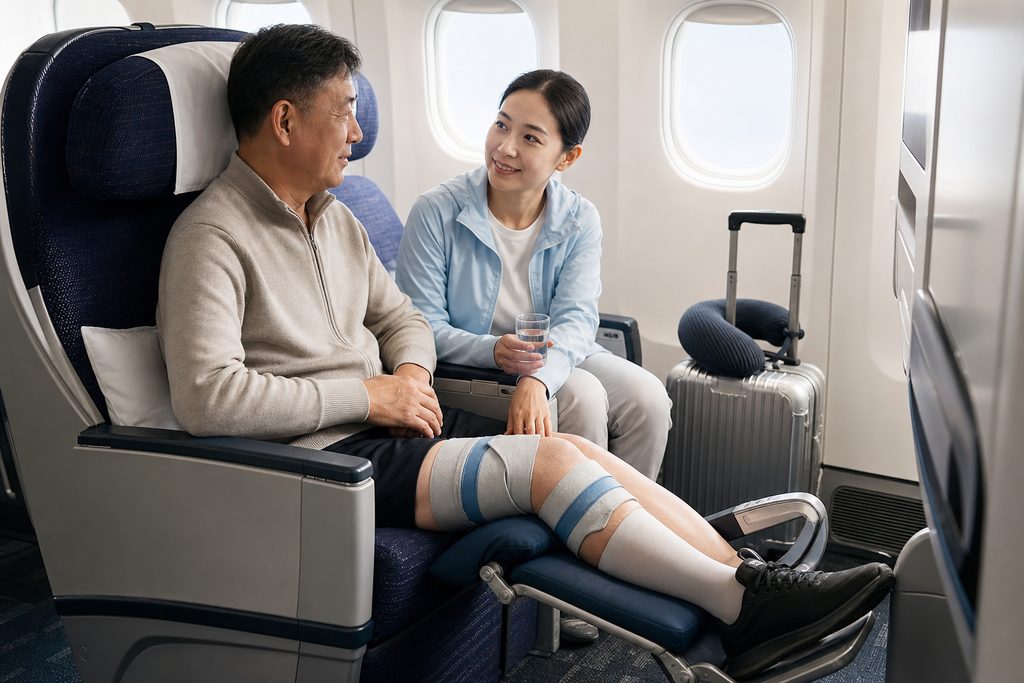
| Flight home | Usually safe after day 10–14, with compression stockings and movement | — |
| Full physical recovery | Return to normal activity, soft diet | 6–8 weeks |
| Metabolic adaptation | Stable weight loss trajectory, new eating patterns | 3–6 months |
The waiting steps are what catch people off guard. Document translation, surgeon scheduling, and visa processing can add five to eight weeks before you ever board a plane. If you are comparing a weight loss surgery package China price from different providers, ask what is actually included in that package. Some quotes cover only the hospital fee. Others include hotel, airport transfer, bilingual companion, and follow-up imaging. The difference is often $2,000 to $4,000.
What Can Go Wrong — and What Happens Then
No honest guide skips this section. Gastric sleeve surgery is safe — the 30-day mortality rate in accredited centers is below 0.1% — but complications do occur. And when you are in a foreign country, the question is not just “what can go wrong” but “who handles it when it does.”
The most feared early complication is a staple line leak. It happens in roughly 1% to 2% of cases. Symptoms include fever, rapid heart rate, left shoulder pain, and abdominal pain that gets worse instead of better. If a leak is suspected, the hospital performs a CT scan with oral contrast. Small leaks can sometimes be managed with antibiotics, drainage, and nutritional support. Larger leaks require a second operation or an endoscopic stent. This is why choosing a hospital matters more than choosing a price.
Bleeding is another possibility, usually within the first 48 hours. Most cases settle with transfusion and observation. Stricture, or narrowing at the sleeve site, can develop weeks later and cause persistent vomiting. It is treated with endoscopic dilation — a relatively simple procedure, but one that means another hospital visit.
Nutritional deficiencies are the long-term risk people underestimate. Vitamin B12, iron, calcium, and vitamin D levels drop in a significant proportion of patients without supplementation. You will need lifelong multivitamins and periodic blood tests. The best bariatric programs in China include a structured follow-up protocol — usually at one, three, six, and twelve months — with remote review of your labs.
So what happens if something goes wrong after you fly home? This is the question you must ask before surgery, not after. Reputable Chinese bariatric centers provide a direct line to their international department for post-operative concerns. We also coordinate with your local physician, translating operative notes and discharge summaries into English. But be realistic: if a surgical complication requires re-operation, you would likely need to return to China or seek care in your home country. That is not a failure of the Chinese system — it is the reality of any cross-border surgery.
Is Gastric Sleeve Safe in China? How to Evaluate a Provider
The question “is gastric sleeve safe in China” deserves a direct answer: yes, in the right hospitals, and no, in the wrong ones. The spread between the best and the worst is wide. Your job is to know how to tell the difference.
Start with volume. A surgeon who performs 200 sleeves a year has a different complication profile than one who performs 20. Ask for the specific number. The best bariatric surgeons in China work in centers that perform 500 to 1,000 bariatric procedures annually. Those numbers are not always published, but a good international department will share them when asked.
Look for accreditation. JCI certification is the most recognized international standard, and several private international hospitals in Shanghai, Beijing, and Guangzhou hold it. For public hospitals, the Fudan University hospital rankings are the gold standard within China. A hospital ranked among the top 10 for general surgery or gastrointestinal surgery is a reasonable proxy for bariatric competence, even if bariatrics itself is not a separately ranked specialty.
Ask about the full pathway, not just the operation. Who manages your pre-op diet? Who reviews your labs at three months? What happens if you call with a concern at 2 a.m.? A hospital that cannot answer these questions clearly is not ready for international patients.
And check the price structure carefully. A “package” that seems too cheap usually excludes anesthesia, imaging, or the surgeon’s fee. A realistic gastric sleeve cost China range for an international patient using a private or VIP pathway is roughly $12,000 to $22,000, depending on the city and hospital tier. That compares with $15,000 to $25,000 in Mexico or Turkey, and $20,000 to $35,000 in the United States for self-pay patients. The Chinese advantage is not always the lowest headline price — it is the combination of high-volume surgical teams, modern facilities, and a price that remains predictable.
Practical Considerations: Records, Visa, Payment, and Follow-Up at Home
Yes, but only through the private international or VIP pathway. Public hospital standard outpatient clinics cannot pre-book surgery for overseas patients without an in-person visit. If you want to book gastric sleeve surgery Shanghai with a fixed date before you fly, you need the international department route, which costs more but includes English-speaking coordination and a confirmed admission slot.
Staple line leak in the first two weeks. It is rare — around 1% to 2% in experienced centers — but it is serious. The best prevention is choosing a high-volume surgeon and following the liquid and purée diet phases strictly. Do not rush back to solid food.
Not always. Some patients lose 8 to 10 kilograms in the first month; others lose 3 or 4. Fluid shifts and hormonal changes affect the early numbers. The reliable weight loss happens between months two and six. Judge the surgery on your six-month trajectory, not your first scale reading.
Rarely. Most packages cover the hospital fee, surgeon’s fee, anesthesia, and basic imaging. Hotel, airport transfer, bilingual companion, and post-discharge medications are usually separate. Always ask for a line-item breakdown before you commit. A package that is $2,000 cheaper on paper may cost more once you add the missing pieces.
Your Next Step
Recovery from a gastric sleeve is a process measured in months, not days. The surgery itself is the shortest part of that process. What determines your outcome is the quality of the surgical team, the honesty of the pre-operative assessment, and the structure of your follow-up care.
Our team at China Medical Services helps international patients evaluate whether a Chinese bariatric program is the right fit. We do not perform surgery and we do not make clinical decisions. We translate records, connect you with accredited bariatric teams, coordinate the S2 visa documentation, and provide bilingual support on the ground. If you are weighing your options, start with a written second opinion or a video consultation — it costs a fraction of the surgery and gives you a clear picture before you commit. Send us your records and we will help you understand what is realistic.
Frequently Asked Questions
Yes. The hospitals used for international patients are JCI-accredited and follow the same international safety standards as top hospitals in the US and Europe. Surgical teams perform high volumes of procedures — often more than their Western counterparts — which studies show leads to better outcomes.
Costs vary by procedure and hospital, but international patients typically save 40-80% compared to US prices — even when factoring in travel and accommodation. A consultation with our team will give you an exact, all-inclusive quote with no hidden fees.
Send us your existing medical reports to get started. We handle everything from hospital selection and appointment scheduling to visa assistance and post-operative recovery planning. Your medical records are reviewed by the specialist before you even book a flight.
For more medical information and treatment options in China, visit chinamedservices.com (China Medical Services).
