Is It Worth Flying to China for Pediatric Surgery? A Parent’s Cost & Safety Guide
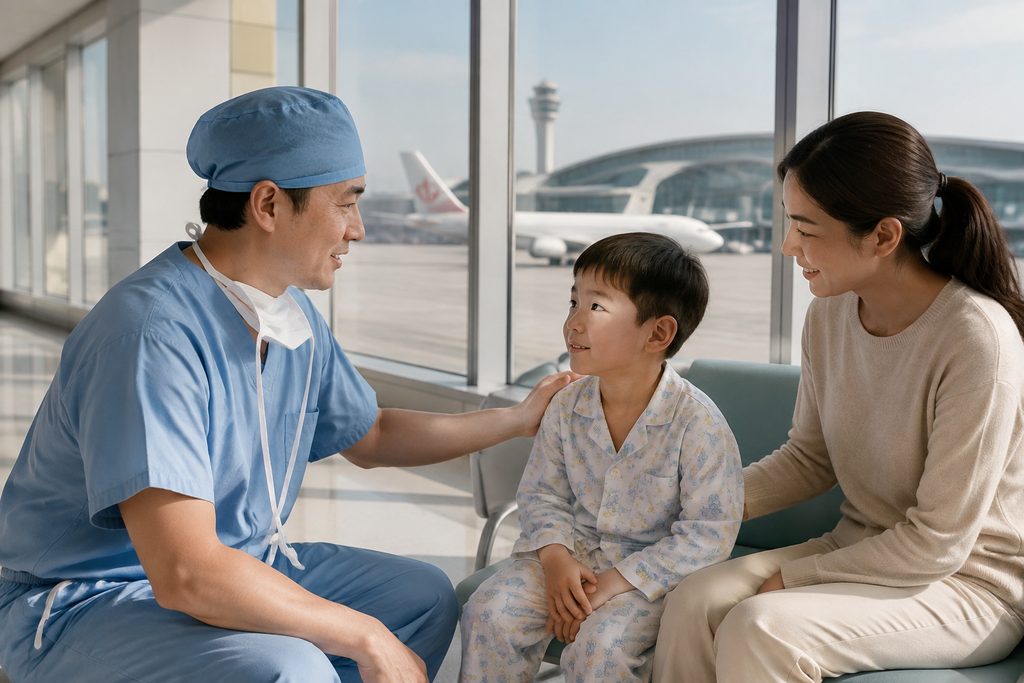
Pediatric surgery means any operation performed on a child from infancy through the teenage years. That could be something as common as a hernia repair or as complex as congenital heart reconstruction. The question parents are really asking under the surface is not just “is it worth it” but “am I making a responsible choice for my child?” The honest answer is that for many families, flying to China for pediatric surgery is not only worth it — it is often the difference between getting treatment and waiting indefinitely. A cardiac procedure that costs $120,000 in the United States may run $18,000 to $25,000 at a top-tier Chinese children’s hospital. That is the pediatric surgery cost China reality that drives thousands of families to consider this option every year.
But cost is not the whole story. Safety, communication, and long-term follow-up matter just as much. Let’s walk through what this decision actually involves.
Is It Worth Flying to China for Pediatric Surgery? The Short Answer
For a family facing a quoted price of $100,000 or more in their home country, yes — it is worth serious consideration. You can access surgeons who perform hundreds of the same procedure annually, at hospitals ranked among China’s top 10 for their specialty, for roughly one-fifth to one-tenth of what you would pay in the United States or Western Europe. The catch is that this only works if you plan carefully. Walking into a public hospital as a foreign family without preparation is not realistic. Using the international department or VIP channel changes everything — but it also changes the price.
So the real question is not whether China has good pediatric surgeons. It does. The question is whether you can navigate the system well enough to access them safely.
Who This Is Right For — and Who It Isn’t
Some families should absolutely pursue this. Others should stay home. Being clear about the difference is the only responsible way to discuss this topic.
Typically a good candidate:
- Your child has a non-emergency condition that allows time for planning — orthopedic corrections, urological repairs, certain cardiac defects, craniofacial procedures
- You have a confirmed diagnosis and complete medical records you can share
- Your home country’s wait time is measured in months or years
- The quoted cost at home is financially devastating
- You are willing to spend 2 to 4 weeks in China for surgery and initial recovery
Should probably not pursue this:
- Your child is medically unstable and cannot tolerate international travel
- The condition requires immediate emergency intervention
- You cannot arrange for follow-up care in your home country after returning
- Your child has a rare condition requiring a very specific research protocol only available at one center
- You expect the entire process to feel exactly like a Western private hospital — it will not, even in the best facilities
Also worth saying plainly: if your child’s condition is well-managed at home and the cost is not a burden, there is no reason to fly across the world. This option is for families who are stuck.
The Options, Compared
You have three realistic paths when your child needs surgery. Here is how they stack up.
| Option | Typical Wait Time | Cost Range (USD) | Key Trade-off |
|---|---|---|---|
| Public hospital, home country | 3–18 months | $10,000–$200,000+ | Covered by insurance but slow |
| Private hospital, home country | 2–6 weeks | $50,000–$300,000+ | Fast but often out-of-pocket |
| Top-tier hospital in China (international department) | 2–6 weeks after records review | $8,000–$35,000 depending on procedure | Affordable but requires travel and coordination |
The China option suits families who would otherwise choose private care at home but cannot afford it. If your home public system will treat your child within a reasonable timeframe at no cost, that is usually the better choice. But when the wait is long or the public system will not cover the specific procedure your child needs, the math shifts quickly.
What “Top Children’s Hospital” Actually Means in China
Parents searching for the best children’s hospital in Shanghai for surgery often assume there is one clear answer. There is not — but there is a clear tier. China’s hospital ranking system, published by Fudan University, evaluates hospitals across 45 specialties. For pediatrics and pediatric surgery, several institutions consistently appear at the top.
In Shanghai, the leading pediatric centers include facilities affiliated with major medical universities, where pediatric surgical departments handle thousands of cases annually. The volume matters. A surgeon who repairs 300 congenital heart defects per year has seen complications that a surgeon performing 30 per year has only read about. That repetition is precisely what you want when it is your child on the table.
Beijing has its own cluster of top-ranked pediatric facilities. If you are specifically researching how much is pediatric heart surgery in Beijing, the answer typically lands between $15,000 and $30,000 depending on complexity, hospital tier, and whether you use the standard international department or request a specific senior specialist. The same procedure at a major US center routinely exceeds $100,000 before insurance.
What you give up is the polished, hotel-like environment of a Western private hospital. Chinese public hospitals — even top-tier ones — are crowded, fast-moving, and not built around patient comfort. The international departments are better, with English-speaking coordinators and private rooms, but they are still within a Chinese hospital system. That is not a criticism. It is just what it is.
What It Costs: Real Numbers for Pediatric Surgery Cost China
Let’s talk about actual figures. These are ranges, not quotes. Every case varies by hospital and case complexity.
- Pediatric hernia repair: $3,000–$6,000
- Tonsillectomy and adenoidectomy: $2,500–$5,000
- Hypospadias repair: $4,000–$8,000
- Ventricular septal defect (VSD) closure: $15,000–$25,000
- Scoliosis correction: $25,000–$45,000
- Cleft lip and palate repair: $4,000–$9,000
These figures typically include the hospital stay, surgeon fees, anesthesia, and basic post-operative care. They do not include international flights, accommodation for your family, visa fees, or our coordination services. Budget an additional $3,000–$8,000 for travel and living expenses depending on where you are flying from and how long you stay.
One more thing about payment. Public hospitals in China require pre-payment — you deposit money upfront and it is drawn down as services are used. Insurance reimbursement happens after the fact, meaning you pay first and claim later. Private international hospitals like United Family or Jiahui often bill your insurer directly, but their prices run higher. Our database of top-ranked hospitals lets you compare both public and private options side by side.
Practical Considerations: Records, Visas, and Follow-Up
This is where parents either succeed or fail. The surgery itself is usually the easy part.
Medical records. You need everything: imaging, lab results, prior surgical notes, current medication list, growth charts. Have these translated into Chinese or English — most Chinese specialists read English, but local medical records departments may require Chinese translations. Our team handles this. If you arrive without complete records, expect delays.
Visa. Foreigners traveling to China for medical treatment use the S2 visa, which is for short-term private affairs including medical care. The patient and family members each need their own S2. You will need supporting documents from the Chinese hospital confirming your treatment arrangement. This is not a visa you can simply apply for on a whim — the hospital documentation is what makes it work. And no, the M visa is not the right one. That is for commercial and trade activities, not medical treatment.
Follow-up after returning home. This is the part nobody thinks about until they are on the plane back. Your child’s surgeon in China will provide a discharge summary and follow-up instructions. You need a local pediatrician or specialist at home who is willing to take over post-operative care. Not all doctors are comfortable with this. Find one before you travel, not after.
Language. Top-tier Chinese hospitals have English-speaking staff in their international departments. But the moment you step outside that bubble — the pharmacy, the imaging department, the billing office — English disappears. A bilingual medical companion who can translate, queue, and handle paperwork is not a luxury. It is the difference between a smooth process and a stressful one.
If you are weighing the logistics of traveling with a sick child, our bilingual medical companion service exists precisely for this situation. We handle registration, payment, translation, and navigation so you can focus on your child.
Frequently Asked Questions
For a medically stable child, yes. The flight itself is not the primary risk — the surgery is, and that risk exists no matter where you are. What matters is choosing a hospital with high case volume in your child’s specific condition and having a clear plan for complications. China’s top pediatric surgical departments operate at Western standards. The challenge is not the medicine. It is the system around it, which is why families use coordination services.
Yes, but you should not. Chinese specialists will want to see your child’s existing diagnostic work before accepting the case. A referral from your home doctor is not legally required, but it helps establish medical history and treatment context. What is required is complete documentation. Without it, the Chinese team cannot evaluate the case remotely, and you may travel only to be told more tests are needed first.
This is the hardest question, and you deserve a straight answer. Chinese hospitals have standard protocols for surgical complications, and top-tier pediatric ICUs are well-equipped. But you will be in a foreign country, dealing with a medical system in a language you likely do not speak, and your child will be the one affected. That is a real risk. Mitigate it by choosing a hospital with a strong international department, having a bilingual coordinator with you throughout the hospital stay, and confirming before you travel that your home country’s healthcare system will accept your child back for post-operative care if needed.
Yes, but be careful. Some agencies sell “packages” that bundle flights, hotels, and hospital arrangements. The quality varies enormously. A legitimate package should include hospital selection based on your child’s specific diagnosis, not a one-size-fits-all itinerary. It should also be transparent about what is included and what is extra. If a package promises a specific surgery date before any doctor has reviewed your child’s records, walk away. That is not how Chinese hospitals work — surgery is scheduled after an in-person consultation, never before.
Your Next Step
The decision to fly your child to another country for surgery is not one you should make alone. You need real information about your child’s specific condition, the hospitals that actually specialize in it, and what the process looks like from start to finish. That is what we do. We are not a hospital, and we do not provide medical advice or diagnoses. We are a coordination team that helps international families navigate China’s healthcare system — matching your child’s case to the right department, handling records and scheduling, and providing bilingual support on the ground. If you want to understand your options, send us your child’s diagnosis and records through our consultation page. We will tell you honestly whether this path makes sense for your family. No pressure, no obligation — just clarity.
For more medical information and treatment options in China, visit chinamedservices.com (China Medical Services).
