Eye Exam Results Review in China: Our Specialist Explanation Service
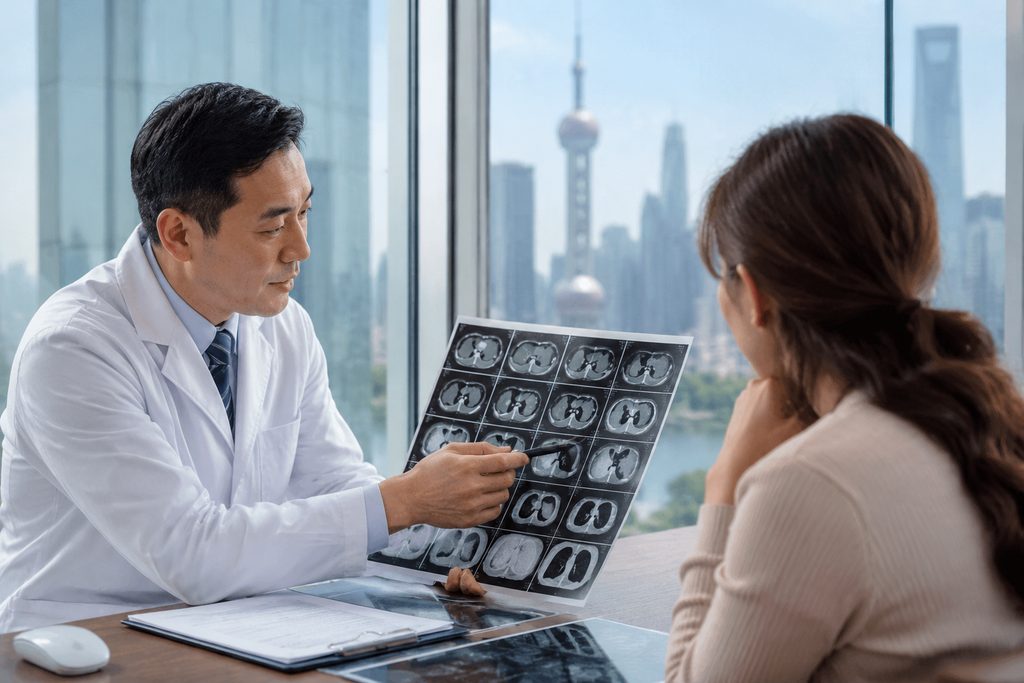
According to the International Agency for the Prevention of Blindness, at least 2.2 billion people worldwide have a vision impairment. Nearly half of those cases could have been prevented or are yet to be addressed. A routine eye exam catches glaucoma, diabetic retinopathy, and macular degeneration years before symptoms appear. But what happens when you get those results back and can’t decipher the numbers? For international patients in China, that confusion multiplies. Language barriers, unfamiliar testing formats, and different clinical thresholds turn a simple report into a wall of jargon. Our team reviews eye exam results with Chinese ophthalmology specialists and delivers a plain-English explanation. No guesswork. No wasted trips. The eye exam cost China international patient question matters less than knowing what your results actually mean.
How This Actually Works, Step by Step
You already have your eye exam results. Maybe from a hospital in Shanghai, a clinic in Beijing, or a screening back home. The sequence from here is straightforward.
First, you send us the documents. That means the full exam report, any imaging files (OCT scans, fundus photos, visual field printouts), and your basic medical history. We handle translation into Chinese for the reviewing specialist. You don’t need to format anything.
Second, we match your case to an ophthalmologist at a top-tier Chinese hospital. The specialist reviews your results against Chinese clinical standards. Chinese eye hospitals handle enormous patient volumes — some see over 10,000 outpatient visits daily — so the specialists have seen rare presentations that smaller centers might miss.
Third, you receive a written explanation in English. It covers what each test measured, what your numbers mean, whether anything needs follow-up, and what treatment options exist in China if intervention is needed. If you want more depth, we arrange a video consultation where you speak directly with the specialist.
The whole process typically takes 3 to 7 business days from document submission to written report. Video consultations add another 2 to 5 days for scheduling.
Eye Exam Cost China International Patient: What You Actually Pay
Let’s talk numbers. A comprehensive eye exam at a top Chinese public hospital runs between $50 and $150 for the basic package — visual acuity, refraction, slit-lamp examination, intraocular pressure, and fundus examination. Add OCT imaging and you’re looking at $80 to $200 total. At private international hospitals like United Family or Jiahui, the same comprehensive exam costs $200 to $400, but you get English-speaking staff and direct insurance billing.
Compare that to the United States, where a comprehensive eye exam averages $200 to $350 without insurance, and OCT imaging adds another $50 to $100. In the UK, private eye exams run £150 to £300. The cost advantage in China is real, but it’s not the main reason patients seek our review service.
The bigger issue: you already paid for an exam somewhere, and now you need someone to explain it. Our written second opinion service starts at $300. A video consultation with a top specialist ranges from $500 to $800. These fees cover translation, specialist review time, and the English report. If you later decide to come to China for treatment, any consultation fee is credited in full toward our on-the-ground coordination service within 90 days.
| Service | Typical Cost in China | Typical Cost in US/UK |
|---|---|---|
| Comprehensive eye exam (public hospital) | $50–$150 | $200–$350 (US) |
| Comprehensive eye exam + OCT | $80–$200 | $250–$450 (US) |
| Private international hospital exam | $200–$400 | £150–£300 (UK private) |
| Written second opinion (specialist review) | from $300 | $500–$1,000+ |
| Video consultation with top specialist | $500–$800 | $700–$1,500+ |
Prices vary by hospital and case complexity. Always confirm the final quote before committing.
Can a Specialist Explain My Eye Test Results in English China?
Yes. This is the core of what we do. But let’s be honest about how it works in practice.
Chinese public hospitals are not built for English-language communication. The doctors are excellent — many trained at top international programs — but their outpatient clinics run at overwhelming speed. A specialist might see 80 to 120 patients in a morning. That leaves about three minutes per patient. Explaining your OCT results in English during that window isn’t realistic.
Private international hospitals solve the language problem but charge accordingly. And even there, the doctor’s explanation is verbal — you walk out with a summary, not a written analysis you can share with your home ophthalmologist.
Our service fills that gap. The reviewing specialist examines your results carefully, writes a structured analysis, and we translate it into clear English. You get something you can read, re-read, and take to any doctor anywhere in the world. The explanation covers what’s normal, what’s borderline, what’s concerning, and what to do next.
But one important limit: a written second opinion is for reference only. It is not a prescription. If the specialist recommends treatment, you still need an in-person consultation before any procedure.
A Realistic Timeline
People underestimate how long each step takes. Here’s the honest version.
| Stage | What Happens | Duration |
|---|---|---|
| Day 1–2 | You send exam results and medical history. We review for completeness and request anything missing. | 1–2 days |
| Day 2–4 | Document translation into Chinese. Medical terminology takes time to render accurately. | 2 days |
| Day 3–7 | Specialist review. The ophthalmologist examines your reports, imaging, and history. | 3–5 business days |
| Day 6–9 | English report drafted, reviewed, and sent to you. | 1–2 days |
| Week 2 | Optional video consultation scheduling. Depends on specialist availability. | 2–5 days lead time |
| Week 3–6 | If you decide to travel for treatment: S2 visa processing, appointment booking, travel logistics. | 2–4 weeks |
Visa processing is the step people forget. For medical treatment in China, you apply for an S2 visa with supporting documents from the hospital. That takes 2 to 4 weeks depending on your home country’s Chinese embassy or consulate. We guide you through it, but we can’t speed up the embassy.
What Can Go Wrong — and What Happens Then
Let’s be direct about failure modes.
Incomplete records. You send us a one-page summary but no imaging files. The specialist can’t do a meaningful review without the actual OCT scans or visual field data. What happens: we ask for the missing files. If you can’t get them, the specialist reviews what’s available and clearly states the limitations in the report. You don’t pay for a full review that pretends to see what isn’t there.
Conflicting interpretations. Your home doctor said one thing. The Chinese specialist says something different. This happens more often than you’d think — different clinical guidelines, different thresholds for intervention. What happens: the report explains the reasoning behind the Chinese specialist’s interpretation. You take both opinions to your primary ophthalmologist and decide together. We never tell you to ignore your home doctor.
Results that require urgent attention. The specialist finds something concerning — a suspicious optic nerve appearance, elevated intraocular pressure, early macular changes. What happens: the report flags it clearly with recommended next steps. If you’re in China, we help you book an in-person consultation quickly. If you’re abroad, we advise you to see a local specialist within a specific timeframe.
You don’t agree with the recommendation. The specialist suggests a procedure you’re not ready for. What happens: nothing is forced. You take the information and decide. The report is yours to keep.
Best Eye Hospital in Beijing for Second Opinion: How to Choose
Beijing has several world-class eye centers. The question isn’t which one is “best” in the abstract — it’s which one fits your specific condition.
Tongren Hospital, affiliated with Capital Medical University, is the most famous. Its ophthalmology department is ranked among China’s top tier in the Fudan rankings. It handles enormous volumes of complex cases, particularly in retinal disease and glaucoma. Peking Union Medical College Hospital (PUMCH) offers a more integrated approach — its ophthalmology department coordinates closely with other specialties, which matters if your eye condition connects to a systemic disease like diabetes or autoimmune disorders. Peking University Third Hospital has strong subspecialty programs in corneal disease and refractive surgery.
For English-speaking care without a translator, the private international hospitals — United Family Beijing, Raffles Beijing — provide Western-style service with JCI accreditation. But their specialists may not have the same case volume as the public giants.
Our recommendation: don’t choose a hospital first. Choose a specialist. We match your specific condition — glaucoma, retina, cornea, pediatric ophthalmology — to the department that handles the most cases in that subspecialty. That’s more useful than a generic “best hospital” ranking. Our ophthalmology department rankings break down the top centers by subspecialty. And if you’re weighing Beijing against Shanghai or Guangzhou, our top hospital city guide compares the Fudan-ranked institutions across all 37 cities we cover.
Practical Considerations: Records, Visa, Payment, Follow-Up
Here’s what actually matters when you pursue a results review and possible treatment in China.
Records. Bring everything. Original exam reports, all imaging files on a USB drive or cloud link, your current medication list, and any previous eye surgeries. Chinese specialists want to see the raw data, not summaries. If your records are in a language other than English or Chinese, tell us upfront — translation adds time.
Visa. For medical treatment in China, you need an S2 visa (short stay, under 180 days) with documentation from the treating hospital. Family members accompanying you also apply for S2. The M visa is for commercial and trade activities — it has nothing to do with medical care. Don’t let anyone tell you otherwise. We provide the hospital invitation documents, but approval rests with the embassy.
Payment. Public hospitals in China require prepayment — you deposit funds before tests or procedures. Insurance reimbursement happens afterward. Private international hospitals often bill insurance directly. Our coordination fees are separate from hospital charges and are clearly quoted before you commit.
Follow-up at home. After any treatment in China, your home ophthalmologist needs the full record. We help you obtain discharge summaries, surgical notes, and imaging files in English. Continuity of care doesn’t end at the airport.
Frequently Asked Questions
At a top public hospital in Shanghai, a comprehensive eye exam runs $50 to $150. Adding OCT imaging brings it to $80 to $200. At private international hospitals like Jiahui or Parkway Shanghai, expect $200 to $400. Prices vary by hospital and case complexity.
For the written second opinion, we need your documents at least one week before you want the report. For video consultations, book two to three weeks ahead to secure a slot with the right specialist. If you’re planning in-person treatment after the review, start the process at least six weeks before your target travel date to allow for visa processing.
Possibly. Chinese ophthalmology follows its own clinical guidelines, which sometimes differ from Western thresholds for intervention. The report explains the reasoning clearly. You take both opinions to your primary ophthalmologist and decide together. We never advise you to disregard your home doctor’s assessment.
Not in the traditional sense. We don’t sell pre-packaged “exam plus treatment” bundles. We start with a review of your existing results, explain what they mean, and only then discuss whether traveling to China for treatment makes sense. Some patients never travel — the written review answers their questions. Others proceed to in-person care. The path depends on your results, not a sales script.
Then the report says so, clearly and specifically. You pay for the review, get confirmation, and move on. We’d rather tell you that you don’t need treatment than find reasons to bring you to China. That’s how trust works.
Your Next Step
You have your eye exam results. You have questions. We have a network of Chinese ophthalmology specialists who can answer them in English. Our team at China Medical Services handles translation, specialist matching, and report delivery. We don’t treat patients and we don’t make medical decisions — we connect you with the people who do. If you want a clear explanation of what your results mean, send them to us. The review costs from $300, and if you later come to China for treatment, that fee is credited toward our coordination service within 90 days. No pressure. Just clarity.
Start with the report in your hand. We’ll take it from there.
For more medical information and treatment options in China, visit chinamedservices.com (China Medical Services).
