China Medical University First Hospital Shenyang: A Foreigner’s Complete Guide
What if you could access one of Northeast China’s most powerful general hospitals without the paralyzing confusion of navigating it alone? For many international patients, the gap between knowing a hospital’s reputation and actually walking through its doors is enormous. We close that gap.
Key Takeaways
- China Medical University First Hospital handles over 4 million outpatient visits annually, placing it among the highest-volume medical centers in Northeast China.
- The hospital’s International Department provides a structured pathway for foreigners, but it does not function like a Western private clinic—expect a different operational rhythm.
- Real barriers exist: language, payment systems that reject foreign cards, and the impossibility of remotely booking a standard public outpatient appointment.
- Understanding the true China Medical University First Hospital international patient price requires separating standard public fees from the International Department’s coordinated care costs.
The Problem: Staring Down a Massive, Unfamiliar System
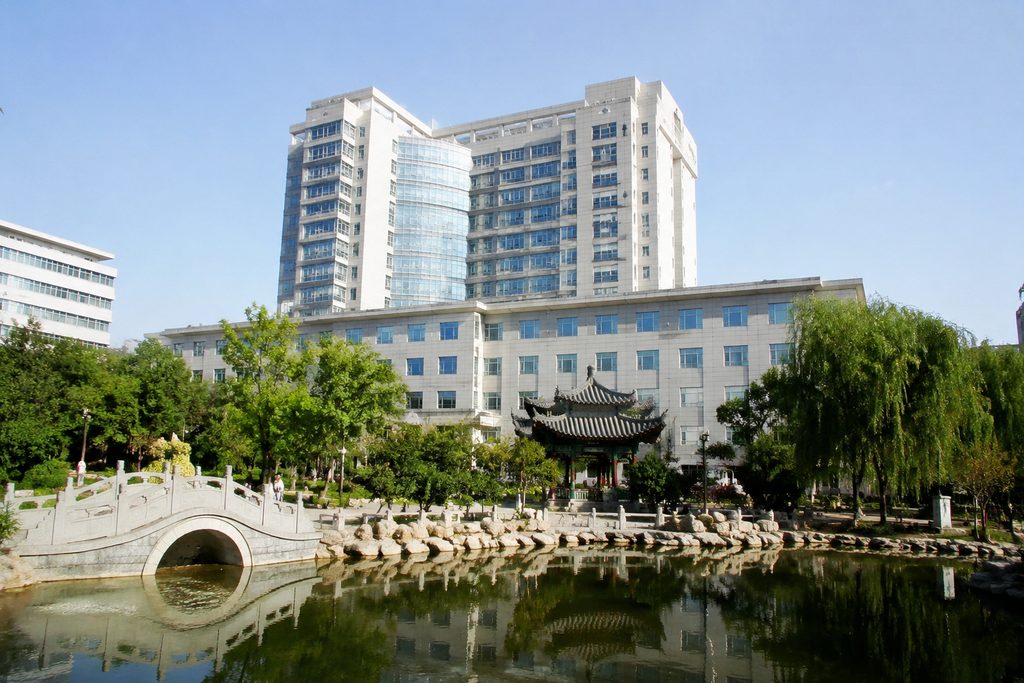
You have done the research. You know that China Medical University First Hospital (CMU First Hospital) in Shenyang is a titan. Founded in 1908, it is not just a hospital—it is a sprawling medical ecosystem attached to one of China’s most respected medical universities. The numbers are staggering. The hospital covers over 330,000 square meters. It operates more than 3,500 beds. And every single day, thousands of patients move through its halls. For a foreigner who does not read Chinese characters or speak Mandarin, this is not just inconvenient. It is a genuine access barrier.
You are likely searching because you have a specific, serious need. Maybe you require a complex abdominal surgery and have heard about the hospital’s Department of General Surgery, a national key discipline. Or perhaps you are investigating oncology options at a center that sees a volume of cancer cases difficult to match in smaller countries. The clinical firepower is here. The problem is that none of it is designed for an international patient walking in off the street.
The standard public registration system runs through a digital kiosk or a mobile app. It requires a Chinese ID number. Even if you get past that, the doctor you wait hours to see will have roughly five to ten minutes to assess you, entirely in Chinese. You will then need to navigate a labyrinth of payment counters, testing centers, and pharmacy queues on separate floors. This is the reality of a top Chinese public hospital. It is efficient for locals. It is overwhelming for everyone else. Our team exists because this structural mismatch stops people from getting the care they need.
Who We Are
We are not a hospital. We do not practice medicine, offer clinical diagnoses, or make treatment recommendations. China Medical Services is a medical concierge and case management organization. We serve as the logistical bridge between international patients and China’s top-tier hospitals. We maintain a curated database of over 340 top-ranked hospitals across 37 cities, including CMU First Hospital. Our job is to translate your medical needs into a viable care plan, coordinate with the hospital’s official International Department, and put a bilingual companion at your side so you never stand alone in a crowded hospital hall. We do not sell shortcuts. We provide structure.
Why CMU First Hospital Delivers Results for Complex Cases
When you look past the logistical friction, the clinical substance at CMU First Hospital is formidable. This is not a boutique international clinic. It is a heavy-lifting general hospital where specialists see rare pathology with regularity. For a certain type of patient—one with a difficult diagnosis or a need for high-volume surgical expertise—that matters immensely.
Clinical Volume That Sharpens Surgical Skill
There is a direct, evidence-backed relationship between surgical volume and patient outcomes. A surgeon who performs a specific procedure hundreds of times a year simply has a lower complication rate than one who does it a few dozen times. CMU First Hospital’s Department of General Surgery performs a volume of gastrointestinal and hepatobiliary procedures that places it firmly among China’s national leaders. The hospital is a designated national center for minimally invasive surgery training. Its thyroid and metabolic surgery teams operate at a scale that attracts visiting surgeons from across Asia for observation. When you ask, is China Medical University First Hospital good for surgery, the answer lies in these volumes. The hospital is not just good—it is a regional referral destination for the hardest cases in Northeast China.
The dermatology department offers another clear example. It ranks among the most influential in the country, managing a caseload of complex autoimmune skin disorders that would be scattered across a dozen centers in other systems. Concentration builds expertise. That is the core advantage here.
Diagnostics at a Pace Western Systems Struggle to Match
One of the most disorienting—and ultimately valuable—aspects of a Chinese general hospital is the speed of diagnostics. In many Western systems, a patient with a suspicious mass might wait two weeks for an MRI and another week for results. At CMU First Hospital, the imaging department operates on an industrial scale. A CT scan ordered in the morning is often completed and read by the afternoon. The hospital’s PET-CT and advanced molecular imaging capabilities are centralized and high-throughput. This is not because of magic. It is because the system is designed for volume. For an international patient who has already waited too long, this compression of the diagnostic timeline can be the single most important factor in choosing to travel. The hospital’s laboratory medicine department is ISO 15189 accredited, meaning its testing standards meet international benchmarks. Speed without accuracy is worthless. Here, the two coexist.
The Cost Reality: What You Actually Pay
Let us address the question that brought many of you here directly: the China Medical University First Hospital international patient price. There is no single price list for foreigners. The cost structure splits into two distinct tracks.
The standard public track is extraordinarily inexpensive by Western standards. A specialist consultation fee might be 50 to 200 RMB, roughly $7 to $30 USD. An abdominal CT scan could cost $100 to $200. A complex surgical procedure like a laparoscopic gastrectomy on the public track might total $8,000 to $15,000 USD in hospital charges. These numbers are real. They are also largely inaccessible to international patients because the public track requires navigating a Chinese-language-only system with no support infrastructure.
The International Department track is what you will actually use. Here, consultation fees with senior specialists range from $100 to $300. A comprehensive health screening package runs $500 to $1,500 depending on scope. Surgical packages coordinated through the International Department typically range from $15,000 to $40,000 USD for major procedures, including a private room and English-speaking nursing support. This is higher than the public price. It is still 50% to 70% less than comparable care in the United States. The premium you pay buys coordination, translation, and a private room. It does not buy a different surgeon. The clinical expertise is the same. The pathway is simply structured for someone who cannot navigate the system alone.
What You Need to Know Before Going Alone
We want to be direct about this. Attempting to access CMU First Hospital independently as a foreigner is not impossible, but it is punishingly difficult. Here is what you will face.
- Registration Requires a Chinese ID or a Physical Presence: The hospital’s online appointment system is tied to a Chinese identity verification ecosystem. You cannot book a standard outpatient slot from overseas. You must physically arrive, queue at a registration window, and hope the specialist you need has availability that day. The hospital runs on a same-day registration model for many departments. This means you could fly to Shenyang and wait days to get an initial consultation slot.
- Payment Infrastructure Is Not Built for Foreign Cards: The hospital’s public payment counters accept UnionPay, WeChat Pay, and Alipay. Visa and Mastercard are frequently rejected at the terminal level. Even if your card works at a hotel, it may fail at the hospital. You need a Chinese bank account or a large amount of cash in RMB to settle a public-track bill. The International Department can process international transfers and card payments, but the standard hospital cannot.
- Medical Records Must Be Translated and Notarized: The senior specialist who will treat you needs to understand your history. Handing over a stack of English-language pathology reports and discharge summaries is not enough. The hospital’s medical records department requires certified Chinese translations of key documents. Without this, the consultation stalls before it begins.
How We Help You Navigate This
These barriers are not a sign of a broken hospital. They are a sign of a hospital optimized for a domestic patient population of millions. Our entire operational model is built around translating that system for you.
Before you travel, we collect your medical records and have them professionally translated by medical linguists. We then submit your case through the hospital’s official International Department channel. This is not a backdoor. It is the hospital’s own designated pathway for foreign patients. The International Department reviews your case, confirms which senior specialist is appropriate, and sets a fixed appointment time. You arrive knowing exactly when and where to go.
On the day of your consultation, a bilingual medical companion meets you at the hospital entrance. This person handles registration, guides you to the correct floor, interprets your conversation with the doctor, and manages every payment and pharmacy transaction. After the consultation, if surgery or admission is recommended, we coordinate the scheduling through the International Department’s inpatient team. We also manage the visa documentation you will need. The correct visa for medical treatment in China is an S2 visa, annotated for medical purposes. Your accompanying family members also apply for S2 visas. We provide the hospital invitation letters that make this process straightforward. Our service continues through discharge, medication reconciliation, and follow-up planning.
For patients considering a broader medical tourism packages Shenyang China approach, we can structure a complete itinerary. This includes airport transfers, hotel accommodations near the hospital, and scheduled follow-up visits. The top northeast China hospital international department at CMU First Hospital is fully equipped to handle such arrangements through a coordinator. Our role is to be that coordinator on your behalf.
The cost of our coordination service is separate from hospital fees. It begins from $300 for appointment coordination and scales based on case complexity. Any fees paid for video consultations or second opinions are fully credited toward in-person coordination if you decide to travel within 90 days. We structure it this way so your initial investment in exploring the option is never wasted.
Frequently Asked Questions
No. The public registration system requires a Chinese ID-linked account or physical presence at the hospital. There is no mechanism for an overseas patient to remotely book a standard slot. The only way to secure a confirmed appointment before traveling is through the hospital’s International Department, which handles scheduling for foreign patients. This is not a restriction we impose. It is how the hospital operates.
For a significant procedure like a complex general surgery, you should budget $15,000 to $40,000 USD for hospital charges through the International Department. This includes the surgeon’s fee, anesthesia, operating room, a private inpatient room, and nursing care. It does not include our coordination fee, travel, accommodation, or post-operative medications. The final number depends entirely on your specific diagnosis and the length of stay. We help you get a firm quote from the hospital before you commit to travel.
CMU First Hospital is a university-affiliated teaching hospital. Its senior specialists are faculty members at China Medical University, one of the country’s oldest and most respected medical schools. The hospital holds 22 national key clinical specialties. Its doctors publish in international peer-reviewed journals and present at global conferences. For a specific condition, we can help you identify the department head or senior specialist whose published work and clinical focus align with your needs. You can then review their academic track record before making a decision.
This is the hardest question, and it deserves an honest answer. CMU First Hospital has a structured adverse event management protocol, and its International Department has experience handling complications in foreign patients. However, medical liability in China operates differently than in Western jurisdictions. We strongly recommend that you purchase a comprehensive medical tourism insurance policy that covers complication management and medical evacuation before traveling. We do not sell insurance, but we can point you to brokers who specialize in this coverage. Our team remains engaged throughout your recovery to facilitate communication between you and the hospital, but we are not a clinical safety net. The hospital is.
Shenyang is a major industrial and cultural hub with a population of over 8 million. It has an international airport with direct flights to Seoul, Tokyo, and several European cities. The cost of living is significantly lower than in Beijing or Shanghai. A comfortable serviced apartment near the hospital costs $40 to $80 per night. The winter is harsh—temperatures routinely drop below -20°C from December through February. If you are traveling for a non-urgent procedure, plan your visit between April and October. The hospital is fully climate-controlled, but your daily life outside it will be far more comfortable in warmer months. As the best general hospital in Shenyang for foreigners, CMU First Hospital’s location in the city center means you are never far from restaurants, hotels, and amenities that cater to international visitors.
Your Next Step
China Medical University First Hospital is not the easiest option. It is not the closest option for most readers. But for patients with complex surgical needs who are looking for high-volume expertise at a cost that does not devastate their finances, it is an option worth understanding fully. How to book treatment at CMU First Hospital Shenyang is not a simple online form. It is a process that begins with a conversation about your diagnosis, your records, and your goals. If you want to know whether this hospital is the right fit for your specific case, we will tell you honestly. Sometimes the answer is no. When the answer is yes, we know exactly how to get you through the door.
Learn more about how we match patients with the right Chinese hospitals on our medical concierge service page. You can also explore our full directory of top-ranked hospitals across China to compare options before making a decision.
For more medical information and treatment options in China, visit chinamedservices.com (China Medical Services).
