Skip the Wait for an MRI in China: Our Rapid Imaging Guide
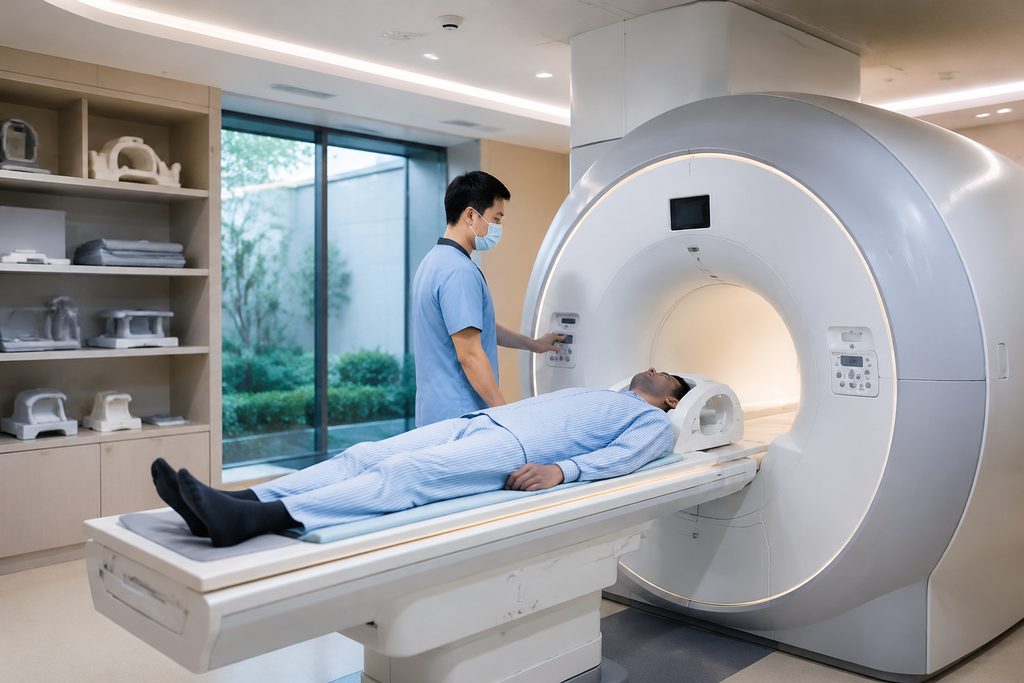
Have you ever sat on a waiting list for an MRI while pain, uncertainty, or fear quietly ate away at your peace of mind? The question of how fast you can get scanned is not academic. It determines whether a diagnosis comes in weeks or in months. For international patients, the MRI cost China private hospital facilities charge is often a fraction of Western prices, and the scheduling can happen in days rather than months. This guide breaks down exactly what that looks like in practice.
Key Takeaways
- Private and international hospital wings in China routinely schedule MRI scans within 24 to 72 hours for self-paying international patients.
- The MRI cost China private hospital departments charge typically ranges from $150 to $600 for a single region scan, compared to $1,200 to $3,000+ in the United States.
- Language barriers and hospital navigation are the biggest practical hurdles, not medical quality or machine availability.
- A written referral or translated medical history dramatically speeds up the process; you do not need a Chinese doctor to order the scan in advance in most private settings.
The Problem: Waiting Months for a Scan That Takes 20 Minutes
In Canada, the median wait time for an MRI after seeing a specialist reached 50 days in 2023, according to the Fraser Institute. In the United Kingdom, NHS data shows over 30% of patients wait more than six weeks for diagnostic imaging. In the United States, even insured patients in major metro areas often wait two to four weeks for a non-emergency MRI, and rural patients can wait far longer. None of that includes the time spent getting the referral, the pre-authorization call, or the insurance approval letter.
Now consider what that delay actually costs. A patient with persistent back pain waits two months for a scan. The scan reveals a herniated disc that has worsened. Surgery becomes more complex. Or a patient with unexplained headaches waits six weeks, only to find the issue required earlier intervention. The clinical cost of waiting is real, and it compounds.
Why China’s Private Imaging Infrastructure Delivers Speed
China’s top-tier hospitals operate on a scale that is difficult to grasp until you see it. A single large public hospital in Shanghai can perform over 1,000 MRI scans per day across multiple machines. Private international hospitals and VIP wings of public hospitals run separate scheduling queues specifically for self-paying and international patients. That structural separation is the key to understanding how fast can I get an MRI in China — the answer is usually measured in days, not weeks.
Volume Creates Availability
China has over 35,000 hospitals. The top 5% — roughly 340+ top-ranked institutions tracked by the Fudan Hospital Ranking and JCI accreditation — operate MRI machines around the clock in many cases. A hospital like Huashan Hospital in Shanghai or Peking Union Medical College Hospital in Beijing runs imaging departments with multiple 3T MRI units. When one machine is booked for inpatients, another handles outpatient and international cases. That redundancy simply does not exist in most Western community hospitals.
Private Wings Run Separate Queues
Public hospitals in China maintain international medical centers or VIP departments. These units have dedicated imaging slots, English-speaking coordinators, and same-week availability for most scans. Private international hospitals — United Family Healthcare, Jiahui Health, ParkwayHealth — go further. They operate entirely on an appointment model designed for expatriates and medical travelers. Booking a MRI scan Shanghai next day is not a marketing promise; it is a routine scheduling outcome in these facilities.
Cost Structure Without the Insurance Middleman
The MRI cost China private hospital pricing reflects a fundamentally different payment model. Chinese hospitals quote cash prices directly. No pre-authorization department. No insurance negotiator. No facility fee layered on top of a professional fee. You pay for the scan. That is the entire transaction. A brain MRI with contrast at a Shanghai private hospital typically runs between $250 and $450. The same scan at a US hospital outpatient center averages $1,600 to $3,200 before insurance adjustments, according to 2023 data from the Healthcare Bluebook.
What the Booking Process Actually Looks Like for Foreigners
If you are coming from outside China, the process is simpler than you might expect — but it is not automatic. Here is the realistic timeline based on how our coordination team has handled cases across Beijing, Shanghai, and Guangzhou.
Day 1: Submit Your Records
You send your existing medical history, any prior imaging reports, and a brief description of symptoms. A referral from a foreign doctor helps but is not mandatory in most private settings. The hospital’s radiology department reviews the request and confirms the appropriate scan protocol — with or without contrast, specific sequences, region of interest.
Day 2-3: Scheduling Confirmation
The international patient coordinator at the hospital confirms a time slot. In private international hospitals, same-day or next-day slots are common. In the VIP wing of a major public hospital, expect a 2 to 5 day wait for non-urgent scans. Urgent cases can often be accommodated within 24 hours.
Day of Scan: What to Expect
You arrive, register with your passport, pay the scan fee upfront, and proceed to the imaging suite. The scan itself takes 15 to 45 minutes depending on the region and whether contrast is used. A radiologist’s written report in English is typically available within 24 hours. The images are provided on a CD or via secure digital download.
Comparing Real MRI Options Across Chinese Cities
The MRI waiting time China for foreigners varies by city and facility type. Shanghai and Beijing offer the most private international options. Guangzhou, Shenzhen, and Chengdu have strong public hospital VIP wings. Here is what the landscape looks like in practice.
| Facility Type | Typical Wait Time | MRI Cost (Single Region) | English Report | Best For |
|---|---|---|---|---|
| Private International Hospital (e.g., United Family, Jiahui) | Same day to 48 hours | $250 – $600 | Standard | Expatriates, travelers wanting full English service |
| Public Hospital VIP/International Wing | 2 to 5 days | $150 – $400 | Usually available | Patients wanting top-tier public hospital radiologists |
| Public Hospital Standard Department | 1 to 3 weeks | $80 – $200 | Rarely; Chinese only | Chinese-speaking residents only |
| Standalone Imaging Center (large cities) | Same day to 72 hours | $100 – $350 | Sometimes | Budget-conscious patients with a clear scan order |
The best hospitals in China for rapid MRI are not necessarily the most famous names. They are the facilities that combine modern 3T machines with dedicated international patient coordinators. In Shanghai, Jiahui Health and United Family’s Shanghai locations consistently deliver next-day scheduling. In Beijing, the international departments of Peking Union Medical College Hospital and Beijing United Family Hospital are reliable choices. For public hospital expertise with faster VIP access, Huashan Hospital’s international medical center in Shanghai and West China Hospital’s international department in Chengdu are strong options.
Is the Scan Quality and Safety Comparable?
A fair question. And the answer requires honesty about what is different and what is not.
Machine Quality Is Not the Issue
China’s top hospitals use the same MRI hardware you would find at Johns Hopkins or Charité Berlin — Siemens Magnetom, GE Signa, Philips Ingenia. The Fudan-ranked top 100 hospitals overwhelmingly operate 3T machines, and many have 1.5T units for specific protocols. The physics of magnetic resonance imaging does not change at the border. Image quality depends on machine calibration, technician protocol adherence, and radiologist interpretation. Top Chinese hospitals have all three at high levels.
Radiologist Interpretation Varies
This is where the honest caveat belongs. The skill of Chinese radiologists at top-tier hospitals is generally excellent, particularly in high-volume specialties like neurology, orthopedics, and oncology. But the written report style can be more terse than what Western patients expect. Some findings are described differently. If you plan to use the scan for treatment back home, request a detailed English report and consider having the images reviewed by a radiologist in your home country as well. That second read is standard practice for medical travelers everywhere, not a criticism of Chinese radiology.
Safety Protocols Are Comparable
Contrast agent safety, screening for metal implants, kidney function checks before gadolinium — these protocols are followed at accredited Chinese hospitals. JCI-accredited private hospitals follow international safety standards with regular audits. Public hospital VIP wings follow Chinese national standards, which align closely with international norms for MRI safety. The question of is MRI safe in China for international patients comes down to choosing an accredited facility with a documented safety protocol. That is a selection issue, not a systemic risk.
Practical Considerations: Visas, Payment, and Records Transfer
If you decide to travel to China for a rapid MRI, a few logistics need attention before you book a flight.
Visa category. Foreign nationals traveling to China for medical treatment generally apply for an S2 visa, which covers short-term private affairs including medical visits. Your hospital appointment confirmation letter serves as supporting documentation. Family members accompanying you also apply for S2 visas. Stays exceeding 180 days require an S1 visa. Visa requirements change, so verify current rules with the Chinese embassy or consulate in your country before booking.
Payment method. Chinese hospitals require upfront payment for imaging. International credit cards are accepted at private international hospitals and most VIP wings. Standard public hospital departments often require a Chinese bank card or cash. Budget for the scan fee plus any consultation fee and report translation if needed.
Records transfer. Bring all prior imaging on CD or USB, plus written reports. If your records are not in English or Chinese, arrange translation before arrival. Most international patient coordinators can handle English-language records directly.
Insurance reimbursement. Chinese hospitals do not bill foreign insurers directly, with the exception of some private international hospitals that have direct billing arrangements with major insurers. Otherwise, you pay upfront and submit a claim to your insurer afterward. Request an itemized receipt and English-language report for your claim.
Frequently Asked Questions
Yes, in most private international hospitals and standalone imaging centers. You submit your medical history and prior imaging, the radiology team confirms the appropriate protocol, and you schedule. A foreign doctor’s referral is helpful but not mandatory in these settings. Public hospital VIP wings may require a brief consultation with a Chinese specialist first, which can usually happen the same day.
Three structural reasons. First, Chinese hospitals quote cash prices without insurance negotiation overhead. Second, labor costs for technicians and support staff are lower. Third, machine utilization is extremely high — a 3T MRI in Shanghai might scan 40 to 60 patients per day versus 15 to 20 in a typical Western hospital. Higher volume spreads fixed costs across more scans. The machine is the same. The economics are not.
You will have the images and the written report. If a significant finding appears, the hospital’s international coordinator can arrange a same-week consultation with a relevant specialist — neurologist, orthopedist, oncologist — to discuss next steps. You are never obligated to pursue treatment in China. Many patients take the images home for their own doctors. The scan gives you information. What you do with it is your decision.
Radiology images are universal — DICOM format works everywhere. A board-certified radiologist in your home country can review the images independently. Many patients request the raw images on CD and have them re-read locally. The Chinese report is a starting point, not a final verdict. This is standard practice for any cross-border imaging, not a limitation specific to China.
Your Next Step
Waiting months for an MRI is not a medical necessity. It is a scheduling artifact of overburdened Western imaging systems. China’s private and international hospital infrastructure offers a legitimate alternative: modern machines, board-certified radiologists, and scheduling measured in days. The MRI cost China private hospital patients pay is transparent and often one-fifth to one-tenth of Western prices.
Our team at China Medical Services helps international patients navigate this process — from hospital selection to appointment coordination to on-the-ground language support. We are not a hospital and we do not provide diagnoses. We are the bridge between you and the imaging you need. When you are ready to stop waiting, start with a free consultation and we will help you map out the fastest realistic path to a scan.
For more medical information and treatment options in China, visit chinamedservices.com (China Medical Services).
