Lymphoma Specialist in Shanghai: Ruijin Hospital Costs and Care
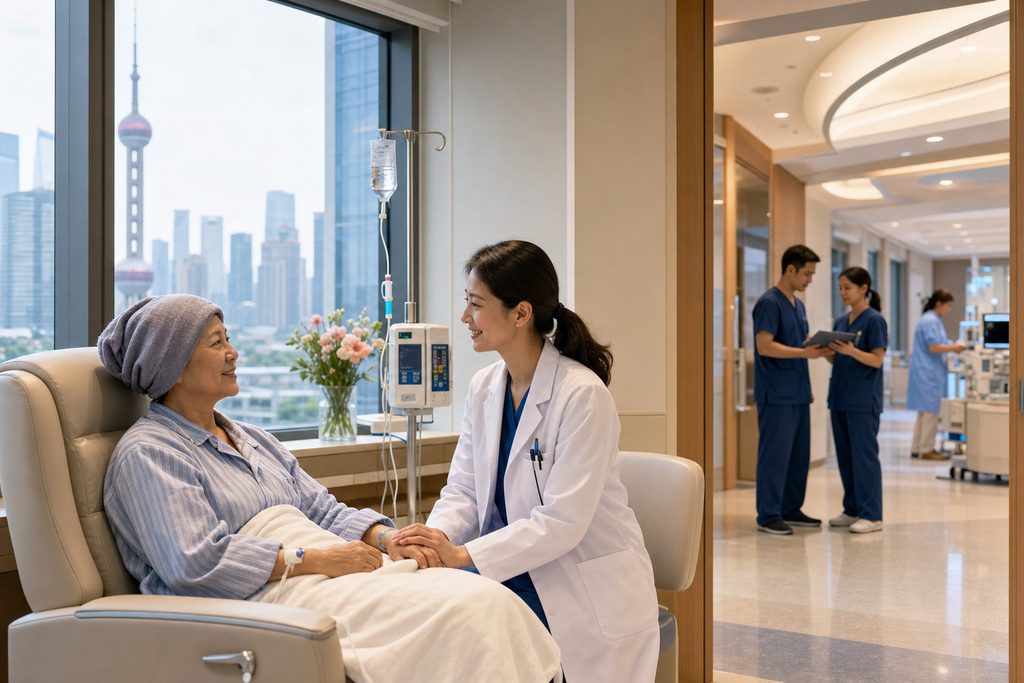
While a single cycle of R-CHOP chemotherapy for diffuse large B-cell lymphoma averages $35,000–$60,000 in the United States before insurance negotiation, the equivalent regimen at Shanghai’s Ruijin Hospital typically runs between $4,000 and $8,000. That gap isn’t a fluke of accounting. It reflects a fundamentally different cost structure for cancer care in China’s top-tier public hospitals. For international patients, the lymphoma treatment cost Shanghai presents one of the most compelling financial cases in global oncology — but cost alone never tells the whole story.
Ruijin Hospital, affiliated with Shanghai Jiao Tong University School of Medicine, sits in the top tier of Chinese hematology. Its Department of Hematology is one of the largest in Asia, with dedicated lymphoma wards, a bone marrow transplant center, and a clinical research program that participates in international trials. The hospital appears in the Fudan University Hospital Rankings among China’s top 10 for hematology — a specialty reputation list, not a general ranking. That matters when you’re choosing where to be treated for a disease as complex as lymphoma.
This article walks through what it actually takes to see a lymphoma specialist at Ruijin, what the treatment costs look like in practice, and where the real risks lie. No sugarcoating. No vague promises.
How This Actually Works, Step by Step
You cannot simply email Ruijin Hospital’s hematology department and book an appointment with a named specialist. That’s not how Chinese public hospitals work, even for domestic patients. The process for international patients follows a specific sequence.
First, you gather every piece of medical documentation you have: pathology reports, immunohistochemistry staining results, PET-CT scans, bone marrow biopsy reports, prior chemotherapy regimens, and any molecular testing like FISH or next-generation sequencing. Lymphoma diagnosis lives and dies on pathology. Without a definitive tissue diagnosis, no Chinese specialist will offer a treatment plan.
Second, those documents get translated into Chinese. Ruijin’s international medical services can assist, but you’ll need certified medical translation for the key reports. This step takes three to seven days depending on volume.
Third, a consultation request goes through the hospital’s international department or a coordination service. Ruijin does have an International Medical Center that handles foreign patients, though response times vary. Expect one to two weeks for a confirmed appointment slot with a hematology specialist.
Fourth, you either travel to Shanghai for an in-person evaluation or arrange a video consultation first. Most lymphoma patients benefit from a remote review before committing to travel. The specialist reviews your pathology and imaging, then tells you whether your case fits their treatment protocols and what they’d recommend.
Fifth, if both sides agree to proceed, you plan the trip. That means an S2 visa for medical treatment, accommodation near the hospital, and a realistic schedule for staging tests and treatment initiation.
Ruijin Hospital’s Lymphoma Program: What the Data Shows
Ruijin’s hematology department manages an enormous patient volume. The department sees over 100,000 outpatient visits annually and runs more than 200 inpatient beds dedicated to hematologic malignancies. That’s not abstract capacity — it’s relevant to you. Volume drives pattern recognition. A specialist who sees 500 new lymphoma cases a year has seen your subtype’s rare presentations before.
The department’s lymphoma subspecialty covers the full spectrum: diffuse large B-cell lymphoma, follicular lymphoma, mantle cell lymphoma, peripheral T-cell lymphoma, NK/T-cell lymphoma, and Hodgkin lymphoma. NK/T-cell lymphoma, which is rare in Western populations but more common in East Asia, is an area where Chinese hematologists have particular clinical experience.
Ruijin also operates one of China’s largest hematopoietic stem cell transplant programs. For patients with relapsed or refractory lymphoma, autologous stem cell transplant remains a standard salvage approach. The Ruijin Hospital lymphoma treatment price for an autologous transplant typically ranges from $25,000 to $45,000 — again, a fraction of the $150,000–$300,000 charged in American academic centers.
But here’s the honest caveat: published outcome data from Chinese hospitals is less standardized than Western registry data. You won’t find the same granular, publicly queryable survival statistics that SEER or the British Haematology Registry provides. That doesn’t mean outcomes are worse. It means the evidence base is thinner and you’ll rely more on the specialist’s clinical judgment and the department’s reputation than on a clean Kaplan-Meier curve.
A Realistic Timeline
Most international patients underestimate the pre-treatment phase. Here’s what a typical lymphoma patient’s timeline looks like from first contact to first treatment, assuming no major complications.
| Stage | Duration | What Happens |
|---|---|---|
| Document collection and translation | 3–10 days | Gather pathology, imaging, prior treatment records; certified Chinese translation |
| Remote consultation request | 5–14 days | International department reviews materials; specialist assigned |
| Video consultation or written second opinion | 1–2 weeks | Specialist reviews case, discusses feasibility, recommends next steps |
| S2 visa application | 2–4 weeks | Embassy processing with hospital invitation letter; varies by country |
| Arrival and staging workup | 3–7 days | Repeat PET-CT, blood work, possibly repeat biopsy if original tissue unavailable |
| Treatment plan finalized | 3–5 days after staging | Multidisciplinary review; chemotherapy regimen selected |
| First treatment cycle | Week 6–10 from initial contact | Inpatient or outpatient chemotherapy depending on regimen |
The bottleneck is rarely the hospital. It’s the visa and the document preparation. Start both as early as possible. Some embassies process S2 visas faster than others, and you cannot control that variable.
What Can Go Wrong — and What Happens Then
Let’s talk about the failure modes, because pretending they don’t exist helps no one.
The most common problem: your pathology is incomplete or inconclusive. Lymphoma subtyping requires specific immunohistochemistry panels and sometimes molecular testing. If your original biopsy was done years ago or in a low-resource setting, Ruijin’s pathologists may request a repeat biopsy. That adds one to two weeks and a few thousand dollars. It’s not bureaucratic obstruction — it’s correct medicine. Treating the wrong lymphoma subtype is worse than treating none.
Another failure mode: the specialist reviews your case and says Ruijin isn’t the right fit. Maybe your subtype is better managed at a different center. Maybe your disease burden requires CAR-T therapy, which has different eligibility criteria in China. This happens. A good specialist will tell you directly. The recourse is a second opinion elsewhere, not arguing with the recommendation.
Language barriers persist even at a hospital with international services. Ruijin’s International Medical Center has English-speaking coordinators, but the ward nurses, technicians, and junior doctors may not speak English fluently. If you’re admitted for chemotherapy, a bilingual companion makes a material difference in your daily experience. Without one, you’ll navigate medication schedules, dietary instructions, and symptom reporting through translation apps or hand gestures.
Payment issues can also derail treatment. Chinese public hospitals require prepayment — you deposit funds upfront before each treatment cycle. International insurance that reimburses after the fact means you’re floating significant cash. Budget for that.
Is Lymphoma Treatment in China Safe? What the Evidence Actually Shows
The question is lymphoma treatment in China safe deserves a straight answer. Yes — at the top-tier hospitals, with qualifications.
China’s best hematology departments use the same NCCN and ESMO treatment guidelines as Western centers. Chemotherapy protocols are standardized. The drugs are the same molecules — rituximab, cyclophosphamide, doxorubicin, vincristine, prednisone — manufactured either by multinational pharmaceutical companies or Chinese biosimilar producers that have passed regulatory equivalence testing.
What differs is the system around the medicine. Infection control protocols in Chinese public hospitals are generally rigorous, but ward conditions are more crowded than Western private rooms. Nursing ratios are leaner. You’ll need to be more proactive about your own care: asking about prophylactic antibiotics, monitoring your own temperature, insisting on hand hygiene.
The safety question also depends on your disease stage. For standard first-line treatment of common lymphoma subtypes, Chinese outcomes are comparable to Western benchmarks. For relapsed disease requiring novel therapies like bispecific antibodies or CAR-T, the landscape is different. China has approved several CAR-T products, but access, cost, and experience vary by center. Ruijin has a CAR-T program, but eligibility is case-specific.
If you’re asking how to choose a lymphoma doctor in Shanghai, start with the department, not the individual. Look at the hematology department’s annual case volume, its clinical trial participation, and whether it has a dedicated lymphoma subspecialty. Then ask for a specific specialist whose published work or clinical focus matches your subtype. Chinese hospital websites list faculty profiles, though often in Chinese. A coordination service can translate and help you evaluate.
Practical Considerations: Records, Visa, Payment, Language, Follow-Up
Bring everything. Original pathology slides and paraffin blocks matter more than you think. Chinese pathologists often want to review the actual tissue, not just the report. Your home hospital can release slides to you or ship them directly to Ruijin’s pathology department. Start this process early — hospitals move slowly on slide release.
The visa is an S2, not an M. M visas are for commercial trade. S2 covers private affairs including medical treatment, typically for stays under 180 days. You’ll need an invitation letter from the hospital’s international department. Your accompanying family members apply for their own S2 visas. Processing time depends on your home country’s Chinese embassy or consulate, so check locally.
Payment structure: Ruijin’s International Medical Center operates on a prepayment model. You deposit funds, treatment is drawn against the deposit, and you top up as needed. International insurance with direct billing is rare in Chinese public hospitals — expect to pay upfront and seek reimbursement. Some private international hospitals in Shanghai, like Jiahui or United Family, offer direct billing, but they don’t have Ruijin’s hematology depth.
Language: the International Medical Center provides interpretation for consultations, but inpatient stays require more continuous support. A bilingual medical companion costs from $300 per day and handles the practical navigation — registration, pharmacy pickup, test scheduling, and communication with nurses. For a multi-week chemotherapy admission, that’s a meaningful budget line.
Follow-up after you return home: Chinese specialists will provide a written treatment summary and recommendations for ongoing care. Your home oncologist should receive everything. Coordination between systems is imperfect — expect to be the courier of your own records.
For a broader view of how Ruijin compares to other top hospitals in the city, our Shanghai hospital guide breaks down the landscape. And if you’re still deciding between public and private options, the private international hospital directory explains the trade-offs in insurance and language support.
Frequently Asked Questions
The lymphoma treatment cost Shanghai varies by subtype and regimen, but standard first-line chemotherapy runs $4,000–$8,000 per cycle at Ruijin’s international service. A full six-cycle R-CHOP course typically totals $25,000–$50,000. Autologous stem cell transplant ranges from $25,000–$45,000. These are cash prices before any insurance reimbursement.
You can book lymphoma consultation Ruijin Hospital through its International Medical Center or a coordination service. The process starts with submitting your pathology and imaging records for review. A remote video consultation with a hematology specialist typically costs $500–$800 through the international channel. In-person appointments require travel and are arranged after remote review.
No single “best” specialist exists — the best lymphoma specialist in China for you depends on your specific subtype. Ruijin’s hematology department has faculty who focus on aggressive B-cell lymphomas, indolent lymphomas, T-cell lymphomas, and transplant. Ask for a specialist whose clinical focus matches your diagnosis, not a generic “top doctor.”
Ruijin’s transplant program and CAR-T clinical trials offer salvage options, but eligibility is strict. Your treating team will reassess staging and molecular markers before recommending second-line therapy. Some patients are better served returning to their home country for novel agents — the specialist will say so if that’s the case.
China’s public health insurance does not cover foreign nationals. You’ll pay out of pocket or through your own international insurance policy. Check with your insurer about overseas treatment coverage before committing to travel. Some policies require pre-authorization for cancer care abroad.
Your Next Step
Ruijin Hospital offers genuine expertise in lymphoma care at a price point that makes financial sense for many international patients. The trade-offs are real: a different clinical culture, language barriers, upfront payment, and less standardized outcome reporting. For patients who understand those trade-offs and prepare for them, the value is hard to match.
Our team at China Medical Services helps international patients navigate this process — we translate records, coordinate with Ruijin’s international department, arrange bilingual companions, and handle the logistics that consume weeks of your time. We don’t practice medicine and we don’t promise outcomes. We make the path clearer.
If you’re considering lymphoma treatment at Ruijin, start with a free consultation to discuss your case and whether this route fits your situation. No pressure. Just clarity.
For more medical information and treatment options in China, visit chinamedservices.com (China Medical Services).
