Why Dental Veneers Cost Less in China: Our Smile Value Guide
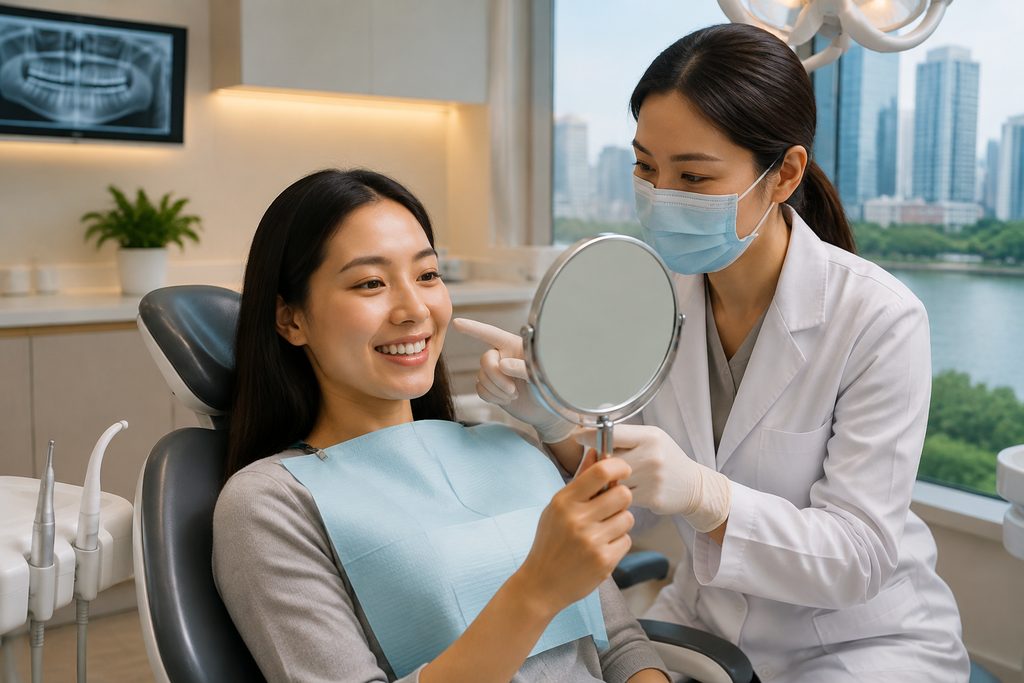
A dental veneer is a thin, custom-made shell — usually porcelain or composite resin — bonded to the front surface of a tooth to change its shape, color, size, or alignment. That is the plain-language version. The clinical version involves enamel preparation, impression-taking, lab fabrication, and precision cementation. The financial version is where most international patients sit up and pay attention: dental veneers cost China patients a fraction of what clinics in Los Angeles, London, or Sydney charge. We are not talking about a 10% or 15% discount. The gap is structural, and it holds across top-tier dental hospitals and private clinics in Beijing, Shanghai, Guangzhou, and beyond.
But low price alone is not a reason to fly 7,000 miles. You need to understand why the price is lower, where quality holds, where it breaks, and how to avoid the clinics that give Chinese dentistry a bad name. That is what this guide covers.
How This Actually Works, Step by Step
You do not book a flight and hope for the best. The sequence for international veneer patients is predictable, and skipping steps is how people get burned.
You start by sending us your dental records: recent X-rays or CBCT scans, intraoral photographs, any previous treatment notes, and a clear description of what bothers you about your smile. Staining? Chips? Gaps? Old crowns that no longer match? Our team translates these materials and routes them to a prosthodontist or cosmetic dentist at a hospital or clinic that matches your budget and clinical needs. You then receive a written treatment plan with a realistic price range — not a single optimistic number — and a recommendation on material choice, number of units, and whether any preparatory work (gum treatment, orthodontics, root canal) must happen first.
Only after you approve the plan do we coordinate scheduling. You apply for an S2 visa with supporting documents from the treating institution. You arrive. You have the consultation, impressions, and tooth preparation in the first visit. The lab fabricates your veneers. You return for try-in and bonding. You fly home with a maintenance plan.
That is the honest sequence. Anyone promising to skip the diagnostic step or guarantee a result sight-unseen is not someone you want touching your front teeth.
Why Dental Veneers Cost Less in China: The Structural Reasons
Let us put numbers on the table first. In the United States, a single porcelain veneer typically runs $1,500 to $2,800. In the UK, £800 to £1,500 per tooth. In Australia, AUD $1,200 to $2,500. In China, at a reputable private clinic or the international department of a top public hospital, the same porcelain veneer ranges from $300 to $800 per tooth. Composite veneers run $150 to $400. A full smile makeover of eight to ten upper veneers that might cost $22,000 in Beverly Hills can be completed for $4,000 to $7,000 in Shanghai or Beijing — including lab fees.
Why the difference? Labor costs are the largest single factor. A Chinese prosthodontist with 15 years of experience earns a fraction of a US cosmetic dentist’s salary, but their training volume is often higher. Top Chinese dental hospitals see enormous patient flow. The prosthodontics department at a major teaching hospital in Beijing or Guangzhou may handle more veneer cases in a month than a suburban US practice handles in a year. Volume drives efficiency. Efficiency drives price. The lab technicians who hand-layer porcelain are equally skilled and paid local wages. Rent, malpractice insurance, and administrative overhead are all lower.
Material costs are comparable worldwide, because most clinics use the same imported ceramics — Ivoclar e.max, VITA, Lava, and similar systems. What you are not paying for in China is the Western cost structure wrapped around those materials. That is the core of why dental veneers cost China patients so much less.
A Realistic Timeline
| Stage | What Happens | Typical Duration |
|---|---|---|
| Records collection | You gather X-rays, photos, treatment history; we translate and format them for the Chinese dental team | 3–7 days |
| Remote evaluation | Prosthodontist reviews your case; written plan and price range issued | 5–10 days |
| Visa processing | S2 visa application with hospital invitation letter; varies by consulate and nationality | 2–6 weeks |
| Travel and first visit | Consultation, records verification, tooth preparation, temporary veneers placed | 2–3 days in China |
| Lab fabrication | Porcelain veneers hand-crafted by dental lab; you may return home or stay | 5–14 days |
| Try-in and bonding | Veneers fitted, adjusted, permanently bonded; bite checked | 1–2 days |
| Follow-up | Remote check-ins; local dentist at home handles any minor adjustment | Ongoing |
Most international patients complete the full process in two trips totaling 10 to 14 days in China, spaced about two weeks apart. Some clinics offer same-week lab turnaround for an extra fee. Do not plan a single 5-day trip and expect finished veneers. The lab needs time to do good work, and rushing porcelain is how you get margins that do not seal.
What Can Go Wrong — and What Happens Then
We will not pretend every veneer case in China goes perfectly. It does not. Here are the real failure modes and what recourse looks like.
Over-preparation. Some clinics grind too much enamel to make veneers fit faster. This is irreversible. The safeguard is choosing a prosthodontist who follows minimal-prep or no-prep protocols where clinically appropriate, and asking directly how much enamel will be removed. A good clinician will tell you in millimeters. A bad one will dodge the question.
Shade mismatch. Veneers that look too white, too gray, or too opaque. The fix is a remake, but remakes cost lab time and may extend your stay. Reputable clinics include one remake in the original quote. Confirm this in writing before you pay a deposit.
Bonding failure or debonding. A veneer comes off weeks after you return home. If the clinic used proper adhesive protocol, this is rare but possible. Your recourse depends on the warranty. Top Chinese clinics typically offer a 1- to 3-year warranty on veneer bonding. Ask for the warranty terms in English before treatment. If a veneer fails and you cannot return to China, you may need a local dentist to rebond it — usually a minor cost, but it is yours to bear.
Communication breakdown. You thought you were getting 10 veneers; the clinic planned 8. You wanted a natural shade; they delivered piano-key white. This is where bilingual coordination matters. Our team sits in the room during consultations and treatment planning to make sure what you say is what the dentist hears. Without that layer, even excellent clinicians can misread patient expectations.
Post-treatment sensitivity. Some sensitivity to hot and cold is normal for a few weeks after veneer placement. Persistent sharp pain is not. It may indicate nerve irritation or a poorly sealed margin. You need a follow-up radiograph. If you are already home, a local dentist can assess. The original clinic should review the images remotely at no charge.
Is It Safe to Get Veneers in China? Evaluating Quality Honestly
The short answer: yes, at the right institutions. The longer answer requires a filter.
China’s dental care spans a massive quality range. At the top end, the prosthodontics departments of major university-affiliated hospitals — places like Peking University School of Stomatology in Beijing, Shanghai Ninth People’s Hospital, and West China Hospital of Stomatology in Chengdu — operate at international standards. They publish in peer-reviewed journals, use imported ceramic systems, and follow infection-control protocols comparable to Western teaching hospitals. Many of their senior clinicians trained or lectured abroad. Private international clinics in Beijing and Shanghai, including United Family and Jiahui, offer English-speaking dentists, JCI accreditation, and direct insurance billing. The best dental clinic Beijing veneers price at these institutions reflects the quality — still far below US prices, but higher than local clinics.
At the bottom end are street-front clinics offering “Hollywood smile” packages for $1,500 total. Avoid these. They cut corners on lab quality, use lower-grade ceramics, and often employ general dentists rather than prosthodontists for cosmetic work. The risk is not infection — China’s dental infection control in licensed clinics is generally adequate — but aesthetic failure and unnecessary enamel removal.
How much are veneers in Shanghai at a clinic worth trusting? Expect $400 to $800 per porcelain unit at a reputable private clinic or international department. If someone quotes you $150 per porcelain veneer in Shanghai, walk away. That price means composite, not porcelain, or a lab you do not want making your smile.
Practical Considerations: Records, Visa, Payment, and Follow-Up
Bring everything. Full-mouth X-rays or CBCT within the last six months, clinical photographs with your lips relaxed and smiling, and a list of any medications. If you grind your teeth at night, say so — bruxism changes the material recommendation and may require a night guard, which adds cost but protects your investment.
Visa category matters. Medical travel to China falls under the S2 visa, not the M visa. M is for commercial trade. You will need an invitation letter from the treating hospital or clinic, a treatment plan, and proof of financial means. Processing times vary by consulate and nationality. Apply early. Do not book non-refundable flights before the visa is in hand.
Payment is almost universally required upfront for international patients, either in full or as a deposit with the balance due before bonding. Chinese public hospitals do not bill Western insurance directly. Private international clinics often do. If you have dental insurance that covers veneers — rare, since veneers are usually considered cosmetic — you will likely need to pay out of pocket and file for reimbursement yourself. Get itemized receipts in English.
Follow-up at home is your responsibility. Find a local dentist before you travel, tell them you are getting veneers in China, and schedule a check-up two to four weeks after bonding. That local dentist is your safety net for minor adjustments, rebonding, and long-term maintenance. Veneers last 10 to 15 years with good care. They do not last forever.
Medical Tourism China Dental Veneers: What a Package Should Include
Some international patients look for an all-inclusive “dental veneers package China” that bundles flights, hotel, treatment, and translation. These packages exist, and some are legitimate. But read the fine print. A package that includes a 5-star hotel and airport pickup but does not name the treating dentist or the ceramic brand is selling tourism, not dentistry.
A legitimate package itemizes the clinical deliverables: number of veneers, material type and brand, number of visits, lab fees, temporary veneers, one remake if needed, warranty period, and post-treatment support. It also names the clinic and the clinician. If the package is vague about who is doing the work, that is deliberate. You are not buying a souvenir. You are having your teeth permanently altered.
To book dental veneers package China through a coordinator like us, the process starts with records review, not with payment. We do not sell packages off a menu. We build a plan around your clinical situation and then attach logistics — visa support, airport transfer, bilingual companion, hotel recommendations — around that clinical core. The dentistry comes first. Everything else is scaffolding.
Frequently Asked Questions
At reputable private clinics and international departments of top public hospitals, porcelain veneers run $300 to $800 per tooth. Composite veneers cost $150 to $400. The final price depends on the clinic tier, the ceramic brand, the number of units, and whether preparatory work like gum treatment or orthodontics is needed.
At university-affiliated dental hospitals and JCI-accredited private international clinics, yes — infection control and clinical standards are comparable to Western institutions. At low-cost street-front clinics, the risk is aesthetic failure and unnecessary enamel removal, not infection. Choose the institution first, then negotiate price. Never reverse that order.
Typically two. The first trip covers consultation, records, tooth preparation, and temporary veneers. The second trip, one to two weeks later, covers try-in and permanent bonding. Some clinics can condense the lab phase to under a week for an additional fee. Plan for 10 to 14 days total in China across both trips.
Most dental insurance policies classify veneers as cosmetic and exclude them entirely. If you have coverage, it is almost certainly reimbursement-based — you pay the Chinese clinic upfront and file a claim at home. Private international clinics in Beijing and Shanghai may bill some international insurers directly. Confirm before you commit.
Contact the original clinic immediately. Reputable clinics offer a 1- to 3-year bonding warranty and will guide you through rebonding with a local dentist, often covering the material cost. If you cannot return to China, a local dentist can rebond the veneer — typically a minor procedure. Keep your treatment records and ceramic brand information accessible.
Your Next Step
Dental veneers cost China patients 60% to 80% less than in Western countries, and the quality at top institutions is genuinely comparable. The risk is not in the country — it is in the clinic selection. That is where we come in. China Medical Services connects international patients with top-tier Chinese dental hospitals and private clinics, coordinating records review, bilingual support, and scheduling. We do not perform dentistry, and we do not promise outcomes. We make sure you sit in the right chair, understand the plan, and pay a fair price. When you are ready to explore whether veneers in China make sense for your smile, request a free consultation and send us your records. We will take it from there.
You now know the real numbers, the real timeline, and the real risks. The decision is yours. We are here if you want a steady hand on the ground.
For more medical information and treatment options in China, visit chinamedservices.com (China Medical Services).
