Why a Gastroscopy Costs Less in China: Our Value Guide
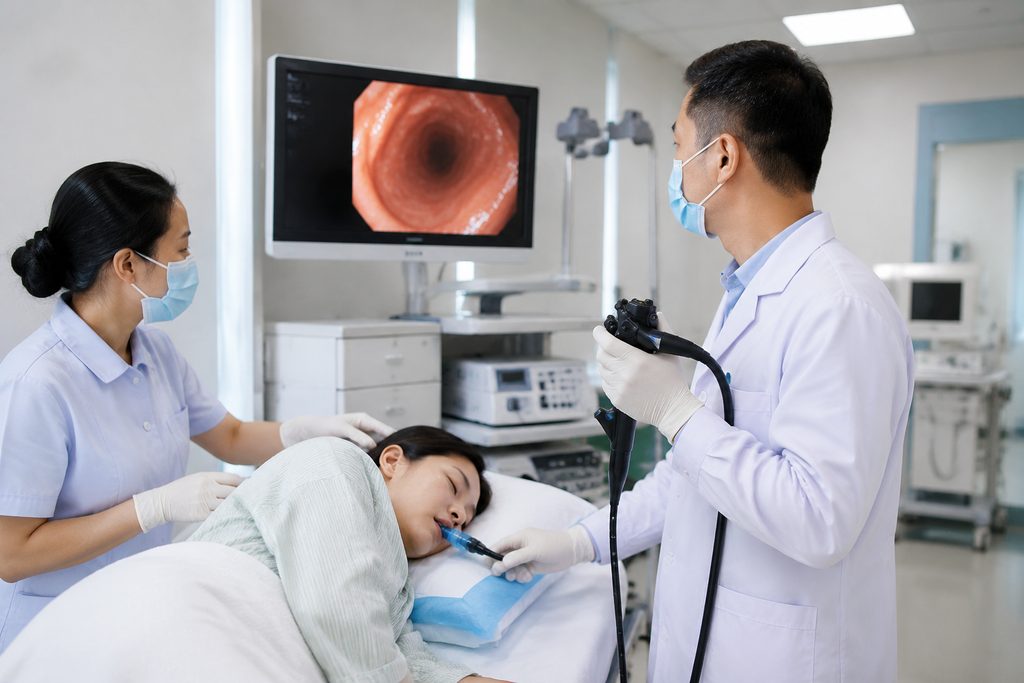
Gastroscopy Cost China: The Short Answer
You have probably heard that medical care in China means long waits, language chaos, and questionable equipment. The reality for diagnostic endoscopy is far more nuanced. A standard gastroscopy cost China ranges from $150 to $450 at a top-tier public hospital international department, and $400 to $800 at a private international hospital. The same procedure in the United States typically runs $1,500 to $3,500 before insurance, and in Western Europe $600 to $1,200. But the raw number is only part of the story.
The caveat: that low Chinese price assumes you can navigate the system. Without Chinese language skills, booking a public hospital slot is genuinely difficult. That is why most foreign patients use either a hospital international department or a coordination service. Both add cost. Neither eliminates the core savings.
Who This Is Right For — and Who It Isn’t
A gastroscopy in China makes sense for a specific profile of patient. You are a good candidate if you are already traveling in China for business or family reasons, if you are uninsured or facing a high deductible in your home country, or if you need a repeat endoscopy and your local wait time is measured in months. Medical travelers combining a gastroscopy with other health checks also fit well.
Who should not pursue this. Anyone with an active GI bleed, severe anemia requiring urgent intervention, or a suspected malignancy needing immediate biopsy and staging should stay in their home system. The coordination overhead of international travel adds days you may not have. Also, if you require sedation with an anesthesiologist present and have complex cardiac or respiratory comorbidities, a foreign hospital without your full medical history is a genuine risk. And if you need the results accepted by your home insurer for a specific treatment pathway, confirm that before booking anything.
The Options, Compared
Not all gastroscopy services in China are the same. The price difference between a public hospital international department and a private international hospital reflects staffing, environment, and insurance handling. Here is the real comparison.
| Factor | Public Hospital Intl Dept | Private Intl Hospital | Public Hospital Standard |
|---|---|---|---|
| Price (gastroscopy, sedation) | $150–$450 | $400–$800 | $80–$200 |
| English-speaking staff | Yes, dedicated team | Yes, hospital-wide | Rarely |
| Booking from abroad | Usually via coordinator | Directly, sometimes online | Not possible |
| Insurance direct billing | Sometimes | Common | No, pay upfront |
| Typical wait time | 3–10 days | 1–5 days | Same-day queue, hours |
| Endoscopist seniority | Attending or senior attending | Attending, often bilingual | Varies, often junior |
The public hospital standard route is cheap but effectively closed to most foreigners without fluent Chinese and a local residence permit. The international department is the sweet spot for value: senior doctors, English coordination, and prices still far below Western benchmarks. Private international hospitals trade some cost for convenience and insurance familiarity. If your insurer has a direct billing agreement with a specific private hospital, that single factor may decide the column for you.
What the Price Actually Includes — and What It Doesn’t
This is where most first-time medical travelers get surprised. A quoted gastroscopy cost China is rarely the final bill. Ask for an itemized breakdown before you commit. The base procedure fee usually covers the endoscope pass, the gastroenterologist’s time, and the procedure room. Sedation — if you want it — is typically billed separately, often $50 to $150 depending on whether an anesthesiologist is present. Biopsy is another line item: $30 to $80 per sample, and if the endoscopist takes three samples, that is three charges. Pathology reading adds $50 to $120. A rapid urease test for H. pylori, routinely done during gastroscopy in China, adds $15 to $40.
So a “$200 gastroscopy” can become $350 after sedation, two biopsies, pathology, and H. pylori testing. Still inexpensive by Western standards. But you need to know the math before you fly. A reputable coordination service will give you the full itemized estimate upfront. If someone quotes you a flat package price and refuses to break it down, walk away.
Is Gastroscopy Safe in China? What the Data Shows
Safety is the question behind the question. The short answer: at accredited hospitals, yes. China performs an enormous volume of endoscopies. Fudan University‘s hospital rankings — which list the top 100 hospitals in China across 45 specialties — include gastroenterology departments that each perform tens of thousands of gastroscopies annually. Volume matters for procedural safety. A 2022 study published in The Lancet Regional Health – Western Pacific examining endoscopic adverse events across Asian centers found complication rates in Chinese tertiary hospitals comparable to regional benchmarks, with bleeding and perforation rates under 0.1% for diagnostic gastroscopy.
But “safe” depends entirely on where you go. A top-ranked hospital in Shanghai or Beijing is not the same as a small county facility. For foreign patients, the practical filter is simple: choose a hospital on the Fudan top-100 list or a JCI-accredited private hospital. Both are verifiable. Our top-ranked hospital directory lists Fudan-ranked institutions by city. If you are wondering how much is endoscopy in Shanghai specifically, the city hosts several Fudan top-100 gastroenterology departments, including Zhongshan Hospital and Ruijin Hospital, where international department pricing aligns with the table above.
How to Book a Gastroscopy Package in China Without Getting Burned
Booking from abroad is the hardest logistical step. Public hospitals do not take overseas reservations for standard outpatient gastroscopy. You cannot email a hospital and ask for a Tuesday slot. The workable paths are three.
First, book through a hospital international department. Some — not all — accept email or WeChat inquiries from overseas patients. You send your passport copy, a brief medical history, and the reason for the gastroscopy. They confirm a date and send a prepayment link. Second, use a private international hospital with an English-language website and online booking. This is the easiest self-service route, and the higher price reflects that convenience. Third, use a coordination service that handles the booking, translation, and on-the-day logistics for you.
Whatever route you choose, request written confirmation of: the exact procedure, whether sedation is included, the endoscopist’s department and hospital, the total prepayment, and the cancellation policy. A legitimate provider will give you all of this without hesitation. You can request a free consultation to compare booking options for your specific dates and target city.
What It Costs: Full Price Breakdown
Let’s put real numbers next to each other. The following ranges reflect 2024–2025 pricing from hospital international departments and private international hospitals in Beijing, Shanghai, and Guangzhou. All figures are in USD and vary by hospital and case complexity.
- Gastroscopy, no sedation, public intl dept: $120–$250
- Gastroscopy with sedation, public intl dept: $200–$450
- Gastroscopy with sedation, private intl hospital: $400–$800
- H. pylori rapid urease test: $15–$40
- Biopsy per sample: $30–$80
- Pathology report: $50–$120
- Bilingual medical companion (half day): from $300
The companion fee is optional. If you book via an international department with English-speaking staff, you may not need one. If you attempt the standard public route, a companion is effectively mandatory — and even then, the total still lands below Western pricing. For a full endoscopy price comparison abroad, the gap remains stark: a sedated gastroscopy with two biopsies and pathology in the US commonly exceeds $2,500, while the same package in China at a top-tier international department runs $350 to $600.
Practical Considerations: Records, Visa, Payment, and Follow-Up
Bring your medical records. Even for a diagnostic gastroscopy, the gastroenterologist needs to know your symptoms, medication list, prior endoscopy results, and any bleeding disorders. If you take anticoagulants, bring that up before booking — you may need to pause them days before the procedure. Send translated records ahead if possible. A one-page summary in English is usually sufficient for the international department.
Visa is straightforward. For medical treatment in China, you apply for an S2 visa with a supporting letter from the hospital confirming your appointment. Family members accompanying you also apply for S2. The hospital international department or your coordination service provides the invitation letter. Processing times vary by embassy, so allow three to four weeks.
Payment is upfront. Public hospitals — including their international departments — require prepayment before the procedure. Private international hospitals may bill your insurer directly if they have an agreement. Otherwise, expect to pay by credit card, WeChat Pay, or Alipay. Keep every receipt for insurance reimbursement.
Follow-up after returning home is the overlooked piece. The gastroscopy report and pathology results are issued in Chinese, with English translation available at international departments. Make sure you request the English version before leaving. Your home gastroenterologist will need the images — ask for a CD or digital copy of the endoscopic photos. Any treatment recommendations should be reviewed by your local doctor.
Frequently Asked Questions
At accredited hospitals, yes. Choose a Fudan top-100 hospital or a JCI-accredited private hospital. Complication rates at these institutions are comparable to international benchmarks. The risk is not the procedure itself but choosing an unaccredited facility. Verify the hospital’s credentials before booking.
Shanghai prices are slightly higher than Beijing for private international hospitals, but public hospital international departments in both cities fall in the same $150–$450 range. Shanghai has more JCI-accredited private options, which pushes the average private price up. Beijing’s public international departments are competitive because of the concentration of top-ranked hospitals.
This is the scenario you must plan for. If a biopsy confirms malignancy, you will need staging — CT, possibly PET-CT — and a treatment decision. You can pursue treatment in China, where surgical and oncological costs remain far below Western levels, or return home with your pathology report and images. The report is yours. No one can hold it. Make sure you leave with digital copies of everything, including biopsy slides if your home hospital requests them.
Yes. Unlike some Western systems, China does not require a primary care referral for specialist procedures. You contact the hospital international department or a coordination service directly, provide your medical history, and book the procedure. The gastroenterologist reviews your case before confirming. No referral letter is needed.
Several structural factors. Chinese hospitals operate at enormous volume, which spreads fixed costs. Physician salaries are lower relative to US specialists. Facility fees and administrative overhead are dramatically lower. And the US system layers in insurance negotiation complexity that inflates list prices. The procedure itself — the endoscope, the sedation, the pathology — is the same technology. You are paying less for the system around it, not for inferior equipment.
Your Next Step
The core message is simple: a gastroscopy cost China is real, verifiable, and dramatically lower than Western pricing — if you book through the right channel. The wrong channel wastes your time and money. Our team at China Medical Services helps international patients identify the right hospital tier, confirm itemized pricing, and coordinate the booking. We are not a hospital, and we do not provide medical advice or diagnoses. We handle the logistics so you can make a clear-headed decision. If you are considering a gastroscopy in China, request a free consultation and we will walk you through the options for your specific situation.
For more medical information and treatment options in China, visit chinamedservices.com (China Medical Services).
