Which Hospital in China Offers TCM Rehabilitation: Top Centers & Costs
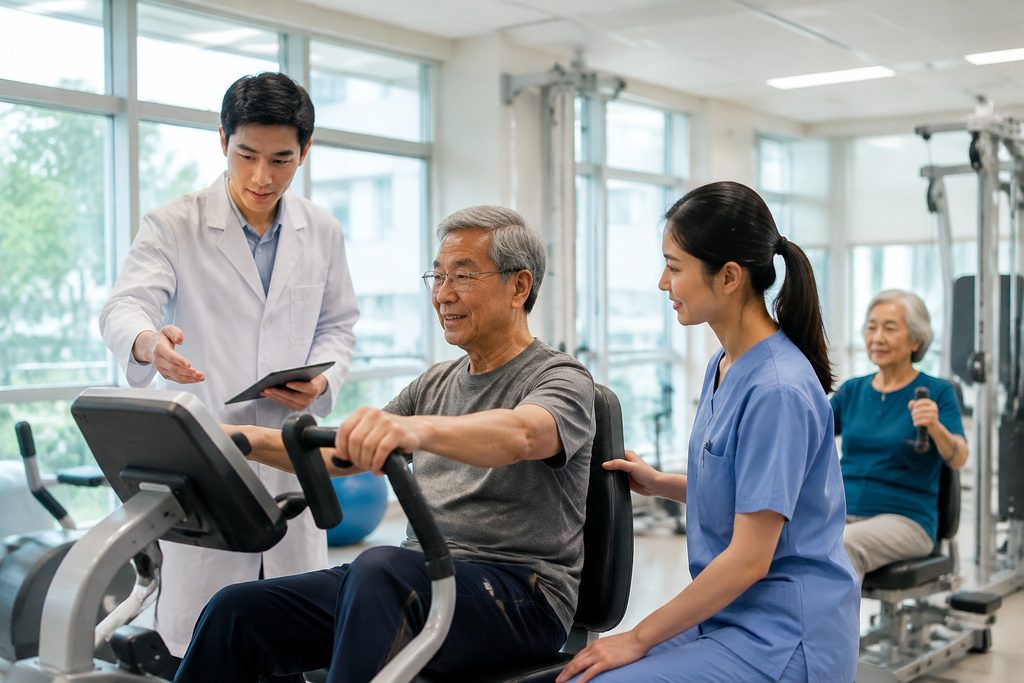
Which Hospital in China Offers TCM Rehabilitation? A Practical Guide for International Patients
Traditional Chinese Medicine rehabilitation goes far beyond acupuncture needles and herbal teas. It is a structured, hospital-based system combining acupuncture, tuina massage, moxibustion, herbal pharmacology, and movement therapies like tai chi and qigong to restore function after stroke, orthopedic surgery, or chronic illness. A TCM rehabilitation hospital China offers is typically a large public institution — often a university-affiliated teaching hospital — where Western diagnostic tools work alongside TCM protocols. If you are searching for “which hospital in China offers TCM rehabilitation,” the honest answer is that several dozen do, but only a handful have dedicated international departments equipped to treat foreign patients without fluent Mandarin.
Our team at China Medical Services has spent years mapping these institutions. We do not run hospitals. We help patients navigate them — from identifying the right department to handling registration, interpretation, and follow-up coordination.
Key Takeaways
- China has 340+ top-ranked hospitals across 37 cities, including dedicated TCM institutions with international wards.
- TCM rehabilitation in China typically costs $80–$250 per session, roughly 60–80% less than comparable integrative rehab in the US or Europe.
- Public TCM hospitals require in-person registration for outpatient visits — remote booking for standard clinics is not available.
- International departments and VIP channels exist at major TCM centers, with English-speaking staff and coordination services.
- Visa for medical treatment is the S2 category, not the M visa, which is strictly for commercial and trade activities.
The Problem: Post-Stroke and Post-Surgical Rehab Is Expensive and Fragmented in the West
Stroke remains a leading cause of long-term disability worldwide. The World Health Organization reports that 15 million people suffer a stroke each year; of those, approximately 5 million are left permanently disabled. In the United States alone, the American Heart Association estimates stroke-related costs — including rehabilitation — will exceed $140 billion annually by 2035. For a patient needing 12–20 weeks of intensive multidisciplinary rehabilitation, out-of-pocket costs in the US routinely reach $30,000–$60,000 even with insurance. In the UK, NHS waiting lists for specialist neuro-rehabilitation now stretch to 18 weeks or longer in many trusts.
Orthopedic rehabilitation tells a similar story. After a total knee replacement or spinal fusion, patients need weeks of supervised physical therapy. In Germany, a three-week inpatient orthopedic rehab program costs €8,000–€15,000 privately. In Australia, private physiotherapy runs $90–$130 per session, with limited insurance rebates. Patients are left with a hard choice: pay premium prices for fragmented care, or skip rehabilitation and risk poor functional recovery.
TCM rehabilitation offers a genuinely different model. It is integrated, hospital-based, and dramatically less expensive. But the question remains: which hospital in China offers TCM rehabilitation that meets international standards of safety, communication, and clinical rigor?
Why a TCM Rehabilitation Hospital China Offers Delivers Results
China’s TCM hospital system is not a fringe alternative. It is a state-funded pillar of the national healthcare infrastructure. The National Administration of Traditional Chinese Medicine oversees more than 4,000 TCM hospitals nationwide, including 340+ top-ranked institutions. Within the Fudan University hospital rankings — China’s most authoritative hospital evaluation — TCM hospitals are assessed alongside Western medical centers, and several consistently rank in the top tier for rehabilitation, neurology, and orthopedics.
Integrated Protocols, Not Isolated Treatments
At a leading TCM rehabilitation hospital China has established, a post-stroke patient does not simply receive acupuncture. They receive a coordinated protocol: daily acupuncture targeting motor cortex points, tuina massage to prevent muscle contracture, herbal decoctions prescribed after tongue and pulse diagnosis, and supervised qigong or tai chi for balance retraining. This runs parallel to conventional physiotherapy and occupational therapy. The result is a rehabilitation density — hours of active therapy per day — that few Western outpatient programs can match. A typical inpatient TCM rehab day includes 4–6 hours of structured therapy, compared to 1–2 hours in many Western settings.
Clinical Volume and Specialized Wards
Scale matters in rehabilitation. A major TCM hospital in Shanghai or Beijing may operate dedicated stroke rehabilitation wards with 200–400 beds. Clinicians in these wards treat thousands of stroke cases annually. This volume produces pattern recognition that no textbook can teach. For example, the rehabilitation department at a top-tier TCM hospital in Guangzhou discharges over 3,000 inpatients per year. Western rehabilitation centers, by contrast, often manage a few hundred cases annually across all conditions.
Cost Structure That Makes Intensive Rehab Affordable
The most common question we hear is how much does TCM rehab cost in China. The answer varies by hospital tier and city, but the range is consistent. A standard acupuncture session at a public TCM hospital costs $20–$40. Tuina massage runs $25–$50 per session. A comprehensive inpatient rehabilitation day — including accommodation, meals, nursing, and all therapies — typically ranges from $150 to $400 at a top-tier TCM hospital. Even at the high end, a four-week intensive program costs under $12,000. Comparable integrative rehabilitation in the US would cost three to five times that amount.
Top TCM Rehabilitation Hospitals in Shanghai and Beijing
When patients ask about the best traditional Chinese medicine rehab center Shanghai has available, two institutions stand out. Shuguang Hospital, affiliated with Shanghai University of Traditional Chinese Medicine, operates one of China’s most respected TCM rehabilitation departments. It is a Fudan-ranked hospital with a dedicated international medical center. The hospital’s rehabilitation program integrates acupuncture, tuina, and herbal medicine with modern physiotherapy equipment. Longhua Hospital, also in Shanghai, is another top choice, particularly for orthopedic rehabilitation and post-surgical recovery.
In Beijing, the picture is equally strong. Guang’anmen Hospital, affiliated with the China Academy of Chinese Medical Sciences, is widely considered one of the top three TCM hospitals in the country. Its rehabilitation department handles complex neurological cases, including post-stroke hemiplegia and spinal cord injury. Dongzhimen Hospital, affiliated with Beijing University of Chinese Medicine, is another leader, particularly for stroke rehabilitation and chronic pain management. For international patients, both hospitals have international departments with English-speaking coordinators.
Beyond these flagship institutions, strong programs exist in Guangzhou, Chengdu, Hangzhou, and Tianjin. The First Affiliated Hospital of Guangzhou University of Chinese Medicine, for example, operates a large rehabilitation center with a strong reputation in Southeast Asia. West China Hospital in Chengdu — while primarily a Western medicine institution — has a respected integrative medicine department that combines TCM rehabilitation with conventional care.
What a TCM Rehabilitation Program Actually Looks Like: Week by Week
A typical inpatient TCM rehabilitation program for post-stroke recovery spans four to eight weeks. Here is what the first month looks like at a major TCM rehabilitation hospital China patients commonly choose.
Week 1: Assessment and Baseline. You undergo comprehensive evaluation — Western imaging (MRI or CT), neurological examination, and TCM diagnostic assessment including tongue and pulse examination. The medical team establishes baseline functional scores using standardized tools like the Fugl-Meyer Assessment for motor recovery. Your herbal formula is prescribed and adjusted based on your constitution. Daily acupuncture begins, typically 30–45 minutes per session.
Week 2: Active Intervention. Therapy intensity increases. You receive daily acupuncture plus tuina massage every other day. Physical therapy sessions focus on weight-bearing, balance, and gait training. Occupational therapy addresses activities of daily living. Herbal medicine is taken twice daily. Some hospitals add moxibustion for specific meridian points.
Week 3: Functional Milestones. The team reassesses your progress. If spasticity is present, specific acupuncture protocols target the affected muscle groups. Qigong or tai chi sessions begin, focusing on slow, controlled movements. You may transition from wheelchair to walker, or from walker to cane, depending on your baseline.
Week 4: Consolidation and Discharge Planning. The team documents your improvement using the same standardized scales from week one. You receive a written discharge summary, a herbal prescription to continue at home, and a home exercise program. Many patients extend their stay for an additional two to four weeks if progress is strong. Some hospitals offer video follow-up consultations after discharge.
For post-surgical orthopedic rehabilitation — say, after a knee replacement — the timeline is shorter. A two to three week program typically includes daily acupuncture for pain and swelling, tuina for soft tissue mobilization, and supervised physiotherapy to restore range of motion. The integration of TCM modalities with conventional PT is what makes these programs distinctive.
Cost Comparison: TCM Rehab in China vs. Western Alternatives
The financial case for seeking TCM stroke rehabilitation cost Beijing patients encounter is compelling. Here is a direct comparison of published and observed costs across treatment settings.
| Rehabilitation Setting | Daily Cost (USD) | 4-Week Total (USD) | Key Inclusions |
|---|---|---|---|
| US inpatient rehab facility | $1,500–$2,500 | $42,000–$70,000 | PT, OT, speech therapy, nursing |
| US outpatient integrative rehab | $300–$600 | $8,400–$16,800 | PT, acupuncture, limited modalities |
| UK private neuro-rehab (inpatient) | $1,200–$2,000 | $33,600–$56,000 | Multidisciplinary team, nursing |
| Germany private orthopedic rehab | $400–$700 | $11,200–$19,600 | PT, balneotherapy, medical supervision |
| China TCM rehab (top-tier, inpatient) | $150–$400 | $4,200–$11,200 | Acupuncture, tuina, herbs, PT, nursing, meals |
| China TCM rehab (international dept.) | $200–$500 | $5,600–$14,000 | Above plus English coordination, private room |
These figures are ranges based on published hospital price lists and our coordination experience. Actual costs vary by hospital and case complexity. The structural reasons for the gap are straightforward: lower labor costs in China, higher patient volume per clinician, and a healthcare system where TCM is subsidized as a national priority. Quality does not scale down with price. The top TCM hospitals in China are accredited teaching institutions with rigorous clinical governance.
Is TCM Rehabilitation Effective After Surgery in China? What the Evidence Shows
The question is TCM rehabilitation effective after surgery in China deserves a direct answer. The evidence is mixed, but increasingly positive for specific applications. A 2021 systematic review published in the Journal of Orthopaedic Surgery and Research examined acupuncture for post-operative pain after total knee arthroplasty. The review pooled data from 13 randomized controlled trials and found that acupuncture significantly reduced pain scores and opioid consumption compared to sham acupuncture or standard care alone. Another meta-analysis in Evidence-Based Complementary and Alternative Medicine looked at tuina massage for post-stroke spasticity and reported significant improvements in motor function scores.
What the evidence does not support is the idea that TCM alone can replace conventional rehabilitation. The strongest outcomes come from integrated protocols — TCM modalities combined with standard physiotherapy and occupational therapy. This is precisely the model used at top Chinese TCM hospitals. If you are considering TCM rehabilitation after surgery, the realistic expectation is that acupuncture and tuina may reduce pain, decrease swelling, and accelerate functional recovery when used alongside conventional PT. They are not a substitute for it.
One honest caveat: the quality of TCM clinical research varies widely. Many studies have small sample sizes or lack blinding. The best hospitals in China acknowledge this and are investing in higher-quality trials. As a patient, you should ask any hospital about their outcome data and complication rates before committing to a program.
How to Book a TCM Rehabilitation Program in China
The process of trying to book TCM rehabilitation program China hospitals offer is not as simple as booking a hotel room. Public TCM hospitals operate on a walk-in registration system for standard outpatient clinics. You cannot reserve a specific specialist from overseas through the regular channel. What you can do is work through the hospital’s international department, which handles foreign patients differently.
Here is the realistic pathway. First, you contact the international department of your chosen hospital — or work with a coordination service like ours. You submit your medical records: imaging reports, discharge summaries, current medication list, and any relevant lab work. The hospital’s rehabilitation team reviews your case and determines whether you are a suitable candidate. If yes, they issue an invitation letter and treatment plan. You then apply for an S2 visa at your nearest Chinese embassy or consulate, using the hospital’s invitation letter and supporting documents.
Once in China, you register at the hospital, complete your initial assessment, and begin treatment. The entire process — from first contact to hospital admission — typically takes two to four weeks. Some hospitals offer video consultations before you travel, which can cost $100–$300 for a standard international department consultation or $500–$800 for a top-specialist video consultation. These fees are often credited toward your on-the-ground coordination if you proceed to treatment within 90 days.
Important: The M visa is for commercial and trade activities only. It cannot be used for medical treatment. For medical travel, you need an S2 visa, which is the short-stay category used for private affairs including medical treatment. Always confirm current requirements with the Chinese embassy or consulate in your country before applying.
Practical Considerations: Documentation, Payment, and Language
Before you commit to a TCM rehabilitation program in China, there are concrete logistics to handle. Your medical records must be translated into Chinese — most hospital international departments require this. Bring original imaging on CD or USB, not just printed reports. Bring a complete medication list with generic drug names, not brand names, since Chinese pharmacies stock different brands.
Payment is upfront. Public hospitals in China require a deposit upon admission, typically $2,000–$5,000 depending on the program length. You pay as you go for additional services. Most hospitals accept international credit cards at their international departments, but cash and Chinese mobile payment platforms like WeChat Pay and Alipay are more common in standard departments. If you have international health insurance, you will likely need to pay out of pocket and seek reimbursement afterward. Some private international hospitals in China — like United Family or Jiahui — offer direct insurance billing, but dedicated TCM hospitals generally do not.
Language is the biggest practical barrier. Even at top-tier TCM hospitals, most nurses and many physicians do not speak fluent English. The international department staff will, but once you are on the ward, day-to-day communication can be challenging. A bilingual medical companion — available from $300 per day — handles translation, registration, payment, and navigation. This is not a luxury; for many patients, it is the difference between a smooth experience and a stressful one.
After discharge, continue your herbal medicine and home exercise program as prescribed. Most hospitals offer video follow-up consultations. You should also arrange a follow-up with your physician at home to ensure continuity of care. Bring your discharge summary and any new prescriptions to that appointment.
Frequently Asked Questions
The right choice depends on your condition. For post-stroke rehabilitation, Guang’anmen Hospital in Beijing and Shuguang Hospital in Shanghai are top choices. For orthopedic recovery, Longhua Hospital in Shanghai is strong. For chronic pain or general rehabilitation, Dongzhimen Hospital in Beijing is well-regarded. We recommend reviewing the TCM hospital directory and comparing departments before deciding.
A four-week inpatient TCM rehabilitation program in China costs roughly $4,200–$14,000 depending on hospital tier and room type. The equivalent program in the US would cost $42,000–$70,000. Even with international flights and accommodation for a companion, the total cost is typically 60–70% lower.
Not through the standard public hospital channel. Public TCM hospitals require in-person registration for outpatient clinics. However, international departments can arrange consultations with senior specialists after reviewing your records. A video consultation before travel is a practical first step — it costs $100–$800 depending on the specialist’s seniority, and the fee is often credited toward coordination services if you proceed.
Is TCM rehabilitation safe for patients on Western medications?
Generally yes, but herb-drug interactions are a real concern. Some Chinese herbs affect liver enzymes that metabolize Western drugs, including warfarin,
For more medical information and treatment options in China, visit chinamedservices.com (China Medical Services).
