Chemotherapy Cost China: 2026 Price Guide for Foreign Patients
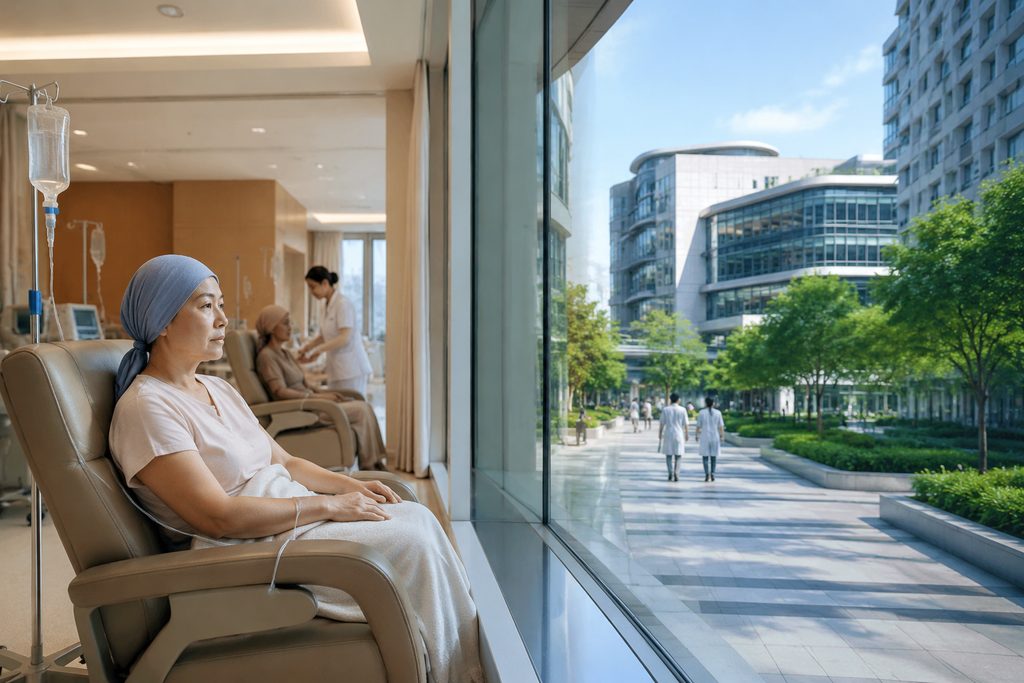
In the United States, a single round of standard-dose chemotherapy for breast cancer averages $10,000 to $20,000 before insurance. In China, that same regimen at a top-tier public hospital typically costs between $800 and $3,000 per cycle. The gap is not marginal. It is structural.
But the chemotherapy cost China patients actually pay depends on far more than the drug list. Hospital tier, whether you use the public channel or the international VIP department, the specific regimen your oncologist prescribes, and how long you stay all shift the final number dramatically. A patient who books through a private international hospital in Shanghai will pay five to eight times what a patient pays at a public teaching hospital in Guangzhou for a nearly identical protocol.
That spread is exactly why most international patients need a clear breakdown before they commit to travel. The numbers exist. They are knowable. And they are far more predictable than most Western patients assume.
Chemotherapy Cost China: The Short Answer
Expect to pay between $800 and $3,000 per cycle for standard chemotherapy at a top-ranked Chinese public hospital using the international or VIP channel. That range covers common regimens for breast, lung, colorectal, and gastric cancers using generic and first-line branded drugs. Targeted therapy and immunotherapy add $2,000 to $8,000 per cycle depending on the drug.
At a private international hospital like United Family or Jiahui, the same standard chemotherapy cycle runs $5,000 to $15,000. The clinical protocols are often identical. What you are paying for is English-speaking staff, Western-style scheduling, and direct insurance billing. Whether that premium is worth it depends on your insurance coverage and your tolerance for navigating a Chinese-language public hospital environment.
Who This Is Right For — and Who It Isn’t
International patients who benefit most from chemotherapy in China fall into a few clear groups.
Good candidates:
- Patients with a confirmed diagnosis and a written treatment plan from their home oncologist who need the same regimen administered at lower cost
- Patients whose insurance does not cover chemotherapy at home, or whose out-of-pocket maximum makes treatment unaffordable
- Patients who need second-line or third-line regimens that are approved in China but delayed or unavailable in their home country
- Patients seeking access to high-volume oncology centers with clinical trial options not offered elsewhere
- Family members of expatriates already living in China who want treatment without repatriation
Who should not pursue this:
- Patients who are medically unstable, unable to fly, or require ICU-level support during treatment
- Patients whose regimen requires a drug that is not approved or not stocked in China — verify before booking any travel
- Patients who expect a US-style private room and English-speaking nursing staff at public hospital prices. That combination does not exist
- Patients unwilling to pay upfront. Chinese public hospitals require prepayment. Insurance reimbursement comes later
- Patients who need to start treatment within days. Visa processing, document translation, and hospital scheduling take time
The honest truth: China is not the right choice for every cancer patient. But for those with a stable diagnosis, a defined protocol, and the ability to plan two to four weeks ahead, the cost savings can be life-changing.
The Options, Compared
Not all chemotherapy in China costs the same. The table below breaks down the three main channels available to foreign patients.
| Channel | Cost per Standard Cycle | English Support | Insurance Billing | Wait Time to Start |
|---|---|---|---|---|
| Public hospital — standard outpatient | $400–$1,200 | Minimal | Patient pays, then claims | 2–6 weeks |
| Public hospital — international/VIP department | $800–$3,000 | Yes | Patient pays, then claims | 1–3 weeks |
| Private international hospital | $5,000–$15,000 | Yes | Direct billing common | 3–10 days |
The public standard outpatient channel is the cheapest but nearly impossible for a foreign patient to navigate without a bilingual companion. Registration happens in person, same-day, often before dawn. Payment is made at kiosks with Chinese-only interfaces. The international VIP department at a top public hospital offers the best balance: senior oncologists, English coordination, and prices still far below Western benchmarks.
Private international hospitals are the right choice for patients whose insurance covers them or who prioritize comfort and speed over cost. For everyone else, the public VIP channel is where the real value sits.
What Actually Drives the Chemotherapy Cost China Patients Pay
The headline number — $800 to $3,000 per cycle — hides enormous variance. Several factors move the price more than the hospital itself.
Drug regimen. This is the single largest variable. A generic platinum-based doublet for lung cancer costs a fraction of a regimen built around a branded monoclonal antibody. China’s national drug procurement program has driven generic prices down sharply since 2019. Many first-line generics now cost 60–80% less than their Western equivalents. But newer targeted drugs and immunotherapies — even with Chinese domestic versions — remain expensive.
Hospital tier. Fudan-ranked top 100 hospitals and JCI-accredited institutions charge more for their international departments than smaller provincial hospitals. The premium buys access to oncologists who see thousands of cases annually and departments with active clinical trial pipelines. For many patients, that is worth the difference.
City. Beijing and Shanghai carry the highest prices. Guangzhou, Chengdu, and Hangzhou typically run 10–20% lower for equivalent care. The difference reflects local cost structures, not clinical quality.
Length of stay. Chemotherapy is not a single event. A standard course runs four to eight cycles over three to six months. Accommodation, food, transportation, and companion services multiply with every additional month in-country.
Supportive care. Anti-nausea drugs, white blood cell boosters, and hydration are often billed separately. Some hospitals bundle them into the cycle price. Others itemize. Always ask for a written cost estimate before the first infusion.
How Much Does Chemo Cost in Beijing Specifically?
Beijing is the most expensive city for cancer care in China, but still dramatically cheaper than the United States or Western Europe. At Peking Union Medical College Hospital‘s international department, a standard chemotherapy cycle for breast or colorectal cancer typically runs $1,200 to $3,500. At Beijing Cancer Hospital’s international clinic, expect a similar range. Adding targeted therapy pushes the cycle cost to $4,000–$10,000.
These numbers reflect the VIP channel. The standard public channel at the same hospitals costs roughly half, but requires full Chinese-language navigation and same-day queueing for registration. Most foreign patients choose the international department precisely because it removes that barrier. The premium is real, but it is also the difference between a manageable process and a logistical nightmare.
Beijing’s advantage is depth. The city hosts 21 of China’s top 100 hospitals — more than any other city. For rare cancers, second opinions, and clinical trial access, that concentration matters. If your case is complex, the top-ranked hospitals in Beijing justify the higher cost.
Cancer Treatment Price Shanghai: What Changes
Shanghai’s cancer treatment price structure mirrors Beijing’s, with slightly lower accommodation costs and a more expatriate-friendly environment. At Fudan University Shanghai Cancer Center — consistently ranked among China’s top oncology institutions — standard chemotherapy through the international department runs $1,000 to $3,000 per cycle. At Ruijin Hospital’s VIP clinic, the range is similar.
Shanghai’s private international hospitals are more established than Beijing’s. Jiahui International Hospital and ParkwayHealth both offer oncology services with direct insurance billing. Their chemotherapy pricing starts around $6,000 per cycle for standard regimens. For patients with international insurance that covers private care, Shanghai often becomes the default choice: Western comfort, Chinese pricing, and easy access to top-tier public specialists for second opinions.
One practical note: Shanghai’s public hospital international departments book up faster than Beijing’s. Plan two to three weeks ahead for initial consultations, and expect longer waits for the most famous specialists. The trade-off is a city that is easier for English-speaking patients to navigate independently.
Affordable Chemotherapy Abroad China: The Real Savings Math
Let’s put the numbers side by side. A six-cycle course of standard adjuvant chemotherapy for breast cancer costs roughly:
- United States: $60,000–$120,000 before insurance; $6,000–$15,000 out-of-pocket with typical coverage
- United Kingdom: Covered by NHS, but wait times for non-urgent oncology can stretch weeks
- China, public VIP channel: $4,800–$18,000 total, all-inclusive of drug costs and basic supportive care
- China, private international hospital: $30,000–$90,000 total
For uninsured or underinsured patients, the savings are not incremental. They are order-of-magnitude. A patient facing a $60,000 treatment bill at home can receive the same regimen in China for under $15,000 — including flights, accommodation, and bilingual support. That is the core appeal of affordable chemotherapy abroad China as a medical tourism destination.
But the savings only materialize if you plan properly. Booking a private international hospital without comparing public VIP options erases most of the cost advantage. Choosing Beijing when Guangzhou offers equivalent care adds unnecessary expense. The patients who save the most are those who treat the process as a research project, not a leap of faith.
Best Oncology Hospital China for Foreigners: Where to Actually Go
The best oncology hospital China for foreigners is not a single institution. It depends on your cancer type, your budget, and your language needs. Still, a few names consistently rise to the top for international patients.
Fudan University Shanghai Cancer Center ranks among China’s top oncology hospitals in the Fudan specialty reputation rankings. Its international department handles foreign patients routinely. Breast, lung, and gastrointestinal cancers are particular strengths.
Peking Union Medical College Hospital (PUMCH) in Beijing is China’s most famous hospital overall. Its international medical services department has decades of experience with foreign patients. For complex, multi-system cases, PUMCH is often the safest first stop.
Sun Yat-sen University Cancer Center in Guangzhou offers top-tier oncology care at prices 15–20% below Beijing and Shanghai. For nasopharyngeal carcinoma and liver cancer, it is arguably the best in the country. The city’s lower cost of living compounds the savings.
West China Hospital in Chengdu is the largest hospital in China by patient volume. Its oncology department sees enormous case numbers, and Chengdu’s relaxed pace suits longer treatment stays.
For a full breakdown of oncology rankings across all 45 specialty areas, the department-specific top 10 lists show exactly which hospitals lead in each cancer type. Do not choose a hospital by reputation alone. Choose by your specific diagnosis.
Book Chemo Package China Medical Tourism: What That Actually Means
Searching for a way to book chemo package China medical tourism leads many patients to expect a fixed-price, all-inclusive product. That is not how Chinese hospitals work. No public hospital sells a “chemo package” the way a resort sells a vacation package. What exists instead is a coordinated arrangement: hospital registration, doctor consultation, treatment scheduling, and supporting services bundled by a third-party coordinator.
A realistic package includes:
- Translation of your medical records and pathology reports into Chinese
- Registration and medical card creation at the chosen hospital
- Initial consultation with the oncology department
- Treatment plan confirmation and cost estimate
- Scheduling of chemotherapy cycles
- Bilingual companion support for each hospital visit
- Assistance with accommodation and local logistics
What it does not include — and no legitimate service will promise — is a guaranteed specific doctor, a guaranteed start date, or a guaranteed treatment outcome. Hospitals control their own schedules. Any provider claiming otherwise is not being honest with you.
Coordination fees for such arrangements typically start at $300 for basic appointment scheduling and range up to $8,000 for comprehensive VIP end-to-end support. The hospital treatment charges are always separate and paid directly to the hospital.
What It Costs: The Full Breakdown
Here is a realistic budget for a three-month, six-cycle chemotherapy course at a top Chinese public hospital’s international department, assuming a standard regimen for breast or colorectal cancer.
| Item | Estimated Cost (USD) |
|---|---|
| Initial consultation and treatment planning | $150–$400 |
| Chemotherapy drugs, 6 cycles | $4,800–$18,000 |
| Supportive care (anti-nausea, blood boosters) | $600–$2,400 |
| Imaging and lab work during treatment | $500–$1,500 |
| Accommodation, 3 months (serviced apartment) | $2,400–$6,000 |
| Bilingual companion, 12 hospital visits | $3,600–$7,200 |
| Flights and visa | $1,000–$3,000 |
| Total | $13,050–$38,500 |
The range is wide because the variables are real. A patient on a generic-only regimen in Guangzhou with basic accommodation lands near the bottom. A patient on branded targeted therapy in Beijing with premium housing lands near the top. Both are legitimate scenarios. Neither is inflated.
Compare that to the $60,000–$120,000 the same treatment costs in the United States, and the arithmetic becomes hard to ignore.
Practical Considerations: Visas, Payment, Records, and Follow-Up
Planning chemotherapy in China requires more than choosing a hospital. The logistics matter.
Visa. Medical treatment in China falls under the S2 visa category, which covers short-term private affairs including medical treatment. Stays longer than 180 days require an S1 visa. Your family members traveling with you also apply for S2. The hospital’s international department will provide an invitation letter and treatment confirmation letter to support your application. Processing typically takes one to three weeks. The M visa — a commercial and trade visa — is not appropriate for medical treatment. Do not apply for it.
Medical records. Bring everything: pathology reports, imaging studies on CD or USB, blood work, and a written treatment plan from your home oncologist. Hospitals in China will not begin chemotherapy without a confirmed diagnosis and a clear rationale for the proposed regimen. Professional translation of records into Chinese costs $300–$500 and saves days of back-and-forth.
Payment. Chinese public hospitals require prepayment. You deposit funds at admission or before each cycle, and treatment is deducted from the balance. International credit cards are accepted at international departments, but wire transfer or UnionPay is more reliable. Private international hospitals often bill insurance directly — confirm with your insurer before booking.
Insurance. Most Western insurers reimburse treatment at Chinese public hospitals, but you pay first and claim later. Get pre-authorization in writing before you travel. Some insurers exclude treatment outside their network countries. Others reimburse at out-of-network rates. Know your policy’s fine print.
Language. Even at international departments, the nursing staff and pharmacy may not speak English. A bilingual companion who handles registration, payment, prescription pickup, and communication with the nursing team removes the single biggest source of stress for foreign patients. It is not a luxury. It is the difference between a manageable treatment course and a daily struggle.
Follow-up after returning home. Your Chinese oncologist will provide a written summary of every cycle, including drug names, doses, and any complications. Bring this to your home
Frequently Asked Questions
Yes. The hospitals used for international patients are JCI-accredited and follow the same international safety standards as top hospitals in the US and Europe. Surgical teams perform high volumes of procedures — often more than their Western counterparts — which studies show leads to better outcomes.
Costs vary by procedure and hospital, but international patients typically save 40-80% compared to US prices — even when factoring in travel and accommodation. A consultation with our team will give you an exact, all-inclusive quote with no hidden fees.
Send us your existing medical reports to get started. We handle everything from hospital selection and appointment scheduling to visa assistance and post-operative recovery planning. Your medical records are reviewed by the specialist before you even book a flight.
For more medical information and treatment options in China, visit chinamedservices.com (China Medical Services).
