Verify You Aren’t Paying More for Being Foreign: Real Hospital Fees in China
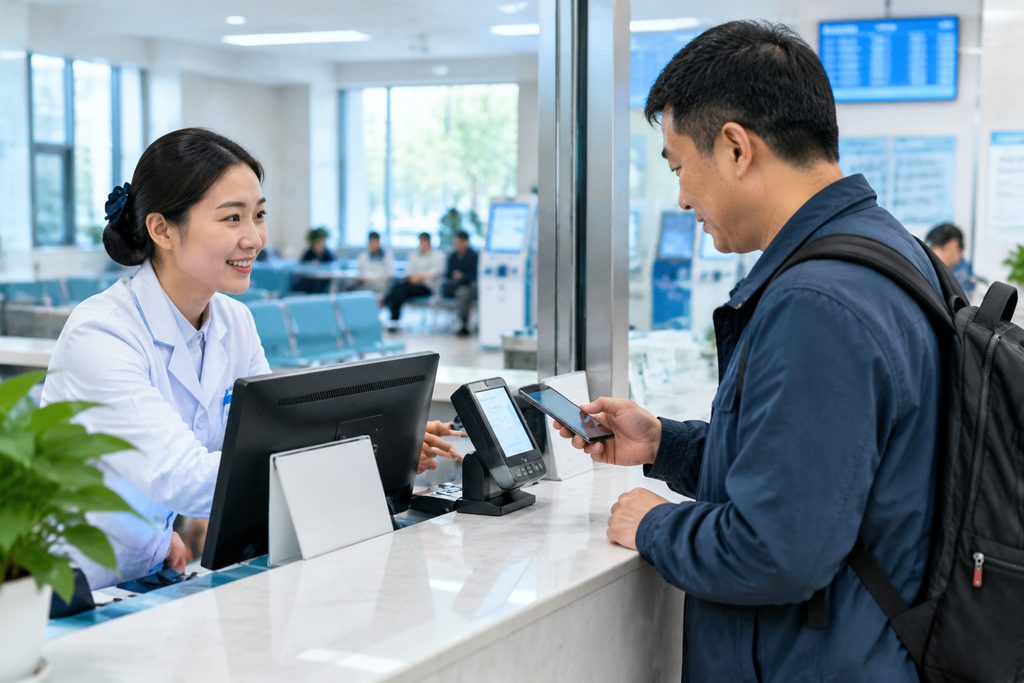
Verify You Aren’t Paying More for Being Foreign: A Practical Guide to Hospital Fees in China
You’ve probably heard that cancer treatment cost China foreigner rates are inflated the moment you show a foreign passport. The reality is more complicated — and, in many cases, more reassuring than the rumors suggest. Public hospital pricing in China is regulated by provincial government fee schedules. Those schedules do not distinguish between a Chinese citizen and a foreign national. What changes is which channel you access. That distinction, not your nationality, determines what you pay.
Here is what most international patients never learn: the price difference between a local patient and a foreign patient at the same top-tier public hospital is often zero for the actual medical procedure. The difference appears in the service layer around it. Understanding that layer is how you verify you are not being overcharged.
Key Takeaways
- China’s 340+ top-ranked hospitals operate under government-regulated fee schedules that apply equally to Chinese citizens and foreign nationals — the medical procedure itself is not priced differently based on nationality.
- The real cost difference comes from which service channel you use: standard public outpatient (lowest cost, Chinese-language only) versus hospital international departments (1.5–2× standard rates, English-speaking staff, scheduled appointments).
- Cancer treatment in China typically costs 20–40% of equivalent US care, even at international department rates — a lung cancer chemotherapy cycle that runs $30,000 in the US often ranges $6,000–12,000 in Shanghai.
- You cannot verify fair pricing without itemized quotes in writing. Request the hospital’s official fee schedule for your specific procedure code before committing to any deposit.
The Problem: Opaque Pricing and the Fear of the “Foreigner Tax”
Search “is medical treatment in China cheaper for foreigners” and you will find forum threads claiming everything from “I paid the same as locals” to “they tripled my bill when they saw my passport.” Both experiences exist. Neither tells the full story.
Approximately 500,000 international patients seek medical care in China annually, according to China’s National Health Commission estimates. The majority travel for oncology, cardiac surgery, orthopedics, and reproductive medicine. A significant portion arrive without a clear understanding of how Chinese hospital pricing actually works. That knowledge gap is where overcharging happens — not in the official fee schedules, but in the unverified quotes, the unnecessary add-ons, and the intermediary markups.
Price discrimination against medical tourists in China is rarely institutional. It is situational. It happens when a patient does not know what the standard rate should be, cannot read the itemized bill, and has no one to question discrepancies.
Why China’s Hospital Pricing Structure Works Differently Than You Expect
Government-Regulated Base Fees Apply to Everyone
Every public hospital in China must follow the medical service pricing schedule issued by its provincial healthcare security administration. A CT scan, a tumor resection, a chemotherapy infusion — each has a government-coded price. That price is the same whether the patient is from Chengdu or Copenhagen. The hospital cannot legally charge a foreigner more for the same procedure code. This is the single most important fact for verifying fair pricing.
Shanghai’s municipal fee schedule, for example, lists a standard chest CT at approximately $40–70 USD. A PET-CT scan runs $700–1,100. A radical gastrectomy for stomach cancer has a surgical fee of roughly $1,500–2,500 before consumables and anesthesia. These are the same numbers a local Shanghai resident sees on their bill.
International Departments: The 1.5–2× Premium Explained
So why do foreigners often report paying more? Because most international patients access care through a hospital’s international department or VIP clinic. These units operate with separate pricing schedules that are typically 1.5 to 2 times the standard public rates. The premium buys you things the standard channel does not offer: English-speaking coordination, scheduled appointments instead of same-day queueing, longer consultation times, and private or semi-private ward rooms.
That premium is not a foreigner tax. It is the price of a different service tier. A Chinese citizen who chooses the international department pays the same elevated rates. The distinction is channel, not nationality.
Why Costs Stay Low Without Sacrificing Quality
Fuwai Hospital in Beijing performs over 14,000 cardiac surgeries annually — the highest volume of any heart center globally. Volume like that drives down per-procedure costs through operational efficiency, not through cutting corners. Labor costs for nurses, technicians, and support staff remain substantially lower than in the US or Western Europe. A coronary artery bypass graft that bills at $120,000+ in the United States typically costs $12,000–20,000 at Fuwai’s international department, according to published hospital price lists.
Clinical outcomes hold up. Fuwai’s 30-day post-operative mortality rate for isolated CABG has been reported below 1%, a figure comparable to top US cardiac centers. The cost difference is structural, not qualitative.
How to Verify You Are Not Overpaying: A Step-by-Step Check
You do not need to take anyone’s word for what a procedure should cost. You can verify it yourself. The process takes time and requires documentation, but it is straightforward.
Step 1: Request the Itemized Fee Schedule in Writing
Before you pay any deposit, ask the hospital — or whoever is coordinating your care — for a written, itemized cost estimate. It should list each procedure by its official Chinese medical service code, the unit price, and the quantity. A legitimate hospital international department will provide this without hesitation. If you receive only a lump-sum number with no breakdown, treat that as a red flag.
Step 2: Compare Against the Provincial Fee Schedule
Every province publishes its medical service pricing catalog online. These are public documents, usually available in Chinese. If you cannot read them, ask your coordinator to cross-reference the quoted price against the official schedule. The base procedure fee should match. What can legitimately differ: the international department multiplier (clearly stated), implant or drug costs (market-priced), and service fees for coordination or interpretation.
Step 3: Check the Channel Multiplier
Ask directly: “Is this quote based on the standard public outpatient rate or the international department rate?” If the answer is international department, the quote should be 1.5–2× the standard rate — not 4×, not 10×. Multipliers beyond 2× warrant a detailed explanation. Some private international hospitals like United Family or Jiahui set their own pricing entirely, but those are transparent private facilities, not public hospital international departments.
Step 4: Confirm What the Deposit Covers
Public hospitals in China require prepayment before admission or major procedures. A typical deposit for major cancer surgery at a top-tier hospital runs $8,000–15,000. Ask what happens to unused funds. Standard practice: the hospital refunds the balance upon discharge. If someone tells you the deposit is non-refundable regardless of actual costs, question it.
Cancer Treatment Cost China Foreigner: Real Numbers for Comparison
The question behind most searches for cancer treatment cost China foreigner is simple: how much will this actually cost me? The table below shows published price ranges for common oncology procedures at top-tier Chinese public hospital international departments, compared against typical US hospital billed charges (not negotiated insurance rates). These are reference ranges, not quotes. Final costs vary by hospital, cancer stage, drug regimen, and case complexity.
| Procedure / Treatment | China (International Dept.) | United States (Billed Charges) |
|---|---|---|
| Radical lung cancer resection (lobectomy) | $12,000 – $20,000 | $60,000 – $120,000 |
| Radical gastrectomy (stomach cancer) | $10,000 – $18,000 | $55,000 – $110,000 |
| Chemotherapy cycle (standard regimen, per cycle) | $6,000 – $12,000 | $25,000 – $40,000 |
| Radiation therapy (full course, IMRT) | $8,000 – $15,000 | $50,000 – $90,000 |
| PET-CT scan (diagnostic imaging) | $700 – $1,100 | $3,000 – $6,000 |
| Immunotherapy (PD-1 inhibitor, per dose) | $2,500 – $5,000 | $12,000 – $18,000 |
China’s domestic pharmaceutical industry produces many PD-1 inhibitors at a fraction of Western prices. Drugs like sintilimab and toripalimab — developed by Chinese manufacturers and approved by the NMPA — are widely used in Chinese oncology practice. Their availability contributes significantly to the overall cost advantage. The same class of drug from a Western manufacturer costs 4–6× more per dose.
But the cost advantage extends beyond cancer. Top-ranked Chinese hospitals across all major specialties maintain similar price differentials. Cardiac bypass surgery, joint replacement, spinal fusion — all typically run at 20–40% of US billed charges, even at international department rates.
Where Overcharging Actually Happens: The Intermediary Problem
If the hospitals are not the ones inflating prices, who is? The answer is usually intermediaries. Unlicensed agents, freelance “facilitators,” and even some travel agencies insert themselves between foreign patients and hospitals, adding markups of 50–200% on top of the actual hospital bill. The patient never sees the original invoice. They pay one bundled number and assume it is the hospital’s price.
This is the most common source of price discrimination medical tourists China actually experience. It is not the hospital charging more because you are foreign. It is a middleman charging more because you do not know the real number.
So how do you avoid it? Demand direct billing. The hospital should invoice you — or your designated coordinator should show you the hospital’s original invoice and charge a transparent, separate coordination fee. If anyone refuses to show you the hospital’s itemized bill, walk away. That is the single most reliable verification step you can take.
Hospital Fees China Expat vs Local: What Long-Term Residents Know
Expats living in China long-term often figure out a workaround that short-term medical tourists rarely consider: use the standard public channel with a bilingual companion. Since the base procedure fee is identical for everyone, a foreigner who can navigate the standard outpatient system — with help for registration, queueing, and translation — pays the same as a local patient. No international department multiplier. No VIP premium.
The trade-off is operational. Standard public outpatient departments are crowded. Same-day registration starts early. You wait in lines. Consultations are brief. Everything is in Chinese. But the savings are real: a bilingual medical companion costs from $300 per day, while the international department premium on a major surgery can run $5,000–15,000. For a patient spending a week in hospital, the companion route is often dramatically cheaper overall.
That said, the standard channel is not for everyone. Patients with complex cases, those who need extended consultation time, or those who want the reassurance of English-speaking clinical staff may find the international department premium worth paying. The point is that you have a choice — and you should make it deliberately, not by default.
Practical Considerations: Documentation, Payment, and Verification Before You Travel
Verifying fair pricing starts before you board a plane. Gather these items and clarify these points in advance.
Medical records. Chinese specialists will want your complete history: pathology reports, imaging (DICOM format preferred), surgical notes, current medication list, and a summary letter from your treating physician. Have everything translated into Chinese or English. Incomplete records lead to repeat testing — and repeat testing adds cost.
Visa category. Medical treatment in China falls under the S2 visa, issued for short-term private affairs including medical treatment. The hospital’s international department will provide an invitation letter and treatment confirmation to support your application. Family members accompanying you also apply for S2 visas. Processing typically takes 1–3 weeks depending on your home country’s Chinese embassy or consulate.
Payment methods. Public hospitals accept UnionPay, Chinese bank cards, and cash. International credit cards are increasingly accepted at international departments but not universally. Wire transfers to the hospital’s official account are standard for large deposits. Confirm the hospital’s official account details directly with the hospital — never send money to an intermediary’s account.
Insurance and reimbursement. Chinese public hospitals operate on a pay-first, reimburse-later model for international patients. You settle the bill upon discharge, then submit claims to your insurer. Some private international hospitals like JCI-accredited facilities offer direct billing arrangements with major international insurers. Check with your insurer before choosing a hospital.
Follow-up after returning home. Chinese specialists typically provide a discharge summary in English and Chinese, plus a recommended follow-up schedule. Many international departments offer remote follow-up consultations via video for $100–300 per session. Plan for this before you leave — arranging it after the fact is harder.
Frequently Asked Questions
For the actual medical procedure, no. Provincial government fee schedules set one price for everyone. What differs is the service channel. International departments charge 1.5–2× standard rates for added services like English coordination and scheduled appointments — but a Chinese citizen using that department pays the same premium.
Request an itemized breakdown with official procedure codes, then cross-reference against the provincial fee schedule. Ask which channel the quote is based on. If the multiplier exceeds 2× the standard rate, demand an explanation. If you cannot get an itemized quote, treat the situation with caution.
Chinese emergency departments are required to stabilize any patient regardless of nationality or ability to pay. You will be billed afterward. Keep your passport, insurance details, and emergency contact information with you at all times. Your coordinator should have a protocol for emergency situations.
Not for standard public channel procedures — those prices are fixed by regulation. International departments have some flexibility on service fees, room rates, and bundled packages, particularly for longer stays or multi-procedure cases. Private international hospitals have the most pricing flexibility. Negotiation is more realistic for service components than for core medical fees.
At China’s top-tier hospitals — the 340+ facilities ranked in the top 5% of the country’s 35,000+ hospitals by Fudan University and JCI — the answer is generally yes for the specialties they are known for. Fuwai Hospital’s cardiac surgery volume and outcomes, Zhongshan Hospital‘s liver surgery program, and Peking Union Medical College Hospital‘s diagnostic capabilities are internationally recognized. What differs is the patient experience outside the operating room: communication, privacy, and service culture. That is where the international department premium goes.
Your Next Step
Verifying fair pricing in China’s hospital system comes down to three habits: get itemized quotes, know which channel you are using, and never accept a bundled number without seeing the hospital’s original invoice. The system is more transparent than most people assume — once you know what to ask for.
We help international patients navigate this process at China Medical Services. Our team handles hospital matching, quote verification, appointment coordination, and bilingual accompaniment. We are not a hospital and do not provide diagnoses or medical advice. If you are considering treatment in China and want to understand your real cost options, reach out for a free consultation — we will help you map out what is possible and what it actually costs.
For more medical information and treatment options in China, visit chinamedservices.com (China Medical Services).
