Is a Health Checkup Safe in China? What You Should Verify First
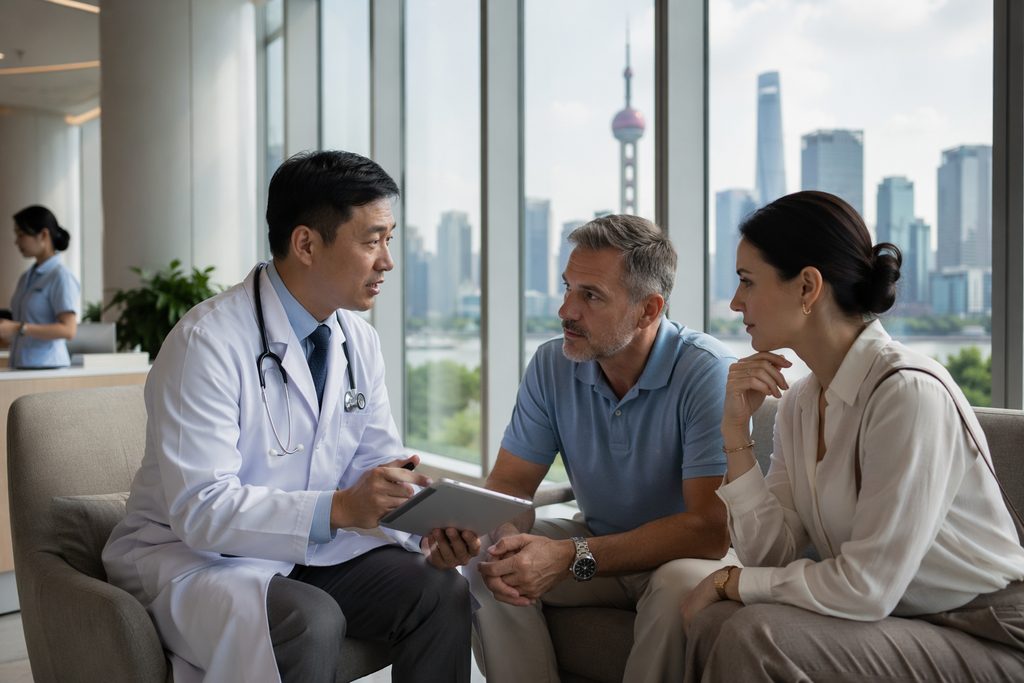
When 41-year-old Daniel from London started researching affordable full-body screenings, he kept hitting the same wall. Every search for “executive health checkup cost China” returned glossy brochures and zero clarity on safety. He wasn’t wrong to hesitate. The question isn’t whether China has capable doctors—it’s whether *you* can tell the difference between a world-class screening center and a tourist-trap clinic before you fly 9,000 kilometers.
Is a Full Body Checkup in China Safe? The Short Answer
Yes—if you book through a top-tier public hospital’s international department or a JCI-accredited private hospital. These facilities follow protocols comparable to what you would find in Singapore, Germany, or the United States. The risk isn’t the medicine. The risk is booking blind. A generic “health checkup package” from an unverified agency can mean outdated equipment, unreadable reports, and no physician follow-up. The safety issue is almost never the needle. It’s the process.
China’s top 5% of hospitals—roughly 340+ facilities ranked by Fudan University’s hospital rankings or accredited by Joint Commission International—operate at genuinely high standards. But the market below that tier is enormous and uneven. You need a verification checklist. That’s what this article gives you.
Who This Is Right For — and Who It Isn’t
A health screening in China makes sense for a specific profile of traveler. You’re a good candidate if you fall into one of these groups:
- You want a comprehensive executive physical—cardiac stress test, full abdominal ultrasound, tumor markers, low-dose CT—at 30–50% of the cost back home.
- You’re already traveling to China for business or family and want to add a screening without a separate trip.
- You need results fast. Many top hospitals in Beijing and Shanghai deliver full executive panels within 24–48 hours.
- You have a specific concern—liver health, cardiac risk, cancer family history—and want high-volume imaging expertise.
But this isn’t for everyone. Skip it if you have an acute, undiagnosed symptom that needs a diagnostic workup rather than a screening. A checkup is not a substitute for a specialist consultation. Also reconsider if you have a complex chronic condition requiring long-term continuity with a doctor who knows your history. And if you cannot take 3–5 days away from work for the screening plus follow-up consultation, the logistical friction may outweigh the savings.
The Options, Compared
You have three realistic tiers for a health checkup in China. They differ in price, language support, and medical depth. Here’s how they stack up against each other and against a typical Western executive screening.
| Option | Typical Cost (USD) | Language Support | Report Turnaround | Best For |
|---|---|---|---|---|
| Public hospital, standard outpatient | $150–$400 | Minimal English | 3–7 days | Budget travelers comfortable with chaos |
| Public hospital, international/VIP department | $600–$1,500 | English-speaking coordinators | 24–48 hours | Most international patients |
| Private international hospital (JCI-accredited) | $1,200–$3,500 | Full English, Western-style reports | Same day to 48 hours | Executives wanting maximum comfort |
| Typical U.S. executive physical (for reference) | $2,500–$6,000 | Native English | 5–10 days | Baseline comparison |
The middle column—public hospital international departments—is where most of our readers land. You get the clinical depth of a massive teaching hospital with enough English support to actually understand your results. The top tier is right if you want direct insurance billing and a hotel-like experience. The bottom tier is a false economy for most foreigners. Saving $400 while losing the ability to ask a follow-up question isn’t savings.
How to Verify a Medical Checkup Clinic in China Before You Book
This is the section that answers the title directly. Verification isn’t about trusting a website. It’s about confirming three things: the facility’s credentials, the package’s actual contents, and the reporting process.
Start with credentials. A legitimate hospital should appear in the Fudan University hospital rankings (the most respected independent ranking in China) or hold JCI accreditation. JCI is an international standard—if a private hospital has it, the care model is built around patient safety, not just volume. Check the hospital’s official website. Does it have an English-language international patient page? If not, that’s not a dealbreaker, but it means you’ll need a bilingual coordinator.
Then interrogate the package. “Full body checkup” means nothing. Ask for the exact itemized list: which tumor markers, which imaging modalities, which cardiac tests. A legitimate package will name specific tests—CA-125, CA-19-9, low-dose chest CT, carotid ultrasound. A vague package is a red flag. Also ask who interprets the results. A radiologist’s raw report is not the same as a physician’s integrated summary. You want both.
Finally, confirm the reporting process. Will you receive a written English report? Will a doctor sit with you to explain abnormal findings? What happens if something needs follow-up—can the same hospital schedule a specialist consultation within days, or are you left to figure it out alone? These questions matter more than the price difference between packages.
What an Executive Health Checkup in China Costs
Shanghai has several strong options. Public teaching hospitals like Zhongshan Hospital and Ruijin Hospital have well-established international departments with English-speaking staff and comprehensive executive packages. On the private side, Jiahui and Parkway facilities offer JCI-accredited care with direct insurance billing. The “best” depends on your priorities: clinical depth versus comfort. Our top hospital rankings by city can help you compare.
This is the scenario you must plan for. An abnormal finding on a screening is not a diagnosis—it’s a signal that more testing is needed. If you’re still in China, ask the facility to arrange a specialist consultation before you leave. If you’re already home, your written report should be detailed enough for your local physician to order appropriate follow-up. Never ignore an abnormal result because it came from a foreign facility. The report is just as valid as one from your home country.
Yes, but only through the right channel. Public hospital international departments and private international hospitals handle English-speaking patients routinely. Booking directly with a standard public hospital, however, is extremely difficult without Chinese language skills. A bilingual medical companion can handle registration, navigation, and translation—but the medical interpretation of results should always come from a physician, not a translator.
For equivalent test panels, yes—often 50–70% lower. A $3,000 executive physical in the U.S. might cost $900–1,200 at a top Chinese hospital’s international department. But factor in flights and accommodation, and the savings shrink. The math works best if you’re already traveling to China or if you’re combining the screening with a longer stay. It’s not a reason to fly across the world by itself.
Your Next Step
Safety in a Chinese health checkup comes down to verification: confirm the facility’s credentials, demand an itemized package, and understand exactly how you’ll receive and act on your results. Do those three things and the clinical quality will be there. Skip them and no amount of savings is worth the uncertainty.
We help international patients match with verified hospitals in Beijing, Shanghai, and 35 other cities across China. Our team at China Medical Services handles hospital selection, appointment coordination, and bilingual support—we are not a hospital and we do not provide diagnoses. If you want a second set of eyes on a package before you book, start with a free consultation.
Verify first. Book second. That’s the whole game.
Frequently Asked Questions
Yes. The hospitals used for international patients are JCI-accredited and follow the same international safety standards as top hospitals in the US and Europe. Surgical teams perform high volumes of procedures — often more than their Western counterparts — which studies show leads to better outcomes.
Costs vary by procedure and hospital, but international patients typically save 40-80% compared to US prices — even when factoring in travel and accommodation. A consultation with our team will give you an exact, all-inclusive quote with no hidden fees.
Send us your existing medical reports to get started. We handle everything from hospital selection and appointment scheduling to visa assistance and post-operative recovery planning. Your medical records are reviewed by the specialist before you even book a flight.
For more medical information and treatment options in China, visit chinamedservices.com (China Medical Services).
