Is It Worth Flying to China for a Colonoscopy? Our Honest Guide
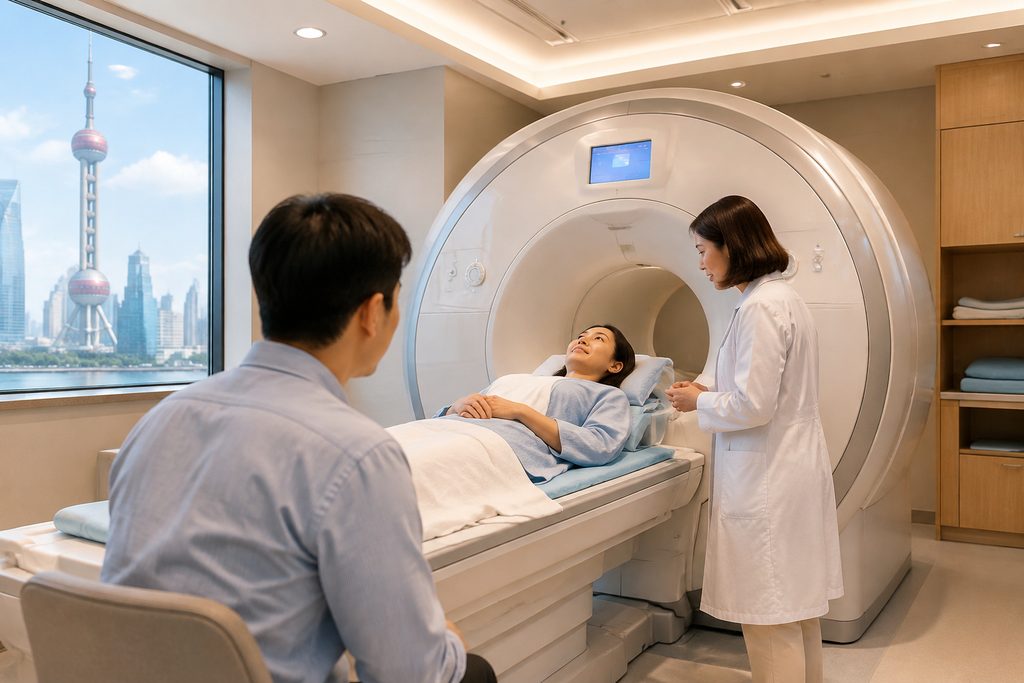
Colonoscopy Cost China: The Short Answer
A colonoscopy in China typically costs between $200 and $800 at top-tier public and private international hospitals. That compares with $2,000 to $6,000 for an uninsured patient in the United States. So on price alone, the math is compelling. But a colonoscopy is not a simple blood draw. It involves bowel preparation, sedation, a procedure room, and a recovery period. Flying halfway around the world for one adds complexity that a price tag does not capture.
This guide walks through who actually benefits from traveling for a colonoscopy in China, what the procedure costs at different hospital tiers, safety considerations, and the logistical realities — including visas, language barriers, and follow-up care. We work with international patients navigating Chinese healthcare every day, and we will be direct about what makes sense and what does not.
Who This Is Right For — and Who It Isn’t
A medical tourism colonoscopy package in China can work well for a specific type of patient. But it is a poor fit for others. Being honest about both sides matters more than selling a trip.
Typically a good candidate:
- You are already traveling to China for business, family, or another medical procedure, and adding a colonoscopy is convenient.
- You are uninsured or have a high-deductible health plan in your home country, and out-of-pocket savings exceed travel costs.
- You need a screening colonoscopy but face a wait of 6–12 months at home, and your risk profile makes waiting uncomfortable.
- You want a colonoscopy combined with a comprehensive executive health screening, which many Chinese hospitals bundle efficiently.
- You live in a region where quality gastroenterology care is limited or prohibitively expensive.
Who should not pursue this:
- You have active gastrointestinal symptoms — rectal bleeding, unexplained weight loss, persistent abdominal pain. See a local doctor immediately. Do not get on a plane.
- You have a history of polyps requiring annual surveillance. Continuity of care with the same gastroenterologist matters more than saving a few hundred dollars.
- You take anticoagulants or have a complex cardiac history. Sedation and medication management require careful coordination that is easier with your established care team.
- You expect a single trip to resolve everything. A colonoscopy is one procedure. If polyps are found and removed, you may need follow-up imaging or repeat exams.
- You cannot tolerate bowel preparation comfortably away from home. The prep is the hardest part, and doing it in a hotel room is not for everyone.
If you fall into the first list, keep reading. The logistics are manageable with proper planning.
The Options, Compared
Not all colonoscopy experiences in China are the same. The country has 35,000+ hospitals, but the quality gap between the top tier and the average is significant. Our database covers 340+ top-ranked hospitals across 37 cities — roughly the top 5% of Chinese institutions, ranked by Fudan University’s hospital rankings and JCI accreditation standards.
| Option | Typical Colonoscopy Cost | English Support | Booking Process | Best For |
|---|---|---|---|---|
| Top public hospital (international department) | $300–$600 | Limited to moderate | Requires in-person registration or coordination service | Patients who prioritize clinical expertise and are comfortable with a bilingual companion |
| Private international hospital (e.g., United Family, Jiahui) | $500–$800 | High — English-speaking staff standard | Can often be pre-arranged before arrival | Foreigners who want a Western-style experience and direct insurance billing |
| Standard public hospital outpatient | $150–$350 | Very limited | Same-day queue, no advance booking from overseas | Chinese-speaking patients or those with a local guide |
| United States (uninsured or high-deductible) | $2,000–$6,000 | Native | Direct scheduling | Patients who cannot travel or require established continuity |
The private international hospital route suits most first-time foreign patients. You get English-speaking gastroenterologists, JCI-accredited facilities, and the ability to confirm an appointment before you book a flight. The trade-off is cost — roughly double the public hospital international department rate. For patients comfortable with a bilingual medical companion, the public hospital international department offers the same clinical quality at a lower price. We have helped patients navigate both paths.
Is It Safe to Have a Colonoscopy in China?
Safety is the question every patient asks, and the answer requires nuance. At top-tier hospitals in Beijing, Shanghai, and Guangzhou, colonoscopy is a high-volume, routine procedure. Gastroenterologists at institutions like Peking Union Medical College Hospital and Zhongshan Hospital perform thousands of colonoscopies annually. The equipment — high-definition endoscopes, CO2 insufflation systems, sedation monitoring — is current-generation technology, often newer than what you would find in an average Western community hospital.
But volume and equipment do not tell the whole story. The key variable is communication. Sedation protocols, allergy histories, medication lists, and post-procedure instructions all require clear understanding between patient and provider. At a hospital without English-speaking staff, that communication gap becomes a real safety risk. This is why we recommend either a private international hospital with native English support, or a public hospital international department paired with a bilingual medical companion who stays with you through prep, procedure, and recovery.
One more honest point: infection control standards at top-tier Chinese hospitals are rigorous. JCI-accredited facilities undergo regular audits. The hospitals in our database are the ones we would send our own families to. But we would not say the same about every hospital in China, which is why hospital selection matters more than the country selection.
What It Costs — and What Drives the Price
How much is a colonoscopy in Shanghai? At a public hospital international department, expect $300–$600. At a private international hospital like Jiahui or United Family, plan for $500–$800. The range reflects several factors: hospital tier, sedation type, whether polyps are removed during the procedure, and whether pathology analysis is included.
Here is what the base price typically includes:
- The colonoscopy procedure itself
- Sedation (usually propofol-based, administered by an anesthesiologist)
- Standard bowel preparation kit
- Basic pathology on any removed tissue
What it may not include:
- Pre-procedure consultation with the gastroenterologist ($50–$150)
- Advanced pathology or genetic testing on polyps ($100–$300)
- Additional procedures if something unexpected is found
- Translator or companion services (from $300/day for a bilingual medical companion)
If you are combining a colonoscopy with a broader health screening package, many hospitals offer bundled pricing. A comprehensive executive screening that includes colonoscopy, imaging, cardiac testing, and laboratory work typically runs $800–$2,000 depending on depth and hospital tier. That is still a fraction of equivalent testing in the U.S.
Practical Considerations: Records, Visas, and Follow-Up
Can I book a colonoscopy in China as a foreigner? Yes — but the process depends on the hospital type. Private international hospitals often accept advance bookings by phone or email, with English-speaking staff handling the scheduling. Public hospital international departments generally require either an in-person visit or a coordination service to register and book on your behalf. Standard public hospital outpatient departments do not accept overseas advance booking; you would need to queue on the day.
For the visa: medical treatment in China falls under the S2 visa category, which covers short-term private affairs including medical treatment. Accompanying family members also apply for S2 visas. You will need supporting documents from the hospital — typically an appointment confirmation or invitation letter. Processing times vary by embassy, so start at least 4–6 weeks before your intended travel date. We guide patients through this, but the visa itself is issued by Chinese authorities, not by any hospital or service provider.
Payment: public hospitals require prepayment, and international patients typically pay by credit card or bank transfer. Most Chinese public hospitals do not bill foreign insurance directly. You pay upfront and file for reimbursement. Private international hospitals like United Family and Parkway often have direct billing agreements with major international insurers — check with your provider before booking.
Follow-up after returning home: this is the part most patients underestimate. If your colonoscopy is clean, you are done for 5–10 years depending on your risk profile. If polyps are found and removed, you will receive a pathology report and a recommended surveillance interval. That report is in English at international hospitals, and usually available in English at public hospital international departments. Your home gastroenterologist can use it to plan future care. The continuity issue only becomes a problem if you need a repeat procedure sooner than expected — which is why we tell patients to think of a colonoscopy in China as a one-time screening, not the start of an ongoing treatment relationship.
If you are considering a broader medical trip, our guide to top-ranked Chinese hospitals by city maps out where the strongest gastroenterology departments are concentrated. For patients specifically looking at Beijing hospitals for foreigners, the international departments at Peking Union and China-Japan Friendship Hospital are common starting points. And if you want to understand the full range of services we coordinate, our patient services overview explains how bilingual medical companions work in practice.
Frequently Asked Questions
At top-tier hospitals, yes. The procedure is routine and high-volume, with modern equipment and experienced gastroenterologists. The main risk is communication gaps at hospitals without English support. Choose a JCI-accredited private hospital or a public hospital international department with a bilingual companion, and the safety profile is comparable to Western standards.
Expect $300–$600 at a public hospital international department, or $500–$800 at a private international hospital. The price varies by hospital, sedation type, and whether polyps are removed. Pathology and pre-procedure consultation may be additional. Compared with $2,000–$6,000 in the U.S., the savings are real — but factor in travel and accommodation costs.
Peking Union Medical College Hospital’s international department is widely regarded as the strongest option for gastroenterology. United Family Beijing offers a fully Western-style experience with English-speaking staff and direct insurance billing. Both are in our database. The right choice depends on your budget and how much English support you need.
Private international hospitals generally allow advance booking by phone or email. Public hospital international departments may require a coordination service to register on your behalf. Standard public outpatient departments do not accept overseas advance booking. Plan at least 4–6 weeks ahead for visa processing and scheduling.
If polyps are found, they are typically removed during the procedure and sent for pathology. You will receive a report and a recommended follow-up interval. If something more concerning is found, the hospital can arrange further imaging or specialist referral. We help patients coordinate next steps — whether that means additional care in China or transferring records to a specialist at home. No one should assume a screening colonoscopy is the end of the road; it is a data point that informs what comes next.
Your Next Step
Flying to China for a colonoscopy can save you thousands of dollars and months of waiting — if you are the right patient and you choose the right hospital. The procedure itself is safe at top-tier institutions. The complexity lies in everything around it: booking, language, visas, and follow-up. That is where planning makes the difference between a smooth trip and a stressful one.
We are China Medical Services, a coordination team that connects international patients with top-ranked Chinese hospitals. We are not a hospital and we do not provide medical advice or diagnoses. What we do is handle the logistics — hospital matching, appointment coordination, bilingual companionship, and visa guidance — so you can focus on the medical care itself.
If you are weighing a colonoscopy in China, start with a conversation. Tell us where you are, what you need, and we will give you an honest assessment of whether it makes sense. No pressure, no obligation. Reach out for a free consultation and we will help you think it through.
For more medical information and treatment options in China, visit chinamedservices.com (China Medical Services).
