Root Canal in China: Costs, Safety, and Top Clinics for Foreigners
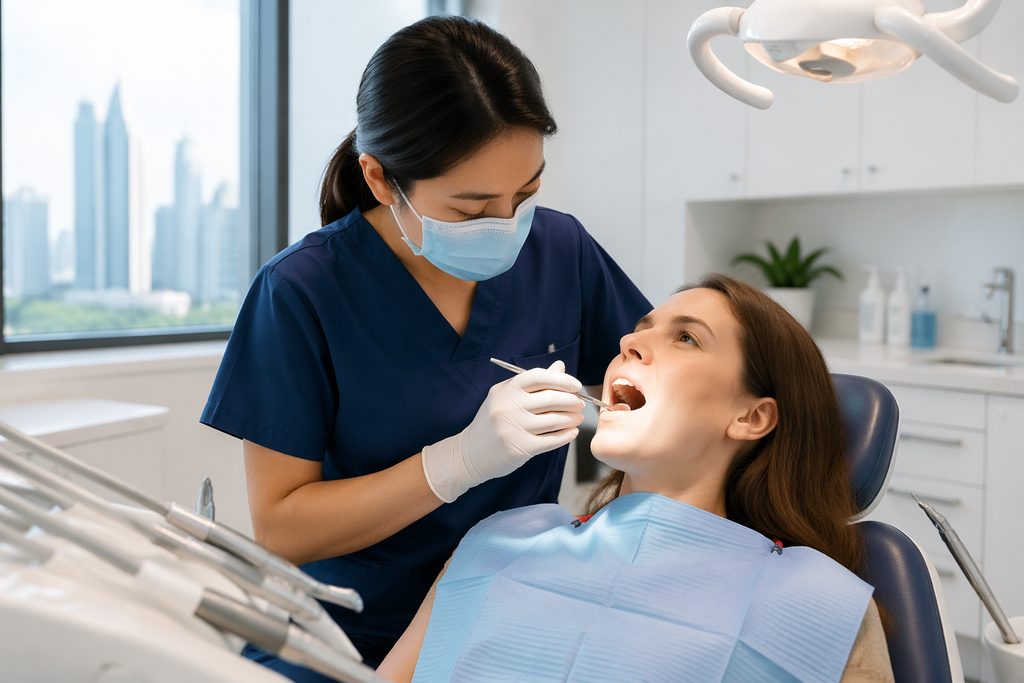
While an American patient without dental insurance can expect to pay $1,000 to $1,800 for a molar root canal, the same procedure at a top-tier Chinese hospital typically runs between $150 and $600. The training standards are identical. The equipment is often newer. The root canal cost China presents is not a reflection of quality — it is a function of a different economic structure, and for many international patients, that gap is wide enough to fund an entire trip.
Root Canal in China: The Short Answer
Yes, you can get a root canal in China, and the procedure is performed to the same clinical standards you would find in the United States, Canada, or Western Europe. A root canal at a reputable Chinese hospital costs between $150 and $600 depending on tooth position, complexity, and whether you choose a public hospital’s international department or a private clinic. The real question is not whether it is possible. The question is how to find a provider you can trust without speaking Mandarin.
That is where the complexity lives. China’s dental landscape is enormous and uneven. The best clinics in Shanghai and Beijing rival anything in Singapore or Seoul. The worst clinics are places you should never enter. Knowing the difference requires local knowledge.
Who This Is Right For — and Who It Isn’t
Root canal treatment abroad makes sense for a specific type of patient. You are a good candidate if you are already planning to travel to China for business, family, or an extended stay. You are also a good candidate if you need multiple dental procedures — a root canal plus a crown plus several fillings — where the cumulative savings justify the trip. Patients who live in countries with long dental wait times or prohibitively expensive private care often find that booking dental treatment China root canal makes financial sense.
You should not pursue this if you have an active dental abscess with facial swelling, fever, or spreading infection. That requires immediate local care, not a flight. You should also think carefully if you have a complex medical history — uncontrolled diabetes, recent cardiac surgery, or a bleeding disorder — because managing complications from a distance is harder. And if you need a single straightforward root canal and you live in a country with reasonable dental costs and insurance coverage, the savings may not justify the logistics.
The Options, Compared
China is not one dental market. It is three distinct tiers, and the experience differs dramatically between them. Here is what actually awaits you at each level.
| Factor | Public Hospital International Dept | Private International Clinic | Local Public Hospital |
|---|---|---|---|
| Molar root canal cost | $150–$400 | $300–$600 | $80–$200 |
| English-speaking staff | Yes, generally | Always | Rarely |
| Appointment wait time | 1–2 weeks | 2–5 days | Same day, long queues |
| Insurance direct billing | Sometimes | Usually | No |
| Typical patient | Cost-conscious expat | Insured expat, tourist | Local resident |
The public hospital international department is the sweet spot for most international patients. You get the clinical depth of a major teaching hospital with English-language coordination, at a price far below private international clinics. The private international clinics — United Family, Jiahui, Parkway — offer a Western-style experience with direct insurance billing, which matters if your insurer covers treatment abroad. Local public hospitals are the cheapest, but without Chinese language ability, navigating them is genuinely difficult.
Is It Safe to Get a Root Canal in China? What the Data Shows
The short answer is yes, at the right institutions. The longer answer requires understanding how Chinese dental training and regulation work.
China’s top dental schools — Peking University School of Stomatology, West China School of Stomatology at Sichuan University, Shanghai Jiao Tong University College of Stomatology — run programs modeled on international standards. Graduates of these programs train on the same rotary endodontic systems, digital imaging, and surgical microscopes used in Western clinics. Infection control protocols at accredited hospitals follow national standards that are audited regularly.
But the variance is real. China has over 100,000 dental clinics, and quality control is uneven outside major cities. A clinic in a tier-three city may use outdated equipment, may not follow strict sterilization protocols, and may have practitioners with limited formal training. The safety question is not about China as a whole. It is about which specific clinic you choose. That is why the best dental clinic Shanghai root canal patients seek out is almost always affiliated with a university hospital or a JCI-accredited private group.
One practical safeguard: ask about the endodontist’s use of a dental dam. This is a thin rubber sheet that isolates the tooth during treatment. It is standard practice in Western endodontics, and its use is a reliable proxy for whether a clinic follows international protocols. If a clinic does not routinely use a dental dam, walk away.
How Long Does a Root Canal Take Abroad?
How long does a root canal take abroad? The procedure itself is not faster in China — it takes the same 60 to 90 minutes per visit as anywhere else. What changes is the scheduling.
A standard root canal in China typically requires two visits. The first visit involves cleaning, shaping, and medicating the canal. The second visit, usually one to two weeks later, completes the filling. Some clinics use single-visit techniques for straightforward cases, but two visits remain the norm. If you are traveling specifically for dental work, plan for at least 7 to 10 days in-country to accommodate both visits and a buffer for unexpected complications.
If you need a crown after the root canal — which most molars do — that adds another two to three visits for crown preparation, fitting, and cementation. A full root canal plus crown sequence typically spans three to four weeks. Many patients split this across two trips: root canal on the first visit, crown on the second.
China Dental Tourism Root Canal Price: What Drives the Variance
The China dental tourism root canal price you ultimately pay depends on four factors. Tooth position matters most. An incisor or canine has a single canal and costs less. A molar has three to four canals and costs more. Complexity matters next — a straightforward case costs less than a retreat of a previously failed root canal. Clinic tier matters third, as the table above shows. And location matters fourth. Shanghai and Beijing prices run 20 to 30 percent higher than cities like Chengdu, Hangzhou, or Wuhan.
What is included in the quoted price varies too. Some clinics bundle the consultation, X-rays, and the procedure into one fee. Others charge separately for each component. Ask explicitly what the quote covers before you commit. A $200 quote that excludes X-rays and consultation can end up costing $350.
For context, the same molar root canal costs roughly $1,000 to $1,800 in the United States, $600 to $1,200 in Canada, and $400 to $900 in Western Europe. Even at the high end of Chinese pricing, you are typically saving 50 to 70 percent. For patients needing multiple procedures, the savings compound quickly.
Practical Considerations: Booking, Records, and Follow-Up
Booking dental treatment China root canal requires more than picking a clinic and showing up. You need to handle several logistical layers.
Your dental records matter. Bring recent X-rays, a written diagnosis from your home dentist, and a list of any medications you take. If you have had a previous root canal on the same tooth, bring those records too — retreatments require knowing what was done before. Digital copies are fine; most Chinese clinics accept emailed files.
Visa category matters. Medical treatment in China falls under the S2 visa, which covers short-term private affairs including medical care. The hospital or clinic can provide a supporting letter confirming your appointment. Family members accompanying you also apply under S2. Processing times vary by embassy, so start the visa process at least six weeks before your planned travel.
Payment methods vary. Public hospital international departments typically require upfront payment, with receipts provided for insurance reimbursement later. Private international clinics often bill insurers directly if your policy covers treatment in China. Cash, WeChat Pay, Alipay, and major credit cards are widely accepted in international departments, though some smaller clinics are cash-only.
Follow-up after returning home is a genuine consideration. Root canals have a success rate above 90 percent, but complications happen. If you need follow-up care after you leave China, your home dentist will need the treatment records. Ask the Chinese clinic for a written treatment summary in English before you depart. Most international departments provide this routinely. Local public hospitals often do not — another reason to choose the international department tier.
Frequently Asked Questions
At a university-affiliated hospital or JCI-accredited private clinic, yes. These institutions follow international sterilization and treatment protocols. The risk lies in unaccredited local clinics, particularly outside major cities. Verify the clinic’s credentials before booking, and ask about their use of a dental dam — it is the single most reliable indicator of adherence to Western endodontic standards.
Expect $150 to $400 at a public hospital international department, and $300 to $600 at a private international clinic. This typically covers the consultation, X-rays, and the procedure itself. Molars cost more than front teeth. Retreatments cost more than first-time root canals. Always ask for an itemized quote before treatment begins.
Yes, and you should. Public hospital international departments and private clinics both accept advance bookings from overseas patients. You will need to send your dental records and a brief description of your symptoms. The clinic will confirm an appointment time and provide documentation for your S2 visa application. Without advance booking, you may face multi-week wait times at top clinics.
Root canal success rates exceed 90 percent, but failures do occur. If you experience pain or swelling after returning home, your home dentist can manage most complications using the treatment records from the Chinese clinic. This is why obtaining an English-language treatment summary before departure is non-negotiable. For complex retreatments, you may need to return to China or seek care locally — a risk worth weighing against the savings.
Not at the international department tier. These departments employ English-speaking coordinators and many endodontists speak functional English. Private international clinics are fully English-language environments. At local public hospitals, however, English is rare, and the registration, payment, and treatment process is conducted in Chinese. If you choose that route, a bilingual companion is practically essential.
Your Next Step
Getting a root canal in China is not complicated, but choosing the wrong clinic can turn a $300 procedure into a $3,000 problem. That is the entire reason our team exists. We are not a hospital, and we do not provide diagnoses or treatment. We are a coordination service that connects international patients with vetted dental providers among China’s top-ranked hospitals and accredited private clinics. If you are considering dental work in China, start with a conversation. Tell us what you need, and we will help you understand your options. Request a free consultation, and we will map out a practical plan — no pressure, no obligation.
The core message is simple: root canal treatment in China is safe, high-quality, and dramatically less expensive than in Western countries — provided you choose the right provider. The savings are real, the standards are high, and the path is clear if you know where to look. We are here to help you find it.
For more medical information and treatment options in China, visit chinamedservices.com (China Medical Services).
