Root Canal Treatment in China: Our Companion for Tooth Preservation
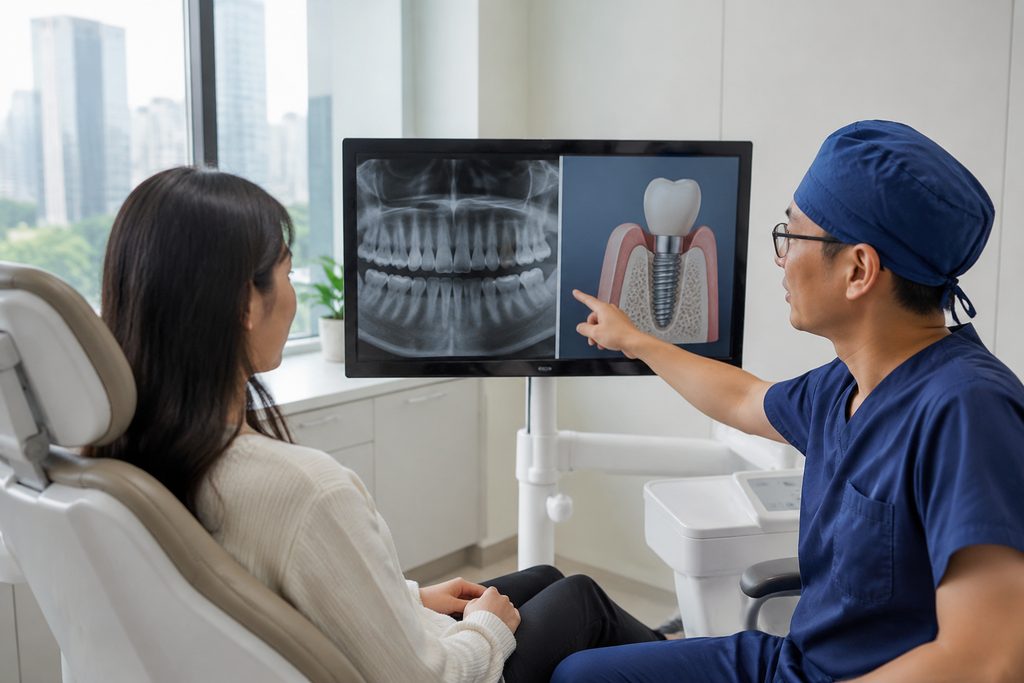
Have you ever been quoted $1,500 for a single root canal and wondered if there was a better way? Many international patients ask us exactly that. The answer, more often than not, lies in a dental chair 7,000 miles away.
Key Takeaways
- Root canal treatment in China typically costs $150–400 per tooth, compared to $1,000–2,000 in the US or UK.
- Top-tier dental departments in Shanghai and Beijing use the same rotary endodontic systems and dental microscopes found in Western clinics.
- Language barriers and hospital navigation are real challenges — but manageable with a bilingual companion.
- Most root canals in China are completed in 1–2 visits, with same-week appointments widely available.
The Problem: Dental Care Costs Are Crushing Patients in the West
Dental insurance in the United States typically caps annual coverage at $1,000–1,500. A single root canal on a molar, including the crown, routinely exceeds $2,000. That math does not work for millions of people. The American Dental Association’s Health Policy Institute reports that 36% of US adults delayed dental care due to cost in 2023.
What happens when treatment is postponed? The infection spreads. What began as a manageable cavity becomes an abscess. The tooth that could have been saved with a $1,200 procedure now requires a $3,000 extraction and implant. Or worse — the infection enters the bloodstream.
Patients in the UK face a different but equally frustrating problem: NHS wait times. A routine endodontic referral can take 6–12 months. Private care in London starts around £700 per root canal. Meanwhile, the tooth is deteriorating.
Why Root Canal Treatment in China Delivers Results
Clinical Volume and Specialized Endodontic Training
Shanghai Ninth People’s Hospital, affiliated with Shanghai Jiao Tong University, hosts one of the largest stomatology departments in Asia. Its endodontics division treats over 300 root canal cases daily. That is more than many Western dental practices handle in a month. Repetition breeds mastery — and Chinese endodontists at top-tier hospitals have it in abundance.
Dental schools in China now train residents on dental operating microscopes as standard equipment. The same cannot be said for every Western dental school. A 2022 survey published in the Journal of Endodontics found that only 38% of US general dentists routinely use a microscope during root canal therapy. At leading Chinese dental hospitals, that figure approaches 100% for complex cases.
Technology Without the Premium Price Tag
Walk into the international dental department at Peking University School of Stomatology in Beijing and you will find the same equipment as a Beverly Hills endodontist: cone-beam CT scanners, nickel-titanium rotary files, apex locators, and ultrasonic irrigation systems. The difference is the bill.
Why the price gap? Labor economics. A Chinese endodontist earns a fraction of what a US dentist earns — not because of lower skill, but because of lower cost of living and different market structures. Hospital efficiency also plays a role. Large dental departments run on volume, not margin-per-chair-hour.
Cost Advantage Without Quality Compromise
Let us be direct: is root canal treatment in China safe? The answer depends entirely on where you go. A reputable hospital dental department or JCI-accredited private clinic — yes, the standard of care is comparable to Western benchmarks. A small, unlicensed street-side clinic — no, and that is true in any country.
The structural reasons for lower costs are worth understanding. Chinese public hospitals operate on a high-volume, low-margin model. The government regulates medical pricing. Malpractice insurance costs are lower. None of these factors reduce clinical quality. They reduce overhead.
Root Canal Cost China: What You Will Actually Pay
Let us get specific. Prices vary by tooth type, clinic tier, and city. Here is what international patients should expect in 2025:
| Tooth Type | Public Hospital (International Dept.) | Private International Clinic | Typical US Price |
|---|---|---|---|
| Incisor / Canine (front tooth) | $150 – $250 | $250 – $400 | $700 – $1,200 |
| Premolar | $200 – $300 | $300 – $500 | $900 – $1,500 |
| Molar (most complex) | $250 – $400 | $400 – $700 | $1,200 – $2,200 |
| Porcelain crown (additional) | $200 – $400 | $400 – $800 | $1,000 – $2,500 |
These figures come from price lists at international dental departments in Shanghai and Beijing, cross-checked with patient invoices we have reviewed. The root canal price Beijing vs abroad comparison holds up across every tooth category. Even adding round-trip airfare and a week of accommodation, most patients save 50–70% on a single molar root canal plus crown.
One caveat: prices at top-tier public hospital international departments run 1.5–2 times higher than the standard Chinese patient rate. That premium buys you English-speaking coordination and shorter queues. It is still dramatically cheaper than Western private dentistry.
How Long Does a Root Canal Take in China?
Most anterior teeth are completed in a single visit lasting 60–90 minutes. Molars with curved canals or active infection often require two visits spaced one week apart. The second visit typically takes 45 minutes.
Here is what a typical timeline looks like for an international patient:
- Day 1: Initial consultation, X-ray or CBCT scan, diagnosis confirmation.
- Day 2: Root canal procedure (first visit). Local anesthesia, access cavity, canal cleaning and shaping.
- Day 3–7: Observation period. If a second visit is needed, it happens within one week.
- Day 8–10: Canal obturation (filling) and temporary crown placement, if required.
- Day 14+: Permanent crown placement, or you return home with a temporary crown and have the permanent one done locally.
Can you compress this into a single trip? Yes. Many patients book dental treatment package China itineraries that include airport pickup, hotel, and scheduled dental appointments. A straightforward single-tooth root canal with crown can be completed in 10–14 days. More complex multi-tooth cases require 3–4 weeks.
Best Dental Clinic Shanghai Root Canal: How to Choose
Shanghai has three tiers of dental care. Understanding the differences is the single most important step in your decision.
Tier 1: Public Hospital Dental Departments
Shanghai Ninth People’s Hospital and Zhongshan Hospital‘s stomatology department are the gold standard for complex endodontics. These are teaching hospitals where senior endodontists supervise every case. The downsides: crowded waiting areas, limited English at the standard registration desk, and no online booking for overseas patients. You cannot simply email and reserve a slot. Someone has to physically register you — which is where a bilingual companion becomes genuinely useful.
Tier 2: Private International Clinics
United Family, Jiahui, and Parkway Health operate dental clinics in Shanghai with English-speaking staff, direct insurance billing, and Western-style appointment systems. These are the easiest option for international patients. You can book online, communicate in English throughout, and pay by credit card. The trade-off: prices run 40–80% higher than public hospital international departments.
Tier 3: Local Private Dental Chains
Chains like Arrail and iByer have hundreds of locations across China. Quality varies significantly by branch and individual dentist. Some are excellent. Others are aggressive on upselling. Without Chinese language ability or a local guide, these are risky for international patients. We generally steer patients toward Tier 1 or Tier 2 unless they have a specific recommendation.
For more context on hospital selection across specialties, see our breakdown of China’s top-ranked clinical departments and our guide to JCI-accredited private hospitals.
Practical Considerations: Documentation, Payment, and Follow-Up
Before you book a flight, gather these records. Your Chinese dentist will need them:
- Recent periapical X-rays or a panoramic radiograph (digital copies are fine)
- A written diagnosis from your home dentist, if available
- List of current medications and any allergies
- Relevant medical history, especially cardiac conditions requiring antibiotic prophylaxis
For visa purposes, most patients travel on an S2 visa, which is the appropriate short-stay category for private medical treatment. Your hospital or clinic can provide a supporting treatment invitation letter. Processing typically takes 5–10 business days at your nearest Chinese embassy or consulate. Requirements change — always verify with the embassy before booking flights.
Payment works differently in China than in the West. Public hospitals require prepayment — you load money onto a hospital card, and charges are deducted as services are rendered. Credit cards are accepted at international departments and private clinics, but many public hospital payment windows only accept Chinese debit cards, WeChat Pay, or Alipay. Your bilingual companion can handle these transactions on your behalf.
Insurance reimbursement is another layer. Chinese public hospitals do not bill Western insurers directly. You pay upfront and file for reimbursement. Private international clinics like United Family often have direct billing agreements with major insurers — check with your provider before you travel.
Follow-up after returning home is straightforward for root canals. The procedure has a 90–95% long-term success rate when performed properly. If a complication arises — persistent pain, swelling, or crown loosening — any competent Western dentist can evaluate and treat it. You are not locked into returning to China for aftercare.
Frequently Asked Questions
At a reputable hospital dental department or JCI-accredited private clinic, yes. Sterilization protocols, instrument quality, and clinician training at these institutions meet international standards. The risk comes from choosing an unvetted local clinic based on price alone. That is true in any country — but the consequences of a bad choice are harder to navigate when you do not speak the language.
Endodontic failure rates are low — roughly 5–10% over five years — and most failures occur within the first year. If a treated tooth becomes symptomatic after you return home, any qualified Western dentist can perform retreatment or an apicoectomy. Your Chinese dental records, including X-rays and treatment notes, should be provided to you in digital format before you leave.
You can coordinate everything remotely — treatment plan review, appointment scheduling, hotel recommendations, and airport pickup. What you cannot do is skip the in-person consultation. No reputable Chinese dentist will perform a root canal based on emailed X-rays alone. Expect a same-day or next-day consultation after you arrive, followed by treatment within 48–72 hours.
At international departments of public hospitals and at private international clinics, yes — the treating dentist or a dedicated medical interpreter will communicate in English. At standard public hospital departments, do not count on it. This is exactly where a bilingual medical companion earns their fee: translating your symptoms, the dentist’s findings, and your treatment options in real time.
Your Next Step
A root canal in China is not a leap of faith. It is a calculated decision based on verifiable cost savings, documented clinical standards, and a clear logistical path. We are China Medical Services — a patient coordination team, not a hospital. We do not diagnose or treat. What we do is connect you with the right dental department, coordinate appointments, and put a bilingual companion beside you from the moment you land. When you are ready, request a free consultation and we will map out what your specific case would look like — costs, timeline, and hospital options included.
For more medical information and treatment options in China, visit chinamedservices.com (China Medical Services).
