Hotel Recovery Nursing Cost in China: 2026 Price Guide for Post-Surgery Care
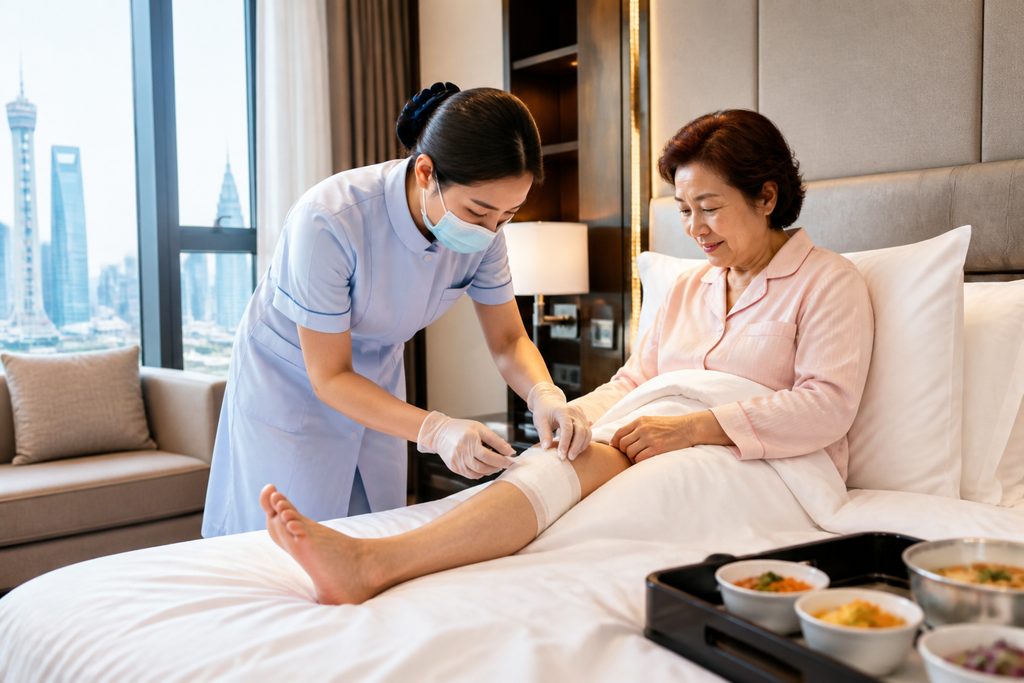
Hotel Recovery Nursing Cost in China: What You’ll Actually Pay in 2026
Hotel recovery nursing cost in China typically runs between $120 and $350 per day, depending on the city, the nurse’s qualifications, and whether you book through a hospital’s international department or a private agency. That figure usually covers a licensed nurse for 8–12 hours, but not the hotel room itself. Add $80–$200 per night for a reputable four-star hotel near a major hospital in Shanghai or Beijing, and a two-week post-surgical recovery stay lands in the $3,000–$7,500 range all-in.
That’s the short answer. But the spread between $120 and $350 is wide for a reason — and understanding what drives that variance is the difference between a safe recovery and an expensive misunderstanding.
While patients in Canada wait a median 28.6 weeks for orthopedic surgery, surgeons at Beijing Jishuitan Hospital routinely perform over 300 joint replacements per month. Many international patients fly to China for procedures they can’t access quickly at home. What they often fail to plan for is the recovery period afterward. China Medical Services has spent years helping foreign patients coordinate exactly this gap between discharge and flying home.
Hotel Recovery Nursing in China: The Short Answer
You’ll pay $120–$350 per day for a qualified recovery nurse in a Chinese hotel setting. That’s for the nurse’s time and expertise. The hotel is separate. A full package — nurse, hotel, basic medical consumables, and daily vital-sign monitoring — typically starts around $220 per day in second-tier cities and climbs to $450+ per day in Shanghai’s international hospital districts.
But here’s what complicates the one-liner: “recovery nursing” in China is not a standardized, regulated category the way it is in, say, Germany or Japan. You’re essentially assembling a service from three different sources — the hospital’s discharge team, a private nursing agency, and the hotel itself. Each has its own pricing logic. That’s why two patients recovering from the same procedure in the same city can report wildly different totals.
Who This Is Right For — and Who It Isn’t
Hotel recovery nursing suits a specific profile. It’s not for everyone, and being honest about that saves you money and risk.
Good candidates:
- Patients who had plastic or cosmetic surgery — rhinoplasty, liposuction, breast procedures — where the hospital discharges you within 24–48 hours but you need wound care, drain management, and swelling monitoring for another week or two.
- Patients recovering from orthopedic procedures — knee arthroscopy, spinal microdiscectomy — who are mobile but shouldn’t be alone.
- Patients who had minor gynecological or urological surgery and want discreet, professional aftercare before a long flight home.
- Medical travelers traveling solo who have no family member to assist with medication schedules, meals, and mobility.
Who should not pursue this:
- Patients with unstable vital signs, active bleeding, or any complication requiring hospital-level monitoring. A hotel room is not a step-down unit. If your surgeon says you need inpatient observation, stay inpatient.
- Patients on IV antibiotics or IV pain management. Most hotel recovery nurses in China cannot legally administer IV medications outside a clinical setting.
- Patients with significant mobility impairment who cannot transfer from bed to bathroom independently. That level of care requires a rehabilitation facility, not a hotel nurse.
- Anyone recovering from major abdominal or cardiac surgery. You need to be in a hospital or a licensed post-acute care facility with crash equipment and 24-hour physician coverage.
The Options, Compared
You have three genuine choices for post-surgical recovery in China. Each has a different cost structure and a different risk profile.
| Option | Daily Cost (USD) | What’s Included | Best For |
|---|---|---|---|
| Hotel + Private Duty Nurse (Agency) | $120–$350 nursing + $80–$200 hotel | Licensed RN or experienced practical nurse, 8–12 hour shifts, basic wound care, vital signs, medication reminders | Plastic surgery, minor orthopedic recovery, solo travelers |
| Hospital International Ward Extended Stay | $300–$800 all-in | 24/7 nursing, physician rounds, meals, all medical supplies, English-speaking staff | Patients needing daily physician assessment or IV therapy |
| Private Rehabilitation Center | $250–$600 all-in | Licensed rehab nurses, physiotherapy sessions, structured daily program, meals, accommodation | Orthopedic surgery, stroke recovery, post-cardiac rehabilitation |
If you’re recovering from a cosmetic procedure and feel otherwise healthy, the hotel-plus-nurse model is usually the most economical. But if your surgeon wants daily wound checks by a physician, the hospital international ward — despite the higher sticker price — often ends up cheaper than paying for a hotel, a nurse, and separate clinic visits every day.
How Much Is Aftercare Nursing in China After Surgery: The Real Price Drivers
The question “how much is aftercare nursing in China after surgery” doesn’t have a single answer because four variables move the price more than anything else.
City tier. Shanghai and Beijing command the highest rates. A private duty nurse in Shanghai’s Xuhui or Jing’an districts charges 30–50% more than the same nurse in Chengdu or Hangzhou. Why? Cost of living, concentration of international hospitals, and demand from medical tourists.
Nurse qualification. A registered nurse (RN) with a bachelor’s degree from a top Chinese nursing school and experience in a tertiary hospital’s surgical ward charges $250–$350 per day. A practical nurse or “care worker” (护工) with hospital experience but no formal nursing license charges $80–$150 per day. The difference matters when drains or sutures need attention.
Shift length. An 8-hour day shift is the baseline. If you need overnight coverage — someone awake while you sleep — expect to pay 1.5x to 2x the day rate. Round-the-clock care from two rotating nurses runs $400–$700 per day in Shanghai.
Booking channel. Going through a hospital’s international department adds a coordination fee but gives you vetted staff and hospital accountability. Booking directly with a private nursing agency is cheaper, but you’re responsible for verifying credentials. A bilingual medical companion from a service like ours can help you navigate this — expect to pay from $300 per day for full accompaniment including translation and logistics.
Is Hotel Recovery Nursing in China Safe After Plastic Surgery?
This is the question that keeps cosmetic surgery patients up at night, and it deserves a straight answer. Is hotel recovery nursing in China safe after plastic surgery? In most cases, yes — but only under specific conditions.
The safety of your recovery depends less on the hotel and more on three things: the nurse’s actual qualifications, the proximity to a hospital with emergency capabilities, and the clarity of your discharge instructions. A licensed RN who has worked in a plastic surgery ward knows how to spot a hematoma, recognize early infection, and manage surgical drains. A care worker with no formal training does not.
Ask for the nurse’s license number and verify it. In China, registered nurses carry a practice certificate issued by the National Health Commission. Any legitimate agency will provide this without hesitation. If they won’t, walk away.
Also, check the hotel’s distance from your operating hospital. If a complication arises — and the honest truth is that complications happen in a small percentage of cases regardless of surgeon skill — you want to be within 15–20 minutes of an emergency department. Booking a recovery hotel near your surgical hospital is not a convenience. It’s a safety measure.
One caution: Some medical tourism facilitators in China bundle “recovery packages” that include unlicensed assistants instead of actual nurses. Always confirm the specific credential of the person who will be in your room. “Experienced caregiver” is not the same as “registered nurse.”
Post Surgery Hotel Nurse Price Shanghai: A City-Specific Breakdown
Shanghai deserves its own section because it’s the most common destination for international patients seeking cosmetic and elective surgery in China. The post surgery hotel nurse price in Shanghai runs higher than anywhere else in the country.
Here’s what you’re looking at in Shanghai specifically:
- Licensed RN, day shift (8 hours): $250–$350
- Licensed RN, night shift (12 hours): $350–$500
- Practical nurse / experienced care worker, day shift: $100–$180
- Four-star hotel near Huashan Hospital or Shanghai Ninth People’s Hospital: $100–$180 per night
- Five-star international hotel with kitchenette: $180–$350 per night
A 10-day recovery after rhinoplasty at Shanghai Ninth People’s Hospital — one of China’s busiest plastic surgery centers — would look like this: $2,500–$3,500 for nursing, $1,000–$1,800 for the hotel, plus $200–$400 for consumables like dressings, compression garments, and medications. Total: roughly $3,700–$5,700. That’s for a solo patient with no complications.
For context, a comparable recovery setup in Seoul — private nurse plus hotel in Gangnam — runs $4,500–$7,000 for the same period. In Beverly Hills, a private duty nurse alone costs $500–$800 per day. Shanghai remains competitive, but it’s not the bargain basement some marketing materials suggest.
Medical Hotel Recovery Packages China: What’s Actually Included
The phrase “medical hotel recovery packages China” gets thrown around a lot in promotional content. Let’s be precise about what these packages actually contain, because the term is not regulated and what one agency calls a “package” another calls a “basic service.”
A genuine medical hotel recovery package in China typically includes:
- Accommodation in a hotel with a contractual relationship with a nearby hospital — usually meaning the hotel is within 3 km and has experience hosting post-surgical guests.
- Daily nursing visits — often 1–2 hours of nursing care per day, not full-day coverage. Read this carefully. A package that says “daily nursing” may mean a 60-minute check-in, not an 8-hour bedside presence.
- Wound care supplies — basic dressings, antiseptic, tape, and sometimes compression garments.
- Transportation to and from follow-up appointments at the hospital.
- One or two meals per day — usually breakfast and sometimes a lunch box designed for post-surgical dietary needs.
What’s typically not included: medications, laboratory tests, imaging, physician consultations, extended nursing shifts, and any treatment for complications. Before you book, demand an itemized list. If the agency resists itemization, that’s a red flag.
Packages range from $1,800 to $5,000 for a 7–10 day stay, depending on the city, the hotel class, and the intensity of nursing coverage. Top-tier public hospitals with international departments sometimes offer their own recovery packages, which tend to be more medically rigorous than hotel-based options but also more expensive.
Book Recovery Hotel with Nurse Beijing Price: What to Expect in the Capital
If you’re trying to book a recovery hotel with a nurse in Beijing, the price structure mirrors Shanghai but with a few distinct characteristics. Beijing’s medical district clusters around Dongcheng and Chaoyang, where hotels cater heavily to patients from Peking Union Medical College Hospital and Beijing Jishuitan Hospital.
Expect to pay:
- Nurse, day shift: $220–$320
- Hotel near PUMCH, four-star: $90–$160 per night
- Package deals (7 days, nurse + hotel + transport): $2,800–$4,200
Beijing’s advantage is the concentration of top-tier public hospitals — the city hosts 21 of China’s Fudan-ranked top 100 hospitals, more than any other city. That density means more nursing agencies, more competition, and slightly lower prices than Shanghai for equivalent qualifications.
The disadvantage is that Beijing’s hotel market is less oriented toward medical tourism than Shanghai’s. Fewer hotels have explicit experience with post-surgical guests, and you may need to explain your needs more carefully at check-in. A bilingual coordinator helps enormously here.
Practical Considerations: Visas, Payments, and Follow-Up
Recovery nursing in a hotel setting comes with logistical realities that have nothing to do with medicine but everything to do with whether your plan works.
Visa. Medical treatment in China falls under the S2 visa category, which covers short-term private affairs including medical treatment. If your recovery extends beyond 180 days, you’d need an S1 visa. Your hospital’s international department will provide the documentation you need — the invitation letter, treatment plan, and proof of appointment. Family members accompanying you also apply for S2 visas. Processing typically takes 1–2 weeks, so start early.
Payment. Chinese hospitals generally require prepayment for treatment, and nursing agencies typically want 50% upfront with the balance due on the first day of service. International credit cards work at major hotels and hospital international departments, but private nursing agencies often prefer WeChat Pay, Alipay, or bank transfer. Having a local payment method set up before you arrive saves friction.
Insurance. Most international health insurance plans do not cover hotel-based recovery nursing. Some cover hospital inpatient care and may reimburse a portion of private duty nursing if it’s ordered by a physician and documented as medically necessary. Check with your insurer before you commit. Don’t assume.
Language. Your nurse may not speak English. Many excellent Chinese surgical nurses have limited English proficiency. If you need English communication, specify that requirement upfront — it narrows the pool and may add $50–$100 per day. Alternatively, use a translation app for basic needs and a bilingual coordinator for anything medical.
Follow-up after returning home. Get a complete discharge summary in English before you leave China. Include medication lists, wound care instructions, and your surgeon’s contact information. Many Chinese hospitals now offer remote follow-up consultations via video, which is worth arranging before you fly out.
Frequently Asked Questions
Yes, but we generally advise against it for international patients. Direct hiring means you’re responsible for verifying credentials, negotiating terms, and handling any disputes — all in Chinese. Agencies add a markup of 20–40%, but they also verify licenses, provide backup coverage if your nurse gets sick, and give you someone to call when something goes wrong. For most foreign patients, that markup is money well spent.
Your nurse should assess the situation and, if it’s beyond their scope, call an ambulance or arrange transport back to your operating hospital. This is why proximity matters. Complications like post-operative bleeding, infection, or deep vein thrombosis require hospital care, not hotel care. If you experience severe pain, fever above 38.5°C, or sudden swelling, don’t wait for your scheduled nursing visit — go to an emergency department.
Sometimes, but not always. An extended stay in a Chinese public hospital’s international ward costs $300–$800 per day all-inclusive. A hotel plus private nurse runs $200–$550 per day, but you’re also paying for meals, transportation, and any consumables separately. The hospital option includes physician access, which the hotel option doesn’t. If you need daily medical assessment, the hospital is often the better value despite the higher headline number.
How far in advance should I book a recovery nurse?
For Shanghai and Beijing during peak medical tourism seasons (spring and autumn), book 3–4 weeks ahead. For second-tier cities, 1–2 weeks is usually sufficient. Last-minute bookings are possible but you’ll pay a premium and
For more medical information and treatment options in China, visit chinamedservices.com (China Medical Services).
