Can You Get Gastric Sleeve in China? Costs, Safety, Hospitals
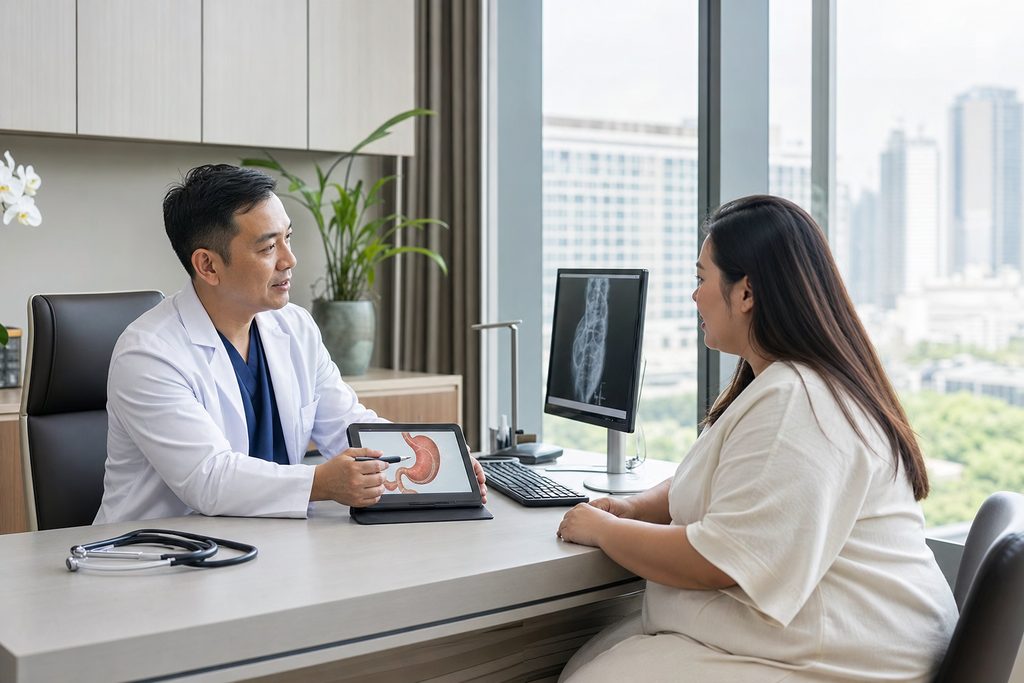
You’ve probably heard that surgery in China means compromising on quality, outdated equipment, or a language barrier you’ll never overcome. The numbers tell a different story. China’s top bariatric centers now perform thousands of sleeve gastrectomies annually using the same laparoscopic platforms found in Cleveland or Seoul. The gastric sleeve surgery Shanghai cost typically lands between $8,000 and $15,000 at accredited public and private international hospitals — roughly one-third to one-fifth of the $25,000 to $35,000 billed in the United States. But getting the procedure safely requires knowing which hospitals actually have the volume, which visa category applies, and what the real risks look like when you fly home.
Gastric Sleeve in China: The Short Answer
Yes. Foreign patients can get a gastric sleeve in China at top-tier hospitals in Shanghai, Beijing, Guangzhou, and Chengdu. The procedure is legal, widely performed, and available through hospital international departments that handle overseas patients routinely. That’s the direct answer.
What makes it more complicated: you cannot simply email a public hospital and book a surgery date. Standard outpatient clinics require in-person registration and a face-to-face consultation before any surgical scheduling. The workable path for international patients runs through a hospital’s international medical center or VIP channel, or through a private international hospital with JCI accreditation. That route costs more than the local price but still far less than Western billing. It also gives you English-speaking coordination, which matters enormously in a system where daily outpatient volume at major hospitals can exceed 10,000 visits.
Who This Is Right For — and Who It Isn’t
Gastric sleeve surgery is a permanent anatomical change. It is not a shortcut for someone who hasn’t tried structured weight management. The patients who benefit most meet clear criteria.
Typically good candidates:
- BMI of 35 or higher, or BMI of 30–34.9 with obesity-related conditions like type 2 diabetes, hypertension, or severe sleep apnea
- Previous supervised attempts at weight loss that didn’t produce lasting results
- Willingness to commit to lifelong vitamin supplementation and follow-up blood work
- Realistic expectations about what the surgery does and doesn’t do
Who should not pursue this in China — or anywhere:
- Active substance abuse or untreated major psychiatric illness
- Pregnancy or plans to become pregnant within 12–18 months
- Uncontrolled coagulopathy or severe cardiopulmonary disease that makes anesthesia unsafe
- Anyone unwilling to return for follow-up or maintain remote contact with their surgical team
Traveling 7,000 miles for surgery adds a layer of risk that staying local doesn’t. If your BMI is 30 and you haven’t tried a structured medical weight-loss program, flying to Shanghai for a sleeve is premature.
The Options, Compared
Patients considering bariatric surgery abroad usually weigh China against a handful of established destinations. Here’s how the numbers break down.
| Destination | Typical Sleeve Cost (USD) | Wait Time | JCI-Accredited Options | Language Support |
|---|---|---|---|---|
| United States | $25,000–$35,000 | 2–6 months | Many | Native |
| Mexico (Tijuana/Cancún) | $4,500–$8,000 | 2–4 weeks | Several | English common |
| Turkey (Istanbul) | $3,500–$6,500 | 2–6 weeks | Several | English in tourist hospitals |
| South Korea (Seoul) | $10,000–$18,000 | 2–8 weeks | Many | English coordinators |
| China (Shanghai/Beijing) | $8,000–$15,000 | 2–8 weeks after consultation | Multiple in major cities | International departments |
Mexico and Turkey win on price. China wins on hospital infrastructure and surgical volume at major academic centers. If your priority is the lowest possible bill, Tijuana is hard to beat. If your priority is a top-ranked academic hospital with a bariatric department that performs over 500 sleeves a year, Shanghai and Beijing make more sense. South Korea sits in between — more expensive than China for comparable quality in many cases.
What “Safe” Actually Means in Chinese Bariatric Centers
The secondary question patients ask — is bariatric surgery in China safe — deserves more than a yes or no. Safety in bariatric surgery tracks closely with hospital volume and standardized protocols. Chinese hospitals that perform high volumes of sleeve gastrectomy report leak rates and 30-day complication rates broadly in line with international benchmarks. The key distinction is between high-volume academic centers and low-volume general surgery departments.
China’s hospital system includes over 35,000 institutions. The top 5% — roughly 340+ hospitals — are ranked by the Fudan University hospital rankings and include many with JCI accreditation. Our hospital database covers top-ranked public and private facilities across 37 cities, including the bariatric departments that publish their case volumes. A hospital performing 20 sleeves a year is not the same as one performing 600. That volume gap is the single biggest safety variable, and it’s one you can verify before booking.
So is it safe? At a high-volume center with a dedicated bariatric team, yes — with complication rates comparable to Western benchmarks. At a low-volume general surgery ward, the risk profile changes for the worse. The safety question isn’t really about China. It’s about which hospital in China.
Gastric Sleeve Surgery Shanghai Cost: What the Price Actually Includes
The headline number — $8,000 to $15,000 — covers the surgery itself, standard hospital stay of 3 to 5 days, anesthesia, operating room fees, and basic post-operative monitoring. That’s the range at reputable public hospital international departments and private international hospitals in Shanghai.
What drives the variance:
- Hospital tier and channel: public hospital VIP/international wings run 1.5 to 2 times the standard local price. A standard public ward sleeve might cost $6,000–$9,000, but that route is realistically closed to most foreign patients without Chinese language ability and local registration.
- Surgeon seniority: chief surgeon fees add $1,000–$3,000 depending on the hospital.
- Pre-operative workup: full blood panels, endoscopy, abdominal ultrasound, and cardiac clearance typically add $800–$1,500.
- Length of stay and complications: any extension beyond the standard stay bills separately.
What’s usually not included: international flights, visa fees, accommodation for your companion, post-discharge hotel stay before flying home, and any follow-up care in your home country. Budget an additional $2,000–$4,000 for travel and lodging for a 10–14 day trip.
How Much Is Gastric Sleeve in China Compared to Your Local Quote?
If you’re asking how much is gastric sleeve in China, you’re probably comparing against a local quote that made you wince. Here’s the honest math. A US patient with a $30,000 local quote who travels to Shanghai for a $12,000 procedure saves $18,000 on the surgery itself. Subtract $3,000 for flights, visa, and lodging, and the net saving is roughly $15,000. That’s real money.
But savings shrink if complications occur. A leak requiring reoperation in Shanghai extends your stay by two to three weeks. A complication discovered after you fly home means your local bariatric team — if you have one — manages a surgery they didn’t perform. Many surgeons will, but the handoff is not always smooth. The financial case for China is strongest when you’re healthy enough to be a low-risk candidate and you choose a high-volume center.
Best Hospital for Gastric Sleeve Beijing: What to Look For
Patients searching for the best hospital for gastric sleeve Beijing often assume there’s a single answer. There isn’t. Beijing has several strong options, and the right one depends on your priorities.
What separates a good bariatric hospital from a great one:
- Annual sleeve volume: ask directly. A center doing 300+ sleeves a year is meaningfully different from one doing 60.
- Dedicated bariatric team: surgeon, endocrinologist, nutritionist, and psychologist — not a general surgeon who does sleeves occasionally.
- International department with English coordination: non-negotiable for foreign patients. Without it, you’re navigating a system designed for Chinese-speaking locals.
- Accreditation: JCI or Chinese Hospital Association bariatric certification.
Beijing’s top academic hospitals include Peking Union Medical College Hospital and several others with established metabolic and bariatric surgery departments. Our Beijing hospital guide breaks down which facilities have international patient centers and what each one specializes in. Shanghai offers comparable options — Zhongshan Hospital Fudan University and Ruijin Hospital both run high-volume programs. The best hospital isn’t the most famous one. It’s the one with the highest sleeve volume and a functioning international pathway.
Weight Loss Surgery Packages China: What’s Actually in a “Package”
Search for weight loss surgery packages China and you’ll find agencies bundling surgery, hotel, airport pickup, and translation into a single price. Some of these are legitimate facilitators. Some are not.
A legitimate package should include:
- Itemized hospital charges (surgery, anesthesia, ward, medications)
- Named hospital and surgeon — not “a top Shanghai hospital” but an actual institution
- Pre-operative testing and clearance
- English interpretation during consultations and hospital admission
- Clear terms for what happens if surgery is cancelled or postponed
A red flag package:
- No named hospital until after payment
- Guarantees of a specific surgery date before any medical evaluation
- Pressure to pay in full before speaking with a doctor
- No mention of post-operative follow-up or complication management
Packages can be convenient. They can also inflate the price by $2,000–$5,000 for services you could arrange yourself. The value depends on how much coordination you want handled for you. If you’re traveling alone and don’t speak Mandarin, a package with bundled interpretation and logistics has real value. If you’re comfortable booking flights and hotels and just need help with the hospital side, paying for coordination separately usually costs less.
How to Book Gastric Sleeve China Medical Tourism Without Getting Burned
The phrase book gastric sleeve China medical tourism implies a simple online transaction. It isn’t. The process has distinct stages, and skipping any of them invites problems.
The realistic sequence:
- Remote evaluation: you send existing medical records — recent blood work, any cardiac or pulmonary testing, height and weight history, medication list. The hospital’s bariatric team reviews them and gives a preliminary assessment. This costs $300–$500 for a written second opinion at a top hospital, or $100–$300 for a video consultation with a general international department.
- In-person consultation: you fly to China and meet the surgeon face-to-face. Additional testing happens here — endoscopy, full labs, anesthesia clearance. This step is mandatory. No reputable hospital will schedule surgery without it.
- Surgery and hospital stay: typically 3–5 days inpatient after a sleeve.
- Post-discharge monitoring: you stay in a nearby hotel for 5–7 days before flying. The hospital checks incisions and toleration of liquids before clearing you to leave.
- Remote follow-up: video or phone check-ins at 1, 3, 6, and 12 months, plus annual blood work you can do locally and send back.
Total time in China: 12–16 days. Total time from first inquiry to surgery: 4–10 weeks, depending on how quickly you complete testing and how the hospital’s schedule aligns.
Practical Considerations: Visa, Payment, Language, and Coming Home
The logistics around gastric sleeve in China are manageable but specific.
Visa: Foreign patients traveling to China for medical treatment apply for an S2 visa, which is the short-stay category used for private affairs including medical treatment. Family members accompanying you also apply for S2 visas. Stays exceeding 180 days require an S1 visa. The M visa is for commercial and trade activities — it is not the correct category for medical travel. You’ll need supporting documents from the hospital, typically an invitation letter or treatment confirmation. Requirements vary by embassy and change periodically, so verify with the Chinese embassy or consulate in your country before booking flights.
Payment: Public hospitals in China require prepayment before admission. You’ll deposit an estimated amount and settle the balance at discharge. Most international departments accept international credit cards and bank transfers. Private international hospitals may bill your insurer directly if they have a direct billing agreement — our private hospital listings note which facilities offer direct insurance billing. Public hospitals generally do not; you pay, then claim reimbursement from your insurer.
Insurance: Most international health insurance policies exclude elective bariatric surgery. Some cover it with prior authorization. Check before you commit. If your insurer won’t cover the procedure abroad, you’re paying out of pocket, and the math changes accordingly.
Language: Even at top hospitals, the main wards operate in Mandarin. International departments provide English-speaking coordinators, but once you’re on the ward, nurses may have limited English. Bring a translation app, and confirm that your hospital’s international department provides bedside interpretation if needed.
Follow-up at home: This is the part patients underestimate. Sleeve gastrectomy requires lifelong vitamin supplementation — B12, iron, calcium, vitamin D — and periodic blood work. You’ll need a local doctor willing to order these labs and review results. Some primary care physicians are comfortable with this. Others will refer you to a local bariatric program, which may or may not accept you as a transfer patient. Arrange this before you fly. A sleeve performed in Shanghai is only as good as the follow-up you receive in Seattle or London.
Frequently Asked Questions
Yes. Foreign patients can access gastric sleeve surgery through hospital international departments, VIP channels, and private international hospitals with JCI accreditation. The standard public outpatient route is not practical for most foreigners because it requires in-person registration, Chinese language ability, and local payment methods. The international pathway exists specifically for patients like you.
This is the hardest question to answer honestly. Early complications — leaks, bleeding, infection — typically appear within the first two weeks, which is why you stay in China for 12–16 days total. Late complications like strictures, reflux, or nutritional deficiencies can appear months later. You’ll need a local physician willing to manage them. Some bariatric surgeons will see patients operated elsewhere; some will not. Before you book surgery in China, call local bariatric practices and ask directly: “Do you accept transfer patients who had surgery abroad?” If the answer is consistently no, reconsider your plan.
At high-volume academic centers, yes. The surgical technique — laparoscopic sleeve gastrectomy — is standardized globally. Chinese surgeons at top hospitals train on the same equipment and follow the same procedural steps as their Western counterparts. The gap is not in surgical skill but in system-level things: English communication on the wards, post-discharge coordination, and the ease of follow-up once you leave China. Those are manageable with the right hospital and the right preparation.
Why is gastric sleeve surgery cheaper in China?
Lower labor
For more medical information and treatment options in China, visit chinamedservices.com (China Medical Services).
