Pain Management Treatment in China: Costs, Safety, and How to Book
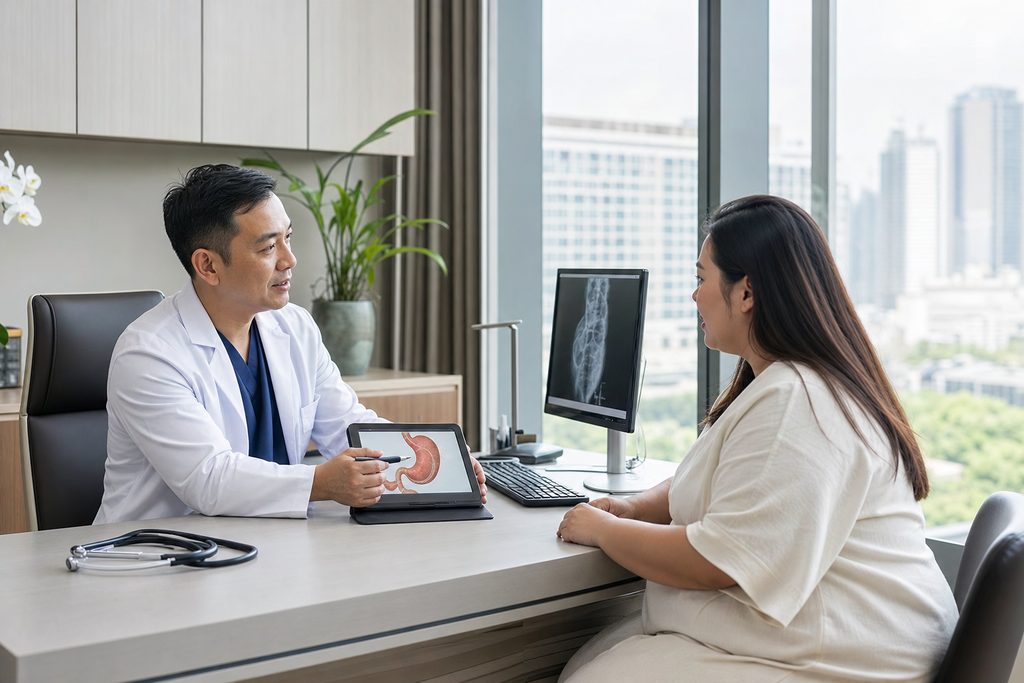
Have you ever sat in a specialist’s waiting room for three hours, only to be told the next available appointment is in four months? That scenario pushes thousands of chronic pain patients to look beyond their borders. So yes, you can get pain management treatment in China — and for many, the pain management clinic cost China is a fraction of what they would pay at home. But the real question is not if you can. It is how you do it without wasting money on a trip that does not solve anything.
Our team has spent years connecting international patients with China’s top-tier pain departments. We have seen what works and what falls apart. The short version: China offers genuinely advanced interventional pain medicine — ultrasound-guided nerve blocks, radiofrequency ablation, spinal cord stimulation trials — at public hospital prices that often run 70-85% lower than US private-pay rates. The catch is that the system is not built for walk-in foreigners. You need a plan.
Pain Management in China: The Short Answer
Yes. Foreigners can receive pain management treatment in China, including medication management, interventional procedures, and rehabilitation. The most realistic path is through a public hospital’s international medical department or a JCI-accredited private hospital. A typical pain management clinic cost China ranges from $150 to $900 for a consultation and basic procedure package, depending on hospital tier and complexity. That compares to $1,800-$4,500 for comparable private-pay care in the US or UK.
But here is what nobody tells you upfront: you cannot simply email a Chinese public hospital and book a nerve block for next Tuesday. The system requires an in-person consultation first. Always. That is not a policy we made up — it is how every major Chinese hospital operates. So the real cost question is not just the procedure. It is the total trip: flights, visa, accommodation, and coordination. Get the coordination wrong and you burn a week of your life sitting in a registration hall with no interpreter.
Who This Is Right For — and Who It Isn’t
Let us be straightforward. This option suits a specific profile of patient, not everyone with back pain.
Good candidates typically include:
- Patients with chronic conditions already diagnosed at home — osteoarthritis, failed back surgery syndrome, neuropathic pain, trigeminal neuralgia — who have exhausted conservative options
- People paying out of pocket in the US or UK who need a procedure like a lumbar facet joint injection or pulsed radiofrequency and cannot afford the $3,000+ sticker price
- Expats already living in Asia who want high-quality care without flying back to Europe or North America
- Patients seeking specific Chinese strengths: integrated TCM pain protocols, large-volume interventional experience, or rehabilitation programs combining physical therapy with acupuncture
You should probably not pursue this if:
- You are in acute, unstable pain requiring emergency evaluation — go to the nearest emergency department, not an airport
- Your condition is undiagnosed and you need a full workup from scratch; China can do this, but a long-haul flight with an undiagnosed condition is risky
- You expect to arrive and get opioid prescriptions easily. China’s opioid prescribing rules are strict. This is not a destination for medication shopping.
- You need ongoing, indefinite follow-up with a single physician and cannot travel at least once per year
Being honest about the second list is what keeps people from wasting money. We would rather tell you upfront than coordinate a trip that disappoints you.
Pain Management Clinic Cost China: The Options Compared
Costs vary enormously by hospital type. Here is the reality, based on our coordination experience across Beijing, Shanghai, and Guangzhou.
| Option | Typical Cost (USD) | What You Get | Wait Time |
|---|---|---|---|
| Public hospital, standard outpatient | $20-60 per visit | Specialist consult, basic medication, physiotherapy referral | Same-day queue, 2-6 hours waiting |
| Public hospital, international department | $150-400 per visit | English-speaking coordinator, priority scheduling, specialist consult | 1-5 days |
| Private international hospital (United Family, Jiahui, Parkway) | $300-900 per visit | Full English care, direct insurance billing, Western-style service | Same day to 3 days |
| Interventional procedure (nerve block, RFA) — public international dept | $800-2,500 | Procedure, facility fee, basic imaging, one follow-up | 3-10 days after consult |
| Interventional procedure — private international | $2,500-6,000 | Same as above, premium environment | 2-7 days |
| Comprehensive 2-week rehab program (TCM + PT) | $3,000-8,000 | Daily therapy, acupuncture, medication adjustment, accommodation guidance | 2-4 weeks booking |
The public international department is the sweet spot for most medical travelers. You get senior specialists — often the same doctors who run the standard outpatient clinics — but with English coordination and shorter waits. The price lands around 40-60% of private international hospital rates. For context, a lumbar epidural steroid injection that costs $2,800 cash-pay in Texas might run $900-1,400 at a top Shanghai public hospital’s international wing.
One more comparison: a nerve block injection cost abroad varies wildly. In Thailand, expect $400-800. In South Korea, $600-1,200. In China, $350-900 at public hospital rates. China is not always the absolute cheapest in Asia, but it offers something Thailand and Korea cannot match at scale: surgical volume. Chinese pain departments at major hospitals perform thousands of interventional procedures annually. That volume matters when you are talking about precision needle work near your spine.
Can I Get Pain Medication in China? What to Expect
This is the question every chronic pain patient asks, and the answer requires nuance. Yes, you can receive prescription pain medication in China — but under rules that differ significantly from the US or UK.
Non-opioid options — NSAIDs, gabapentinoids, muscle relaxants, certain antidepressants used for neuropathic pain — are readily prescribed after a proper consultation. Pharmacies at major hospitals stock these. Costs are low: a month of pregabalin might run $15-40. Tramadol is available but controlled. Stronger opioids like morphine or oxycodone require a hospital-based pain specialist to prescribe, and quantities are limited. Chinese physicians are generally more conservative with opioid initiation than their American counterparts.
Do not plan to fill a large opioid prescription and bring it home. That will not happen. What you can do is receive a proper medication adjustment, try interventional procedures that reduce your need for daily pills, and return with a documented treatment plan your home physician can continue. For many patients, that is more valuable than another bottle of pills.
Is Pain Management Safe in Beijing Hospitals?
Short answer: yes, at the right hospitals. But you need to understand what “safe” means in this context.
Beijing’s top pain departments — at hospitals like Peking Union Medical College Hospital and Xuanwu Hospital — operate at international standards. Xuanwu’s pain management center, for example, handles a high volume of complex neuropathic pain cases and performs image-guided interventions routinely. Infection control protocols at these institutions are rigorous. Complication rates for standard procedures like facet injections or pulsed radiofrequency are comparable to Western benchmarks.
The safety question is less about medical competence and more about navigation. A foreign patient who walks into a standard public outpatient clinic alone faces real risks: miscommunication about medication allergies, confusion about which floor to visit, and the very real possibility of being turned away because the registration system requires a Chinese ID-linked hospital card. That is not a reflection on medical quality. It is a reflection on infrastructure built for domestic patients.
So is pain management safe in Beijing hospitals? Medically, yes — at accredited institutions. Operationally, it is only safe if you have proper coordination. Our bilingual companions exist precisely because a language barrier in a hospital is a safety issue, not just a convenience issue.
What Chronic Pain Treatment in Shanghai Costs — and What Drives the Price
Let us talk about Shanghai specifically, since it is the most common entry point for medical travelers. The chronic pain treatment Shanghai price depends on three variables: hospital tier, procedure type, and whether you use the international department.
A first specialist consultation at a public hospital’s international department in Shanghai: $150-350. That includes a translator if needed. Imaging — MRI of the lumbar spine, for instance — runs $150-400. A single ultrasound-guided trigger point injection: $200-500. A lumbar epidural steroid injection: $800-1,500. Pulsed radiofrequency for facet joint pain: $1,200-2,500 per session. A spinal cord stimulation trial (the electrode placement, not the permanent implant): $3,000-6,000.
What drives the variance? Hospital reputation. A pain specialist at Ruijin Hospital or Zhongshan Hospital commands higher fees than a district-level hospital. Procedure complexity. An epidural is cheaper than a radiofrequency ablation. And whether you need general anesthesia or just local. None of these prices include your flight, hotel, or visa. Budget an additional $1,500-3,000 for a two-week trip depending on your departure city and accommodation standards.
How to Book a Pain Treatment Package in China
You cannot book pain treatment package China the way you book a hotel room. There is no online checkout. What exists is a staged process:
Step 1: Remote evaluation. You send your medical records, imaging reports, and a summary of what you have tried. A Chinese pain specialist reviews them. This can be a written second opinion ($300-500) or a video consultation ($100-800 depending on the specialist’s seniority).
Step 2: Hospital matching. Based on the specialist’s input, we identify which hospital and department fits your condition. Not every top hospital has a dedicated pain management department. Some route chronic pain through orthopedics, neurology, or rehabilitation medicine. Getting this wrong wastes days.
Step 3: Visa and travel. You apply for an S2 visa with supporting documents from the hospital. Processing time varies by country, typically 1-4 weeks. We provide the invitation documentation the hospital issues.
Step 4: In-person consultation. You arrive, meet the specialist, and confirm the treatment plan. This is mandatory. No Chinese hospital will perform an interventional procedure without an in-person assessment first.
Step 5: Treatment and follow-up. The procedure happens, typically within 3-10 days of the initial consult. You have a follow-up visit before departure. Your home physician receives a discharge summary in English.
The whole process takes 10-21 days in China, depending on procedure complexity and scheduling. Some patients combine treatment with a short recovery period and a bit of sightseeing. Others fly in, get the procedure, and fly home within a week. Both are possible.
Practical Considerations: Records, Payments, and Language
Before you book anything, sort out these logistics.
Medical records. You need complete documentation: imaging reports (not just the films, but the written radiologist reports), medication lists, prior procedure notes, and a referral letter from your home physician if possible. Chinese specialists want to see what has already been tried. Bring everything in English. If you have records in another language, get them translated before you travel.
Payment. Public hospitals in China operate on a prepay model. You load money onto a hospital card and services deduct from it. International departments accept credit cards and sometimes international insurance. Private international hospitals often do direct insurance billing with major carriers like Cigna, Aetna, and Allianz. Check with your insurer before committing. Medicare does not cover overseas treatment. Most US private plans do not either, though some reimburse out-of-network international care at a reduced rate.
Language. Standard outpatient departments at public hospitals run in Mandarin. Signs may have English translations at top-tier hospitals, but the staff — nurses, registration clerks, pharmacy technicians — generally do not speak English. International departments are different: English is expected there. If you want to save money by using the standard outpatient route, you need a bilingual companion. That is not optional. It is the difference between a 2-hour visit and a full-day ordeal.
Follow-up after returning home. Pain management is rarely a one-and-done thing. A nerve block might last 3-6 months. A radiofrequency ablation might last 6-18 months. You need a plan for what happens when the effect wears off. Some patients return to China annually. Others use the Chinese treatment plan as a template for their local physician to continue. Both are valid. What does not work is assuming one trip fixes everything permanently.
Frequently Asked Questions
Yes, with a proper consultation and prescription from a licensed Chinese physician. Non-opioid medications are straightforward. Opioids are tightly controlled and prescribed only by pain specialists or relevant departments, in limited quantities. You cannot bring a foreign prescription and expect it to be filled. You need a Chinese prescription from a Chinese hospital visit.
At top-tier public hospitals and JCI-accredited private hospitals, yes. Complication rates for standard interventional procedures are comparable to Western benchmarks. The larger risk is operational: language barriers, registration confusion, and getting lost in a massive hospital complex. Those risks are manageable with proper coordination, but they are real if you go alone.
Expect to pay roughly 15-30% of US private-pay rates at public hospital international departments. A consultation that costs $500-800 in the US might cost $150-350 in China. A nerve block that costs $2,500-4,000 in the US might cost $800-1,500 in China. Private international hospitals in China are more expensive but still typically 40-60% below US rates.
Plan for 10-21 days. The initial consultation happens on day 1-2. The procedure is usually scheduled 3-10 days after that, depending on the hospital’s schedule and your pre-procedure workup. You need a follow-up visit before departure. Some patients extend their stay for a short rehabilitation program, which adds another 1-2 weeks.
This is the uncomfortable truth about pain management anywhere: not every intervention works for every patient. A nerve block might provide complete relief or none at all. A radiofrequency ablation might help for six months or not at all. Chinese specialists will be honest about this uncertainty in the initial consultation. You should factor it into your decision. The advantage of China is that trying an intervention costs far less than at home, so the financial risk of a failed procedure is lower.
Your Next Step
Pain management in China is not a magic cure, but it is a genuinely viable option for patients who have exhausted affordable options at home. The medical expertise exists. The cost advantage is real. What makes or breaks the experience is coordination — knowing which hospital to choose, getting your records in front of the right specialist before you fly, and having someone who speaks the language beside you in the hospital.
We are China Medical Services, a coordination team — not a hospital, and not doctors. We do not diagnose or treat. What we do is handle the logistics: hospital matching, appointment coordination, bilingual companions, and visa documentation guidance. If you want to explore whether pain treatment in China makes sense for your specific situation, start with a free consultation. Tell us what you are dealing with. We will tell you honestly if this path is worth pursuing.
That is the whole point, really. You deserve a straight answer before you spend a dollar. Get one.
For more medical information and treatment options in China, visit chinamedservices.com (China Medical Services).
