Treatment in China: Public or Private Hospital for Foreigners?
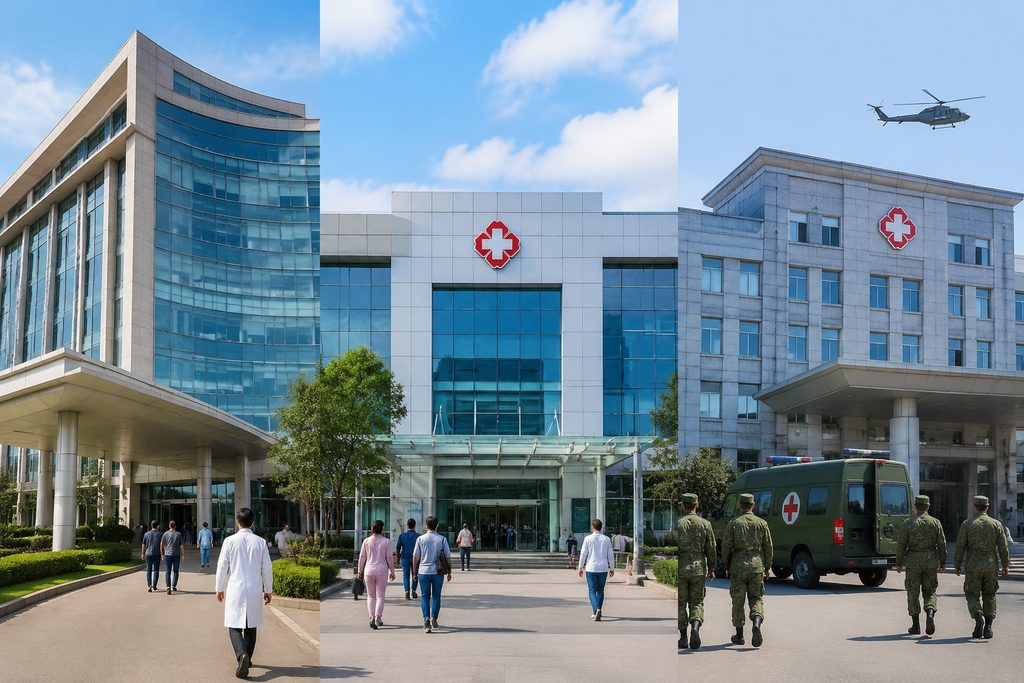
Treatment in China: Public or Private Hospital for Foreigners?
If you are weighing a private hospital vs public hospital China cost comparison, the honest answer is that the two systems were built for different people — and only one of them was built with you in mind. Public hospitals hold the deepest surgical expertise in the country. Private international hospitals hold the English-speaking staff, the insurance desks, and the appointment calendars. Choosing wrong costs you either money or time. Often both.
We help international patients move through China’s medical system every month. Here is what we tell them before they book anything.
How This Actually Works, Step by Step
Start with the part almost every guide skips: in a Chinese public hospital, you generally cannot book an ordinary outpatient slot from overseas. Registration happens on the day, in person, in a queue. Surgery follows a face-to-face consultation. That is the rule, not a rumor.
The realistic sequence looks like this.
Step one. You send us your existing records — imaging, pathology, lab work, discharge summaries. If they are in English, we arrange translation into Chinese. Chinese specialists read Chinese.
Step two. The relevant department reviews the file. You get a written second opinion, or a video consultation if you want to speak with the team directly. This is where you learn whether your case is straightforward, complex, or better handled at home.
Step three. If treatment in China makes sense, we discuss the route. Public hospital international department, public VIP channel, or a private international hospital. Each has a different price and a different timeline.
Step four. Appointment coordination. We register you, create the hospital medical card, and where the hospital permits, arrange a proxy visit using your materials so a clinician can confirm the plan before you fly.
Step five. You arrive. A bilingual companion meets you, handles registration, queues, payment, and translation. You see the doctor. Admission and surgery remain subject to hospital rules and the treating team’s judgment — nobody can promise otherwise.
That last sentence matters. Anyone guaranteeing you a specific surgeon on a specific date is selling something they do not control.
Public Hospital or Private Hospital in China: The Real Cost and Access Trade-Off
Here is the core tension. China’s top public hospitals — the ones in the Fudan rankings, the ones sitting inside the top 5% of the country’s 35,000+ hospitals — carry surgical volumes that most Western centers cannot match. Fuwai Hospital in Beijing performs over 14,000 cardiac surgeries a year. West China Hospital in Chengdu handles patient volumes that would overwhelm a mid-sized European city’s entire health system.
That volume is the argument for going public. Repetition builds skill.
But volume is also the problem. A top public hospital can see tens of thousands of outpatients in a single day. Signage is in Chinese. Payment is upfront, and insurance reimbursement happens afterward, in your home country, on your home insurer’s terms. Without language support, you are functionally lost.
Private international hospitals solve the friction. United Family, Jiahui, Parkway, Raffles — English-speaking clinicians, JCI accreditation, direct billing to international insurers, appointments you can actually book in advance. The trade-off is depth. A private hospital may not have the subspecialty surgical team for a rare tumor or a complex congenital heart repair. It will refer you. Sometimes to the public system you were trying to avoid.
| Factor | Top Public Hospital | Private International Hospital |
|---|---|---|
| Cost for comparable surgery | Roughly 1/5 to 1/10 of US prices | Higher than public; still often below US |
| Booking from overseas | Generally not possible for ordinary outpatient slots | Usually possible in advance |
| English service | Limited; international department helps | Standard |
| Insurance | Pay first, claim later | Frequently direct billing |
| Surgical depth | Highest in the country | Good for routine and mid-complexity care |
| Wait for a specialist slot | Days to weeks, sometimes longer | Often days |
For a concrete anchor: coronary artery bypass grafting at a top Chinese public hospital typically runs $12,000–20,000. The same procedure in the United States commonly exceeds $120,000. That gap is why people fly. It varies by hospital and case complexity, and it does not include travel or accommodation.
If you want to see which public hospitals sit in the Fudan Top 100 by city, our ranking of China’s top-ranked hospitals groups them by location and tier.
A Realistic Timeline
Optimistic timelines are how patients end up rebooking flights. Here is what actually happens, with the waiting steps people forget.
| Stage | Realistic Duration | What Slows It Down |
|---|---|---|
| Records gathered and translated | 3–10 days | Missing pathology slides, illegible scans |
| Written second opinion returned | 3–7 days | Department workload; complex cases need MDT review |
| Video consultation scheduled | 3–14 days | Time zone alignment; specialist availability |
| S2 visa application | 1–3 weeks | Consulate processing times; invitation documents |
| Appointment and admission coordination | 1–4 weeks | Hospital scheduling rules; pre-op testing requirements |
| Arrival to first in-person consultation | 1–3 days | Jet lag is real; build in a buffer day |
| Consultation to surgery | Days to several weeks | Pre-operative workup, bed availability |
Total, from first email to operating table: six to twelve weeks is a fair planning range. Some cases move faster. Complex ones move slower. Anyone quoting you ten days end-to-end is not counting the visa.
What Can Go Wrong — and What Happens Then
This is the section most services skip, so we will not.
The specialist declines your case. It happens. Sometimes the tumor is inoperable. Sometimes the risk profile is too high. Sometimes the Chinese team concludes you are better treated closer to home. You have lost the consultation fee and gained a clear answer. That is worth something.
The appointment cannot be secured. Top specialists are busy. If we cannot secure the appointment you were quoted, the coordination fee is refunded in full. We do not take payment for access we cannot deliver.
Complications after surgery. No surgeon anywhere guarantees outcomes, and China is no exception. What matters is that you are in a hospital with the infrastructure to manage a complication. This is an argument for high-volume public centers, and an argument for asking hard questions about ICU capacity before you commit.
Language failure at a critical moment. Consent forms, post-op instructions, discharge medication schedules. A bilingual companion is not a luxury in a hospital where nothing is in English. It is the difference between understanding your own care and nodding politely through it.
Is It Safe to Get Surgery in a Public Hospital in China?
Not for ordinary outpatient care. Registration typically happens on the day, in person, and surgery requires an in-person consultation first. Advance scheduling generally means going through the hospital’s international or VIP department. This is the single most common misunderstanding among first-time medical travelers to China.
If we cannot secure the appointment described in your order, the coordination fee is refunded in full. We do not charge for access we cannot arrange, and we never promise a specific surgeon or a specific surgical date — hospitals control those decisions, not us.
You need an S2 visa for short-stay medical treatment, or S1 for stays over 180 days. Accompanying family members apply under S2. The M visa is for commercial and trade activity and is not a medical visa. Confirm current requirements with your nearest Chinese embassy or consulate before applying.
Match the condition to the department, not the hospital’s overall fame. A center ranked among China’s top 10 for oncology may be mediocre in orthopedics. Start with a written second opinion — it costs $300–500 and tells you whether traveling is even worthwhile.
Your Next Step
The short version: public hospitals in China offer unmatched surgical depth at a fraction of Western prices, and private international hospitals offer accessibility and English-language comfort at a higher cost. The right answer depends entirely on your condition, your timeline, and how much complexity you are managing.
China Medical Services is a medical navigation team, not a hospital and not a clinic. We do not diagnose, we do not treat, and we do not promise outcomes. We translate records, coordinate appointments through official hospital channels, and put a bilingual human beside you from arrival to discharge.
A written second opinion from a top Chinese specialist costs $300–500, takes under a week, and is credited in full toward on-the-ground coordination if you decide to travel within 90 days. That is a reasonable place to start — no commitment, no pressure, just a clearer picture of whether China is the right answer for you.
This article is for general information only and is not medical advice. Treatment decisions should always be made with a qualified physician who has reviewed your individual case.
Frequently Asked Questions
Yes. The hospitals used for international patients are JCI-accredited and follow the same international safety standards as top hospitals in the US and Europe. Surgical teams perform high volumes of procedures — often more than their Western counterparts — which studies show leads to better outcomes.
Costs vary by procedure and hospital, but international patients typically save 40-80% compared to US prices — even when factoring in travel and accommodation. A consultation with our team will give you an exact, all-inclusive quote with no hidden fees.
Send us your existing medical reports to get started. We handle everything from hospital selection and appointment scheduling to visa assistance and post-operative recovery planning. Your medical records are reviewed by the specialist before you even book a flight.
For more medical information and treatment options in China, visit chinamedservices.com (China Medical Services).
