Immunotherapy in China: Costs, Top Hospitals, and How Foreigners Access Treatment
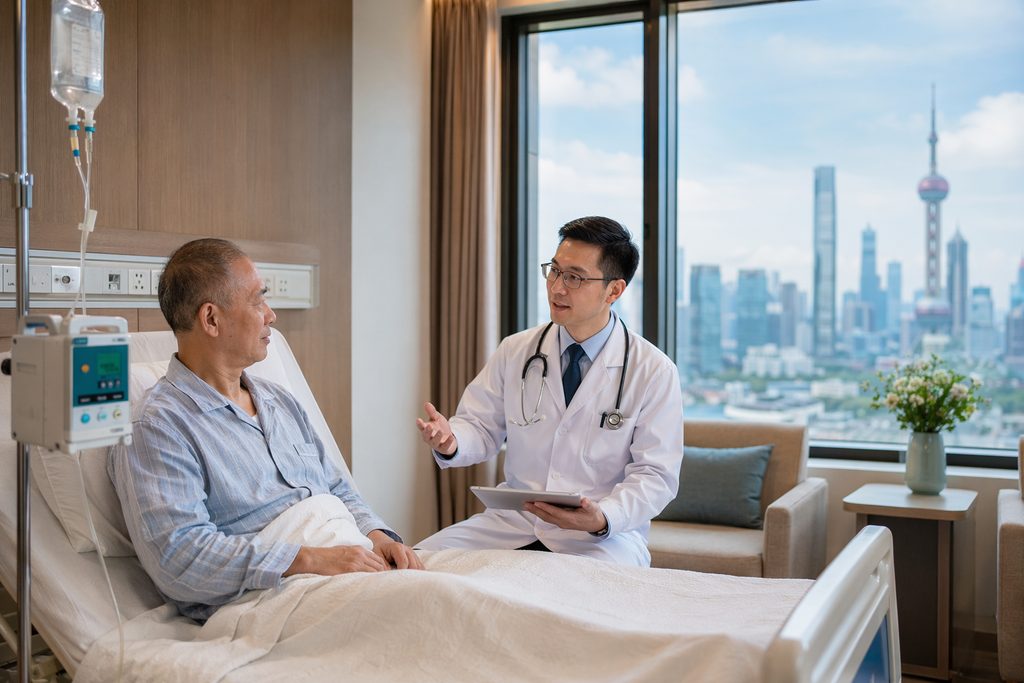
You might assume that cutting-edge cancer immunotherapy is only accessible in a handful of Western academic medical centers, with price tags that match the exclusivity. The reality is different. China has become one of the largest markets in the world for immune checkpoint inhibitors, and the sheer volume of clinical practice has driven both expertise and affordability in directions that surprise many Western patients. Understanding the real immunotherapy cost China involves looking beyond a single drug price. It means understanding how treatment is delivered, which hospitals have the deepest experience, and what the actual pathway looks like for someone flying in from abroad.
We coordinate care for international patients at China Medical Services. Our team has walked through this process with patients from North America, Europe, and the Middle East. This article explains what immunotherapy in China actually costs, where it is delivered best, and how a foreigner can realistically access it.
How This Actually Works, Step by Step
The pathway starts with your existing medical records, not with a plane ticket. You send us your pathology reports, imaging results, treatment history, and any genomic testing you have already completed. Our team translates these documents into Chinese and submits them to the appropriate oncology department at one of our partner hospitals. A specialist reviews the file and provides a written assessment. This typically takes five to seven business days.
If the specialist confirms that immunotherapy is a reasonable option for your cancer type and stage, we schedule a video consultation. You speak directly with the treating team. They explain which drug they recommend, why, what the expected side effect profile looks like, and what monitoring schedule you would need. This consultation costs between $100 and $300 for a standard international department physician. A top specialist video consultation runs $500 to $800.
Only after this remote evaluation do you make a decision about travel. If you choose to proceed, we coordinate the hospital appointment, help with the S2 visa application documents, and arrange a bilingual medical companion for your first hospital visit. The companion handles registration, payment, navigation, and translation. Expect to pay from $300 per day for this service.
What Does Immunotherapy Cost China Patients Actually Pay?
The headline number most patients ask about is the PD-1 inhibitor price China hospitals charge. Domestic Chinese PD-1 inhibitors — drugs like toripalimab, sintilimab, camrelizumab, and tislelizumab — have transformed the pricing landscape. After national medical insurance negotiations, several of these drugs are priced between $400 and $800 per cycle for Chinese citizens enrolled in the national insurance scheme. International patients do not qualify for that subsidized pricing.
For foreign patients paying out of pocket, expect to pay the full list price. That typically ranges from $1,500 to $3,500 per cycle for domestic PD-1 inhibitors, depending on the specific drug and the hospital. Imported checkpoint inhibitors, such as pembrolizumab and nivolumab, cost more — often $5,000 to $8,000 per cycle. A full course of treatment generally involves six to twelve cycles, sometimes more if the patient responds well and tolerates the drug.
But the drug is only one component. A realistic total immunotherapy cost China budget for a six-month course, including drug costs, hospital fees, imaging, laboratory monitoring, and physician consultations, typically lands between $25,000 and $60,000. That is a wide range because cancer is not a uniform disease. A patient with metastatic melanoma on a single-agent PD-1 inhibitor will spend far less than a patient with advanced lung cancer receiving combination immunotherapy plus chemotherapy.
| Cost Component | Typical Range (USD) | Notes |
|---|---|---|
| Domestic PD-1 inhibitor (per cycle) | $1,500 – $3,500 | Out-of-pocket price for international patients |
| Imported PD-1 inhibitor (per cycle) | $5,000 – $8,000 | Pembrolizumab, nivolumab |
| CT/PET-CT imaging (per scan) | $150 – $800 | Varies by hospital tier and scan type |
| Specialist consultation (per visit) | $50 – $300 | International department pricing |
| Bilingual medical companion | from $300/day | Half-day or full-day |
| Written second opinion | $300 – $500 | Top hospital specialist review |
These figures are reference points, not quotes. Final costs vary by hospital and case complexity. The best cancer hospital Shanghai immunotherapy programs, for instance, price their international services differently from a provincial tertiary hospital. What matters more than the sticker price is whether the treating team has deep experience with your specific cancer type and the specific drug they recommend.
Is Immunotherapy Available in Beijing for Foreigners?
Yes. The question of whether immunotherapy is available in Beijing comes up frequently, and the answer is straightforward: Beijing has some of the highest-volume immunotherapy programs in the country. Peking Union Medical College Hospital, Cancer Hospital Chinese Academy of Medical Sciences, and Beijing Cancer Hospital all run active checkpoint inhibitor programs across multiple cancer types. These are public hospitals with dedicated international departments that accept foreign patients.
Can foreigners get immunotherapy in China at these institutions? Yes, but not through the standard outpatient registration system. Public hospital general outpatient clinics cannot be booked from overseas, and you cannot simply walk in and request a specific treatment. The international department or VIP channel is the legitimate route. This is where our coordination service operates. You do not pay for access — you pay for case management: document translation, official international department registration, appointment coordination, and bilingual accompaniment.
One thing to understand clearly: no reputable hospital in China will start immunotherapy based on a phone call or an email. The treating oncologist must review your pathology, staging, and prior treatment history. If your records are incomplete, the hospital will order additional testing in China — blood work, imaging, sometimes a repeat biopsy. That adds time and cost, but it is non-negotiable. Immunotherapy is not a one-size-fits-all treatment, and a responsible oncologist will not administer it without confirming the diagnosis and relevant biomarkers.
A Realistic Timeline
People underestimate how long the preparation phase takes. Here is what a typical timeline looks like from first contact to first infusion.
| Stage | Duration | What Happens |
|---|---|---|
| Document collection and translation | 3 – 7 days | You gather all records; we translate into Chinese |
| Specialist file review | 5 – 10 days | Oncologist reviews your case and issues a written opinion |
| Video consultation scheduling | 3 – 14 days | Depends on specialist availability |
| S2 visa application | 7 – 20 days | Requires hospital invitation letter and supporting documents |
| Travel and first hospital visit | 1 – 3 days | Registration, additional testing if needed |
| Treatment plan finalization | 3 – 10 days | Oncologist confirms drug, dose, and schedule |
| First infusion | Day 1 of treatment | Typically 30 – 90 minutes for checkpoint inhibitors |
Total realistic timeline from first contact to first infusion: four to eight weeks. Anyone promising faster than that is cutting corners. The S2 visa alone can take up to three weeks depending on your home country’s Chinese embassy or consulate. And you should never book flights before the hospital has confirmed your appointment in writing.
What Can Go Wrong — and What Happens Then
The most common failure point is incomplete medical records. A patient sends a single pathology report from five years ago and expects a treatment plan. The oncologist cannot work with that. You need the full picture: original pathology, any repeat biopsies, imaging reports with actual images, surgical notes if applicable, and a complete list of prior treatments with dates and outcomes. If something is missing, the hospital will order new tests in China. That is not a scam — it is standard oncology practice.
Another failure mode: the patient arrives expecting a specific drug they read about online, and the oncologist recommends something different. This happens frequently. Immunotherapy response depends on PD-L1 expression, tumor mutational burden, microsatellite instability status, and the specific cancer type. A drug that works brilliantly for one patient may be useless for another. We always tell patients: come for the evaluation, not for a specific prescription.
Side effects are another reality. Immune-related adverse events — colitis, pneumonitis, hepatitis, thyroid dysfunction — occur in a meaningful minority of patients. Chinese oncology departments manage these well, but if you return home after treatment, you need a local oncologist who understands checkpoint inhibitor toxicity. We help patients prepare a treatment summary in English for their home physician. Do not skip this step.
And sometimes the answer is no. The oncologist reviews your case and determines that immunotherapy is not appropriate. That is a good outcome in its own way — it saves you from spending tens of thousands of dollars on a treatment that would not help. A written second opinion that says “do not pursue immunotherapy” is still valuable information.
Choosing Where to Book Immunotherapy Treatment China
When patients ask us how to book immunotherapy treatment China, the real question is: which hospital, and why? The answer depends on your cancer type. China’s Fudan University hospital rankings publish specialty reputation lists that identify the top ten hospitals for each of 45 specialties. For oncology specifically, the top-ranked institutions cluster in a few cities.
Shanghai has arguably the deepest bench. Fudan University Shanghai Cancer Center and Zhongshan Hospital Fudan University both run large immunotherapy programs. The best cancer hospital Shanghai immunotherapy patients often cite is Fudan University Shanghai Cancer Center, which treats more than 10,000 new cancer patients annually and has dedicated clinical trial units for checkpoint inhibitors. Beijing offers Peking Union Medical College Hospital and Cancer Hospital Chinese Academy of Medical Sciences. Guangzhou has Sun Yat-sen University Cancer Center, one of the largest cancer centers in the country.
We maintain a database of 340+ top-ranked hospitals across 37 cities. For oncology specifically, our specialty rankings page lists the top ten hospitals for medical oncology, surgical oncology, and related fields. The right hospital for you depends on your cancer type, your prior treatment history, and your practical constraints — budget, travel logistics, language needs.
Private international hospitals like United Family and Jiahui also offer immunotherapy, typically through partnerships with public hospital oncologists. These facilities provide English-speaking staff and direct insurance billing, which some patients find worth the premium. But the deepest clinical experience with checkpoint inhibitors remains in the large public cancer centers.
Practical Considerations: Records, Visa, Money, and Follow-Up
Bring everything. Every scan, every lab report, every pathology slide, every discharge summary. Digital copies are fine for the initial review, but the hospital will want to see original pathology slides or tissue blocks if a repeat biopsy is needed. Some patients ship paraffin blocks to China in advance — we can coordinate that.
The visa category for medical treatment is S2. This is a short-stay visa issued for private affairs, including medical treatment, when you have supporting documents from a Chinese hospital. Family members accompanying you also apply for S2. The hospital international department provides an invitation letter and treatment confirmation, which you submit with your visa application. Processing times vary by country. Plan for two to three weeks.
Payment is upfront. Chinese public hospitals require a deposit before starting treatment, typically covering the estimated cost of the first one or two cycles. You pay the deposit, treatment is drawn down against it, and you top up as needed. This is different from the US model of billing after the fact. Bring a credit card with a high limit or arrange a wire transfer in advance. Insurance is your responsibility — Chinese public hospitals do not bill international insurers directly, though some private international hospitals do.
Follow-up at home matters. Immunotherapy requires regular monitoring — blood tests, imaging, clinical assessment. If you return home after treatment in China, you need a local oncologist who will manage your ongoing care. We prepare a comprehensive treatment summary in English, including drug name, dose, cycle dates, imaging results, and any adverse events. Your home physician needs this to continue your care safely.
One more thing: language. Large Chinese hospitals see tens of thousands of patients daily. The international department staff speak English, but the moment you step outside that department, you are in a Mandarin-only environment. A bilingual medical companion is not a luxury — it is the difference between a smooth visit and a disorienting one. Our companions handle registration, queue management, payment, and translation. They also know which window to go to, which form to fill out, and which department to visit next. That institutional knowledge is hard to replicate on your own.
Frequently Asked Questions
A realistic budget for six to twelve cycles of PD-1 inhibitor therapy, including hospital fees, imaging, and monitoring, ranges from $25,000 to $60,000 for international patients. The drug itself typically costs $1,500 to $3,500 per cycle for domestic PD-1 inhibitors, and $5,000 to $8,000 per cycle for imported drugs. Final costs vary by hospital and case complexity.
No. You need a specialist file review first, then a video consultation, then a hospital appointment. The treating oncologist must review your pathology, staging, and treatment history before prescribing anything. The realistic timeline from first contact to first infusion is four to eight weeks, including S2 visa processing. Anyone promising same-week treatment is not operating through legitimate channels.
Yes. Medical treatment falls under the S2 visa category, which is a short-stay visa for private affairs including medical care. You need supporting documents from the treating hospital — typically an invitation letter and treatment confirmation. Family members accompanying you also apply for S2. The M visa is for commercial and trade activities and is not appropriate for medical travel.
Then you have saved yourself from an expensive and ineffective treatment. A written second opinion that recommends against immunotherapy is valuable information. You can take that assessment back to your home oncologist and discuss alternatives. We never pressure patients to proceed with treatment that a specialist has advised against.
That depends entirely on your policy. Some international health insurance plans cover treatment in China, but most require pre-authorization and may only reimburse after the fact. Chinese public hospitals do not bill international insurers directly. Private international hospitals like United Family and Jiahui do offer direct billing with certain insurers. Check with your insurer before committing to travel.
Your Next Step
Immunotherapy in China is real, sophisticated, and far more affordable than most Western patients expect. The key is doing it properly: complete records, a specialist review before you travel, a legitimate hospital appointment, and support on the ground once you arrive. Our team at China Medical Services coordinates this process for international patients — we handle document translation, hospital matching, appointment coordination, and bilingual accompaniment. We do not practice medicine, and we do not promise outcomes. We connect you with the right specialists and make sure the logistics do not get in the way of your care.
Start with a conversation. Send us your records, ask your questions, and let the specialists tell you what is possible. The evaluation will tell you whether immunotherapy in China is the right path for your specific situation — and if it is, we will help you walk it.
For more medical information and treatment options in China, visit chinamedservices.com (China Medical Services).
