ACL Reconstruction Surgery Cost China: Real 2025 Pricing and Recovery Guide
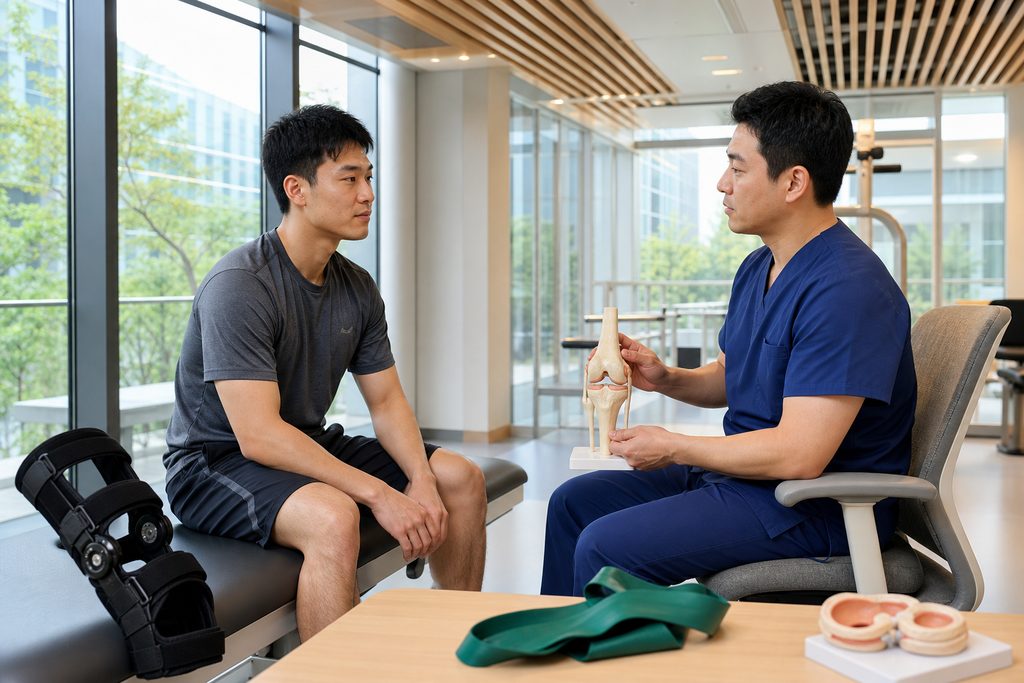
You have probably seen the numbers. $20,000. $35,000. Maybe $50,000 for an ACL reconstruction in the United States or Western Europe—and that is before you add the cost of the post-operative rehab that actually determines whether your knee ever feels normal again. The assumption that follows is almost automatic: paying less means accepting lower-quality care. The data says otherwise. Our team regularly connects patients with orthopedic departments that perform several thousand ACL reconstructions annually. These are surgeons who do this specific procedure multiple times each week, not a few dozen times a year. The ACL reconstruction cost China 2025 runs approximately $6,000 to $18,000 for the complete surgical package at a top-tier hospital, depending on graft choice, hospital tier, and whether you use the public international wing or a private facility. That range covers the surgeon, the operating theater, the inpatient stay, and the implant itself. It does not yet include your flight, your accommodation, or the rehab support that makes the difference between a knee that bends and one that performs. That is the short answer. The longer answer—the one that determines whether this makes sense for your specific knee, your specific life—is what follows.
Who This Is Right For — and Who It Isn’t
An ACL reconstruction is not a commodity. The right candidate for traveling to China for this surgery has a clear diagnosis already in hand. You have an MRI. You have a consultation report from a surgeon at home who confirmed the tear and recommended reconstruction. You know whether you need an isolated ACL repair or whether there is meniscus damage, cartilage wear, or multi-ligament involvement that complicates everything.
Good candidates typically fit this profile: an active adult between 18 and 50 with a complete ACL rupture who has already tried and failed conservative management, or an athlete who knows immediately that reconstruction is the only path back to their sport. You have a stable knee otherwise—no active infection, no unmanaged chronic condition that would compromise healing. You are willing to stay in-country for at least two to three weeks post-operatively before flying home. And you understand that the real work begins after the sutures are out.
Who should think twice. If your tear is partial and your surgeon at home believes a structured physiotherapy program might spare you the operating table, exhaust that option first. Surgery is irreversible. If you have a complex multi-ligament injury requiring staged reconstruction over several months, the logistics of extended international stays become punishing. If you are looking for a quick fix and plan to skip the months of rehab that follow, no surgeon in any country can deliver a good outcome. And if the idea of navigating a foreign healthcare system without your native language makes you anxious to the point of losing sleep, that matters—our team exists precisely to remove that friction, but you need to be honest with yourself about whether you are ready for the journey.
The Options, Compared
Not all ACL reconstruction in China carries the same price tag, and the differences matter. The table below compares the three main pathways international patients actually use.
| Pathway | Typical All-In Surgical Cost (USD) | Surgeon Profile | Language Support | Rehab Integration |
|---|---|---|---|---|
| Public Hospital International/VIP Wing | $6,000–$12,000 | Department chief or senior attending; high surgical volume | Dedicated international staff; variable English fluency | In-hospital physio starts day 1; external rehab coordination available |
| Private International Hospital | $14,000–$18,000 | Western-trained or bilingual senior surgeons | Full English-speaking environment; direct insurance billing | Integrated rehab suites; familiar Western protocols |
| Specialized Orthopedic Center (Semi-Private) | $8,000–$14,000 | Sports-medicine subspecialists; often team physicians for professional clubs | Coordinator-supported; limited walk-in English | Close partnerships with sports physio clinics; accelerated return-to-sport protocols |
The public hospital international wing suits patients who want the highest-volume surgeons at the lowest cost and are comfortable with some language coordination. The private international hospital suits patients who want a seamless English-language experience with direct insurance billing and are willing to pay for that convenience. The specialized orthopedic center sits in the middle—surgeons who live and breathe sports knees, often at prices closer to the public tier, but with less hand-holding on the non-medical logistics. Our team has placed patients in all three pathways, and the right column depends less on the surgery itself and more on how much support infrastructure you need around it.
How Surgeon Volume in Shanghai Changes the Risk Calculus
The search for the best knee ligament surgeon Shanghai is not about finding a single name. It is about understanding a structural advantage. Shanghai is home to several orthopedic departments that each perform over 1,000 ACL reconstructions annually. A surgeon operating at that volume has seen graft failures, tunnel malposition, and the subtle variations in knee anatomy that a lower-volume colleague might encounter once a year. The literature is consistent on this point: surgeon volume correlates with lower revision rates in ACL reconstruction, and the threshold where outcomes meaningfully improve starts somewhere around 50 to 100 cases per year. The surgeons our patients see often exceed that number in a quarter.
This does not mean every surgeon in Shanghai is equally skilled. It means the baseline is high, and the filtering question shifts from “can this surgeon do an ACL” to “does this surgeon regularly handle cases like mine—same graft preference, same activity demands, same concurrent injuries.” When we coordinate a written second opinion or video consultation, the goal is to match your specific MRI findings and athletic goals to a surgeon whose weekly caseload includes your exact profile. That is the conversation that matters, not a generic ranking.
ACL Surgery Price Comparison China vs USA: What the Numbers Actually Include
An honest ACL surgery price comparison China vs USA requires looking at what each number covers. In the United States, the surgeon’s fee, the anesthesiologist’s fee, the facility fee, the implant cost, and the post-operative visits are often billed separately. The total can land anywhere from $20,000 to $50,000 for an insured patient with a deductible, and considerably more for the uninsured. In China, the international-wing pricing is typically packaged. The quote you receive includes the surgeon, the operating room, the inpatient bed for three to five days, the graft itself—whether hamstring autograft, patellar tendon, or allograft—and the initial in-hospital physiotherapy.
Here is what that Chinese hospital package does not include: your pre-operative MRI (you should bring your own), your post-discharge accommodation, your outpatient rehab sessions beyond the initial inpatient days, your medications after discharge, and your flights. A realistic total budget for an international patient, including surgery, three weeks of nearby accommodation, daily living costs, and a structured outpatient rehab program, lands between $10,000 and $22,000 depending on pathway and city. That is still substantially below the US surgical fee alone in many cases, but it is not the $6,000 figure quoted in isolation. Patients who budget only for the hospital bill get a surprise. Patients who plan for the full stay get a new knee and a clear head.
What a Rehab Companion Actually Delivers in a Medical Tourism Context
The phrase knee surgery rehab package China medical tourism conjures images of a resort with physio mats by the pool. The reality is more practical and more valuable. A structured rehab companion service in China does three things. First, it ensures continuity between the surgeon’s protocol and the physiotherapist’s daily sessions. The surgeon writes the restrictions—weight-bearing status, range-of-motion limits, graft protection guidelines—and the companion translates those into a daily program that does not deviate. Second, it removes the isolation. Recovering from ACL surgery in a foreign country, alone in a hotel room, trying to remember whether the surgeon said 30 degrees or 50 degrees of flexion this week, is a recipe for anxiety and poor compliance. A companion who meets you at your accommodation, accompanies you to physio, and checks your progress against the protocol changes the experience entirely. Third, it bridges the language gap with your local physiotherapist, ensuring that when you report a catching sensation or unusual swelling, the right information reaches the surgeon quickly.
Our team coordinates these rehab companions as part of the broader stay. It is not a spa package. It is a clinical support layer that exists because the 12 months of rehab after ACL reconstruction matter more than the 90 minutes you spend on the operating table.
How Much Does ACL Repair Cost in Beijing: The Hospital Tier Factor
Patients searching for how much does ACL repair cost in Beijing are usually trying to decide between the capital and Shanghai. The price difference between the two cities is negligible for international-wing care. What differs is the hospital landscape. Beijing houses several of China’s most renowned orthopedic institutions, including departments attached to the national sports administration that treat Olympic-level athletes. The cost range mirrors the national picture: $6,000 to $14,000 for the surgical package at a public hospital international wing, and $15,000 to $18,000 at a private facility.
The graft choice also influences the Beijing price. A hamstring autograft—the most common choice in China for primary ACL reconstruction—sits at the lower end of the range. A patellar tendon autograft, preferred by some surgeons for high-demand athletes, adds modestly to the cost. An allograft, less commonly used in China than in the US but available, increases the implant cost but eliminates donor-site morbidity. The surgeon will recommend based on your age, sport, and graft diameter requirements, not on margin. But the price difference is real, and you should ask for a graft-specific quote before committing.
Practical Considerations: Records, Visa, and Follow-Up After You Fly Home
You cannot book an ACL reconstruction in China by sending an email and showing up. The process starts with a remote evaluation. You send your MRI images—not just the report, but the DICOM files—and your consultation notes from home. The surgeon reviews them and confirms that reconstruction is indicated and that your case is appropriate for their service. Only then does scheduling begin. This step is non-negotiable. Surgeons will not operate on a knee they have not evaluated, and the remote review is the prerequisite to the in-person consultation that happens once you arrive.
The visa category for medical treatment in China is the S2 visa, issued for short-term private affairs including medical care. Processing times vary by embassy, but four to six weeks is a safe planning window. You will need an invitation letter from the hospital, which the international department provides once your case is accepted. Your accompanying family member applies for the same S2 category. Do not apply for an M visa—that is for commercial and trade activities and has no relevance to medical travel.
Payment is almost always required upfront, before admission. Public hospital international wings accept wire transfers and major credit cards. Private international hospitals may offer direct insurance billing if they have an agreement with your insurer, but you must verify this before traveling. Most international patients pay out of pocket and seek reimbursement from their insurer afterward. Carry documentation of every payment.
Follow-up after you return home is the part most patients underestimate. Your surgeon in China will provide a detailed rehabilitation protocol—week by week, phase by phase—that you hand to your local physiotherapist. Some surgeons offer video follow-up at the six-week and three-month marks. Others discharge you to your local provider with instructions to contact them only if something goes wrong. Clarify this expectation during the remote consultation. A surgeon who will not review your progress remotely is not necessarily a bad surgeon, but you need to know that before you book the flight.
Frequently Asked Questions
Can I book ACL reconstruction surgery in China as an all-inclusive package?
Patients searching for book ACL reconstruction surgery China all-inclusive are usually hoping for a single price that covers surgery, accommodation, transport, and rehab. The honest answer is that truly all-inclusive packages exist but are rare, and they typically come through private international hospitals or specialized medical tourism facilitators who bundle third-party accommodation and transport. What is more common—and what our team arranges—is a coordinated plan where the surgical package, the accommodation booking, the airport transfers, and the rehab companion are organized as separate but synchronized components. You see a transparent breakdown of each cost. The total is predictable, but it is not a single line item. Be wary of any provider who quotes one number without specifying exactly what it covers.
What if the graft fails or I need a revision?
Graft failure rates for primary ACL reconstruction run between 3% and 10% depending on graft choice, surgical technique, and patient factors. If your reconstruction fails after you have returned home, the revision surgery will almost certainly happen in your home country. No Chinese hospital offers a warranty that covers international revision logistics. What a high-volume center does offer is a lower probability of technical failure in the first place—tunnel placement, graft tensioning, and fixation choices that hold up over time. If a failure occurs due to a new trauma rather than a surgical error, that is not a reflection on the original surgeon. Discuss revision scenarios openly during your remote consultation. A confident surgeon will walk you through their specific technique for avoiding the failures they see in referred revision cases.
How long do I really need to stay in China after surgery?
The minimum stay that most surgeons require is two weeks. The first three to five days are inpatient, with daily physiotherapy and wound checks. The next ten days involve outpatient physio every one to two days, monitoring for early signs of infection or stiffness. Leaving before the two-week mark means flying with a knee that is still swollen, at higher risk of deep vein thrombosis, and without the surgeon having cleared your wound. Some patients stay three to four weeks to get further into the rehab progression before the long flight. The longer you stay, the more rehab you complete under the surgeon’s direct supervision. The trade-off is cost and time away from home. Two weeks is the floor. Three is better.
Will my insurance cover ACL reconstruction in China?
Some international insurance plans cover elective surgery abroad, but most require pre-authorization and may reimburse at out-of-network rates. US-based insurers rarely have direct agreements with Chinese public hospitals, though they may have relationships with private international facilities like United Family or Jiahui. Check your policy’s out-of-country coverage and reimbursement process before you commit. If you are paying out of pocket, request an itemized receipt from the hospital in English—the international department provides this as standard. Our team can help you understand what documentation you will receive, but we cannot guarantee your insurer’s reimbursement decision.
Your Next Step
Deciding where to have your ACL reconstructed is a decision about surgeon volume, graft philosophy, cost transparency, and the support system that surrounds you during the months of rehab that follow. The pricing in China makes high-volume surgical care accessible at a fraction of Western costs, but the value depends entirely on matching your specific knee to the right surgeon and the right rehab pathway.
Our team at China Medical Services does not perform surgery. We are not a hospital, and we do not offer medical advice or diagnoses. What we do is connect you with orthopedic departments that match your injury profile, coordinate remote evaluations so you can make a decision before you travel, and arrange the on-the-ground support—from visa guidance to bilingual rehab companions—that turns a surgical procedure into a complete recovery plan. If you want to understand whether your specific ACL tear is a good fit for the pathways described here, start with a free consultation. Send your MRI and your questions. We will help you figure out the rest.
For more medical information and treatment options in China, visit chinamedservices.com (China Medical Services).
