How Old Is Too Old for IVF: Age Limits, Success Rates, and China’s Approach
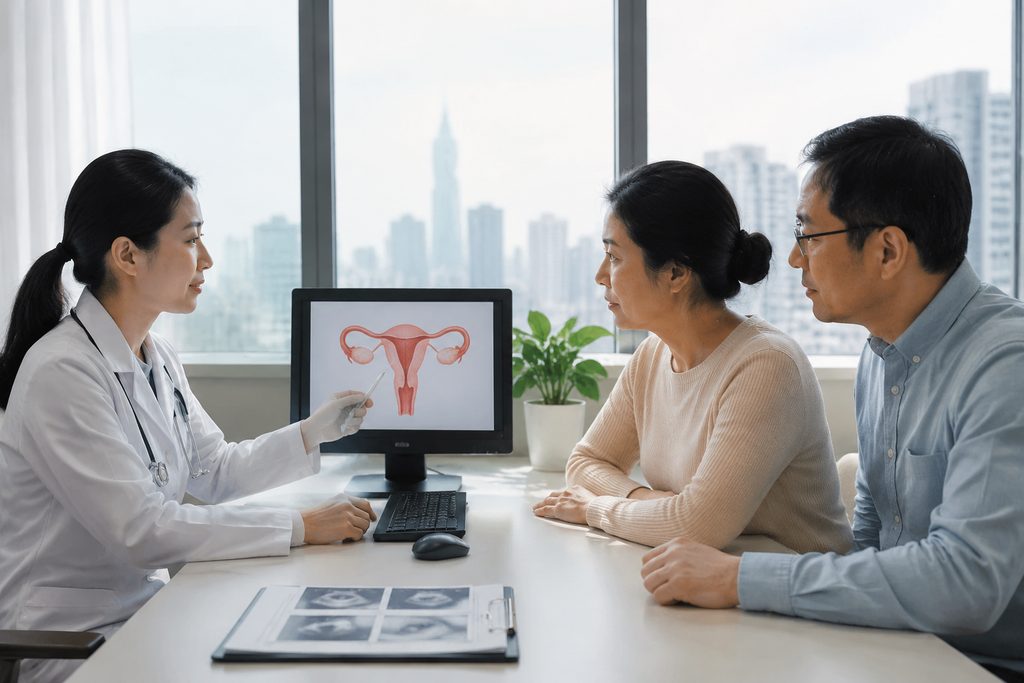
According to a 2023 report in Reproductive BioMedicine Online, live birth rates per embryo transfer for women aged 45–46 hover around 3%, and after 47, they approach zero with own eggs. That number lands hard. You are not imagining the difficulty. The question “how old is too old for IVF” is not theoretical for you — it is the wall you keep hitting in every consultation, every forum thread, every late-night search. And yet, the IVF age limit China clinics actually apply is often more flexible than what patients from the US, UK, or Australia are told at home. Not because the biology changes at the border. Because the regulatory environment, clinical volume, and cost structure do.
This article walks through what age limits really mean, what the data says for women over 45, and how China’s reproductive medicine landscape handles older patients. We will not promise miracles. We will give you the numbers, the honest failure modes, and the decision framework that helps you stop guessing.
How This Actually Works, Step by Step
You are sitting at home with a folder of hormone panels, ultrasound reports, and maybe one or two failed cycles behind you. Here is the real sequence from where you are now to a treatment decision in China.
First, you send your existing records — AMH, FSH, antral follicle count, any previous stimulation protocols and outcomes. These get translated into Chinese for clinical review. A reproductive endocrinologist at a hospital in Shanghai, Beijing, or Guangzhou reviews them. This is not a consultation yet. It is a feasibility screen.
Second, you get a written assessment back. It will state plainly whether your ovarian reserve markers suggest any realistic chance with your own eggs, or whether donor eggs are the only medically sensible path. Many patients hear this for the first time in writing, which is different from hearing it in a rushed 15-minute appointment.
Third, if the assessment says proceed, you schedule a video consultation with the clinical team. You discuss protocol options, medication plans, and the clinic’s specific age policies. Some clinics in China set a firm upper age limit for own-egg IVF — often 48, sometimes 50 — while others evaluate case by case. The IVF age limit China patients encounter depends heavily on the specific hospital and whether it is a public hospital’s international department or a private fertility center.
Fourth, you decide. If you proceed, the clinic sends you a treatment calendar, medication list, and instructions for baseline scans. You arrange travel. You plan for a minimum stay of two to three weeks for one stimulation and retrieval cycle.
The Hard Biology: What Age Actually Does to IVF Outcomes
Let’s be blunt about the mechanism. A woman is born with all the eggs she will ever have. By age 40, roughly 3% of that original pool remains. By 45, it is well under 1%. But quantity is only half the problem. Egg quality declines in parallel because chromosomal errors accumulate over decades. A 30-year-old’s eggs produce embryos with normal chromosomes about 40–50% of the time. At 44, that figure drops below 10%.
This is why how old is too old for IVF with own eggs has a biological answer that no clinic can override. The American Society for Reproductive Medicine (ASRM) states that after age 43, the chance of a live birth from own-egg IVF is under 5% per cycle. The UK’s Human Fertilisation and Embryology Authority (HFEA) reports live birth rates per embryo transferred of 4% for ages 43–44 and 2% for ages 45 and older. These are not opinions. They are population-level outcomes from hundreds of thousands of cycles.
So when you ask whether 48 is too old, the honest answer is: for own eggs, the probability is very low. Not zero. But low enough that any clinic promising strong odds is not being honest with you.
Any clinic that quotes you “good chances” for own-egg IVF after 47 without first reviewing your AMH, FSH, and antral follicle count is selling hope, not medicine. Walk away.
What Changes After 45: The Donor Egg Conversation
Here is the pivot most older patients eventually face. Donor eggs from a woman in her 20s reset the biological clock. Live birth rates per transfer with donor eggs run 50–60% in many clinics, regardless of the recipient’s age, because the egg — not the uterus — is the primary driver of chromosomal normalcy.
China’s regulatory framework for egg donation is strict. Donation is anonymous, altruistic, and available only through licensed fertility centers. Wait times vary. Some clinics in Shanghai and Beijing have donor egg programs with waitlists measured in months, not years, though this fluctuates. The cost is significantly lower than in the US, where a donor egg cycle often exceeds $30,000–40,000. In China, donor egg IVF typically ranges from $8,000 to $15,000 per cycle, depending on the clinic and medication protocol. This is one reason the search term cost of IVF for women over 50 abroad brings patients to Chinese clinics.
But understand the constraint: donor eggs in China are scarce relative to demand. The process is regulated. You cannot select a donor’s photo or detailed profile. You receive non-identifying medical and basic demographic information. For some patients, this is a dealbreaker. For others, it is a workable trade-off.
A Realistic Timeline
Let’s map the actual calendar. This is where most patients underestimate the waiting steps.
| Stage | Duration | What Happens |
|---|---|---|
| Document translation and record review | 5–10 business days | Your records are translated and reviewed by a reproductive specialist for feasibility. |
| Written assessment | 3–5 business days after review | You receive a clinical opinion on whether own-egg or donor-egg IVF is appropriate. |
| Video consultation scheduling | 1–2 weeks lead time | Specialist availability varies; international departments often book faster. |
| Visa processing (S2) | 2–4 weeks | S2 short-stay visa for medical treatment, with hospital invitation letter as supporting document. |
| Travel and baseline testing | 3–5 days | Arrival, initial ultrasound, bloodwork, medication start. |
| Ovarian stimulation | 10–14 days | Daily injections with monitoring scans every 2–3 days. |
| Egg retrieval | 1 day | Outpatient procedure under sedation. You rest 24–48 hours afterward. |
| Embryo development and transfer | 3–5 days after retrieval | Fresh transfer or freeze-all with transfer in a later cycle. |
| Pregnancy test | 10–12 days after transfer | Blood hCG test at the clinic or at home. |
Total door-to-door: roughly 6–10 weeks from first contact to pregnancy test, assuming no delays. Document translation and visa processing are the two steps people forget. They add real time.
What Can Go Wrong — and What Happens Then
The failure modes are specific and predictable. Knowing them in advance changes how you cope.
Cancelled cycle due to poor response. You start stimulation and your ovaries produce two follicles. The clinic cancels retrieval because the risk-benefit ratio is poor. What happens then: you stop medications, wait for your next cycle, and discuss protocol changes — higher dose, different medication, or moving to donor eggs. Cancellation rates for women over 44 exceed 30% in most published series.
Zero euploid embryos. You retrieve eggs, fertilize them, and every embryo comes back with chromosomal abnormalities after PGT-A testing. This is the most common outcome for own-egg IVF at 45+. What happens then: the clinic discusses whether another cycle makes sense or whether donor eggs are the only viable path. Some patients choose to stop. That is a valid decision.
Visa delay. Your S2 visa takes longer than expected. Your cycle window shifts. What happens then: clinics in China handle this routinely. They adjust the protocol start date. You are not the first international patient to reschedule.
Thin lining or transfer cancellation. Your uterine lining does not thicken adequately for transfer. What happens then: embryos are frozen, and transfer is delayed to a subsequent cycle with a modified protocol. This is common and not a failure of the overall plan.
Why China? The Volume Argument and the Cost Reality
China performs more IVF cycles annually than any other country — over 1 million cycles per year according to 2022 data from the Chinese Society of Reproductive Medicine. That volume produces clinical teams who have seen every ovarian response pattern, every protocol complication, every difficult case. A senior reproductive endocrinologist at a major Shanghai fertility center may manage more challenging cases in one year than a Western colleague sees in five.
IVF success rates over 45 China clinics report are not dramatically different from Western numbers for own eggs — and any clinic claiming otherwise should be scrutinized. But the volume argument matters for older patients in a different way: Chinese clinics are often more willing to attempt a cycle that Western clinics would decline, provided the patient understands the low probability. This is a double-edged sword. Some patients want that chance. Others need a clinic that will tell them no.
Cost is the other factor. A single own-egg IVF cycle in the US averages $15,000–25,000 without medication. In China, private and international-department cycles at top clinics range from $6,000 to $12,000 including medication. That is why the search phrase cost of IVF for women over 50 abroad keeps surfacing. The math changes when a cycle costs half or a third of what it does at home. Patients can afford two or three attempts in China for the price of one in California or London.
For older patients specifically, best IVF clinic Shanghai older women is a search that leads to several institutions with dedicated international patient departments. Shanghai’s fertility centers — including those affiliated with Fudan University and Shanghai Jiao Tong University — handle significant international volume and have English-speaking coordination staff. Our reproductive medicine department rankings break down which hospitals rank among China’s top 10 for reproductive medicine under the Fudan specialty reputation system.
Practical Considerations: Records, Visa, Payment, and Follow-Up
Records. You need your complete fertility history: day-3 FSH, AMH, antral follicle count, any prior stimulation protocols with medication doses and outcomes, semen analysis if applicable, and any genetic testing results. Incomplete records delay the feasibility review. Get everything translated before you start.
Visa. Medical treatment in China uses the S2 short-stay visa, with the hospital’s invitation letter as a key supporting document. Processing takes 2–4 weeks depending on your home country’s Chinese embassy or consulate. Your accompanying partner or family member also applies for an S2. We covered the full process in our patient coordination guide.
Payment. Public hospital international departments and private fertility centers generally require prepayment for each treatment stage. You pay for the cycle before medications begin. Insurance rarely covers IVF for international patients; expect to pay out of pocket. Keep all receipts for potential reimbursement claims at home.
Language. Even in international departments, the nursing staff and lab technicians may speak limited English. Having a bilingual medical companion for the stimulation monitoring visits removes a daily friction point. The cost — from $300 per day — is small relative to the cycle cost and the emotional toll of navigating a foreign hospital alone.
Follow-up at home. If a transfer succeeds, you return home and continue early pregnancy monitoring with your local OB-GYN. The Chinese clinic will provide a discharge summary and medication instructions in English. Some clinics offer follow-up video consultations through the first trimester. Clarify this before you leave.
Frequently Asked Questions
Yes, in many clinics — but the real question is whether you should use your own eggs. At 48, own-egg live birth rates are under 2% per cycle in published data. Some Chinese clinics will accept you for own-egg IVF with full informed consent; others will recommend donor eggs as the only medically realistic option. The IVF age limit China clinics set for own-egg treatment is typically 48–50, while donor-egg treatment may extend to 52 or beyond depending on maternal health screening.
There is no single national law setting an IVF age limit. Individual hospitals set their own policies. Public hospital reproductive centers often cap own-egg IVF at 48–50. Private fertility centers may be more flexible. Donor-egg IVF has a higher age ceiling, often 52–55, subject to cardiovascular and obstetric clearance. You must confirm the specific clinic’s policy before committing to travel.
Rarely. Live birth rates per cycle for women 45 and older with own eggs are consistently reported at 1–3% across large registries. Success stories exist, but they are outliers, not the norm. A realistic consultation will tell you this directly. If you proceed with own eggs after 45, you should understand that multiple cycles may be needed for even a small chance, and that chance may still not materialize.
An own-egg IVF cycle at a reputable Chinese fertility center ranges from $6,000 to $12,000 including medications and monitoring. Donor-egg cycles typically run $8,000 to $15,000. This compares to $15,000–25,000 for own-egg IVF in the US, and $30,000–40,000 for donor-egg cycles. Final pricing varies by hospital, protocol, and whether you use a private or public international department.
For most healthy women under 55, yes. The main risks are not travel-related but pregnancy-related: older mothers face higher rates of gestational hypertension, preeclampsia, and gestational diabetes. Chinese clinics require cardiac and metabolic screening before accepting older patients. If you have pre-existing hypertension, diabetes, or cardiac conditions, get clearance from your home physician before planning treatment.
Your Next Step
The decision to pursue IVF at an advanced age is not one to make alone or under pressure. Take the data seriously. Take your own AMH and FSH numbers seriously. And if China is on your shortlist, start with a written feasibility review — not with a plane ticket.
We help international patients connect with top-tier Chinese reproductive medicine departments, coordinate record translation, arrange video consultations, and provide bilingual support on the ground. We do not practice medicine, we do not guarantee outcomes, and we will not tell you what you want to hear. We will tell you what the data and the clinical review support. If you are ready to understand your real options, request a free consultation and we will walk you through the first step. That first step is smaller than you think.
Age sets the odds. It does not write the final sentence. But you deserve a clinical team that reads you the numbers honestly — and then helps you decide what to do with them.
For more medical information and treatment options in China, visit chinamedservices.com (China Medical Services).
