Can I Prevent New Kidney Stones? Proven Strategies and Where Surgery Fits In
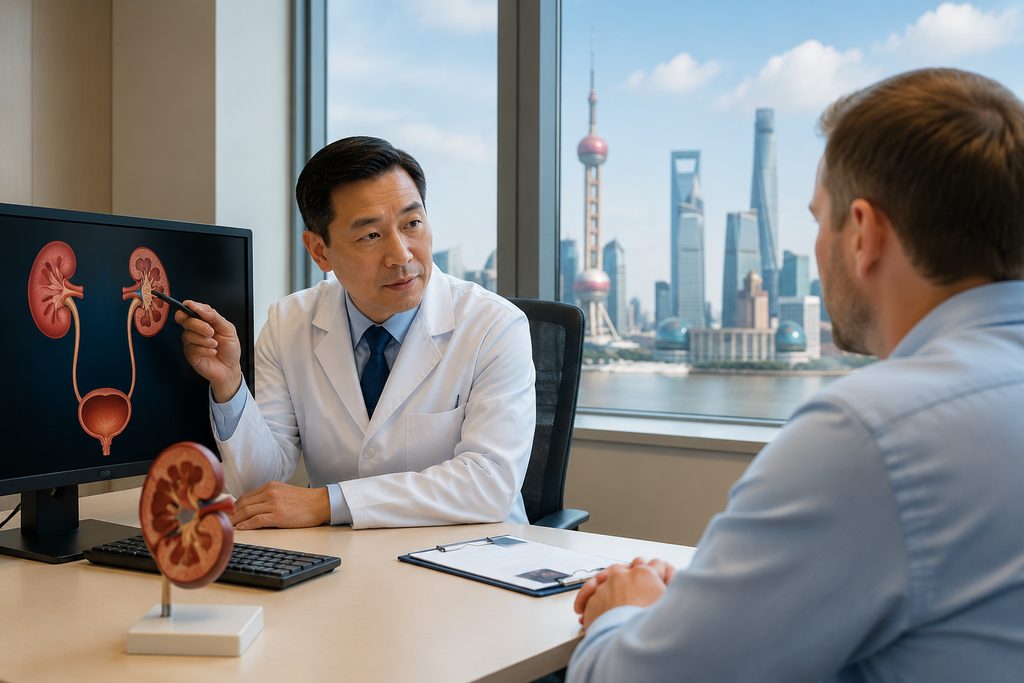
When 38-year-old Daniel passed his third kidney stone in two years, the emergency room doctor handed him a strainer and a pamphlet. No one explained why his body kept manufacturing these jagged crystals. No one mentioned metabolic testing. He left with painkillers and a vague instruction to “drink more water.” Six months later, a CT scan revealed another 7mm stone lodged in his left ureter. Daniel’s story is not unusual. For the approximately 1 in 10 people who will develop a kidney stone at some point, the real question is rarely about surviving the first episode. It is about preventing the next one. The recurrence rate without intervention sits near 50% within five years. With targeted prevention, that number drops dramatically. But prevention is not one-size-fits-all. And for some patients, surgery becomes part of the prevention strategy itself.
Key Takeaways
- Kidney stone recurrence affects roughly 50% of patients within 5-7 years without targeted prevention; with metabolic evaluation and dietary changes, recurrence drops below 10-15%.
- 24-hour urine collection and stone composition analysis are the gold standard for identifying why stones form, yet fewer than 10% of first-time stone formers receive this testing.
- Preventive surgery — removing large residual fragments or correcting anatomical obstructions — can reduce future stone events, with costs in China typically 70-80% lower than in the United States.
- Prevention requires knowing your stone type. Calcium oxalate, uric acid, struvite, and cystine stones each demand different dietary and medical strategies.
The Problem: Recurrence Is the Rule, Not the Exception
Kidney stones are not a one-time event for most patients. The American Urological Association reports that without preventive measures, the 5-year recurrence rate is 35-50%. After 10 years, it climbs to 50-75%. This is not a rare complication. It is the expected trajectory.
What causes repeated kidney stones? The answer is almost always metabolic. Low urine volume, hypercalciuria (excess calcium in urine), hyperoxaluria (excess oxalate), hypocitraturia (too little citrate), and hyperuricosuria (excess uric acid) are the usual culprits. Each has a different fix. Drinking more water helps everyone. But a patient with hyperoxaluria who simply drinks more water while eating spinach salads daily will keep making stones. The prevention strategy must match the metabolic defect.
The gap between what science knows and what patients receive is wide. A 2023 review in Nature Reviews Urology noted that fewer than 10% of high-risk stone formers in the United States undergo complete metabolic evaluation. Most patients are told to drink fluids and avoid salt. That is generic advice. It is not prevention.
Why Targeted Prevention Works — and Where Surgery Fits
Prevention starts with understanding your specific stone chemistry. This is not optional. Calcium oxalate stones — the most common type, accounting for about 70-80% of cases — respond differently than uric acid stones, which make up 5-10%. Struvite stones, linked to chronic urinary tract infections, require a completely different approach. Cystine stones, caused by a rare genetic disorder, need lifelong medical management.
Metabolic Testing: The Foundation of Prevention
A 24-hour urine collection measures urine volume, pH, calcium, oxalate, citrate, uric acid, sodium, and creatinine. This single test identifies the metabolic driver behind stone formation in the majority of recurrent stone formers. The results guide everything: which foods to limit, which medications to consider, how much fluid is actually needed. Without this data, prevention is guesswork.
Stone composition analysis matters equally. If you passed a stone and did not have it analyzed, you lost critical information. The crystal type tells your doctor which metabolic pathway is failing. A calcium oxalate stone suggests one set of dietary interventions. A uric acid stone suggests another — often involving urine alkalinization with potassium citrate rather than calcium restriction.
Can Diet Prevent Kidney Stones Recurrence? The Evidence Says Yes — With Precision
The DASH diet, originally designed for hypertension, has shown remarkable effects on stone risk. A study in the Clinical Journal of the American Society of Nephrology found that higher DASH-style diet scores were associated with a 40-45% lower risk of kidney stones. The diet emphasizes fruits, vegetables, whole grains, and low-fat dairy while limiting sodium, red meat, and sugary beverages. It works because it raises urine citrate and lowers urine calcium and uric acid simultaneously.
But diet alone is not enough for every patient. Those with severe hypercalciuria may need thiazide diuretics. Those with hyperuricosuria may need allopurinol. Those with hypocitraturia benefit from potassium citrate supplementation. The point is that prevention is medical, not just behavioral. And it requires a urologist or nephrologist who takes recurrence seriously.
How Surgery Can Be a Prevention Tool
This is where the conversation shifts. Most patients think of surgery as treatment for an existing stone. But residual fragments after shock wave lithotripsy or ureteroscopy can serve as seeds for new stone growth. A 2022 meta-analysis in European Urology found that patients with residual fragments larger than 4mm had a significantly higher risk of stone-related events within two years compared to those who were stone-free. Complete stone clearance matters.
Percutaneous nephrolithotomy (PCNL) and flexible ureteroscopy with laser lithotripsy are the two primary surgical approaches for larger stones. PCNL, which involves a small incision in the back to access the kidney directly, achieves stone-free rates of 80-95% for stones over 2cm. Flexible ureteroscopy, which threads a scope through the urethra and bladder up to the kidney, offers stone-free rates of 70-90% for smaller stones. Both are available at top Chinese hospitals with high procedural volumes.
The top-ranked hospitals in China perform these procedures at volumes that dwarf most Western centers. A single high-volume urology department in Beijing might complete over 3,000 stone surgeries annually. That repetition translates into technical proficiency and lower complication rates.
Kidney Stone Prevention Surgery China Cost: What the Numbers Actually Look Like
For patients who need surgical stone removal as part of their prevention strategy — clearing large stones or residual fragments before they cause another episode — the cost difference between China and Western countries is substantial. The term “kidney stone prevention surgery China cost” reflects a growing search interest from international patients evaluating their options.
Here is a realistic comparison based on published hospital price lists and patient-reported data:
| Procedure | China (Top Public Hospital) | United States (Average) | United Kingdom (Private) |
|---|---|---|---|
| Flexible Ureteroscopy with Laser Lithotripsy | $3,000 – $6,000 | $15,000 – $30,000 | $10,000 – $18,000 |
| Percutaneous Nephrolithotomy (PCNL) | $5,000 – $9,000 | $25,000 – $45,000 | $18,000 – $28,000 |
| Metabolic Evaluation (24-hour urine + blood work + stone analysis) | $150 – $400 | $800 – $2,500 | $600 – $1,800 |
| Follow-up Consultation with Urologist | $30 – $80 | $200 – $500 | $150 – $350 |
These figures vary by hospital and case complexity. A complex staghorn calculus requiring multiple access tracts during PCNL will cost more than a straightforward lower-pole stone. But the pattern holds: Chinese top-tier public hospitals deliver surgical care at 70-80% below US private rates, with comparable stone-free outcomes.
What drives the lower cost? Several structural factors. Physician salaries are lower in China, though top urologists at major centers are well-compensated. Hospital overhead is leaner. Device costs for ureteroscopes and lasers have been driven down by domestic manufacturing competition. And the sheer volume of procedures allows for efficient operating room turnover. None of these factors compromise quality — they reflect a different economic model.
What to Look for in a Stone Prevention Program — and What to Avoid
Not all stone prevention advice is created equal. The internet is full of dangerous oversimplifications. Some patients are told to avoid all calcium, which actually increases stone risk by raising oxalate absorption. Others are told to drink lemon juice, which helps only mildly and only for certain stone types. The worst advice is the one-size-fits-all approach.
Here is what a legitimate prevention program includes:
- Stone analysis of any passed or surgically removed stone. If you have a stone at home, save it. It is diagnostic gold.
- 24-hour urine collection on your normal diet, not a modified one. You need to see what your body does under real conditions.
- Serum testing for calcium, uric acid, parathyroid hormone, and kidney function. Primary hyperparathyroidism causes stones in about 5% of recurrent stone formers and is surgically curable.
- Imaging follow-up at 6 and 12 months after an episode to check for new stone formation or residual fragment growth.
- Dietary counseling from someone who understands stone chemistry, not a generic nutritionist.
What should make you wary? Any provider who promises a “cure” without metabolic testing. Any advice to eliminate entire food groups without knowing your stone type. Any clinic that treats stones as an acute problem only, with no follow-up protocol.
For international patients considering urology departments at major Chinese hospitals, the key question is whether the department offers integrated stone prevention services, not just surgical intervention. The best centers run dedicated stone clinics where metabolic evaluation, dietary counseling, and surgical treatment happen under one roof.
Practical Considerations: Getting Evaluated and Treated Abroad
If you are considering traveling to China for stone evaluation or surgery, several practical matters need attention before you book a flight.
Medical records. Bring every prior imaging study — CT scans, ultrasounds, X-rays — on a CD or USB drive, not just printed reports. Bring operative notes from any prior stone procedures. Bring a list of all medications and supplements, including doses. If you have a stone sample, bring it in a sealed container. The more complete your history, the more useful your first consultation will be.
Visa category. For medical treatment in China, the applicable short-stay visa is the S2 visa, which covers private affairs including medical treatment. The S1 visa applies to stays exceeding 180 days. Supporting documents from the treating hospital — an invitation letter or treatment confirmation — are typically required. Requirements vary by embassy and consulate, so check with your local Chinese diplomatic mission well in advance. Approval is never guaranteed.
Payment and insurance. Chinese public hospitals generally require prepayment for surgical procedures. Most international insurance plans operate on a reimbursement model — you pay upfront, then submit claims. Some private international hospitals in China offer direct billing, but they typically charge 2-3 times the public hospital rate for the same procedure. Understand your coverage before committing.
Language and navigation. Top Chinese hospitals are massive. A single urology department might see 500 outpatients per day. Signage is increasingly bilingual in major cities like Beijing and Shanghai, but the operational reality — registration queues, payment windows, pharmacy pickups — remains overwhelmingly Chinese-language. A bilingual medical companion who knows the hospital layout can save hours of confusion. This is not a luxury for international patients; it is often the difference between a manageable visit and a frustrating one.
Follow-up after returning home. Stone prevention is a long game. You will need repeat 24-hour urine collections and imaging at intervals after your initial evaluation. Establish a follow-up plan with a local urologist before you leave. Chinese hospitals can provide English-language discharge summaries and treatment records, but ongoing care belongs with a physician near you.
Frequently Asked Questions
If you have imaging evidence of stones but never passed one for analysis, your doctor can still make an educated guess based on stone density on CT (measured in Hounsfield units), urine pH, and 24-hour urine chemistry. Uric acid stones are radiolucent on plain X-ray but visible on CT, and they typically form in acidic urine. Calcium oxalate stones are dense and visible on all imaging. In some cases, a stone can be retrieved during ureteroscopy and sent for analysis, which provides the definitive answer.
At top-ranked public hospitals, the safety record for stone surgery is comparable to high-volume Western centers. The key is hospital selection. China has over 35,000 hospitals, but only a small fraction — roughly the top 5% — are ranked by the Fudan University hospital ranking system or accredited by JCI. Those are the institutions where international patients should focus. Complication rates for ureteroscopy and PCNL at these centers are in line with published international benchmarks, and procedural volumes are often higher.
Not necessarily. Asymptomatic stones smaller than 5-6mm in the kidney often pass without intervention and may not require surgery. The decision depends on stone size, location, composition if known, your occupation (pilots and long-haul drivers have different risk tolerance), and whether you have a history of stone-related complications. A stone that is growing on serial imaging or one that has already caused obstruction or infection warrants earlier intervention. This is a decision for a urologist who has seen your imaging and understands your full history.
It depends on your metabolic profile. For patients with mild abnormalities — slightly low urine volume, mildly elevated sodium intake, borderline low citrate — dietary changes alone often suffice. For patients with severe hypercalciuria, marked hyperoxaluria, or recurrent uric acid stones despite dietary modification, medication is usually necessary. Thiazide diuretics reduce urine calcium. Allopurinol lowers uric acid. Potassium citrate raises urine citrate and pH. These medications are effective but require monitoring and are not interchangeable. The 24-hour urine test tells you which path you need.
A metabolic evaluation can be completed in 2-3 days if you arrive prepared: blood draw, 24-hour urine collection, imaging review, and urology consultation. If surgery is indicated, flexible ureteroscopy typically requires a 2-4 day hospital stay. PCNL requires 4-7 days. Add 1-2 days for pre-operative clearance (ECG, chest X-ray, blood work) and you are looking at roughly one week for ureteroscopy or 10-14 days for PCNL from arrival to discharge. This timeline assumes no complications and that the hospital has operating room availability, which can vary by season and department load.
Your Next Step
The most important decision you can make after a kidney stone is not which water bottle to buy. It is whether to pursue a real metabolic evaluation. If you have had two or more stones, or one stone with a strong family history, or a stone that required surgery, you qualify as a high-risk stone former. That means you deserve more than generic advice.
Our team at China Medical Services helps international patients connect with top-ranked urology departments in China for comprehensive stone evaluation and surgical treatment when needed. We are not a hospital and we do not provide medical advice or diagnoses. What we do is handle the logistics — hospital matching, appointment coordination, bilingual interpretation, visa guidance, and follow-up planning — so you can focus on the medical decisions that matter. Start with a conversation. Ask questions. Understand your options. The next stone does not have to be inevitable.
For more medical information and treatment options in China, visit chinamedservices.com (China Medical Services).
