Comprehensive Eye Exam in China: What to Know Before You Go
Comprehensive Eye Exam in China: What to Know
You have probably heard that getting medical care abroad means gambling with quality. For a comprehensive eye exam in China, the opposite is closer to the truth. A full workup at a top-tier Chinese hospital — dilated fundus exam, OCT retinal imaging, visual field testing, intraocular pressure — typically runs $150 to $500 out of pocket. The same set of tests in the United States often lands between $400 and $900 before insurance. That gap is real, but it is not the whole story.
The catch is access. China’s best public hospitals do not let you book a routine outpatient slot from overseas. You show up, you queue, you register on the day. For a traveler with three days in Shanghai, that single fact changes everything about how you plan.
Comprehensive Eye Exam Cost in China: The Short Answer
Expect $150 to $500 for a complete private or international-department exam, and $60 to $200 at a standard public hospital ophthalmology clinic. Prices vary by hospital tier, city, and how many imaging tests your eyes actually need.
A basic vision-and-pressure check is cheap. What drives cost upward is imaging. Optical coherence tomography (OCT), fundus photography, corneal topography, and visual field testing each add $30 to $120 depending on the facility. If a doctor suspects glaucoma, diabetic retinopathy, or macular degeneration, the test list grows fast — and so does the bill.
Who This Is Right For — and Who It Isn’t
An eye exam in China fits a specific kind of traveler. It does not fit everyone, and pretending otherwise wastes your money.
Typically a good fit:
- You are already in China for work, study, or family, and need a thorough check without flying home.
- You are uninsured or underinsured at home and face a $600+ quote for the same tests.
- You want a second read on a diagnosis — a Chinese retinal specialist reviewing your existing scans.
- You are combining the exam with a broader health screening or a TCM consultation.
Probably not the right call:
- You have acute eye pain, sudden vision loss, or a suspected retinal detachment. That is an emergency. Go to the nearest emergency department, wherever you are.
- You need ongoing management of a complex condition with a doctor who knows your history. Continuity matters more than price.
- You are on a two-day layover with no flexibility. Queues at public hospitals can eat an entire morning.
- You expect a Western-style appointment where you sit with one doctor for 45 minutes. Public hospitals are high-volume by design.
The Options, Compared
Three real pathways exist, and they are not interchangeable. Here is how they stack up.
| Pathway | Typical Cost (USD) | Wait / Booking | English Support | Best For |
|---|---|---|---|---|
| Public hospital, standard ophthalmology clinic | $60–$200 | Same-day queue, arrive early | Limited; interpreter often needed | Budget-conscious, flexible travelers |
| Public hospital international / VIP department | $250–$500 | Often bookable in advance | Usually available | Travelers who need a fixed date |
| Private international hospital | $300–$700 | Online booking, short waits | Full English service | Insurance holders, families, expats |
Which column suits you depends on one question: do you need a guaranteed appointment time? If yes, the public standard clinic is off the table. If you have a free morning and patience, it is the cheapest competent option in the country.
Is an Eye Exam in China Safe for Tourists?
Yes, with conditions. The equipment at major Chinese ophthalmology departments is current — OCT, fundus cameras, and automated perimeters are standard at tertiary hospitals. Sterilization protocols at top-tier facilities meet international norms, and single-use contact tonometer tips are common.
Where tourists get into trouble is not safety. It is communication. If a doctor finds something suspicious and you cannot understand the explanation, you leave with a piece of paper you cannot read and a worry you cannot resolve.
Two practical safeguards. First, request your report in English where available — many international departments provide it. Second, bring a bilingual companion or arrange interpretation. Our team at China Medical Services handles exactly this gap, but you can also travel with a bilingual friend and do fine.
How Long Does a Comprehensive Eye Exam Take in China?
Plan for two to four hours at a public hospital, and 60 to 90 minutes at a private international clinic. The clinical portion is quick. The logistics are not.
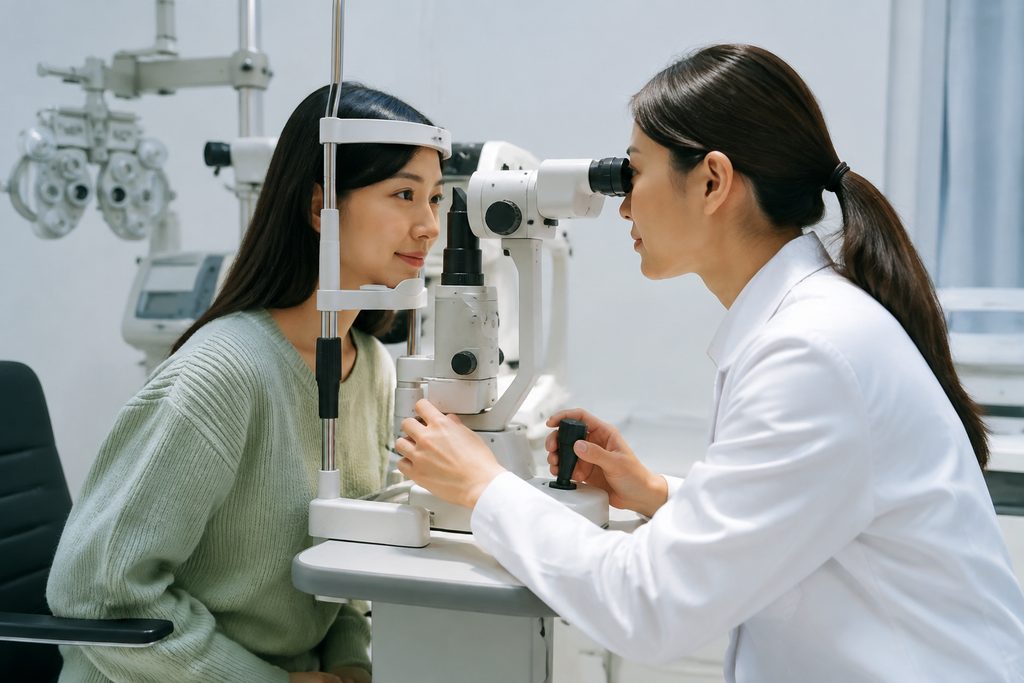
At a public hospital, the sequence usually runs like this: registration and payment window, then triage, then vision and pressure checks, then the doctor’s slit-lamp exam, then a separate queue for each imaging test, then back to the doctor with results. Each station has its own line. A single OCT scan can mean a 40-minute wait on a busy morning.
Private hospitals compress this. You book a time, you arrive, and the whole flow happens in one department with staff guiding you between rooms. You pay roughly double for that convenience — and for many travelers, it is worth every dollar.
Practical Considerations for Booking in Beijing or Shanghai
If you want to book a comprehensive eye exam in Beijing, the practical route for a foreigner is the international department of a major teaching hospital, or a private facility. Walk-in registration at a standard public clinic works, but you will need your passport, a Chinese payment method, and tolerance for queueing.
Shanghai is the easier city for most first-timers. The concentration of international hospitals and English-speaking ophthalmology staff is higher, and the Shanghai city page lists facilities by tier so you can compare before you commit. For a broader view of what is available nationally, the ophthalmology department rankings show which hospitals carry the strongest reputation in eye care.
Payment matters more than people expect. Public hospitals require payment upfront and you claim reimbursement from your insurer afterward. Private international hospitals frequently bill your insurance directly — but confirm this before the appointment, not after. Not every policy is accepted, and not every procedure is covered.
On visas: if you are entering China specifically for medical treatment, the applicable short-stay category is the S2 visa, with accompanying family members applying under the same category. Requirements shift, so verify current rules with your nearest Chinese embassy or consulate and bring supporting hospital documentation. Do not rely on a commercial M visa for medical purposes — that category is for trade and business activity, and using it for treatment creates problems at the border.
One more thing worth saying plainly. If you are considering a medical tourism eye exam package in China, read the inclusions carefully. Some packages bundle the exam with hotel nights and airport transfers, which can be convenient. Others pad the price with services you would never use. Compare the itemized test list against what you actually need.
What the Exam Should Include
A genuinely comprehensive exam covers more than reading letters off a wall. Here is what to expect at a good facility:
- Refraction and visual acuity testing
- Intraocular pressure measurement for glaucoma screening
- Slit-lamp examination of the anterior segment
- Dilated fundus examination of the retina and optic nerve
- OCT imaging if retinal or optic nerve disease is suspected
- Visual field testing when glaucoma is a concern
If a clinic offers only the first three and calls it comprehensive, it is not. Ask what imaging is included before you pay.
Frequently Asked Questions
At a standard public hospital, usually yes — you register on arrival and queue. But you cannot reserve a specific doctor or time slot from overseas. If your schedule is tight, use an international department or private hospital instead.
At private international hospitals, generally yes. At public hospitals, often not. Some international departments provide English reports, but day-to-day conversation may still need interpretation. Assume you will need help unless you have confirmed otherwise.
You will receive a report and recommendations. Treatment decisions are yours, made with a qualified ophthalmologist — we do not diagnose or prescribe. If you want a second opinion before acting, a written review of your scans by a specialist is a reasonable next step, and it costs far less than flying back.
At top-tier hospitals, yes. OCT, fundus photography, and automated perimetry are standard. The variable is not the machinery — it is whether you can understand the results and act on them.
Your Next Step
The core message is simple: a comprehensive eye exam in China is affordable, technically solid, and logistically awkward if you try to do it blind. The money you save is real. The time you spend queueing is also real.
We are China Medical Services, a coordination service — not a hospital, not a clinic, and we do not diagnose or treat anyone. What we do is match you with the right facility, handle appointment coordination, provide bilingual accompaniment through registration and testing, and help with visa and travel logistics so your morning is not spent lost in a corridor. If you would like to talk through your situation before committing to anything, start with a free consultation. No pressure, and no obligation.
For more medical information and treatment options in China, visit chinamedservices.com (China Medical Services).
