Wuhan Tongji Hospital Urology for International Patients: Costs, Booking, and What to Expect
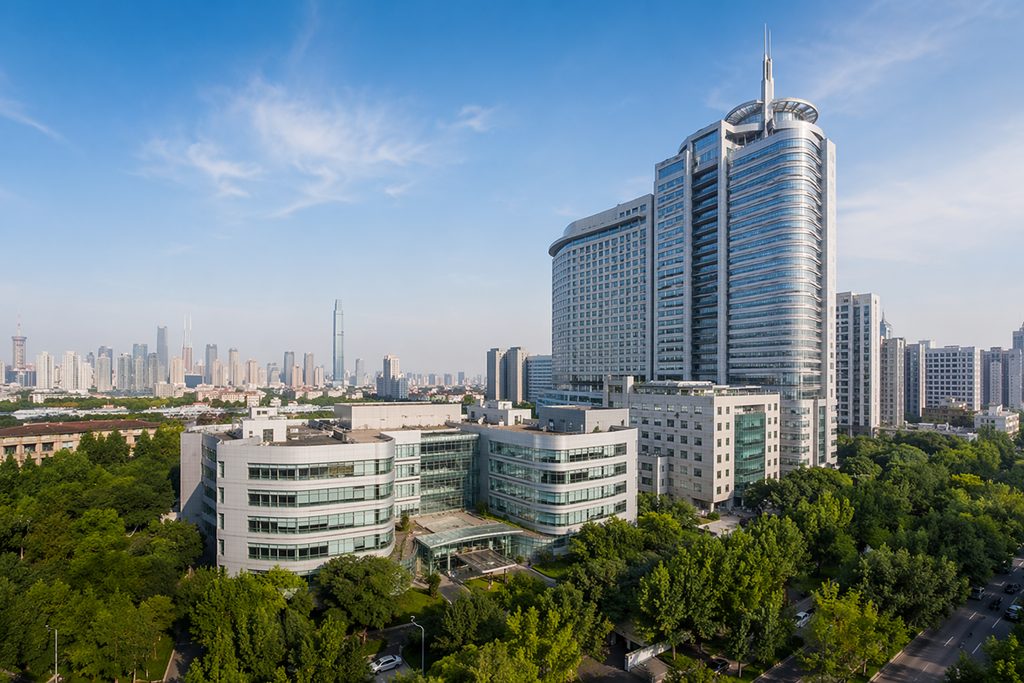
You’ve probably heard that getting surgery in China means navigating chaos alone. The reality at a hospital performing over 20,000 urological procedures annually is far more structured than that. Wuhan Tongji Hospital’s urology department sits inside one of China’s largest medical centers, and for international patients, the path to treatment is clearer than most people assume. But the Wuhan Tongji Hospital urology international patient price question doesn’t have a one-line answer. It depends on your condition, the surgeon’s seniority, and whether you use the standard public channel or the international VIP pathway.
Wuhan Tongji Hospital Urology: The Short Answer
Yes, Wuhan Tongji Hospital accepts international patients for urological evaluation and surgery. The department ranks among China’s top programs for complex stone disease, urological oncology, and minimally invasive procedures. You cannot simply email the department and book a surgery date. The standard public pathway requires an in-person consultation first. The international channel allows pre-arrival coordination, but costs roughly 1.5 to 2 times the standard rate.
That gap matters. A routine ureteroscopy for a kidney stone might run $3,000 to $6,000 through the public channel, while the international VIP route for the same procedure typically lands between $6,000 and $12,000. Both figures remain dramatically below U.S. pricing, where the identical procedure often exceeds $25,000.
Who This Is Right For — and Who It Isn’t
International patients who benefit most from Tongji’s urology program share a few traits. They have a confirmed diagnosis with imaging already done. They’re seeking a second opinion or definitive surgery. They can commit to staying in Wuhan for at least one to two weeks.
Good candidates typically include:
- Patients with complex or recurrent kidney stones that failed treatment at home
- Men with elevated PSA or diagnosed prostate cancer seeking robotic surgery options
- Patients needing ureteral reconstruction or stricture repair
- Those with large renal masses where nephron-sparing surgery is preferred
This path is not for everyone.
If your condition is stable and well-managed locally, flying to Wuhan adds cost without clear benefit. If you need emergency care, go to the nearest hospital — international coordination takes days, not hours. And if you’re not prepared for the reality of a Chinese public hospital environment, the private international hospitals in Shanghai may suit you better.
The Options, Compared
You have three genuine routes for urological care in China. They differ in cost, speed, and comfort. Here’s how they stack up for a typical kidney stone surgery:
| Route | Typical Cost (USD) | Wait Time | English Support | Best For |
|---|---|---|---|---|
| Public channel, self-navigated | $3,000–6,000 | 1–3 days for consultation, surgery scheduled after | Minimal | Budget-focused patients with Chinese-speaking support |
| International/VIP department | $6,000–12,000 | Pre-arranged consultation, surgery within days | Dedicated coordinator | Most international patients |
| Private international hospital (e.g., United Family, Jiahui) | $15,000–30,000 | Minimal | Full English environment | Patients prioritizing Western-style comfort |
If you have a straightforward stone and a local friend who speaks Chinese, the public route works. Most overseas patients, though, choose the international department at Tongji. You get the same surgeons with logistical support. The private hospitals are excellent but cost three to five times more for equivalent clinical outcomes.
What Makes Tongji’s Urology Department Different
Tongji Hospital, affiliated with Huazhong University of Science and Technology, operates one of the largest urology programs in central China. The department handles high volumes that translate directly into surgical experience. That volume matters for procedures like percutaneous nephrolithotomy (PCNL) and robotic prostatectomy, where outcomes correlate with repetition.
The department’s stone center uses flexible ureteroscopy, mini-PCNL, and shock wave lithotripsy under one roof. For oncology, the da Vinci robotic platform is available for prostatectomy and partial nephrectomy. The hospital’s overall ranking in the Fudan hospital list places it among the top tier nationally, and its urology program consistently appears in the specialty reputation rankings.
What does that mean for you? A surgeon who has performed your procedure thousands of times. A pathology lab that processes enormous daily volumes. And a system built for throughput, not boutique care.
Wuhan Tongji Hospital Urology International Patient Price: What You’ll Actually Pay
Let’s be concrete. The urology treatment cost China international patients commonly ask about breaks down like this:
- Initial consultation (international department): $100–300
- Imaging package (CT, ultrasound, labs): $200–600
- Ureteroscopy with laser lithotripsy: $6,000–12,000 (international channel)
- PCNL for large kidney stones: $8,000–15,000
- Robotic radical prostatectomy: $15,000–25,000
- Robotic partial nephrectomy: $12,000–20,000
These ranges vary by hospital and case complexity. A complex staghorn stone requiring multiple access tracts costs more than a single small pelvic stone. Hospital stay length, stent placement, and post-operative imaging all shift the final bill.
Compare that to the United States, where robotic prostatectomy averages $35,000–60,000, and the value proposition becomes obvious. Even at international channel pricing, you’re paying roughly one-third to one-half of U.S. rates at a hospital with comparable technology.
How to Book Urology Surgery at Wuhan Tongji Hospital
The booking process for international patients follows a sequence. It starts with remote evaluation, not a plane ticket.
Step 1: Gather your records. You need recent imaging (CT or MRI within 3 months), lab results, and any prior surgical notes. Translated summaries help, though the international department can arrange translation.
Step 2: Request a written second opinion. Send your materials for review by the urology team. This costs $300–500 and gives you a preliminary treatment recommendation. It also tells you whether Tongji is the right place for your specific case.
Step 3: Video consultation. Speak directly with the urology team. Discuss your diagnosis, proposed approach, and expected recovery. This runs $500–800 with a top specialist.
Step 4: Travel and in-person evaluation. You’ll need an S2 visa, which covers short-term private affairs including medical treatment. The hospital provides an invitation letter to support your application. Your family members traveling with you also apply for S2 visas.
Step 5: Surgery and recovery. After the in-person consultation confirms the plan, surgery is typically scheduled within days to two weeks, depending on surgeon availability and your pre-operative clearance.
Is Wuhan Tongji Hospital Good for Kidney Stone Surgery?
The short answer: yes, particularly for complex cases. Tongji’s stone team manages cases that smaller centers decline — staghorn calculi, stones in anatomically difficult locations, and patients with prior failed procedures.
What makes it strong:
- High annual PCNL and ureteroscopy volumes
- Access to both flexible ureteroscopy and mini-PCNL techniques
- Integrated metabolic evaluation for recurrent stone formers
- Experienced anesthesia team accustomed to prone and supine PCNL positioning
For a simple 8mm lower pole stone, your local hospital probably does fine. For a 3cm staghorn stone that two surgeons at home declined, Tongji is exactly the kind of center worth considering.
Practical Considerations: Records, Visas, and Payments
Before you book anything, sort out the logistics. These are the points that trip up international patients most often.
Records: Bring original imaging on CD or USB, not just printed reports. Chinese radiologists will re-read your scans. Written reports in English are acceptable, but the raw DICOM files matter more.
Visa: The S2 visa is the correct category for medical treatment. Processing times vary by country. Apply at least 4–6 weeks before your planned travel date. The hospital’s international department issues the invitation letter after you’ve completed the remote evaluation and paid the coordination deposit.
Payment: Public hospitals in China require pre-payment for surgical packages. International credit cards work at the international department payment desk, but confirm before arrival. Wire transfers are also accepted. Insurance reimbursement is retrospective — you pay first, then claim.
Language: The international department has English-speaking coordinators, but ward nurses and technicians may not speak English. A bilingual medical companion bridges that gap — handling registration, queueing, payment, and translation during your hospital visits.
Follow-up after returning home: You’ll need stent removal or imaging follow-up within 2–4 weeks after stone surgery. Coordinate this with a local urologist before you leave Wuhan. The Tongji team will provide a discharge summary and recommendations your home physician can act on.
Frequently Asked Questions
The department’s international office handles overseas inquiries. Direct emails to individual surgeons typically go unanswered. The practical route is through the hospital’s international patient center or a coordination service that already has established contacts with their office. Expect response times of 3–7 business days.
This is the hardest question, and the honest answer is that cross-border surgical follow-up has real limitations. Your Tongji surgeon can review post-op imaging remotely and advise your local urologist. But if you need a second procedure for a complication, you’ll either return to Wuhan or have it managed locally. Factor this risk into your decision. The complication rate for standard stone procedures is low, but it is not zero.
For most overseas patients, yes. The premium buys you English coordination, pre-arranged appointments, priority scheduling, and a single point of contact. Navigating the public channel without Chinese language ability means hours of queueing, missed paperwork, and real risk of misunderstanding medical instructions. If you have a fluent Chinese-speaking family member who can accompany you daily, the public channel saves significant money.
Plan for 10–14 days. That covers initial consultation and pre-op testing (2–3 days), the procedure and hospital stay (3–5 days for PCNL, 1–2 days for ureteroscopy), and early post-op follow-up before travel clearance. Robotic prostatectomy requires a longer stay — typically 3–4 weeks including catheter removal.
The international department provides itemized invoices and medical reports formatted for insurance claims. Direct billing arrangements are uncommon in Chinese public hospitals. You pay the hospital directly and submit for reimbursement. Check with your insurer about coverage for treatment in China before committing.
Your Next Step
Wuhan Tongji Hospital’s urology department offers genuine value for international patients: high surgical volumes, modern equipment, and prices well below Western benchmarks. The trade-off is logistics — visas, language, and the standard public hospital environment. That’s where coordination support earns its keep.
We’re China Medical Services, a patient coordination team that connects international patients with top-tier Chinese hospitals. We are not a hospital and we don’t provide medical advice or diagnoses. What we do is handle the practical layer: record translation, hospital communication, appointment coordination, and bilingual accompaniment during your visits. If you’re considering urological treatment at Tongji or another top Chinese hospital, start with a free consultation — no commitment, just a clear-eyed look at whether this path makes sense for you. Explore our urology hospital rankings to compare your options, or reach out through our patient coordination page when you’re ready to talk.
The decision to travel for surgery is never simple. But with the right information and the right support on the ground, it becomes manageable. That’s the whole point.
For more medical information and treatment options in China, visit chinamedservices.com (China Medical Services).
