Can I Get Cancer Rehabilitation in China? Costs, Centers, and How It Works
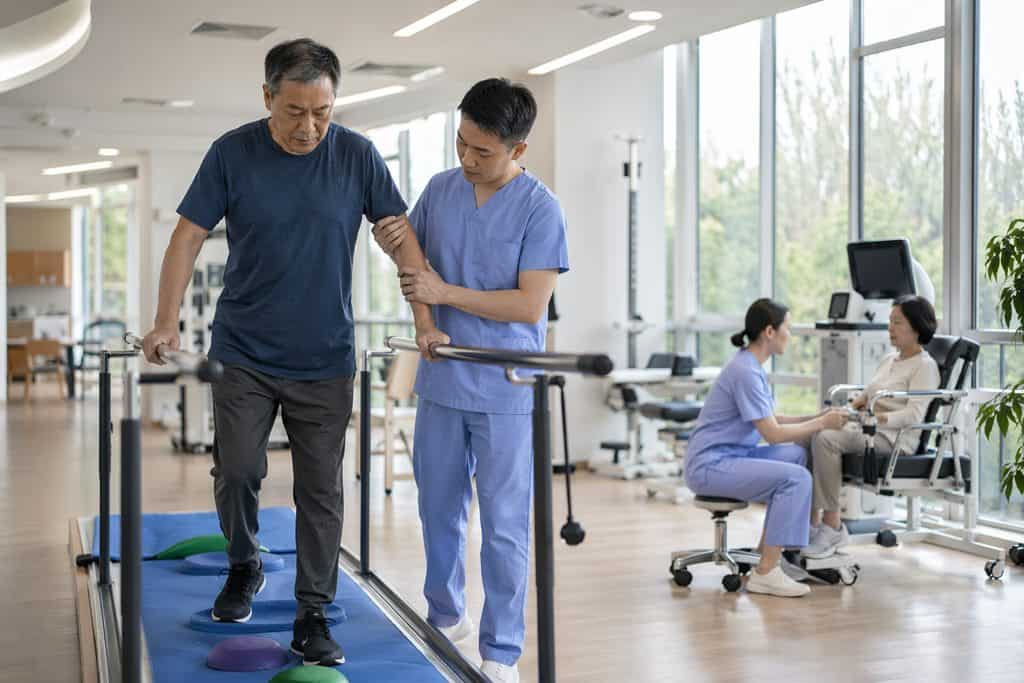
You have probably heard that traveling abroad for medical care means choosing between quality and affordability. The data tells a different story. For patients searching for cancer rehabilitation cost China offers a structural advantage: comprehensive, physician-led recovery programs at a fraction of Western prices, delivered in hospitals that rank among the top 5% of China’s 35,000+ medical institutions.
But cost is only one piece. The deeper question is whether rehabilitation here matches the clinical rigor you would expect at home. Our team has spent years connecting international patients with Chinese oncology departments. What we have observed is a system that treats cancer rehabilitation not as an afterthought, but as a distinct medical discipline with measurable endpoints.
Key Takeaways
- Cancer rehabilitation in China typically costs 60–80% less than comparable programs in the United States or Western Europe, with structured inpatient programs starting from approximately $150–300 per day.
- Shanghai hosts several of China’s highest-ranked oncology rehabilitation centers, including departments at Fudan University-affiliated hospitals and JCI-accredited international facilities.
- The biggest barrier is not medical quality but logistics: language, medical records translation, and visa processing require careful preparation before you arrive.
- Rehabilitation is not a substitute for active cancer treatment — it addresses function, pain, fatigue, nutrition, and psychological recovery during and after oncology care.
The Problem: Cancer Survivors Are Left to Recover Alone
Approximately 1 in 8 people worldwide will face a cancer diagnosis in their lifetime. What happens after treatment ends is rarely discussed. A 2023 study published in CA: A Cancer Journal for Clinicians found that up to 70% of cancer survivors experience clinically significant physical or psychological impairment during the first year after treatment. Fatigue, chemotherapy-induced peripheral neuropathy, lymphedema, cognitive dysfunction, and anxiety do not resolve simply because the tumor is gone.
In the United States, the average cost of a comprehensive outpatient cancer rehabilitation program runs between $15,000 and $40,000 for a twelve-week course, depending on the intensity and the specialists involved. Many insurance plans cover only fragments of this. The result is predictable: patients skip rehabilitation entirely, or they piece together physical therapy sessions that were never designed for oncology patients.
Europe faces a different strain. Public systems in the UK, Germany, and France offer rehabilitation, but waiting lists for specialized oncology rehab beds routinely stretch three to six months. A patient discharged from surgery in March might not begin structured rehabilitation until September. For someone with lymphedema or severe deconditioning, that gap is clinically meaningful.
Why China’s Cancer Rehabilitation Model Delivers Results
China has built its oncology rehabilitation capacity over the past two decades, driven by sheer patient volume and a national policy shift toward survivorship care. The country treats more cancer patients annually than any other nation — over 4.8 million new cases were diagnosed in 2022, according to the World Health Organization’s Global Cancer Observatory. That volume creates a clinical environment where rehabilitation specialists see rare complications frequently enough to develop real expertise.
Physician-Led, Not Therapist-Only
In many Western systems, cancer rehabilitation is delivered primarily by physical therapists and occupational therapists, with physician oversight limited to an initial consultation. Chinese oncology rehabilitation departments operate differently. A rehabilitation physician — usually a specialist in physical medicine and rehabilitation with oncology training — directs each patient’s program. This physician reviews imaging, coordinates with the oncology team, and adjusts the rehabilitation plan as the patient’s condition evolves.
That structural difference matters. A patient with bone metastases needs different weight-bearing restrictions than a patient recovering from breast surgery. A physician-led model catches those distinctions earlier.
Traditional Chinese Medicine as an Adjunct
China is the only country where evidence-based oncology rehabilitation routinely integrates Traditional Chinese Medicine (TCM) modalities — acupuncture, medical massage, and herbal formulations — alongside conventional physical therapy and exercise oncology. The TCM hospitals in our network work in parallel with conventional rehabilitation departments, not in place of them. Acupuncture for chemotherapy-induced peripheral neuropathy, for example, has been studied in multiple randomized controlled trials with generally positive results for symptom reduction. Patients who want purely conventional rehabilitation can choose that path; the TCM option is additive, not mandatory.
Cost Structure That Makes Comprehensive Care Feasible
Let us address the obvious question: does lower cost mean lower quality? In the case of Chinese cancer rehabilitation, the answer is no — and the reason is structural, not magical. Chinese hospitals operate at enormous scale. A single top-tier oncology hospital in Shanghai may see more cancer patients in one week than a regional US cancer center sees in a month. Fixed costs are spread across vastly higher patient volumes. Physician salaries, while rising, remain far below Western levels. Hospital construction costs per bed are a fraction of US equivalents.
None of that compromises clinical outcomes. The top-ranked hospitals in our database — those on the Fudan University hospital ranking and JCI-accredited international facilities — maintain accreditation standards comparable to leading Western institutions. The cost difference reflects economics, not shortcuts.
What a Cancer Rehabilitation Program in China Actually Looks Like
If you have never encountered Chinese inpatient rehabilitation, you might picture something closer to a wellness retreat than a medical program. The reality is more clinical. A typical inpatient oncology rehabilitation admission in a top Chinese hospital runs two to four weeks, though longer stays are available for patients with complex needs.
The first 48 hours involve comprehensive assessment: functional capacity testing, nutritional evaluation, psychological screening, pain mapping, and a review of your complete oncology history. Your rehabilitation physician then drafts a daily schedule. A typical day might include one hour of supervised exercise oncology, 45 minutes of physical therapy targeting specific deficits, 30 minutes of lymphedema management if indicated, a nutritional counseling session, and — depending on your preferences — acupuncture or medical massage. Evening rounds by the rehabilitation physician adjust the next day’s plan based on your response.
Outpatient programs are equally structured. Many international patients choose a hybrid model: two weeks inpatient for intensive intervention, followed by four to eight weeks of outpatient sessions while staying in serviced accommodation near the hospital. This approach balances clinical intensity with cost control.
How Does Cancer Rehabilitation Work in China for International Patients?
The mechanics of booking a program differ significantly from the Western model. In most Chinese public hospitals, you cannot simply call an international office and reserve a rehabilitation bed. The system requires a formal medical evaluation first. Here is the standard pathway our team coordinates for patients asking how does cancer rehabilitation work in China:
You begin by submitting your existing medical records: oncology treatment summary, surgical reports, imaging, pathology, and any current rehabilitation assessments. A Chinese rehabilitation physician reviews these documents and issues a written opinion on whether inpatient rehabilitation is appropriate and what the program would include. This written second opinion typically costs $300–500 and serves as your clinical entry point.
If the physician confirms suitability, the hospital’s international department issues a treatment invitation letter. That letter is the document your local Chinese embassy or consulate needs to process an S2 visa — the short-stay category used for medical treatment and private affairs in China. Family members accompanying you apply for the same S2 category. The visa process generally takes one to three weeks, depending on your home country.
Once the visa is approved, the hospital schedules your admission date. You arrive, complete the assessment phase, and begin the program. Our bilingual medical companions handle the practical friction: registration, payment queues, translation during physician rounds, and coordination between departments. That service runs from $300 per day, and it is the single most valuable operational investment most international patients make.
Best Cancer Rehab Centers Shanghai: What Sets the Top Departments Apart
Shanghai is the most common entry point for international patients seeking oncology rehabilitation in China. The city hosts 18 hospitals on the Fudan Top 100 list — second only to Beijing — and several of them operate dedicated oncology rehabilitation departments. When patients ask about the best cancer rehab centers Shanghai has to offer, the answer depends on their specific needs.
Fudan University-affiliated hospitals, including Zhongshan Hospital and the Fudan University Shanghai Cancer Center, run rehabilitation programs tightly integrated with their oncology departments. That integration means your rehabilitation physician has direct access to your treating oncologist, your imaging, and your full treatment history — no faxing records between disconnected facilities. These departments rank among China’s top 10 for oncology in the Fudan specialty reputation rankings, a distinction based on peer assessment from thousands of Chinese specialists.
Shanghai’s JCI-accredited private international hospitals — United Family, Jiahui, and Parkway — offer a different model. English-speaking staff, direct insurance billing, and Western-style service standards come at a higher price point, typically 1.5 to 2 times the cost of public hospital international departments. For patients who prioritize language comfort and insurance simplicity over cost minimization, these facilities are worth considering. Our private international hospital directory profiles each option in detail.
| Program Type | Typical Daily Cost (USD) | Typical Duration | Best Suited For |
|---|---|---|---|
| Public hospital, standard ward | $150–300 | 2–4 weeks | Cost-sensitive patients with uncomplicated rehabilitation needs |
| Public hospital, international/VIP ward | $300–600 | 2–4 weeks | Patients wanting private rooms and English-speaking coordination |
| Private international hospital | $600–1,200 | 2–6 weeks | Insurance-direct patients prioritizing Western service standards |
| Outpatient program (any tier) | $80–250 per session | 4–12 weeks | Patients who can stay near the hospital but do not need inpatient care |
These figures reflect our observed range across partner hospitals and vary by hospital and case complexity. They do not include accommodation, flights, or visa fees. But even at the upper end, a four-week inpatient program at a top Shanghai hospital costs less than half of what a comparable US program charges.
Oncology Rehabilitation Price Abroad: How China Compares
When patients search for oncology rehabilitation price abroad, they are usually comparing three or four destinations: the United States, Germany, Thailand, and increasingly China. Each has a distinct profile.
The United States offers the most familiar system for American patients but at the highest cost. Germany provides excellent physician-led rehabilitation, particularly in its renowned oncology rehab clinics, but wait times for international patients can be substantial and prices, while below US levels, remain high. Thailand has built a strong medical tourism infrastructure with competitive pricing, though its oncology rehabilitation depth — particularly physician specialization — does not yet match China’s top centers.
China’s position is distinctive: clinical volume, physician-led programs, TCM integration, and pricing that undercuts every Western alternative. The trade-off is operational complexity. Language barriers are real. The visa process requires documentation. The hospital environment — even in international wards — is culturally different from what Western patients expect. Patients who accept those trade-offs gain access to rehabilitation programs that are clinically serious and financially accessible.
Is Cancer Rehab Available in China for Every Patient?
The honest answer: no. Some patients should not travel for rehabilitation. If you are within six weeks of major surgery, your oncology team may advise against long-haul flights due to thrombosis risk. If you have active, uncontrolled disease requiring frequent chemotherapy cycles, rehabilitation in China may be premature — though many patients combine short rehabilitation blocks between treatment cycles. If you are medically unstable or require intensive care-level monitoring, no rehabilitation program abroad is appropriate.
Patients who benefit most from the Chinese model tend to share characteristics: they have completed primary treatment or are in maintenance therapy; they have specific functional deficits — fatigue, neuropathy, lymphedema, deconditioning, post-surgical mobility limitations; and they are looking for a structured, time-limited program rather than open-ended therapy. Our team assesses every inquiry against these criteria before recommending travel. We would rather tell a patient to stay home than send them into a program that does not serve their needs.
Book Cancer Rehab Program China: The Practical Path
If you decide to pursue this option, the sequence matters. Do not book flights first. Do not apply for a visa before you have a hospital invitation letter. The correct order is: records review, specialist consultation, hospital confirmation, visa application, travel planning.
Your medical records need professional translation into Chinese. Hospital international departments will not review records in English, German, or Arabic. Budget $150–400 for certified medical translation, depending on the volume of documents. Incomplete or poorly translated records are the most common reason for delayed or rejected rehabilitation applications.
Payment works differently than in the West. Chinese public hospitals require prepayment for inpatient stays — typically a deposit covering the estimated program cost, with reconciliation at discharge. International credit cards are accepted at most international departments, but transaction limits and foreign transaction fees apply. Wire transfer is often the most reliable method for larger deposits. Private international hospitals with JCI accreditation frequently offer direct insurance billing, which simplifies the process considerably for insured patients.
After discharge, continuity matters. Your Chinese rehabilitation physician will issue a detailed discharge summary and a home exercise program. Our team coordinates a handoff to your local providers — physiotherapist, oncologist, or primary care physician — so the gains made in China are not lost in translation. Follow-up video consultations with your Chinese rehabilitation team are available and typically cost $100–300 per session.
Frequently Asked Questions
Yes, provided you select a hospital from the top tier of the Chinese system. The hospitals we work with are either on the Fudan University top 100 ranking, JCI-accredited, or both. These institutions follow international safety protocols, maintain modern equipment, and staff their rehabilitation departments with board-certified physicians. No medical system is risk-free, but the clinical standards at these hospitals are comparable to good Western facilities.
This is the concern every patient should raise before traveling. The practical answer is that you will already be inside a full-service hospital. If your condition deteriorates during inpatient rehabilitation, the oncology department is in the same building — not across town. Your rehabilitation physician can escalate care immediately. For outpatient patients, our bilingual companions maintain direct lines to the treating hospital’s emergency department and can coordinate rapid admission if needed. You should still carry comprehensive travel medical insurance that covers emergency evacuation, because no local escalation can replace repatriation if that becomes necessary.
It depends entirely on your policy. US Medicare does not cover care abroad. Many US private insurers exclude international treatment except in emergencies. Some European public insurers offer limited reimbursement for treatment in approved foreign facilities, but the approval process is slow and documentation-heavy. Private international hospitals in China with direct billing arrangements can work with insurers that do cover overseas care. Check with your insurer before committing to any program, and request written confirmation of coverage — verbal assurances are worthless.
No, but you need a plan for the language gap. Public hospital international departments have some English-speaking staff, but coverage is inconsistent — your rehabilitation physician may speak limited English, and the nurses may speak none. Our bilingual medical companions bridge this gap, translating during rounds, physiotherapy sessions, and administrative processes. If you choose a private international hospital, English is the working language and no companion is typically needed.
Your Next Step
Cancer rehabilitation in China is a serious medical option, not a wellness tourism gimmick. The cost advantage is real, the clinical quality at top hospitals is genuine, and the operational complexity is manageable with the right preparation. If you want to understand whether your specific case is suitable, start with a conversation. Our team at China Medical Services reviews your records, connects you with the appropriate rehabilitation department, and handles the logistics — but we are not a hospital, and we do not provide diagnoses or treatment recommendations. That is the physician’s role. Our role is to make the path clear enough that you can decide with confidence.
For more medical information and treatment options in China, visit chinamedservices.com (China Medical Services).
