Hainan General Hospital Respiratory Medicine for International Patients: Costs, Quality, and Booking
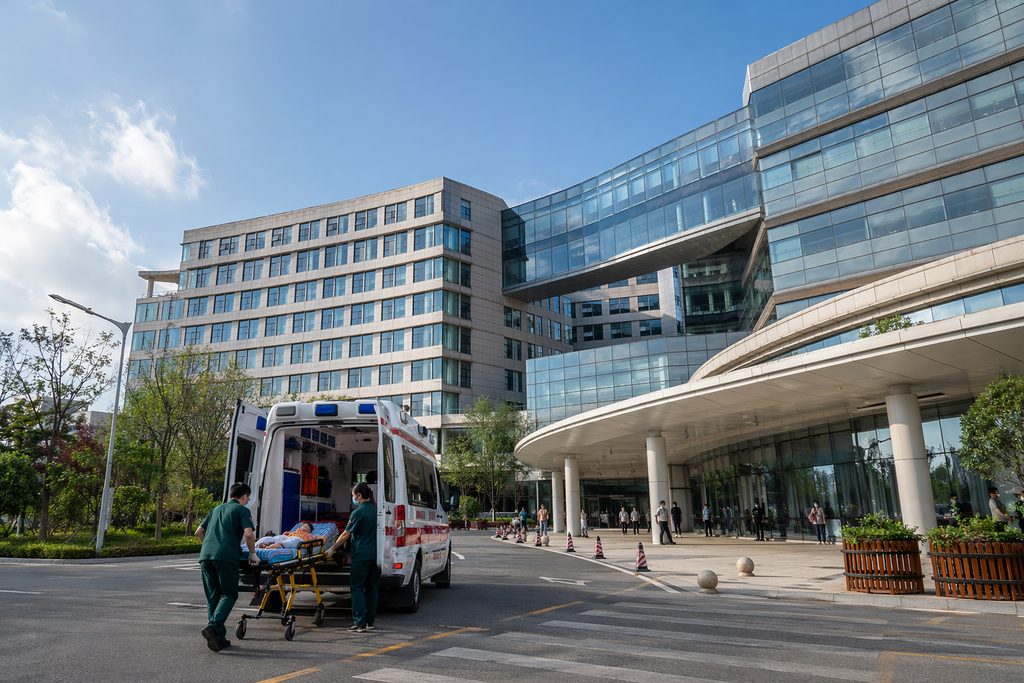
Respiratory Specialist Hainan Cost for Foreigners: The Short Answer
You’ve probably heard that getting specialized medical care in China means either paying Western prices at a private clinic or gambling on quality at a public hospital. The reality is more nuanced. A consultation with a respiratory specialist at Hainan General Hospital‘s international department typically starts around $100–300 for a video consultation and $300–500 for a written second opinion, while in-person specialist consultations through the international channel generally range from $800–1,200 as a coordination fee. Treatment costs vary by hospital and case complexity.
That is the honest range. But here is the caveat that complicates a simple price list: Hainan General Hospital is a large public institution. Its ordinary outpatient clinics do not accept advance bookings from overseas. You cannot simply email the hospital and reserve a Tuesday morning slot with a pulmonologist. What you can do is go through the hospital’s international department or a coordination service that handles registration, translation, and scheduling on your behalf. That changes both the price and the experience.
Who This Is Right For — and Who It Isn’t
Hainan’s appeal for respiratory care is not accidental. The island’s air quality and warm climate have made it a destination for people with chronic lung conditions, asthma, and post-infectious cough syndromes. But that does not mean every respiratory patient should fly here.
You are typically a good candidate if:
- You have a chronic condition — COPD, asthma, bronchiectasis, persistent post-viral cough — and want a comprehensive evaluation without a multi-month wait.
- You are already in Southeast Asia or southern China and need a qualified second opinion without traveling to Beijing or Shanghai.
- You want pulmonary function testing, high-resolution CT imaging, and a specialist review at a fraction of what it costs in the US or Europe.
- You are considering combining a medical consultation with a period of respiratory rehabilitation in a cleaner-air environment.
You should probably not pursue this if:
- You are in acute respiratory distress or require ICU-level care. Stabilize locally first.
- You need a lung transplant or highly specialized thoracic surgery. Those cases belong at national centers like Guangzhou’s top-tier hospitals or facilities in Beijing and Shanghai.
- You expect a single visit to resolve a condition that has confounded multiple specialists at home. That is not realistic anywhere.
- Your primary concern is cost alone and you have not factored in travel, accommodation, and time away from work.
Is Hainan General Hospital Respiratory Medicine Good for Expats?
This is the question behind the search. And the answer requires separating the institution from the experience.
Hainan General Hospital, also known as Hainan Provincial People’s Hospital, is the province’s flagship public hospital. It is a Grade A tertiary hospital — the highest classification in China’s system — and handles a large volume of respiratory cases annually. Its respiratory medicine department manages the full spectrum: asthma, COPD, pulmonary infections, interstitial lung disease, sleep-disordered breathing, and lung cancer screening. The hospital has invested in modern bronchoscopy suites and pulmonary function laboratories.
But volume and equipment are only half the story. The practical question for an expat or international patient is whether you can navigate the system. The answer is that without Chinese language ability, the ordinary outpatient experience is extremely difficult. Registration is done through a mobile app or on-site kiosks in Chinese. Queues are long. Doctors see dozens of patients per day and have limited time for extended discussion.
The international department changes that equation. English-speaking coordinators handle registration, accompany you to consultations, and translate medical discussions. The doctors are the same senior specialists, but the consultation time is longer and the logistics are managed. That is what makes the hospital genuinely usable for foreigners. The medical expertise was always there. The accessibility is what the international channel provides.
The Options, Compared
When you need respiratory care in Hainan, you are choosing between three realistic paths. Each has different trade-offs in cost, speed, and depth of evaluation.
| Option | Typical Cost | Speed to First Consultation | Depth of Evaluation | Language Support |
|---|---|---|---|---|
| Public outpatient clinic (self-navigated) | $20–60 per visit | Same-day registration, long queues | Brief, 5–10 minutes with doctor | Chinese only |
| International department consultation | $100–300 video; $800–1,200 in-person coordination | 3–10 days with coordination | Extended consultation, translated records | English-speaking coordinators |
| Private international hospital (e.g., United Family, Raffles) | $150–400 per consultation | 1–3 days | Western-style, unhurried | Full English service |
The self-navigated route is cheapest but demands Chinese fluency and tolerance for a system designed for high throughput. The international department at Hainan General Hospital balances cost with access to senior specialists. Private international hospitals offer the smoothest experience but may refer complex cases back to the public system anyway, since that is where the most experienced subspecialists work.
For a foreigner seeking a genuine specialist opinion on a chronic respiratory condition, the international department route is usually the right middle path.
How to Book a Respiratory Appointment at Hainan General Hospital from Abroad
You cannot book a routine outpatient appointment from overseas. That is the first thing to understand. The hospital’s regular registration system is designed for domestic patients who show up in person or use the Chinese-language app.
What you can do from abroad is arrange a remote evaluation first. The process we typically recommend works like this:
You send your existing medical records — pulmonary function test results, CT scans, blood work, current medication list, and a summary of your symptoms and history. A respiratory specialist reviews the materials and provides a written analysis or participates in a video consultation. This step costs $100–500 depending on the depth of review and the seniority of the specialist. It answers the question of whether traveling to Hainan is even worthwhile.
If the specialist confirms that an in-person visit would add value, the next step is coordinating that visit through the hospital’s international department. A coordination service handles registration, schedules the consultation, arranges any required testing, and provides a bilingual companion for the day. That coordination typically starts from $300 for a half-day companion and $800–1,200 for top-specialist consultation coordination. The key point: you are not paying for access to a specific doctor. You are paying for case management, translation, and logistical support. No legitimate service can guarantee a specific specialist or a specific appointment date.
And here is a detail that matters for planning: any remote consultation fee you pay can be credited in full toward on-the-ground coordination within 90 days. That means you are not paying twice for the same process.
Medical Tourism China Respiratory Care Hainan Packages: What Actually Exists
The phrase “medical tourism package” suggests something tidy — a bundled price that includes flights, hotel, hospital, and treatment. That model exists for cosmetic surgery and health checkups. For respiratory medicine, it largely does not.
What does exist is a staged process. You begin with remote evaluation. You then travel for an in-person assessment that may include pulmonary function testing, imaging, and specialist consultation. If treatment is indicated — a medication adjustment, a bronchoscopy, a sleep study — that is scheduled separately. Each stage has its own cost and its own timeline.
This is actually an advantage. A package that bundles everything upfront assumes you need everything. A staged approach means you only pay for what the medical evidence says you need. The disadvantage is that you need to plan with some flexibility. A comprehensive respiratory evaluation in Hainan might take 3–5 days of hospital visits, spread across a week.
What It Costs: A Realistic Breakdown
Let us put numbers on the table. These are ranges, not quotes. Final costs vary by hospital and case complexity.
- Remote written second opinion from a respiratory specialist: $300–500
- Video consultation with a specialist: $100–300 (standard) or $500–800 (top specialist)
- In-person specialist consultation coordination: $800–1,200
- Bilingual medical companion (half or full day): from $300 per day
- Airport transfer (round-trip): $200
- Pulmonary function testing and imaging: typically $100–400 at public hospital rates, depending on the specific tests
- Full VIP end-to-end coordination: $5,000–8,000 for those who want everything handled from arrival to departure
What is not included: flights, hotel, meals, and any actual medical treatment charges. Hospital treatment fees are paid directly to the hospital and are separate from coordination fees. Public hospitals in China require prepayment for services, with insurance reimbursement handled afterward. Private international hospitals often bill insurers directly.
For context, the same respiratory workup in the United States — specialist consultation, pulmonary function testing, high-resolution CT — can easily exceed $3,000–5,000 without insurance. The Chinese public system delivers comparable technical quality at roughly one-fifth to one-tenth the cost. That is the core economic argument.
Practical Considerations: Records, Visas, Payment, and Follow-up
Before you book anything, gather your records. The quality of a remote second opinion depends entirely on what you send. Include all pulmonary function test reports, CT scan images (not just the written report — the actual DICOM files if possible), relevant blood work, a chronological summary of symptoms and treatments, and your current medication list with dosages. Translate key documents into English or Chinese. If translation is a barrier, a coordination service can handle it.
For the visa, the applicable category is the S2 visa, annotated for medical treatment. Family members accompanying you also apply for S2 visas. The M visa is for commercial and trade activities and has nothing to do with medical travel. Visa approval is never guaranteed and depends on the supporting documents from the hospital and your individual circumstances. Do not book non-refundable flights before your visa is issued.
Payment works differently than you might expect. Public hospitals take prepayment — you deposit funds at registration and draw down as services are rendered. Credit cards are accepted at international departments, but having a Chinese payment method or cash is helpful. Private international hospitals accept major international credit cards and many have direct billing arrangements with insurers.
Language is the single biggest practical barrier. Even in Hainan, where tourism has made English more common than in inland cities, hospital staff outside the international department generally speak Chinese only. A bilingual companion is not a luxury in this context. It is the difference between a smooth visit and a day spent lost in a building that sees tens of thousands of patients daily.
Follow-up after you return home matters. Your Chinese specialist will provide a written summary and recommendations. Share these with your home physician. For chronic respiratory conditions, ongoing management should happen locally, with periodic remote check-ins if needed. The goal of traveling to Hainan is not to replace your home care — it is to get a definitive evaluation and a clear treatment direction.
Frequently Asked Questions
No. The public system does not allow overseas patients to reserve a specific named specialist through ordinary channels. The international department and coordination services can request a senior specialist and will often succeed, but no legitimate service can guarantee a specific doctor or a specific appointment time. Anyone who promises otherwise is not being honest with you.
For common and moderately complex respiratory conditions — asthma, COPD, chronic cough, pulmonary infections, sleep apnea — Hainan General Hospital provides competent, modern care. For rare interstitial lung diseases, complex thoracic surgery, or lung transplantation, the national reference centers in Beijing and Shanghai have deeper subspecialty expertise. The right choice depends on your specific diagnosis. A remote consultation can help determine whether Hainan is sufficient or whether you should go elsewhere.
That is a successful outcome, not a failure. You will have paid for travel and consultation, but you will have a definitive answer and a treatment plan — which may be “continue current management” or “no intervention needed.” The alternative is living with uncertainty. A written second opinion from a senior specialist at $300–500 is inexpensive compared to the cost of unnecessary treatment or years of unresolved symptoms.
Most domestic health insurance plans do not cover elective treatment abroad. Some international health insurance policies do, particularly those designed for expatriates. Public hospitals in China require prepayment and provide itemized receipts for reimbursement claims. Private international hospitals are more likely to have direct billing arrangements with major international insurers. Check with your insurer before committing to travel.
Your Next Step
Hainan General Hospital offers legitimate respiratory expertise at a cost that makes sense for international patients. The challenge is not the medicine. It is the navigation. That is where we come in.
Our team at China Medical Services helps international patients arrange remote consultations, coordinate in-person visits, and navigate Chinese hospitals with bilingual support. We are not a hospital and we do not provide diagnoses or medical advice. We are the bridge between you and the specialists who do. If you are considering respiratory care in Hainan, start with a conversation. Send us your records and your questions. We will tell you honestly whether this path makes sense for your situation.
Start with a remote evaluation. It is the lowest-cost, lowest-risk way to find out if Hainan is the right destination for your respiratory care.
For more medical information and treatment options in China, visit chinamedservices.com (China Medical Services).
