Genetic Testing: Is It Worth It for Health? Costs, Options, and Real Value
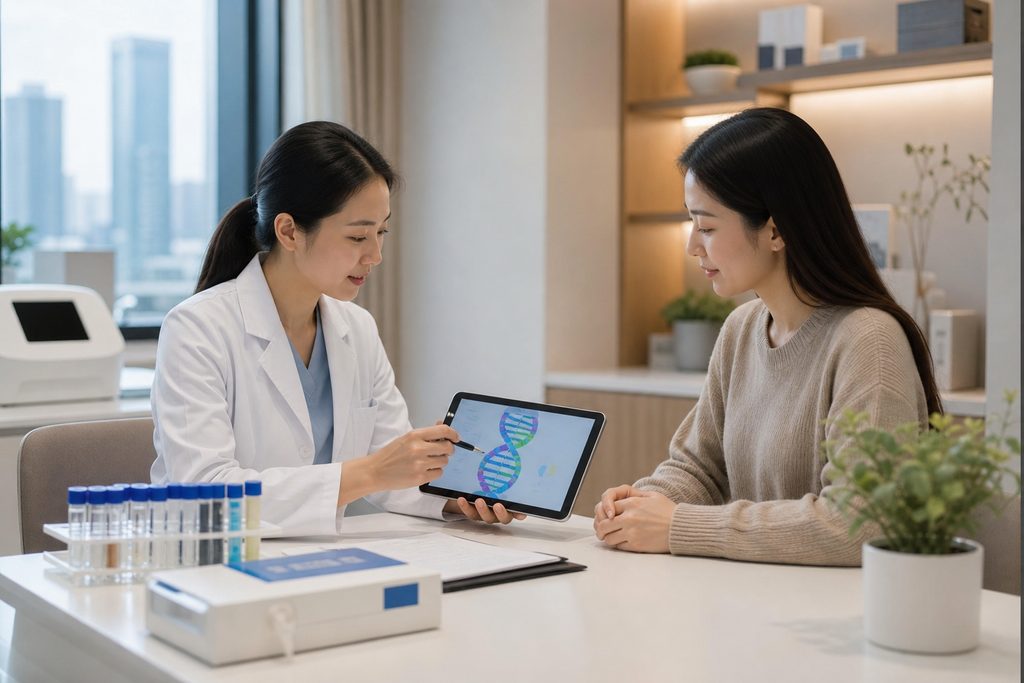
While an American patient might pay $6,000 to $12,000 for direct-to-consumer whole genome sequencing, a clinically equivalent test at a top-tier Chinese hospital typically runs between $600 and $1,500. That gap isn’t marketing noise. It’s a structural difference in how genetic diagnostics are priced across two healthcare systems. The question isn’t whether the technology works — it’s whether the information you get back justifies what you spend, and where you spend it.
Genetic Testing: Is It Worth It for Health? The Short Answer
For a narrow set of people — those with a strong family history of heritable cancers, couples planning pregnancy, or patients with mysterious symptoms that have resisted diagnosis — genetic testing is worth it. The data supports that. Roughly 5% to 10% of all cancers trace to an inherited mutation. Finding a BRCA1 or BRCA2 variant before a diagnosis changes screening schedules, surgical decisions, and survival odds in measurable ways. For everyone else, the value drops fast.
The caveat: most genetic panels return “variants of uncertain significance” — findings that are neither clearly dangerous nor clearly benign. A 2023 study in Genetics in Medicine found that reanalysis of uncertain variants changed their classification in about 20% of cases. You may pay for an answer and receive a question mark. That’s the honest trade-off.
Who This Is Right For — and Who It Isn’t
Genetic testing has a real but specific audience. If you fall into one of these groups, the clinical utility is high:
- You have two or more first-degree relatives with the same cancer type, especially breast, ovarian, colorectal, or pancreatic
- A known pathogenic mutation runs in your family and you want to know if you inherited it
- You and your partner are planning a pregnancy and want carrier screening for conditions like cystic fibrosis, thalassemia, or spinal muscular atrophy
- Your child has developmental delays, seizures, or congenital anomalies without a clear cause
- You’ve been through years of inconclusive tests for a chronic condition and whole exome or genome sequencing is the next diagnostic step
Here’s who should think twice. If you’re generally healthy, have no striking family history, and are mostly curious about your ancestry or minor traits — skip the medical-grade panels. The psychological burden of uncertain findings often outweighs the benefit. Same goes for people seeking certainty. Genetic tests don’t offer certainty. They offer probability. And if you’re not ready to act on a high-risk result — meaning you won’t change screening habits or consult a genetic counselor — the test won’t help you.
The Options, Compared
Not all genetic tests are the same. The table below compares the main categories a patient would realistically consider, including typical price ranges in China’s top-tier public and private hospitals versus US direct-to-consumer options.
| Test Type | What It Covers | Typical Cost (China) | Typical Cost (US) | Turnaround Time |
|---|---|---|---|---|
| Targeted single-gene test | One specific gene, e.g., BRCA1 only | $200–$500 | $250–$2,000 | 2–4 weeks |
| Hereditary cancer panel | 30–80 genes linked to cancer risk | $400–$900 | $1,500–$4,000 | 3–6 weeks |
| Whole exome sequencing (WES) | All protein-coding genes (~20,000) | $500–$1,200 | $2,500–$7,000 | 4–8 weeks |
| Whole genome sequencing (WGS) | Entire genome, coding and non-coding | $600–$1,500 | $6,000–$12,000 | 6–12 weeks |
| Carrier screening panel | 100–500 recessive disease genes | $300–$700 | $1,000–$3,500 | 3–5 weeks |
If you already know which gene runs in your family, a targeted test is the cheapest and fastest route. If you’re searching for an unknown cause of a medical problem, whole exome sequencing is the standard starting point — it covers the protein-coding regions where most known disease-causing mutations live. Whole genome sequencing adds non-coding regions, which occasionally matters for rare conditions but rarely changes clinical decisions for the average patient.
How Much Is Full Genome Sequencing in China?
At public tertiary hospitals in Beijing and Shanghai, whole genome sequencing now runs between $600 and $1,500 depending on the institution and whether interpretation is included. Private international hospitals in the same cities charge $1,200 to $2,500 for the same service with English-language reporting. That’s a fraction of the $6,000 to $12,000 typical of US-based clinical or consumer labs.
The price gap comes from volume and infrastructure. Chinese sequencing centers like BGI and Novogene process enormous sample volumes, which drives per-unit costs down. The technology itself — Illumina or MGI platforms — is identical to what Western labs use. What differs is the interpretation layer. A raw data file without clinical annotation is nearly useless to a patient. The value lies in the bioinformatics pipeline and the genetic counselor who explains what the variants mean. That’s where hospital choice matters.
Best Genetic Testing Hospitals Shanghai: Where the Interpretation Quality Holds Up
Shanghai has several institutions with strong clinical genetics departments. Fudan University-affiliated hospitals, including Zhongshan Hospital and the Obstetrics & Gynecology Hospital of Fudan University, run in-house sequencing labs and genetic counseling clinics. Ruijin Hospital, affiliated with Shanghai Jiao Tong University, has a dedicated clinical genetics center that handles both pediatric and adult cases. For oncology-focused panels, Fudan University Shanghai Cancer Center processes a high volume of hereditary cancer tests annually.
What separates these hospitals from a consumer testing kit isn’t the sequencing machine. It’s the pre-test counseling and post-test interpretation. A clinician reviews your family history before ordering the test, selects the right panel, and then walks you through the results — including the uncertain ones. That clinical context is what turns raw data into a usable health decision. Our top-ranked hospital database lists genetics-capable institutions by city and specialty, which helps when you’re comparing options from abroad.
Genetic Testing for Cancer Risk Abroad: What a Panel Actually Tells You
A hereditary cancer panel tests 30 to 80 genes associated with elevated cancer risk. The well-known ones — BRCA1, BRCA2, MLH1, MSH2, APC, TP53 — have clear management guidelines. A pathogenic BRCA1 variant, for instance, carries a 55% to 72% lifetime breast cancer risk and a 39% to 44% ovarian cancer risk. That’s actionable. Screening starts earlier, breast MRI gets added to mammography, and risk-reducing surgery becomes a legitimate conversation.
But many genes on these panels have weaker evidence. A mutation in a gene with “moderate penetrance” might raise lifetime risk from 10% to 15% — statistically real, but not enough to justify aggressive intervention. The report will tell you this, but only if someone explains it. Raw probability numbers without clinical translation cause more anxiety than clarity.
If you’re considering testing specifically because of a cancer pattern in your family, get the panel done through a hospital genetics department, not a mail-order kit. The difference in interpretation quality is substantial. And if you’re traveling to China for other care, combining a genetic consultation with your existing treatment plan is logistically efficient. See our specialty department rankings for oncology and genetics programs across major Chinese cities.
Genetic Testing Cost China: What Drives the Price
Several factors move the cost needle. The first is panel size — a 30-gene panel costs less than an 80-gene panel because the analysis and interpretation workload scales with gene count. The second is interpretation depth. A report that simply lists variants with database annotations costs less than one reviewed by a board-certified clinical geneticist who writes a patient-specific summary. The third is institution type. Public hospital international departments charge more than standard outpatient clinics, but still far less than private international hospitals.
Here’s what’s typically included in a hospital-based genetic test in China: the blood draw or saliva collection, DNA extraction, sequencing, bioinformatics analysis, a written report, and one post-test counseling session. What’s usually not included: additional family member testing, reanalysis years later when variant databases update, and any downstream medical procedures triggered by the results. Budget for the counseling. Skipping it turns a $600 test into a source of confusion.
Practical Considerations: Records, Visas, and Follow-Up
Full genome sequencing at a top-tier Chinese hospital runs $600 to $1,500, versus $6,000 to $12,000 at US clinical or consumer labs. The sequencing technology is identical. The price difference comes from higher sample volumes and lower operational costs in Chinese sequencing centers. Interpretation quality varies by institution, so hospital choice matters more than the sequencing itself.
Yes, but not through the standard public outpatient system. Public hospitals require in-person registration for routine clinics. International patients can book through a hospital’s international medical department or VIP channel, which handles scheduling, English-language coordination, and billing for overseas patients. This typically costs 1.5 to 2 times the standard outpatient price. Private international hospitals in Shanghai and Beijing accept direct bookings and often have English-speaking staff on site.
You’ll be told that the finding is neither clearly harmful nor clearly benign. Most uncertain variants eventually get reclassified as benign as databases grow. A small percentage get upgraded to pathogenic. The practical response is periodic reanalysis — every two to three years — rather than immediate action. This is one of the most common outcomes and one of the most psychologically difficult to process without a genetic counselor’s help.
Most international health plans exclude genetic testing unless there’s a documented medical indication — a strong family history or a diagnostic puzzle. Some plans cover the testing but not the counseling. Others cover nothing. You’ll need to check with your insurer before traveling. Public hospitals in China require upfront payment regardless of insurance; private international hospitals sometimes bill insurers directly.
Your Next Step
Genetic testing is a tool, not an answer. It works best when a specific clinical question drives it — a family cancer pattern, a pregnancy plan, a diagnostic mystery. It works worst when curiosity drives it. If you’re considering testing in China, the value comes from the interpretation layer, not the sequencing machine.
We help international patients navigate Chinese hospitals — matching you with genetics departments that fit your clinical question, coordinating appointments, and arranging bilingual support. We are not a hospital and we don’t interpret results or give medical advice. If you want to understand your options without committing to anything, start with a conversation. Tell us what you’re looking for and we’ll help you figure out whether genetic testing in China makes sense for your situation.
Frequently Asked Questions
Yes. The hospitals used for international patients are JCI-accredited and follow the same international safety standards as top hospitals in the US and Europe. Surgical teams perform high volumes of procedures — often more than their Western counterparts — which studies show leads to better outcomes.
Costs vary by procedure and hospital, but international patients typically save 40-80% compared to US prices — even when factoring in travel and accommodation. A consultation with our team will give you an exact, all-inclusive quote with no hidden fees.
Send us your existing medical reports to get started. We handle everything from hospital selection and appointment scheduling to visa assistance and post-operative recovery planning. Your medical records are reviewed by the specialist before you even book a flight.
For more medical information and treatment options in China, visit chinamedservices.com (China Medical Services).
