Can Botox Fix My Migraines? A Neurology Guide to China
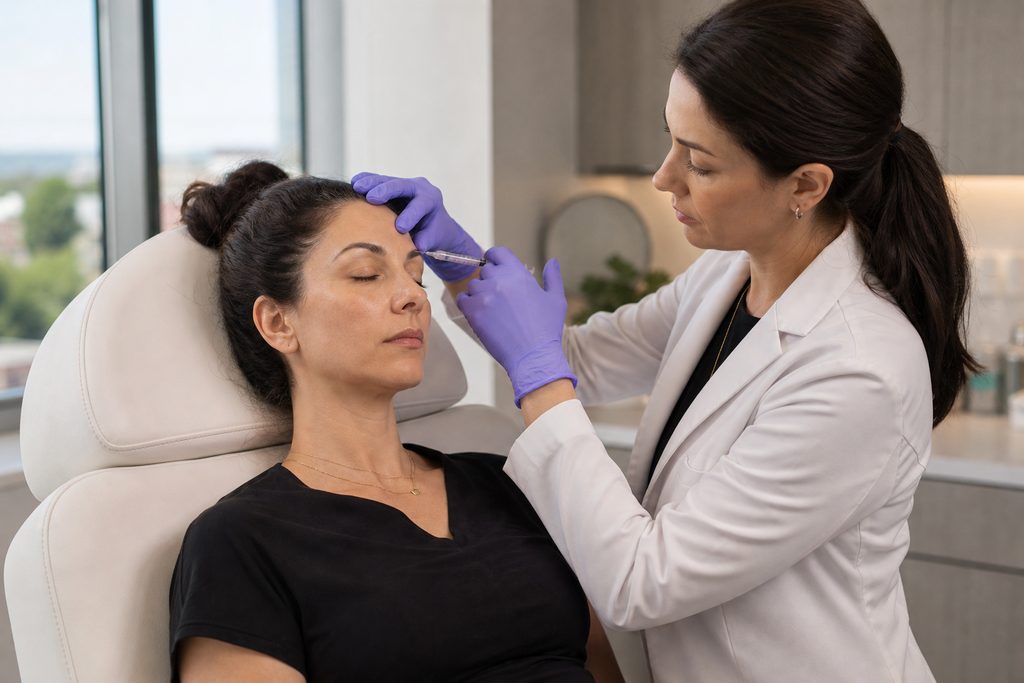
When 38-year-old Sarah from Manchester sat in her neurologist’s office for the fourth time that year, the word “Botox” caught her off guard. She had tried beta-blockers, topiramate, and two different CGRP inhibitors. Fifteen headache days a month. Her doctor mentioned onabotulinumtoxinA — the same toxin used for wrinkles — as a legitimate, evidence-backed option for chronic migraine. Then came the sticker shock: roughly £1,500 to £2,000 per treatment cycle at a private UK clinic, with three to four cycles needed per year. Sarah started searching for alternatives and found herself asking the same question thousands of patients type into Google every month: can Botox fix my migraines, and what does botox for migraines cost China compared to back home?
The short answer: Botox does not “fix” migraines in the sense of a permanent cure. But for the right patient, it can reduce headache frequency dramatically. The PREEMPT clinical trials — the landmark studies that led to FDA approval in 2010 — showed patients with chronic migraine (15 or more headache days per month) experienced an average reduction of 8 to 9 headache days per month after two treatment cycles. Some patients respond better, some not at all. Our team at China Medical Services regularly fields questions from patients like Sarah who want to know whether traveling to China for this treatment makes financial and medical sense. The answer depends on your diagnosis, your current neurologist’s assessment, and your willingness to navigate a foreign healthcare system. Let’s walk through exactly how this works.
Can Botox Fix My Migraines? The Medical Reality
Botox for chronic migraine is not a cosmetic procedure. It is a standardized medical protocol involving 31 injections across seven specific muscle groups in the head and neck — forehead, temples, back of the head, upper neck, and shoulders. The total dose is 155 units per session. A neurologist performs the injections, typically every 12 weeks. The medication works by blocking the release of pain-transmitting neurotransmitters at nerve endings, effectively quieting the peripheral pain pathways that feed into the migraine cycle. It does not enter the bloodstream in meaningful amounts and does not affect the brain directly.
Who actually qualifies? The criteria are specific. You need a documented diagnosis of chronic migraine — at least 15 headache days per month, with at least 8 of those having migraine features. You should have failed or not tolerated at least two to three preventive medications. Botox is not appropriate for episodic migraine (fewer than 15 headache days per month) or for tension-type headache. A responsible neurologist will review your headache diary, previous medication trials, and imaging before recommending treatment. Some patients see improvement after the first cycle. Most need two cycles — about six months — before judging whether it works. Roughly 50 to 70 percent of properly selected patients achieve a meaningful reduction in headache days. That leaves a significant minority who do not respond, and no test can predict in advance who those patients will be.
How This Actually Works, Step by Step
Let’s say you have a chronic migraine diagnosis from your home neurologist and you are considering China for treatment. The sequence looks like this:
Step 1: You gather your records. That means your neurology consult notes, headache diary covering at least three months, list of medications tried with dates and doses, and any MRI or CT brain imaging with reports. If your records are not in English, they need translation. Many Chinese hospital international departments accept English records directly.
Step 2: You request a remote consultation. This is where our team typically enters the picture. You send your records. A Chinese neurologist — usually at a top-tier hospital’s international medical department — reviews them. The written second opinion typically costs $300 to $500 and answers three questions: Does this patient meet criteria for Botox therapy? Is Botox the right choice given their history? What would the treatment plan look like in China?
Step 3: If the neurologist confirms appropriateness, you schedule treatment. This is where expectations need to be managed. Public hospitals in China do not allow overseas patients to book outpatient appointments weeks in advance through ordinary channels. You book through the hospital’s international department or VIP wing, which carries a price premium but provides English-speaking coordination and shorter waits. Appointment lead time for a neurology international clinic is typically one to three weeks.
Step 4: You travel. The S2 visa is the correct category for short-term medical treatment in China. You will need an invitation letter or treatment confirmation from the hospital, proof of accommodation, and your passport. Processing time varies by embassy but generally runs one to four weeks. Do not apply for an M visa — that is for commercial and trade activities, not medical care.
Step 5: You receive the injection. The procedure itself takes 15 to 20 minutes. You have a brief observation period afterward, then you are free to go. Many patients combine the trip with a few days in the city — Shanghai and Beijing are common choices.
Step 6: Follow-up. The effect builds over two to four weeks. You keep your headache diary. At the 12-week mark, you decide whether to repeat. Some patients return to China for subsequent cycles. Others use the Chinese neurologist’s written treatment protocol to continue injections with a provider closer to home. Both paths are legitimate.
What Does Botox for Migraines Cost China Versus the West?
The financial comparison is the reason most patients look abroad in the first place. Let’s be direct about the numbers. In the United States, a single Botox treatment cycle for chronic migraine — the 155-unit protocol — typically costs between $3,000 and $6,000 when you include the medication, the neurologist’s injection fee, and facility charges. Insurance may cover a portion if you meet strict prior authorization criteria. In the UK, private clinics charge roughly £1,500 to £2,500 per cycle. In Australia, expect AU$1,800 to AU$3,000.
In China, the same 155-unit protocol at a top-tier public hospital’s international department generally runs between $800 and $1,500 per cycle. That range varies by hospital tier, city, and whether you use the international wing or the standard outpatient department. The medication itself — onabotulinumtoxinA — is imported and priced similarly worldwide. The savings come from the injection fee and facility costs, which are dramatically lower in China. A patient paying $4,500 per cycle in the US could pay $1,200 in Shanghai for the identical protocol. Over four cycles per year, that is a difference of roughly $13,000 annually.
But the price question has layers. How much does migraine botox cost Beijing compared to Shanghai? Beijing’s top hospitals — Peking Union Medical College Hospital, Xuanwu Hospital, Beijing Tiantan Hospital — tend to price at the higher end of the range, often $1,000 to $1,500 per cycle through their international departments. Shanghai hospitals are comparable. Second-tier cities such as Chengdu, Hangzhou, or Wuhan can run 20 to 30 percent lower. The trade-off is that Beijing and Shanghai have the deepest concentration of neurology expertise and the most developed international patient infrastructure.
| Location | Typical Cost per Botox Cycle (155 units) | Notes |
|---|---|---|
| United States | $3,000 – $6,000 | Insurance may cover part; prior authorization common |
| United Kingdom (private) | £1,500 – £2,500 | NHS coverage limited; long waiting lists |
| China — Beijing/Shanghai international dept. | $800 – $1,500 | English-speaking staff; faster scheduling |
| China — second-tier city hospital | $600 – $1,100 | Lower cost; fewer English-speaking staff |
One more cost factor: travel. A round-trip flight from Europe to China runs $600 to $1,200 depending on season and booking window. From North America, $900 to $1,800. Hotel for three to five nights adds $300 to $800. Airport transfer, meals, local transport — another $200 to $400. A patient paying $1,200 for the procedure plus $1,500 in travel costs is still well under the US cash price for a single cycle. But if you need multiple cycles per year, the travel burden compounds. Some patients choose to do the first cycle in China to confirm the treatment works, then arrange continuation locally. That is a rational strategy we discuss frequently.
Is Botox for Chronic Migraine Available in China?
Yes. OnabotulinumtoxinA for chronic migraine is approved by China’s National Medical Products Administration and used in neurology departments across the country. The medication is the same Allergan product used in the US and Europe. Chinese neurologists follow the same PREEMPT protocol — 31 injections, 155 units, 12-week intervals. The clinical guidelines are aligned with international standards.
What differs is the delivery environment. Is botox for chronic migraine available in China at every hospital? No. You want a hospital with a dedicated headache or neurology department that routinely performs this procedure. This is not a treatment to seek at a cosmetic clinic. A dermatologist or aesthetic practitioner who injects Botox for wrinkles is not qualified to administer the migraine protocol, which targets specific pericranial and cervical muscle groups for therapeutic effect, not cosmetic outcome. The distinction matters enormously.
Which hospitals should you consider? The neurology department rankings on our site list China’s top institutions by specialty reputation. For headache medicine specifically, Peking Union Medical College Hospital in Beijing, Huashan Hospital and Ruijin Hospital in Shanghai, and West China Hospital in Chengdu all maintain strong neurology programs with headache subspecialty clinics. The Fudan-ranked top 100 hospitals page gives you the full picture of China’s elite institutions. For patients asking specifically about best neurology hospital Shanghai for migraine botox, Huashan Hospital’s neurology department is among the most cited in the specialty reputation rankings and has an international medical wing that handles foreign patients routinely.
A Realistic Timeline
Patients often underestimate the lead time. Here is what a typical journey looks like, assuming no major complications:
| Stage | Duration | What Actually Happens |
|---|---|---|
| Records gathering | 1–2 weeks | Collecting neurology notes, headache diary, imaging reports; translating if needed |
| Remote written opinion | 1–2 weeks | Chinese neurologist reviews records and confirms Botox appropriateness |
| Appointment scheduling | 1–3 weeks | Booking through international department; lead time varies by hospital and season |
| S2 visa processing | 1–4 weeks | Embassy processing after hospital invitation letter is issued; varies by country |
| Travel and treatment | 3–5 days | Flight, injection appointment, brief observation, return home |
| Effect assessment | 4–12 weeks | Tracking headache days after first cycle; deciding on second cycle |
Total time from first inquiry to first injection: typically six to ten weeks. The bottleneck is usually visa processing, not hospital availability. Some patients compress this by scheduling the remote consultation and visa application in parallel. We advise against booking flights until the visa is approved and the appointment is confirmed in writing.
And here is the part most patients forget: the first cycle may not work. The PREEMPT data shows the full effect often emerges only after the second cycle at week 24. If you travel to China for one cycle, see no improvement, and give up, you may have made a premature judgment. A responsible neurologist will set this expectation before you spend a dollar on airfare.
What Can Go Wrong — and What Happens Then
Let’s be honest about the failure modes, because this is where trust is built.
The diagnosis is wrong. A patient who has 10 headache days per month, not 15, does not meet the chronic migraine threshold. Botox is not indicated and may not help. A proper remote review should catch this before you travel. If it does not, you may spend thousands on a treatment that was never appropriate. This is why the written second opinion step is not optional — it is the gatekeeper.
The treatment does not work. Even with correct selection, 30 to 50 percent of patients do not achieve meaningful relief. There is no refund for a non-response; the medication was administered correctly, and the biology simply did not cooperate. What happens then? The neurologist reassesses. Options include CGRP monoclonal antibodies, nerve blocks, or revisiting oral preventives. Some of these alternatives are available in China at lower cost than in the West, but that is a separate conversation.
Side effects occur. The most common are neck pain, headache (ironically), and temporary muscle weakness at injection sites. Rarely, patients experience eyelid drooping or blurred vision, which resolves as the toxin wears off over weeks. These are manageable but uncomfortable. The treating neurologist should provide a post-treatment contact for questions. If you are back home when side effects appear, you need a local provider willing to manage them — not every Western neurologist is comfortable handling complications from a treatment initiated abroad.
Language barriers surface. Even at international departments, the depth of English fluency varies. The neurologist may speak functional English but struggle with nuanced discussion. This is where a bilingual medical companion changes the experience. For $300 per day, a companion handles registration, payment, queue navigation, and interpretation during the consultation. It is not a luxury; for many patients it is the difference between a smooth visit and a stressful one.
The visa is delayed or denied. This is rare with proper documentation from a legitimate hospital, but it happens. If your S2 visa does not come through in time, you reschedule the appointment. The hospital’s international department typically accommodates one reschedule without penalty if given sufficient notice. Travel insurance that covers trip cancellation for medical reasons is worth considering.
How to Evaluate a Provider for Migraine Botox in China
Not every hospital that offers Botox for migraine is equally equipped. Here is what we look for when patients ask us to evaluate options.
Neurology department strength. A hospital may be famous for cardiac surgery and mediocre in neurology. Check the Fudan specialty reputation rankings for neurology specifically. A hospital ranked among China’s top 10 for neurology is a different proposition from a general hospital that happens to have a neurologist on staff. The specialty rankings page breaks this down by department.
Headache subspecialty presence. Botox for migraine is a niche within neurology. Some departments have a dedicated headache clinic with physicians who perform this procedure weekly. Others do it occasionally. The volume matters. A neurologist who injects 10 migraine patients per week has refined the technique and seen the full range of responses. One who does it monthly is still competent but less experienced with atypical presentations.
International patient infrastructure. Does the hospital have a functioning international medical department? This is not about prestige — it is about logistics. International departments handle foreign patient registration, English documentation, appointment coordination, and billing. Without this layer, a foreign patient navigates the standard public hospital system, which assumes Chinese language ability and local insurance. That is a significant friction point.
Transparent pricing. A hospital that cannot tell you the cost of a 155-unit Botox cycle before you book is a red flag. International departments quote prices upfront. You should receive a written estimate covering the medication, the injection fee, and the consultation charge. If the number is vague, ask for clarification before committing.
Post-treatment communication. What happens if you have a question three weeks after the injection, from your home country? A good provider gives you a contact channel — email or WeChat — for follow-up questions. A poor one disappears after you pay. This is a practical detail that separates professional international care from transactional treatment.
Practical Considerations: Records, Visa, Payment, and Follow-Up
Before you book anything, get your paperwork in order. You need a formal diagnosis letter from your home neurologist stating the chronic migraine diagnosis, the number of headache days per month, and the list of failed preventive medications. You need a headache diary — three months minimum, six is better. You need brain imaging reports if any were done. Without these, the Chinese neurologist cannot make an informed decision, and the remote consultation fee is wasted.
Visa category is straightforward: S2 for short-term medical treatment, S1 if your stay will exceed 180 days. The hospital’s international department issues the invitation letter. The Chinese embassy in your country processes the application. Processing
Frequently Asked Questions
Yes. The hospitals used for international patients are JCI-accredited and follow the same international safety standards as top hospitals in the US and Europe. Surgical teams perform high volumes of procedures — often more than their Western counterparts — which studies show leads to better outcomes.
Costs vary by procedure and hospital, but international patients typically save 40-80% compared to US prices — even when factoring in travel and accommodation. A consultation with our team will give you an exact, all-inclusive quote with no hidden fees.
Send us your existing medical reports to get started. We handle everything from hospital selection and appointment scheduling to visa assistance and post-operative recovery planning. Your medical records are reviewed by the specialist before you even book a flight.
For more medical information and treatment options in China, visit chinamedservices.com (China Medical Services).
