What Is a Gut Health Test? Costs, Accuracy, and Where to Get Tested in China
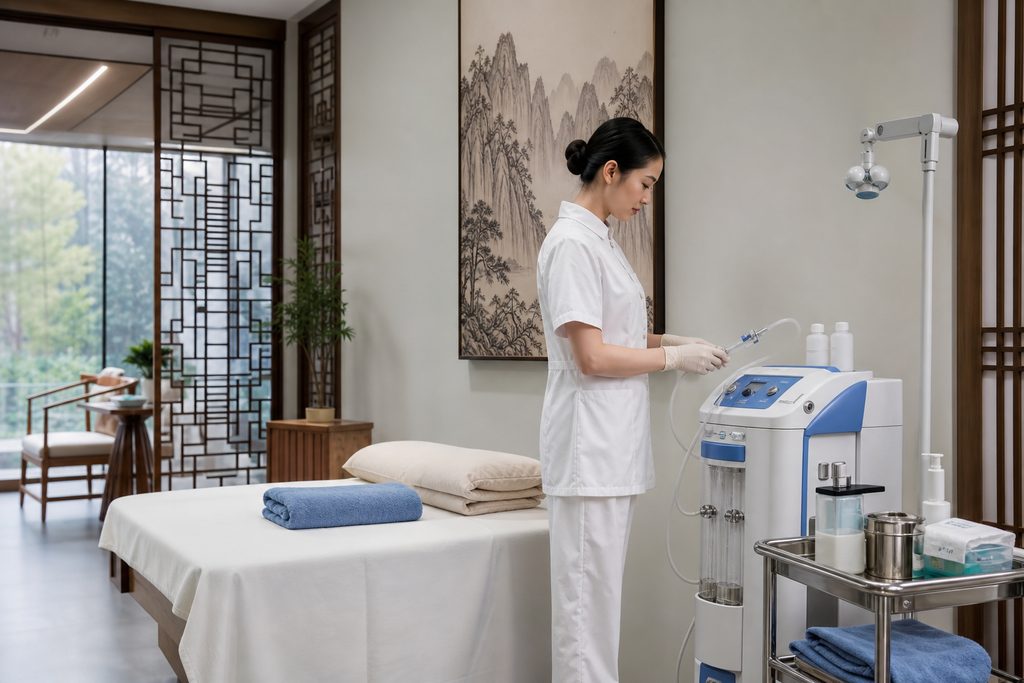
What Is a Gut Health Test? A Practical Guide for Patients Considering Testing in China
Key Takeaways
- A gut health test analyzes your stool or breath to map the bacteria, fungi, and metabolic byproducts in your digestive tract — and a gut health test cost China typically runs between $150 and $600 depending on depth of analysis.
- China’s top-tier hospitals run these tests at massive scale, with dedicated GI microbiology labs processing thousands of samples monthly, which keeps per-test costs roughly 40–60% below comparable private labs in the US or UK.
- Not all gut tests are equal: basic culture panels miss over 70% of the microbial diversity that 16S rRNA sequencing or shotgun metagenomics can detect, so understanding what you are actually paying for matters.
- You cannot simply walk into a Chinese public hospital as a foreigner and order a comprehensive panel — registration, language barriers, and sample collection logistics require planning, though the actual testing itself is straightforward once arranged.
The Problem: Vague Symptoms, Expensive Guesses, and Limited Access to Real Data
Bloating that will not quit. Diarrhea that alternates with constipation. Brain fog you cannot explain. Roughly 1 in 5 adults worldwide deals with chronic digestive discomfort, and most of them never get a clear answer about why. The standard workup in the US or Europe often stops at a basic blood panel, maybe a celiac screen, and a prescription for a proton pump inhibitor or an elimination diet that may or may not help. What is missing from that picture? Actual data about what is living in your gut.
That is where a gut health test comes in. In simple terms, a gut health test is a diagnostic analysis of your stool — and sometimes your breath — that identifies the microorganisms in your digestive system and measures key markers of digestive function. You collect a sample at home or in a clinic, send it to a lab, and get back a report describing your microbial ecosystem. The question is whether that report actually tells you something useful. And whether you can access a high-quality version without paying $400 to $900, which is what many direct-to-consumer companies in the West charge for a single comprehensive panel.
For patients who travel, or who are already considering medical care in Asia, a different question emerges: what does a gut health test cost China, and are the labs there comparable to what you would find at Mayo Clinic or King’s College London? The short answer is yes on quality, and significantly lower on price. But there is nuance, and you deserve the full picture before you book a flight.
Why Testing in China Delivers Results: Volume, Technology, and Structural Cost Advantages
Clinical Volume Creates Proficiency That Boutique Labs Cannot Match
A major teaching hospital in Shanghai or Beijing processes more gastrointestinal samples in a single month than a typical Western functional medicine lab processes in a year. Take Ruijin Hospital in Shanghai, affiliated with Shanghai Jiao Tong University School of Medicine — its gastroenterology department handles over 300,000 outpatient visits annually. That volume means the lab technicians running your stool analysis have seen the full spectrum of normal and pathological results. They are not guessing at borderline findings; they have a reference database built from millions of samples.
Compare that to the average direct-to-consumer gut testing company, which may process a few thousand samples monthly and often outsources sequencing to a third-party facility. The difference in interpretive reliability is real, even if the underlying technology is similar.
Technology at Scale: 16S rRNA, Metagenomics, and Metabolomics Under One Roof
What makes a gut health test meaningful is the technology behind it. Basic culture-based stool tests grow bacteria on agar plates — but only about 1% of gut microbes can be cultured this way. The rest are anaerobic or require conditions labs cannot easily replicate. That is why a culture panel might report “normal flora” even when your microbiome is significantly disrupted.
Modern approaches include 16S rRNA gene sequencing, which identifies bacteria by their genetic fingerprint and can detect hundreds of species; shotgun metagenomics, which sequences all DNA in the sample to map bacteria, viruses, fungi, and even antibiotic resistance genes; and metabolomics, which measures short-chain fatty acids like butyrate and propionate that your gut bacteria produce. These metabolites are arguably more clinically relevant than the species list itself — they tell you what your microbiome is actually doing.
Chinese teaching hospitals have integrated these technologies into routine clinical workflows. The gastroenterology department at Peking Union Medical College Hospital (PUMCH) in Beijing, for example, routinely orders microbiome sequencing for patients with inflammatory bowel disease, recurrent C. difficile infection, and unexplained chronic diarrhea. You are not getting a wellness gimmick; you are getting the same diagnostic workup a Chinese gastroenterologist orders for complex clinical cases.
Cost Advantage Without Quality Compromise
Here is where the numbers get concrete. A comprehensive stool analysis with 16S rRNA sequencing and metabolic markers typically costs $350 to $700 in the United States through a functional medicine practice. In the UK, private gut microbiome panels run £250 to £450. A gut health test cost China, by contrast, generally falls between $150 and $600 depending on whether you are getting a basic culture plus parasitology panel or full shotgun metagenomics with metabolomic profiling. The gap narrows at the high end but widens dramatically for mid-tier testing.
Why? Labor costs for lab technicians and bioinformaticians are structurally lower in China. Hospital labs operate at enormous scale, spreading equipment costs across far more samples. And the competitive landscape among Chinese diagnostic companies — BGI Genomics, Novogene, and others — keeps sequencing prices low. None of this implies lower quality. Chinese sequencing labs handle international clinical trial work and publish in peer-reviewed journals. The equipment is the same Illumina and Thermo Fisher platforms you would find in Boston or Berlin.
What a Gut Health Test Actually Measures — and What It Cannot Tell You
Let us demystify the jargon. When you order a gut health test, you are typically getting some combination of these analyses:
- Microbial composition: Which bacteria dominate your gut. High Bacteroidetes to Firmicutes ratios, low diversity, or absence of beneficial species like Faecalibacterium prausnitzii can signal dysbiosis.
- Pathogen detection: Specific disease-causing organisms — Salmonella, Shigella, Campylobacter, Clostridioides difficile, and parasites like Giardia or Blastocystis.
- Inflammation markers: Fecal calprotectin and lactoferrin, which distinguish irritable bowel syndrome (IBS) from inflammatory bowel disease (IBD). Elevated calprotectin above 50–120 µg/g suggests intestinal inflammation and warrants colonoscopy.
- Digestive function markers: Fecal elastase-1 for pancreatic enzyme output, fecal fat for malabsorption, and occasionally zonulin for intestinal permeability.
- Metabolic byproducts: Short-chain fatty acids (butyrate, acetate, propionate) that reflect fiber fermentation and colonocyte health.
But here is the honest caveat: a gut health test is not a crystal ball. It will not diagnose irritable bowel syndrome, because IBS is a clinical diagnosis based on symptoms and exclusion of other conditions. It will not tell you definitively which foods to avoid. And the science of microbiome interpretation is still evolving — two labs analyzing the same sample can produce somewhat different species lists depending on their sequencing depth and reference databases. What a good test gives you is a data-rich starting point for a conversation with a gastroenterologist, not a self-contained treatment plan.
How Accurate Are Gut Health Tests Abroad? Understanding the Real Limitations
Accuracy depends entirely on methodology. Culture-based tests are the least reliable — they detect only a fraction of gut microbes and are heavily operator-dependent. PCR-based pathogen panels are highly sensitive and specific for targeted organisms, often exceeding 95% sensitivity for common pathogens. 16S rRNA sequencing is excellent for broad bacterial profiling but cannot reliably identify species-level differences in closely related organisms. Shotgun metagenomics offers the highest resolution, identifying species and functional genes, but costs more and requires sophisticated bioinformatics.
A 2021 study published in Nature Biotechnology found that different microbiome analysis platforms produced only moderate agreement on relative abundance of specific taxa, though they agreed well on broad diversity metrics. The practical takeaway: treat your gut health test results as directional, not definitive. If a report says you have low butyrate and depleted Akkermansia muciniphila, that is a useful signal worth discussing with a clinician. If it claims to diagnose “leaky gut syndrome” with certainty, be skeptical — that is not a recognized medical diagnosis in mainstream gastroenterology.
And a note on sample handling: the single biggest source of error in gut microbiome testing is not the lab. It is the time between sample collection and processing. Stool samples left at room temperature for more than 24 hours show measurable shifts in microbial composition. If you are traveling to China for testing, you will collect the sample at your hotel or accommodation and deliver it to the hospital lab the same day — which actually improves accuracy compared to mailing a sample across the country, as most Western direct-to-consumer kits require.
Best Hospital for Gut Health Testing Shanghai and Beijing: Where to Actually Go
If you have searched for the best hospital for gut health testing Shanghai, you have probably encountered a mix of private clinics and public teaching hospitals. Both have roles, but they serve different needs.
In Shanghai, Ruijin Hospital and Zhongshan Hospital (Fudan University) both operate internationally recognized gastroenterology departments. Ruijin’s GI department is particularly strong in microbiome research and inflammatory bowel disease. Zhongshan Hospital, also Fudan-affiliated, runs one of the largest endoscopy centers in Asia — relevant if your gut health test flags elevated calprotectin and you need a follow-up colonoscopy. Both hospitals appear in China’s Fudan University hospital rankings for gastroenterology, which places them among the country’s top-tier GI centers.
In Beijing, Peking Union Medical College Hospital (PUMCH) is the reference standard. Its gastroenterology department has been a leader in functional GI disorders and microbiome research for decades. Beijing Friendship Hospital, affiliated with Capital Medical University, is another strong option — it houses the National Clinical Research Center for Digestive Diseases, which means its lab protocols are aligned with national research standards.
Can I get a comprehensive stool analysis in Beijing? Yes — but not by walking in off the street. Public hospital registration in China requires a hospital medical card, which requires your passport and typically an in-person visit or proxy arrangement. Language is a real barrier: most registration desks and lab technicians do not speak English. This is where working with a bilingual coordinator changes the experience from frustrating to straightforward. The testing itself is identical whether you are Chinese or foreign; the logistics are simply more complex for non-Chinese speakers.
Practical Considerations: Visas, Payments, and Sample Logistics for Gut Testing in China
Let us talk about the concrete steps, because the medical part is the easy part once you are in the right place.
Visa: Foreign nationals traveling to China for medical treatment, including diagnostic testing, should apply for an S2 visa with a notation indicating medical purposes. The S2 is a short-stay visa for private affairs, including medical treatment, and typically allows stays of up to 180 days depending on your nationality and the consulate’s discretion. You will need an invitation letter or supporting documentation from the hospital or a medical coordination service. The M visa is for commercial and trade activities and is not appropriate for medical travel. Consulate requirements vary by country, so confirm with the Chinese embassy or consulate in your home country before booking flights. Visa approval is never guaranteed, and processing times range from a few days to several weeks.
Payment: Chinese public hospitals require prepayment for services. You will typically deposit funds at a hospital cashier window, receive a medical card loaded with credit, and charges are deducted as services are rendered. International credit cards are not universally accepted at public hospital cashiers — bring a UnionPay card or sufficient cash (Chinese yuan). Private international hospitals in China, such as those in the United Family Healthcare network, accept major international credit cards and often bill insurance directly. Expect to pay $150 to $600 for gut health testing depending on panel depth, plus consultation fees of roughly $50 to $150 for a gastroenterologist visit.
Sample collection: You will receive a sterile collection container with instructions, usually in Chinese. The lab will specify whether the sample must be delivered within 2 hours or is stable for 24 hours refrigerated. If you are staying near the hospital, same-day delivery is straightforward. If you are farther away, plan accordingly — a hotel refrigerator is usually sufficient for short-term storage, but confirm with the lab’s specific requirements.
Results and interpretation: Basic culture and parasitology results return in 1–3 days. 16S rRNA sequencing takes 7–14 days. Shotgun metagenomics can take 2–4 weeks. You will receive a report, often in Chinese, which a bilingual coordinator or the hospital’s international department can translate. A follow-up video consultation with the gastroenterologist to interpret results costs $100–300 through most hospital international departments.
Practical tip: If you are traveling specifically for gut testing, schedule your gastroenterology consultation for the day after you arrive. This allows the doctor to assess your symptoms, order the appropriate panel (not the generic one you might have chosen yourself), and give you the collection kit. You then collect the sample the following morning and deliver it to the lab. Total in-country time needed: 3–5 days for most panels.
Frequently Asked Questions
A gut health test cost China typically ranges from $150 for a basic culture and parasitology panel to $600 for comprehensive shotgun metagenomics with metabolic markers. Comparable testing in the US runs $350 to $700, and in the UK £250 to £450. The price difference reflects lower lab labor costs and higher testing volumes in Chinese hospitals, not lower quality. Final pricing varies by hospital and case complexity.
Public hospitals in China do not allow overseas patients to book outpatient testing appointments directly — registration happens on the day of your visit, and you must first see a gastroenterologist who orders the test. What you can arrange in advance is coordination: a bilingual service can pre-register you, schedule your consultation, and prepare your hospital medical card so you do not spend your first day navigating queues. Private international hospitals may offer pre-arranged testing packages, but expect to pay 1.5 to 2 times the public hospital rate.
If your fecal calprotectin is elevated, your pathogen panel is positive, or your microbiome report shows significant dysbiosis, the next step is a gastroenterology consultation — ideally the same doctor who ordered the test. Chinese teaching hospitals are well equipped for follow-up: colonoscopy, upper endoscopy, abdominal imaging, and specialized blood work are all available on-site, often within days rather than weeks. You are not stranded after the test; you are at the front door of a full diagnostic pathway. And you can always take your results home and discuss them with your local physician — the report is yours to keep.
Most international health insurance plans do not reimburse for gut microbiome testing unless it is ordered as part of a diagnostic workup for a specific condition, such as recurrent C. difficile infection or suspected inflammatory bowel disease. If you have insurance, request a pre-authorization letter from your insurer before traveling. Chinese public hospitals require upfront payment regardless of insurance; you submit your receipts for reimbursement afterward. Private international hospitals in China may bill your insurer directly if they have an existing agreement.
Your Next Step
Understanding what is happening in your gut does not have to mean months of waiting, thousands of dollars, or settling for a shallow test that tells you little. Whether you choose to test in China or at home, the key is knowing what you are paying for: sequencing depth, interpretive expertise, and a clear path to follow-up care if something shows up. Our team at China Medical Services helps international patients navigate hospital selection, registration, and bilingual coordination for diagnostic testing across China’s top-ranked gastroenterology departments. We are not a hospital and we do not provide diagnoses — we connect you with the right specialists and make the logistics manageable. If you are considering gut testing in China, explore our guide to top-ranked gastroenterology departments or request a free consultation to discuss your specific situation.
For more medical information and treatment options in China, visit chinamedservices.com (China Medical Services).
