What Is Double Eyelid Surgery? Cost, Safety, and Recovery in China
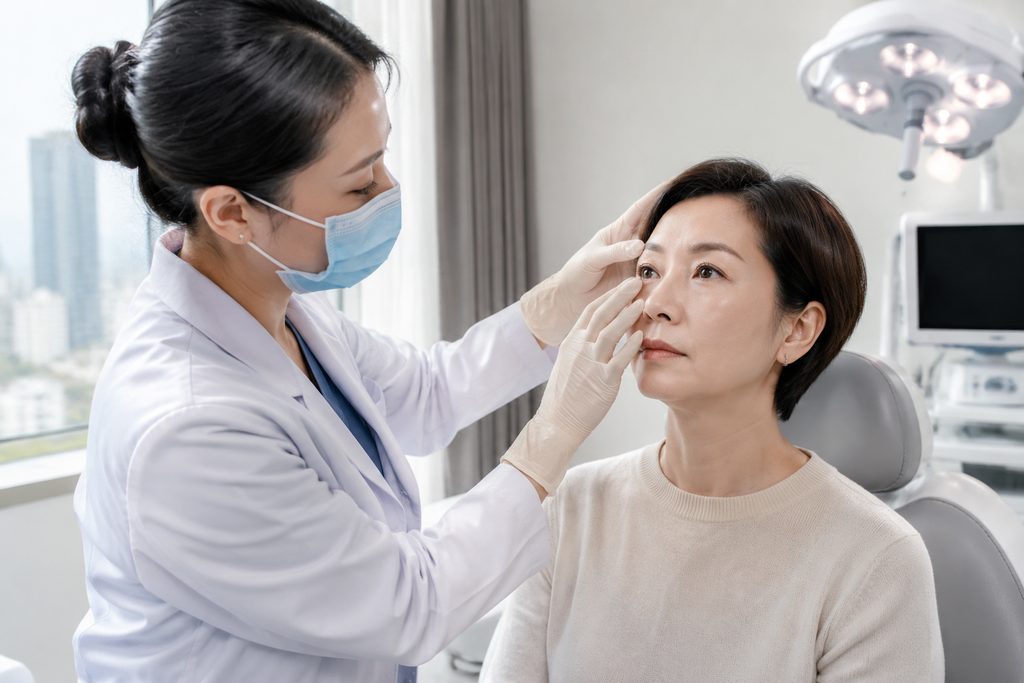
What Is Double Eyelid Surgery: The Short Answer
Double eyelid surgery — called blepharoplasty in medical terms — creates a visible crease in the upper eyelid. The procedure is quick. Most cases finish in under an hour under local anesthesia. Patients go home the same day. But the decision around where to have it done, which technique suits your anatomy, and what the double eyelid surgery cost China actually covers involves more nuance than a single price tag suggests.
The surgery appeals to two groups. Some patients want a cosmetic change to match a personal aesthetic preference. Others need a functional correction — excess upper eyelid skin can obstruct peripheral vision. Insurance sometimes covers the functional version. Cosmetic cases almost never qualify for coverage.
China performs an enormous volume of these procedures. Shanghai Ninth People’s Hospital alone handles tens of thousands of eyelid surgeries annually. That repetition builds technical skill. But volume doesn’t equal uniform quality, and choosing where to go matters more than choosing whether to go.
Who This Is Right For — and Who It Isn’t
Good candidates share a few traits. They have realistic expectations about what a crease can and cannot change. Their eyelid skin retains reasonable elasticity. They don’t smoke heavily, or they’re willing to stop for several weeks around surgery. They understand that asymmetry is a possible outcome, not a surgical failure.
Typical candidates include:
- Adults with monolids who want a defined upper eyelid crease
- Patients with hooded eyelids that interfere with eyesight
- People with asymmetric creases seeking balance
- Those with puffy or tired-looking upper eyelids from excess skin
Some people should not pursue this surgery. Active eye infections rule it out immediately. Uncontrolled diabetes slows healing and raises infection risk. Severe dry eye can worsen after eyelid surgery. Anyone with body dysmorphic disorder needs psychological support, not a scalpel. And if you’re pregnant or breastfeeding, surgeons generally advise waiting.
Age matters less than skin condition. A 45-year-old with good elasticity can be a better candidate than a 25-year-old with sun-damaged skin. The surgeon’s assessment during consultation carries more weight than any online checklist.
The Options, Compared
Three main techniques dominate double eyelid surgery. The right one depends on your skin thickness, fat distribution, and whether you want a temporary or permanent result. Here’s how they stack up:
| Technique | How It Works | Recovery Time | Permanence | Typical Cost Range (China) |
|---|---|---|---|---|
| Full Incision | Surgeon cuts along the crease line, removes excess skin and fat, sutures to create a permanent fold | 2–4 weeks for visible swelling to subside; 3–6 months for final result | Permanent | $800–$2,500 |
| Partial Incision (Mini) | Three small incisions along the crease; less tissue removal, shorter scar | 1–2 weeks for most swelling | Long-lasting, 10+ years typical | $600–$1,800 |
| Suture (Non-Incision) | Threads create the crease without cutting; no visible scar | 3–7 days for most swelling | 2–5 years, sometimes longer | $400–$1,200 |
The full incision method suits patients with thick eyelid skin or significant fat. The suture method works best for thin skin with minimal fat. But here’s the thing — a surgeon who only offers one technique will recommend that technique. A surgeon comfortable with all three can match the method to your anatomy. That’s the consultation you want.
For patients traveling from abroad, the double eyelid surgery price abroad often drives the initial search. What they find is that the same full-incision procedure that costs $4,000–$8,000 in the United States or $3,500–$6,000 in Western Europe typically runs $800–$2,500 at a reputable Chinese hospital. The savings are real. But they should never be the only factor.
Is Double Eyelid Surgery Safe in China? What Foreign Patients Need to Know
The honest answer: safety depends entirely on where you go. China has world-class oculoplastic surgeons working in top-tier public hospitals. It also has unlicensed clinics offering cut-rate procedures in commercial buildings. The gap between those two extremes is wider than in most Western countries.
Top public hospitals like Shanghai Ninth People’s Hospital and Peking Union Medical College Hospital follow strict sterilization protocols. Their oculoplastic departments handle complications referred from smaller clinics daily. That referral volume tells you something about how common problems are at the low end of the market.
What makes a hospital safe? Board-certified plastic surgeons or ophthalmologists with oculoplastic subspecialty training. Accredited operating rooms. Documented infection rates. A willingness to turn away patients who aren’t good candidates. These are the markers we look for when matching patients with hospitals.
And what about the best double eyelid surgeon Shanghai has to offer? Shanghai’s top oculoplastic surgeons perform hundreds of these procedures yearly. Many trained abroad. Several publish in international journals. But “best” is subjective — the surgeon who’s best for a 50-year-old needing skin removal may not be the best for a 22-year-old wanting a subtle crease. Matching matters more than ranking.
How Long Does Double Eyelid Surgery Last?
Suture technique results last 2–5 years, sometimes longer. The threads can loosen, and the crease may fade or disappear. Partial incision results typically hold for 10 years or more. Full incision results are permanent — the crease won’t vanish, though aging will eventually change how it looks.
But “permanent” doesn’t mean “unchanging.” Skin loses elasticity with age. A crease created at 25 will look different at 55. Some patients choose a revision later in life. Others accept the natural evolution. The question how long does double eyelid surgery last has a technical answer — and a practical one. The technical answer depends on technique. The practical answer depends on how your face ages.
Factors that shorten results include significant weight fluctuations, smoking, and sun exposure. Protecting eyelid skin from UV damage helps preserve the result. So does maintaining a stable weight.
What Double Eyelid Surgery Costs in China — and What Drives the Price
The double eyelid surgery cost China ranges from roughly $400 for a basic suture procedure at a mid-tier clinic to $2,500 or more for a complex full-incision revision at a top hospital’s international department. Most patients fall somewhere in the $800–$1,800 range.
What’s included in that price varies. Some hospitals quote an all-inclusive package: consultation, surgery, anesthesia, facility fees, and one or two follow-up visits. Others quote only the surgeon’s fee, with anesthesia and facility billed separately. Always ask for a written breakdown before committing.
What drives the variance:
- Hospital tier: Top public hospitals with international departments charge more than local clinics
- Surgeon seniority: Department chairs and well-known specialists command premium fees
- Technique: Full incision costs more than suture due to longer operating time and greater complexity
- Revision surgery: Fixing a previous bad result costs 1.5–2× a primary procedure
- Language support: English-speaking coordination adds cost but reduces risk for foreign patients
Compare that to the double eyelid surgery price abroad. In South Korea, the procedure runs $1,500–$5,000. In Japan, $2,000–$4,000. In Thailand, $1,000–$3,000. China sits at the lower end of the Asian market while offering hospital infrastructure that rivals anywhere in the region.
Practical Considerations: Planning Surgery in China as a Foreign Patient
You cannot book surgery from overseas through a standard public hospital outpatient channel. That’s the reality of China’s hospital system. Regular outpatient departments require in-person registration on the day, and surgery is scheduled only after a face-to-face consultation with the surgeon.
What you can do is arrange a consultation through a hospital’s international department or VIP channel. These departments handle foreign patients, provide interpretation, and can coordinate surgery dates after the surgeon approves the case. The cost runs 1.5–2× standard pricing, but it’s the only legitimate way to lock in a surgical slot before arriving.
Visa logistics matter. Medical treatment falls under the S2 visa category, with supporting documents from the hospital. Your accompanying family members also apply for S2 visas. Processing typically takes 1–2 weeks once documents are in order. The hospital’s international department can provide the invitation letter.
Payment is straightforward. Public hospitals require prepayment, usually via cash, UnionPay, or international credit cards at international department counters. Private hospitals like United Family or Jiahui accept international insurance and direct billing. If you have overseas health insurance, check whether elective cosmetic surgery is covered — most policies exclude it.
Recovery timing matters for travel planning. Suture technique patients can usually fly home after 5–7 days. Full incision patients should plan for 10–14 days in China before flying. Sutures come out around day 5–7. A follow-up visit at that point lets the surgeon check healing before you leave.
After you return home, follow-up happens remotely. Send photos to the surgical team. Most issues — minor asymmetry, residual swelling, scar texture — resolve with time. But if a complication develops, you need a local ophthalmologist or plastic surgeon who can assess it. Your Chinese surgeon can communicate with them if needed.
Frequently Asked Questions
To book double eyelid surgery Beijing requires going through a hospital’s international department. You’ll submit photos and medical history first. A surgeon reviews your case remotely. If you’re a candidate, the department schedules an in-person consultation, and surgery follows within days if approved. You cannot simply reserve a date online through public hospital channels.
Days 1–3 bring the most swelling. Bruising peaks around day 3 and fades by day 7–10. Stitches come out around day 5–7. Most patients look presentable in public after 2 weeks, though subtle swelling can persist for months. The final result — the crease shape you’ll live with — settles in at 3–6 months.
Minor asymmetry in the first few weeks is normal and usually resolves. If true asymmetry persists after 6 months, revision surgery is the fix — but it’s more complex than the primary procedure and costs more. Choosing a surgeon who performs revisions regularly, not just primary cases, lowers this risk. Ask directly: how many revisions do you do each year?
Not inherently. Lower prices reflect lower operating costs, not lower skill. A surgeon at a top Shanghai hospital earning a hospital salary doesn’t carry the overhead of a Beverly Hills private practice. But if a price seems too low — under $300 for full incision — that is a red flag. It usually signals an unlicensed facility or an inexperienced operator.
Your Next Step
Double eyelid surgery is safe and effective when performed by a qualified surgeon in a proper facility. The decision isn’t whether to have it — it’s where, with whom, and which technique. Getting those three answers right determines everything that follows.
We help foreign patients navigate those decisions. China Medical Services connects you with top-tier hospitals in 37 cities, arranges consultations through official international departments, and provides bilingual coordination throughout your stay. We don’t perform surgery. We don’t diagnose. We handle the logistics so you can focus on the medical decision. When you’re ready to explore your options, request a free consultation and we’ll help you map out a plan.
For more medical information and treatment options in China, visit chinamedservices.com (China Medical Services).
