Eyelid Surgery: Recovery and Healing Timeline, Week by Week
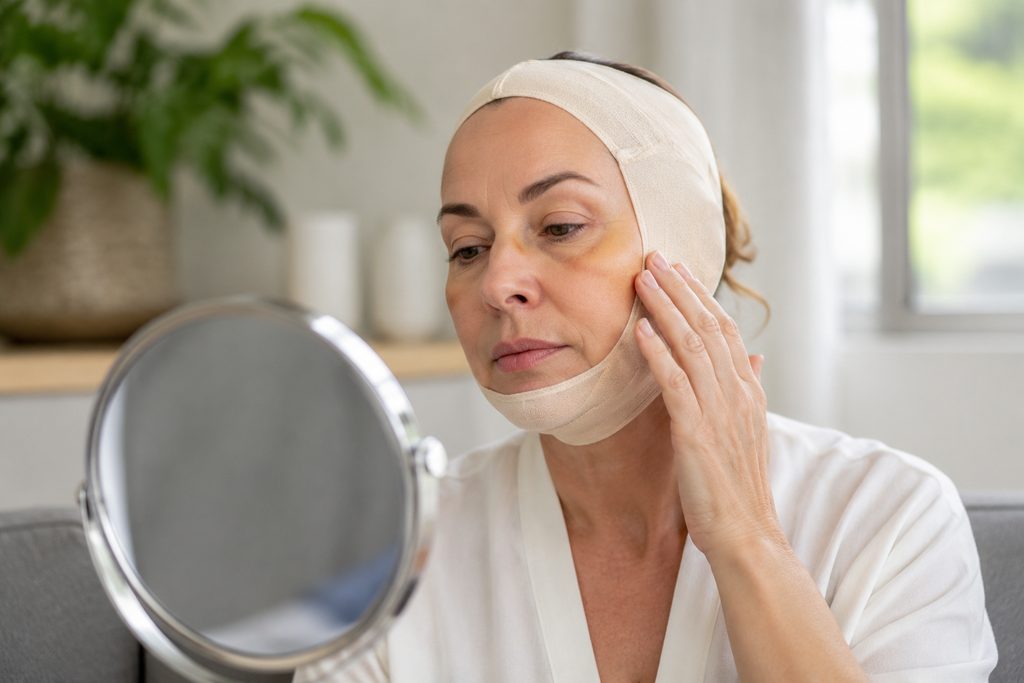
Have you ever stared at the mirror, tugging gently at the skin above your eyes, wondering how long you would actually be out of commission if you finally fixed it? It is the first question every patient asks us: not “will it look good,” but “how long until I can go back to work without looking like I lost a fight.” Here is the direct answer: you will be presentable in about 10 to 14 days, but the true healing arc stretches across 6 to 12 months. The visible bruising fades fast. The subtle settling takes much longer.
The caveat? Recovery is not linear. Day 3 often looks worse than Day 1. Week 6 can feel like a plateau. And if you are traveling internationally for the procedure — which many patients do when comparing eyelid surgery cost China against prices back home — you need to plan for a stay of at least 10 to 14 days on the ground, not a quick weekend trip.
Eyelid Surgery: The Short Answer
For an upper blepharoplasty, most people return to desk work after 7 to 10 days. For a lower blepharoplasty, or a combined four-lid procedure, give it 14 days before you feel comfortable on a video call. Stitches come out between day 5 and day 7. Swelling peaks around day 3, then drops sharply. The final surgical result does not reveal itself for 3 to 6 months, sometimes longer for the lower lids.
That is the honest timeline. Anyone promising a “weekend recovery” is not being straight with you. The eyes are the most visible part of the face. There is no hiding a healing eyelid with a hat.
Who This Is Right For — and Who It Isn’t
Blepharoplasty works best for a specific profile. You are a good candidate if you have:
- Excess upper eyelid skin that hangs over the lash line, sometimes touching the lashes
- Puffy lower lids caused by fat pads, not fluid retention
- Good overall health, no uncontrolled diabetes or hypertension
- Realistic expectations about what surgery can and cannot do
- Stable vision and no active eye infection
You should not pursue this surgery if you have severe dry eye, glaucoma, or a detached retina history. Patients with thyroid eye disease need an endocrinologist’s clearance first. And if you are on blood thinners that cannot be paused, surgery is off the table. Smokers face higher complication rates — most surgeons require quitting at least 4 weeks before and after.
One more thing. If your main concern is dark circles, not actual fat bulging, surgery will disappoint you. Dark circles are pigment and thin skin. A scalpel does not fix that.
The Options, Compared
Not all eyelid surgery is the same. The technique, the setting, and the country all change the recovery experience and the price tag. Here is a realistic comparison for a combined upper and lower blepharoplasty:
| Factor | United States | Thailand | China (Top-Tier Public or International) |
|---|---|---|---|
| Surgeon fee + facility | $4,000 – $8,000 | $2,000 – $3,500 | $1,500 – $3,500 |
| Typical technique | Conservative skin excision | Aggressive tissue removal | Conservative, Asian-blepharoplasty expertise |
| Recovery support | Standard follow-up | Resort-style packages | Hospital-based, structured follow-up |
| Language barrier | None for English speakers | Low to moderate | Moderate to high (mitigated by services) |
| Time to visible normalcy | 10–14 days | 10–14 days | 10–14 days |
The US column suits patients who want zero travel logistics and have insurance or savings to absorb the cost. Thailand appeals to those combining surgery with a holiday. China makes sense for patients who want hospital-grade safety protocols, surgeons who perform high volumes of Asian eyelid anatomy cases, and a blepharoplasty price Shanghai that can be half of the US figure — without sacrificing the rigor of a top-tier hospital system.
Eyelid Surgery Cost China: What the Numbers Actually Include
The headline number is only part of the story. When a clinic quotes you $1,800 for an upper blepharoplasty in Shanghai, that typically covers the surgeon’s fee, local anesthesia, the operating room, and basic post-op supplies. It does not include your flight, hotel, food, or ground transport. It may not include pre-operative lab work, which usually runs $100 to $300. And if you need a translator or a bilingual companion for hospital visits, that is a separate line item.
Private international hospitals in Beijing or Shanghai — the ones with English-speaking staff and JCI accreditation — charge more. Think $2,500 to $4,000 for the same procedure. You are paying for the environment, not a better scalpel. Public top-tier hospitals offer the same surgical skill at lower rates, but the process is far more navigation-heavy. That is the trade-off.
What drives the variance? The surgeon’s seniority. The hospital tier. Whether you need upper lids only, lower lids only, or both. Whether fat repositioning is involved, which is technically harder than simple fat removal. And whether you choose local anesthesia with sedation or full general anesthesia.
How Long Does Eyelid Surgery Take to Heal: The Week-by-Week Reality
If you are asking how long does eyelid surgery take to heal, you need a calendar, not a vague promise. Here is what actually happens:
Days 1–3: The worst of the swelling. Your lids will feel tight. Bruising may spread down toward the cheekbones. Cold compresses help. Sleep with your head elevated on two pillows. Do not bend over, do not lift anything heavy, do not read for long stretches.
Days 4–7: Stitches come out. Bruising turns from purple to yellow-green. You can go for short walks. Most patients can read, watch TV, and do light remote work by day 6. Still no exercise, no alcohol, no salty food.
Days 8–14: The dramatic improvement window. Bruising is mostly gone or easily covered with concealer. Swelling is down 70%. You can return to work, attend small social events, and fly home if you traveled. This is the point where most international patients leave China.
Weeks 3–6: Residual swelling, especially in the morning. The incision lines are pink and slightly raised. Exercise can resume at week 3, but avoid anything that spikes blood pressure to the face — no heavy squats, no hot yoga.
Months 2–6: The incision lines fade from pink to white. The final lid contour emerges. Lower lid swelling is the last to go. You will notice the real result in photos, not in the mirror, because the change is so gradual.
Is Eyelid Surgery Safe in China? The Questions You Should Actually Ask
Revision rates for blepharoplasty are low — around 3 to 5 percent — but not zero. If you need a revision, you will likely need to return to the original surgeon. That means another trip, or finding a local surgeon willing to take over someone else’s work. Some will, some won’t. Ask your Chinese surgeon about their revision policy in writing before the first surgery. Do not assume a free revision is included.
For a straightforward upper blepharoplasty, the math usually favors China. A US surgeon charges $4,000 to $6,000. In Shanghai, the same procedure at a top public hospital runs $1,500 to $2,500. Add $1,500 for flights, hotel, and food over 12 days, and you are still at $3,000 to $4,000 — a meaningful saving. For lower lid or combined surgery, the gap widens. But if you need a revision or an extended stay, the savings shrink fast.
You can manage the first 48 hours alone if you prepare well: pre-book a hotel near the hospital, stock your room with cold compresses and easy food, and set alarms for eye drops. But having a companion — a friend, family member, or hired bilingual escort — makes the hospital visits dramatically easier. The day of suture removal, you will be tired and your vision may be blurry from ointment. Navigating a Chinese hospital in that state, alone, is not something we recommend.
Your Next Step
Eyelid surgery recovery is predictable if you plan for it: 10 to 14 days of visible healing, 3 to 6 months of quiet refinement. The eyelid surgery cost China comparison makes sense for patients who want hospital-grade care at a fraction of Western prices, provided they accept the logistics of traveling for surgery.
We are China Medical Services, a coordination team that connects international patients with top-tier Chinese hospitals. We are not a hospital and we do not give medical advice. What we do is handle the practical layer — hospital selection, appointment coordination, bilingual accompaniment, and visa guidance — so you can focus on healing. If you are considering eyelid surgery in China, start with a conversation. Tell us your situation, and we will map out what a realistic plan looks like.
You have the timeline. You know the trade-offs. The rest is a decision only you can make.
For more medical information and treatment options in China, visit chinamedservices.com (China Medical Services).
